Bellegem / Bellenghem / Bellengim / Bellingim
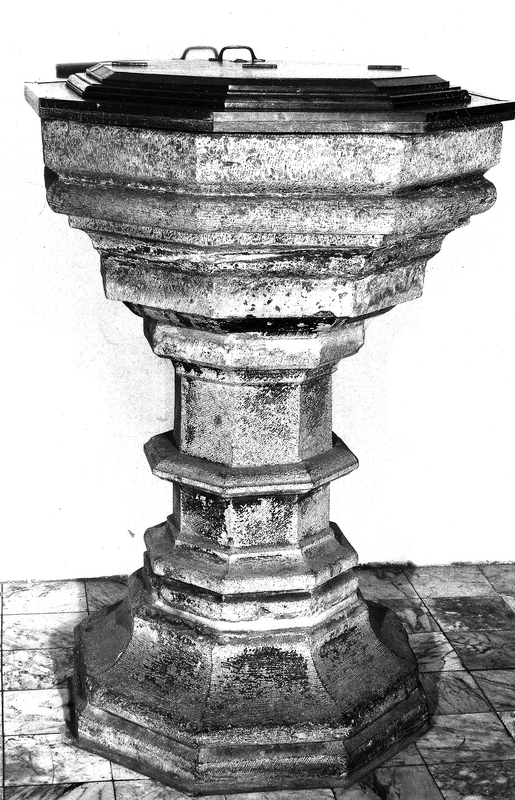
Image copyright © KIK-IRPA, Brussels (Belgium), 2026
CC-BY-4.0
Results: 6 records
view of font and cover
Copyright Statement: Image copyright © KIK-IRPA, Brussels (Belgium), 2026
Image Source: digital image of an undated B&W photograph [cliché M110272] by Renard, Jean-Pierre, KIK
Copyright Instructions: CC-BY-4.0
view of font and cover
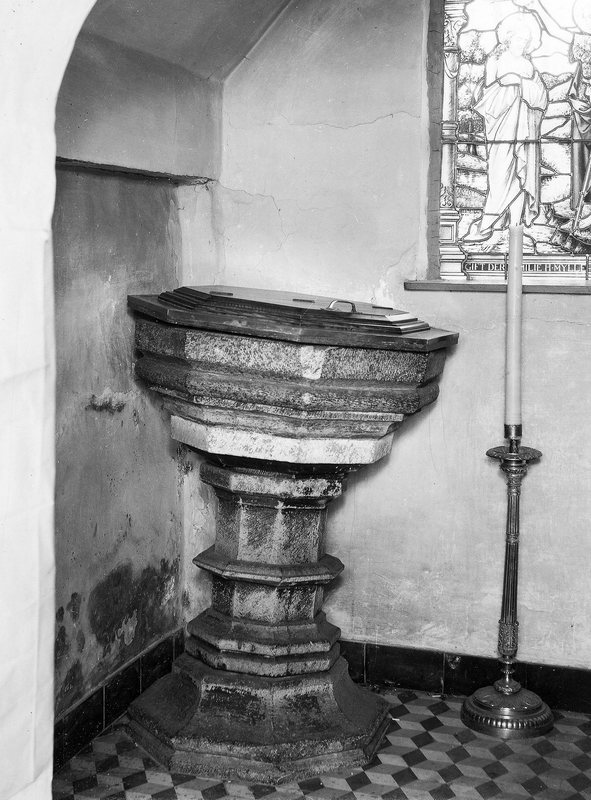
Copyright Statement: Image copyright © KIK-IRPA, Brussels (Belgium), 2026
Image Source: digital image of a 1942 B&W photograph [cliché B038717] by the Commissariat général à la Restauration du Pays
Copyright Instructions: CC-BY-4.0
view of font
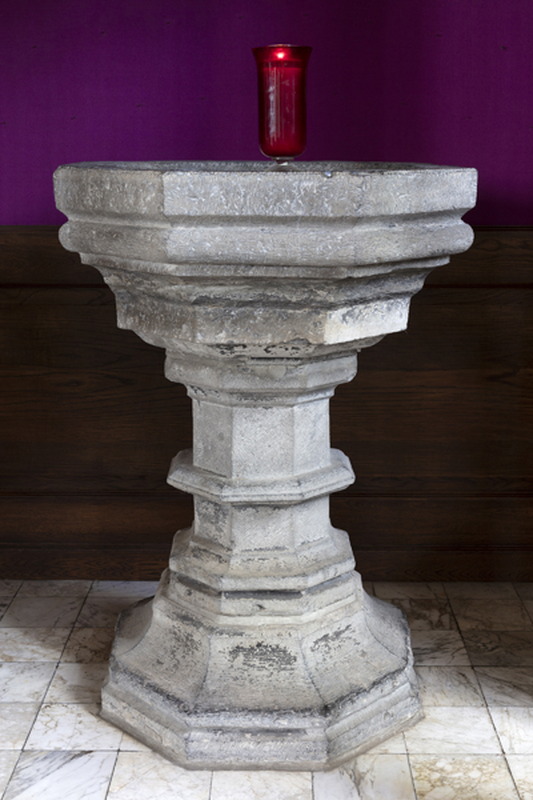
Scene Description: "Bellegem, Sint-Amanduskerk. Kortrijk. West-Vlaanderen. Belgium. Binnenzicht, doopvont. Parish church (Sint-Amanduskerk, Bellegem). Interior. Baptismal font."
Copyright Statement: Image copyright © PMRMaeyaert, 2025
Image Source: digital photograph 14 June 2025 by PMRMaeyaert
Copyright Instructions: CC-BY-SA-4.0
view of font
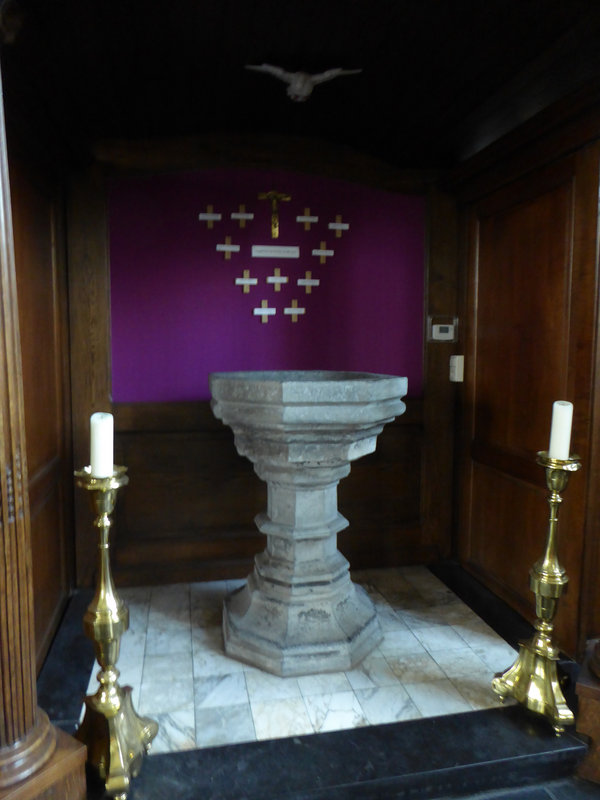
Scene Description: "Baptismal fonts in Church of Saint Amand in Bellegem. Bellegem, Kortrijk, West Flanders, Belgium"
Copyright Statement: Image copyright © Pierre André, 2017
Image Source: digital photograph 3 August 2017 by Pierre André
Copyright Instructions: GFDL
view of church exterior - northeast view
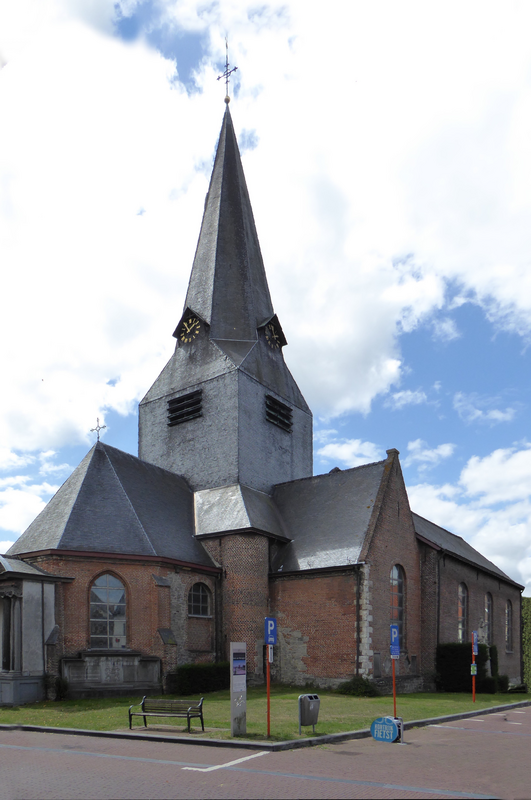
Scene Description: "Sint-Amanduskerk in Bellegem / Church of Saint Amand in Bellegem. Kortrijk, Belgium / Eglise Saint-Amanduskerk de Bellegem"
Copyright Statement: Image copyright © Pierre André Leclercq, 2017
Image Source: digital photograph 3 August 2017 by Pierre André Leclercq
Copyright Instructions: CC-BY-SA
view of church interior - looking east
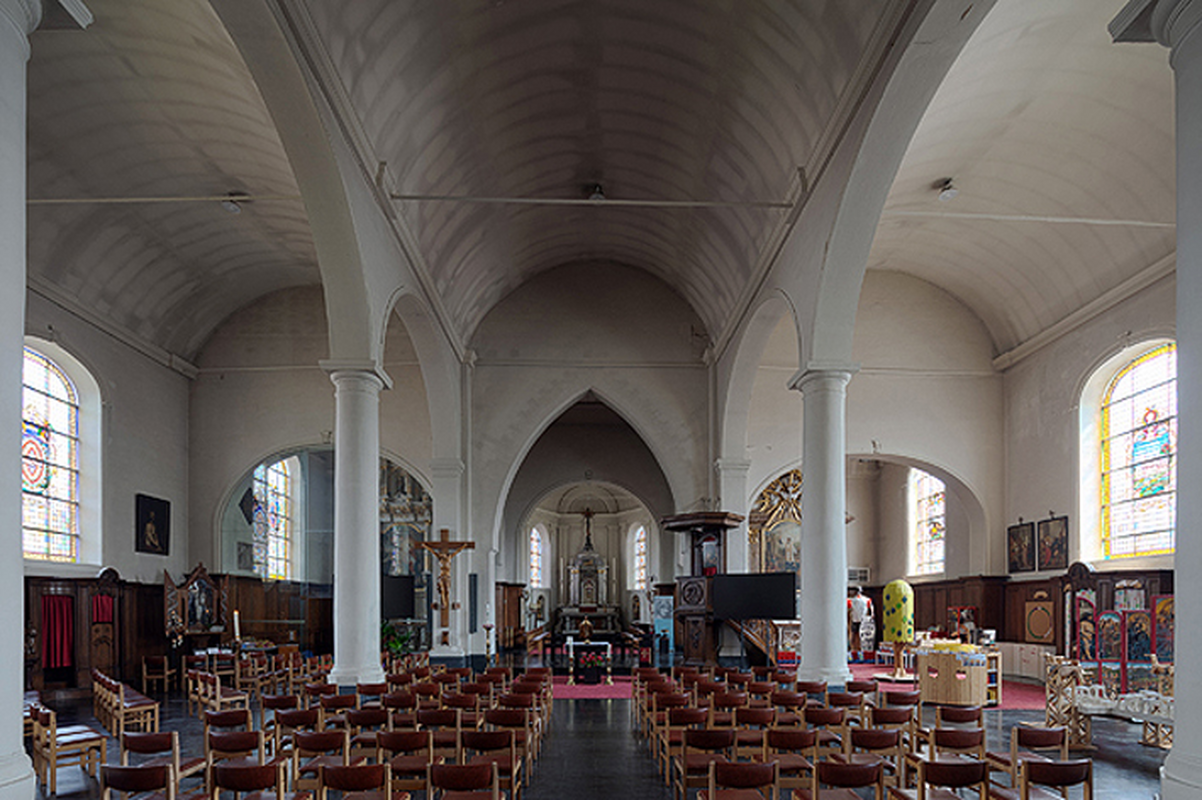
Scene Description: "Bellegem, Sint-Amanduskerk.Kortrijk.West-Vlaanderen.Belgium.Binnenzicht, het schip.Parish church (Sint-Amanduskerk, Bellegem). Interior. The nave."
Copyright Statement: Image copyright © PMRMaeyaert, 2025
Image Source: digital photograph 14 June 2025 by PMRMaeyaert
Copyright Instructions: CC-BY-SA-4.0
INFORMATION
Font ID: 26378STV
Object Type: Baptismal Font1
Font Century and Period/Style: 15th - 16th century (?), Late Gothic
Workshop/Group/Artisan: Hainaut type font
Church / Chapel Name: Sint-Amanduskerk van Bellegem
Church Wikidata: https://nl.wikipedia.org/wiki/Sint-Amanduskerk_(Bellegem)
Church Patron Saint(s): St. Amandus
Church Notes: 12thC original church?; much modified since [cf. FontNotes]
Church Address: Bellegemplaats 5, 8510 Kortrijk, Belgium
Site Location: West-Vlaanderen / Flandre Occidentale, Vlaanderen / Flandres, Belgium, Europe
Directions to Site: Located off Hwy E403/A17, in the municipality and 6-7 km S of Kortrijk
Ecclesiastic Region: Diocèse de Bruges / Bisdom Brugge
Town/City Wikipedia: https://nl.wikipedia.org/wiki/Bellegem
Font Notes:
Click to view
Baptismal font made of limestone in the 13th century [cf. infra], listed in the Onroerend erfgoed [https://inventaris.onroerenderfgoed.be/erfgoedobjecten/60507] [accessed 3 May 2026]: "Vermoedelijk 13de-eeuwse gotische, arduinen doopvont." Listed and illustrated in BALaT KIK-IRPA [https://balat.kikirpa.be/object/33392] [accessed 3 May 2026] with date in the 13th century [cf. infra]: "doopvont [...] arduin [...] gothiek [...] Date: 1201 - 1300".
A communication to BSI from Pol Herman (e-mail of 18 March 2026) informs: "Bellegem, Sint-Amanduskerk. 1111 Bellengim, 1154 Bellingim, , 1175 Bellenghem. Bellegem was first mentioned in writing in 1111, referring to the lord Morantus de Bellengim. Presumably, a parish already existed in Bellegem in 1195, given a written document mentioning a cleric. A priest is also mentioned in 1277. The right of patronage rested with the Chapter of Our Lady of Tournai. Several lordships were located within the territory of Bellegem. A similar situation is also found in the ecclesiastical sphere: in total, there were no fewer than eighteen different tithe collectors, which led to financial conflicts and lawsuits. Remains of an earlier Romanesque church structure from around 1180 are still present, particularly in the northern and southern walls of the choir and in the substructure of the crossing tower. A Gothic church was erected in the 13th century, which underwent numerous major renovations in the 17th and 18th centuries. The 16th century brought famine, a plague epidemic (1555-1556), and subsequently the religious conflicts, in which the Calvinists trouble makers were replaced by bands of Malcontents. During the Iconoclasm, the church and parish suffered greatly, including the imprisonment of the pastor. The church's leaning tower, which dated from the second half of the 17th century, was demolished and rebuilt in 1961. Subsequently, the Nine Years' War (1688-1697) raged, during which French troops, among others, regularly plundered the village. The church was neglected and fell into disrepair.
After the invasion by the French revolutionaries, the church was closed in 1792. From February 27 to March 7 1814, Bellegem was the scene of a battle between Prussian and French troops. Baptismal registers start in 1605. Octagonal, limestone, gothic, Hainaut-type baptismal font. KIK-IRPA dating is 13th c. However, to me it looks late 16th c. https://balat.kikirpa.be/object/33392"
A communication to BSI from Pol Herman (e-mail of 18 March 2026) informs: "Bellegem, Sint-Amanduskerk. 1111 Bellengim, 1154 Bellingim, , 1175 Bellenghem. Bellegem was first mentioned in writing in 1111, referring to the lord Morantus de Bellengim. Presumably, a parish already existed in Bellegem in 1195, given a written document mentioning a cleric. A priest is also mentioned in 1277. The right of patronage rested with the Chapter of Our Lady of Tournai. Several lordships were located within the territory of Bellegem. A similar situation is also found in the ecclesiastical sphere: in total, there were no fewer than eighteen different tithe collectors, which led to financial conflicts and lawsuits. Remains of an earlier Romanesque church structure from around 1180 are still present, particularly in the northern and southern walls of the choir and in the substructure of the crossing tower. A Gothic church was erected in the 13th century, which underwent numerous major renovations in the 17th and 18th centuries. The 16th century brought famine, a plague epidemic (1555-1556), and subsequently the religious conflicts, in which the Calvinists trouble makers were replaced by bands of Malcontents. During the Iconoclasm, the church and parish suffered greatly, including the imprisonment of the pastor. The church's leaning tower, which dated from the second half of the 17th century, was demolished and rebuilt in 1961. Subsequently, the Nine Years' War (1688-1697) raged, during which French troops, among others, regularly plundered the village. The church was neglected and fell into disrepair.
After the invasion by the French revolutionaries, the church was closed in 1792. From February 27 to March 7 1814, Bellegem was the scene of a battle between Prussian and French troops. Baptismal registers start in 1605. Octagonal, limestone, gothic, Hainaut-type baptismal font. KIK-IRPA dating is 13th c. However, to me it looks late 16th c. https://balat.kikirpa.be/object/33392"
Credit and Acknowledgements: We are grateful to Pol Herman for bringing this font to our attention and for his help documenting it
COORDINATES
UTM: 31U 519728 5625124
Latitude & Longitude (Decimal): 50.777539, 3.279817
Latitude & Longitude (DMS): 50° 46′ 39.14″ N, 3° 16′ 47.34″ E
MEDIUM AND MEASUREMENTS
Material: stone, limestone
Font Shape: octagonal (mounted)
Basin Interior Shape: round
Basin Exterior Shape: octagonal
LID INFORMATION
Date: modern
Notes: octagonal and flat; modern
REFERENCES
- KIK-IRPA, BALaT KIK-IRPA, 2024. URL: https://balat.kikirpa.be/.