Borlon / Bourlon
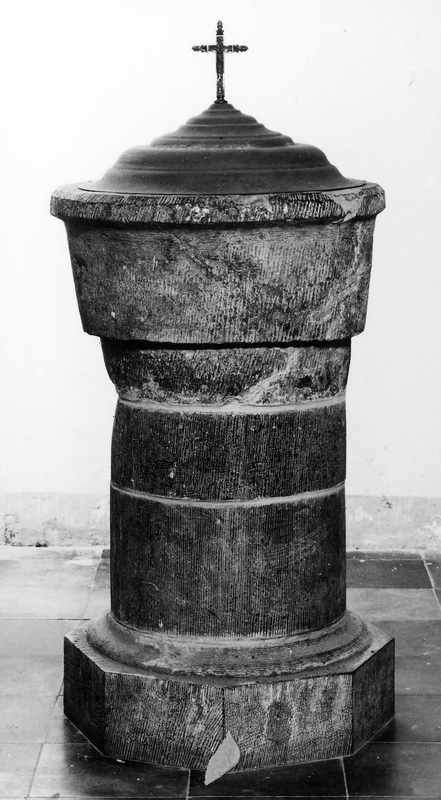
Image copyright © KIK-IRPA, Brussels (Belgium), 2026
CC-BY-4.0
Results: 2 records
view of font and cover
Copyright Statement: Image copyright © KIK-IRPA, Brussels (Belgium), 2026
Image Source: digital image of a 1973 B&W photograph [cliché M201460] by Pluymers, Serge, IRPA
Copyright Instructions: CC-BY-4.0
view of church exterior - southwest view
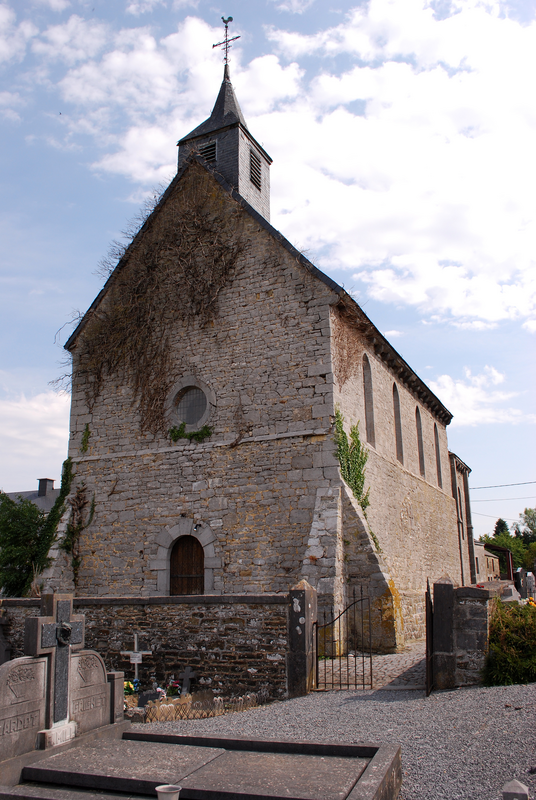
Scene Description: " L'église Notre-Dame à Borlon (Durbuy)."
Copyright Statement: Image copyright © Jean Housen, 2020
Image Source: digital photograph 21 July 2010 by Jean Housen
Copyright Instructions: CC-BY-SA-3.0
INFORMATION
Font ID: 26374BRX
Object Type: Baptismal Font1
Font Century and Period/Style: 17th century (?)
Church / Chapel Name: Église Notre-Dame de Borlon
Font Location in Church: Inside
Church Wikidata: https://fr.wikipedia.org/wiki/Église_Notre-Dame_de_Borlon
Church Patron Saint(s): St. Mary the Virgin
Church Notes: 13thC church; modified 16thC and later
Church Address: Rue des Gueuvelettes 7, 6941 Durbuy, Belgium
Site Location: Luxembourg / Luxemburg, Wallonie / Wallonne, Belgium, Europe
Directions to Site: Located off (E) the N638, in the municipality and 6-7 km NW of Durbuy, about 45 km SW of Liège
Ecclesiastic Region: Diocèse de Namur
Additional Comments: disappeared font? (the one from the 13thC church here)
Town/City Wikipedia: https://fr.wikipedia.org/wiki/Borlon
Font Notes:
Click to view
Baptismal font losted and illustrated in BALaT KIK-IRPA [https://balat.kikirpa.be/object/10065237] [accessed 1 May 2026]: "fonts baptismaux [...] pierre [...] Date: 1601 (incertain) - 1700 (incertain) [...] hauteur totale : 124.5 cm [...] hauteur partie supérieure : 37 cm".
A communication to BSI from Pol Herman (e-mail of 5 March 2026) informs: "Borlon, église Notre-Dame.
https://fr.wikipedia.org/wiki/%C3%89glise_Notre-Dame_de_Borlon
Source : Damien Fanon, L’église Notre-Dame de Borlon, souvenir du règne de la princesse Ermesinde de Luxembourg, dans : Terre de Durbuy, Bulletin du Cercle Historique de Durbuy, n° 139, mars 2017, p.3-13. It is noteworthy that Borlon only appears in the archives from the 13th century onwards, while the nearby hamlets of Walthina (Uualthina, Walohina, Vôhinnes, now a land called Fond de Wohine) and Baina (now the village of Bende), who were part of Borlon from an ecclesiastical point of view, already existed in 862. The "ter et fon de Wohinne" is mentioned for the last time in the archives of Stavelot Abbey in 1363. Then, this village disappears from written sources. In his article, Fanon explains this by the creation of new travel routs between Namur, Liège, Trier, and Luxembourg created in the period around 1184-1243. These new roads rendered the existing historical itineraries obsolete. To avoid the steep slopes at the entrance to and exit from the town of Durbuy (problematic for heavy convoys), a detour was created passing through Borlon. This would explain the decline of Wohine that had become isolated from traffic and trade, and the rise of Borlon. The church of Borlon is a remarkable and rare example of Gothic architecture in a rural area during the 13th century. How can one explain the presence of such a high-quality Gothic building in a village of no particular importance? Fanon suggests that Countess Ermesinde had this church built, dedicated to Our Lady, the patron saint of her realm. If the building is disproportionately large for the small local community, it served another purpose: to impress travellers coming down from the Prince-Bishopric of Liège using the new road between Huy and Luxembourg. When they arrived at the border village of Borlon, the northernmost settlement in the Luxembourg territory, the splendour of the church was a symbol of the power of Luxembourg, the land that they entered. After Ermesinde's death in 1247, in an effort to ease tensions between Luxembourg and Liège, her son Gérard transferred the church of Borlon to the chapter of Saint-Martin at Liège. 1252: Juliotus de Borlon and his wife donated their rights to the tithe and the patronage of Borlon to the collegiate church of Saint-Martin in Liège. The problem was that they had already promised the tithe, for a sum of money, to Orban, provost of Durbuy. 1256: Gerardus de Lucelebourc, lord of Durbuy, donated the tithe of Borlon-lez-Durbuy, which the late Juliotus de Borlon had held, to the chapter of the collegiate church of Saint-Martin-en-Mont in Liège. The apse dates from the second half of the 13th century, while the current nave was built during the first half of the 16th century. The church never had a defensive tower. The attic above the chancel allowed the inhabitants to take shelter in case of danger. An opening above the triumphal arch, with a door that could be locked from the inside, prevented attackers from entering. 1497 : Bourlon capella. 1558 : Bourlon ecclesia sive cappella. The mother church was Saint-Martin in Tohogne. Between 1558 and 1609, Borlon was upgraded to an independent parish. However, the first mention of "parish church" dates from 1698. Modifications to the church in 1695. Oldest baptismal record: 1761. Limestone baptismal font on octagonal plinth. KIK-IRPA dating : 17th c. https://balat.kikirpa.be/object/10065237 "
A communication to BSI from Pol Herman (e-mail of 5 March 2026) informs: "Borlon, église Notre-Dame.
https://fr.wikipedia.org/wiki/%C3%89glise_Notre-Dame_de_Borlon
Source : Damien Fanon, L’église Notre-Dame de Borlon, souvenir du règne de la princesse Ermesinde de Luxembourg, dans : Terre de Durbuy, Bulletin du Cercle Historique de Durbuy, n° 139, mars 2017, p.3-13. It is noteworthy that Borlon only appears in the archives from the 13th century onwards, while the nearby hamlets of Walthina (Uualthina, Walohina, Vôhinnes, now a land called Fond de Wohine) and Baina (now the village of Bende), who were part of Borlon from an ecclesiastical point of view, already existed in 862. The "ter et fon de Wohinne" is mentioned for the last time in the archives of Stavelot Abbey in 1363. Then, this village disappears from written sources. In his article, Fanon explains this by the creation of new travel routs between Namur, Liège, Trier, and Luxembourg created in the period around 1184-1243. These new roads rendered the existing historical itineraries obsolete. To avoid the steep slopes at the entrance to and exit from the town of Durbuy (problematic for heavy convoys), a detour was created passing through Borlon. This would explain the decline of Wohine that had become isolated from traffic and trade, and the rise of Borlon. The church of Borlon is a remarkable and rare example of Gothic architecture in a rural area during the 13th century. How can one explain the presence of such a high-quality Gothic building in a village of no particular importance? Fanon suggests that Countess Ermesinde had this church built, dedicated to Our Lady, the patron saint of her realm. If the building is disproportionately large for the small local community, it served another purpose: to impress travellers coming down from the Prince-Bishopric of Liège using the new road between Huy and Luxembourg. When they arrived at the border village of Borlon, the northernmost settlement in the Luxembourg territory, the splendour of the church was a symbol of the power of Luxembourg, the land that they entered. After Ermesinde's death in 1247, in an effort to ease tensions between Luxembourg and Liège, her son Gérard transferred the church of Borlon to the chapter of Saint-Martin at Liège. 1252: Juliotus de Borlon and his wife donated their rights to the tithe and the patronage of Borlon to the collegiate church of Saint-Martin in Liège. The problem was that they had already promised the tithe, for a sum of money, to Orban, provost of Durbuy. 1256: Gerardus de Lucelebourc, lord of Durbuy, donated the tithe of Borlon-lez-Durbuy, which the late Juliotus de Borlon had held, to the chapter of the collegiate church of Saint-Martin-en-Mont in Liège. The apse dates from the second half of the 13th century, while the current nave was built during the first half of the 16th century. The church never had a defensive tower. The attic above the chancel allowed the inhabitants to take shelter in case of danger. An opening above the triumphal arch, with a door that could be locked from the inside, prevented attackers from entering. 1497 : Bourlon capella. 1558 : Bourlon ecclesia sive cappella. The mother church was Saint-Martin in Tohogne. Between 1558 and 1609, Borlon was upgraded to an independent parish. However, the first mention of "parish church" dates from 1698. Modifications to the church in 1695. Oldest baptismal record: 1761. Limestone baptismal font on octagonal plinth. KIK-IRPA dating : 17th c. https://balat.kikirpa.be/object/10065237 "
Credit and Acknowledgements: We are grateful to Pol Herman for bringing this font to our attention and for his help documenting it
COORDINATES
UTM: 31U 670969 5583616
Latitude & Longitude (Decimal): 50.379722, 5.404722
Latitude & Longitude (DMS): 50° 22′ 47″ N, 5° 24′ 17″ E
MEDIUM AND MEASUREMENTS
Material: stone, limestone ?
Font Shape: tub-shaped, mounted
Basin Interior Shape: round
Basin Exterior Shape: round
Basin Total Height: 37 cm*
Font Height (with Plinth): 124.5 cm*
Notes on Measurements: * KIK-IRPA [cf. FontNotes]
LID INFORMATION
Material: metal
Notes: round moulded medium-dome with Latin-cross finial
REFERENCES
- KIK-IRPA, BALaT KIK-IRPA, 2024. URL: https://balat.kikirpa.be/.