Beaumont / Baimunt / Beaulmont / Beaumont in Hainaut / Bellemont / Bellumons / Bellus Mont / Belmont / Biaumont / Bielmont
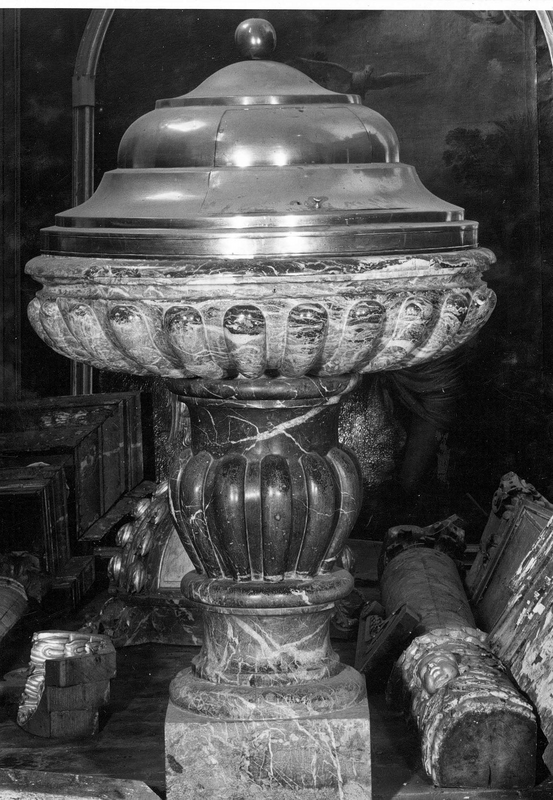
Image copyright © KIK-IRPA, Brussels (Belgium), 2026
CC-BY-4.0
Results: 6 records
view of font and cover
Copyright Statement: Image copyright © KIK-IRPA, Brussels (Belgium), 2026
Image Source: digital image of a 1968 B&W photograph [cliché M020913] by IRPA
Copyright Instructions: CC-BY-4.0
view of font - west side
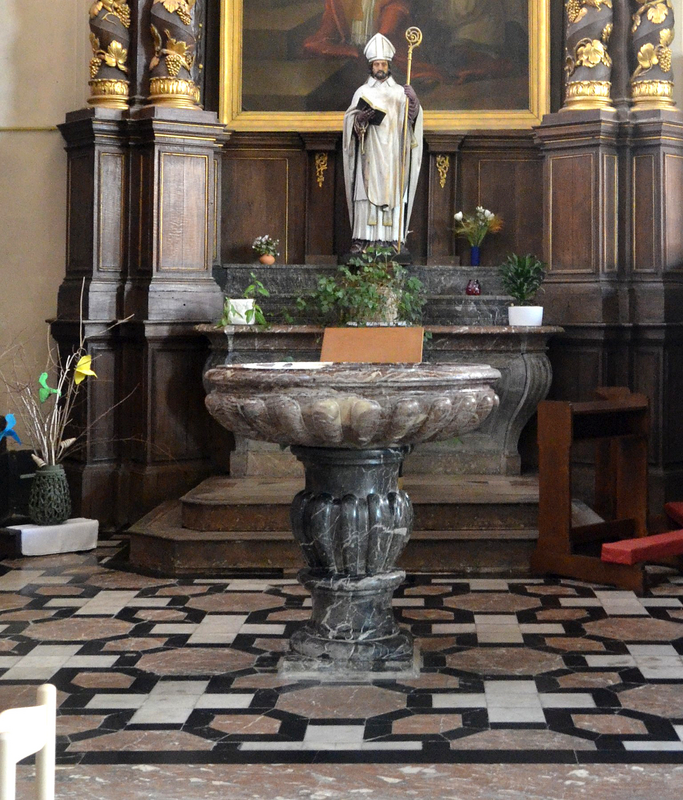
Scene Description: located at the east end of the north aisle
Copyright Statement: Image copyright © Jmh2o, 2024
Image Source: edited detail of a digital photograph 11 May 2024 by Jmh2o
Copyright Instructions: CC-BY-SA-4.0
design element - patterns - gadrooned
Scene Description: all around
Copyright Statement: Image copyright © KIK-IRPA, Brussels (Belgium), 2026
Image Source: digital image of a 1968 B&W photograph [cliché M020913] by IRPA
Copyright Instructions: CC-BY-4.0
view of font in context - west side
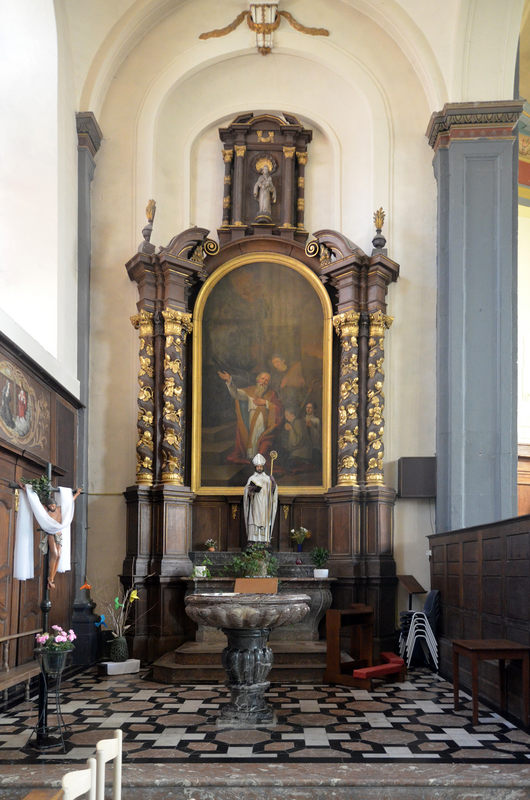
Scene Description: "Beaumont (Belgique) - église Saint-Servais - intérieur - autel latéral gauche." -- showing the font at the east end of the north aisle
Copyright Statement: Image copyright © Jmh2o, 2024
Image Source: digital photograph 11 May 2024 by Jmh2o
Copyright Instructions: CC-BY-SA-4.0
view of church exterior - southeast view
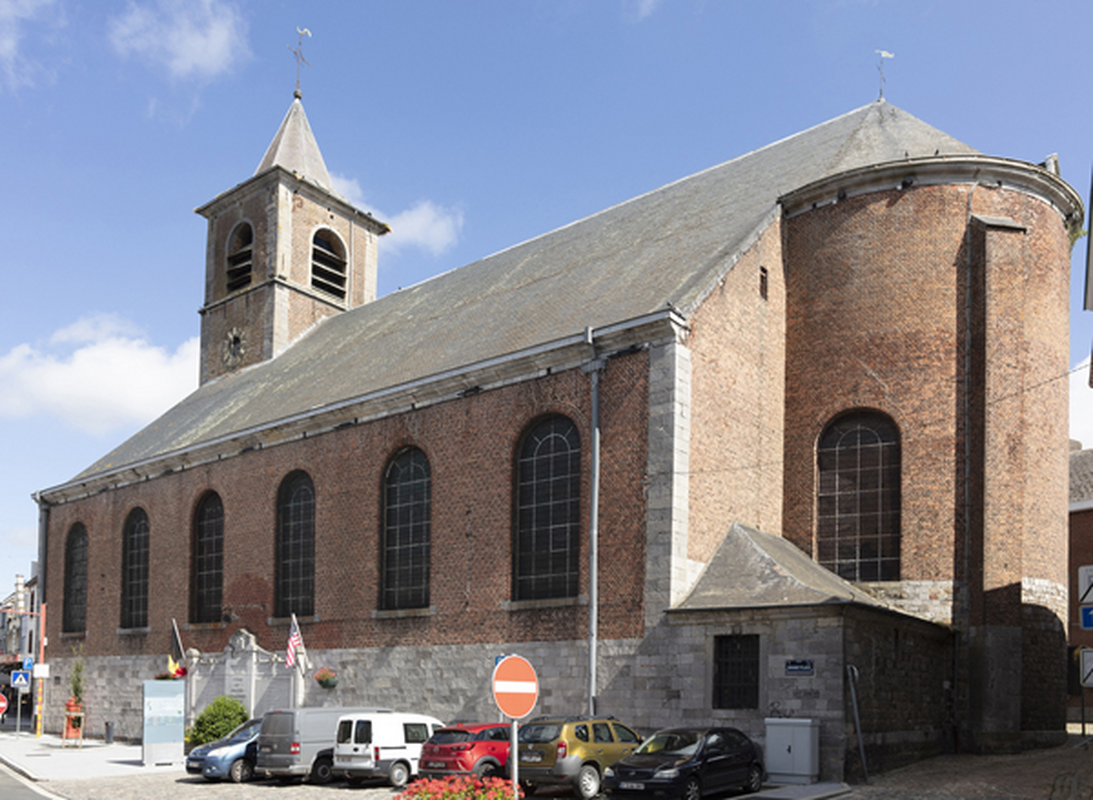
Scene Description: "Église Saint-Servais. Beaumont. Hainaut. Belgium. Extérieur. Parish church (Église Saint-Servais). Exterior."
Copyright Statement: Image copyright © PMRMaeyaert, 2024
Image Source: digital photograph 10 August 2024 by PMRMaeyaert
Copyright Instructions: CC-BY-SA-4.0
view of church interior - looking east
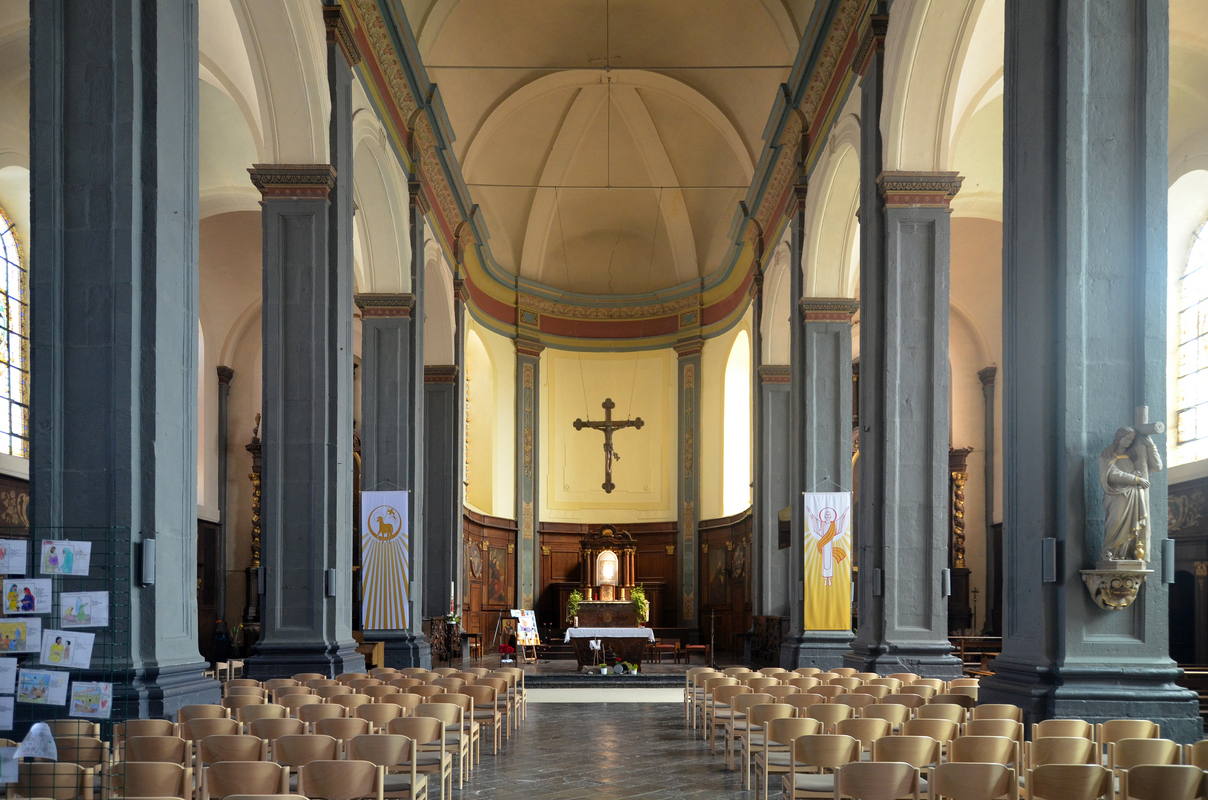
Scene Description: "Beaumont (Belgique) - église Saint-Servais - intérieur - nef vue depuis l'entrée."
Copyright Statement: Image copyright © Jmh2o, 2024
Image Source: digital photograph 11 May 2024 by Jmh2o
Copyright Instructions: CC-BY-SA-4.0
INFORMATION
Font ID: 26337MET
Object Type: Baptismal Font1
Font Date: ca. 1700?
Font Century and Period/Style: 17th - 18th century (?), Baroque
Church / Chapel Name: Eglise paroissiale Saint-Servais à Beaumont
Font Location in Church: Inside
Church Patron Saint(s): St. Servatius
Church Notes: original church documented in the 13thC; became parochial 14thC; re-built 15thC; present church 1770s
Church Address: Rue Sous les Cloches, 6500 Beaumont, Belgium -- Tel.: +32 71 58 71 68
Site Location: Hainaut / Henegouwen, Wallonie / Wallonne, Belgium, Europe
Directions to Site: Located off the N40-N53 crossroads, 3-4 km NW of Barbençon, just E of the border with France
Ecclesiastic Region: Diocèse de Tournai / Bisdom Doornik
Additional Comments: disappeared font? (the one from the 13thC church here)
Font Notes:
Click to view
The present baptismal font is listed and illustrated in BALaT KIK-IRPA [https://balat.kikirpa.be/object/10053848] [accessed 23 April 2026]: "fonts baptismaux [...] hauteur: 135 cm [...] marbre rouge de Rance et gris, couvercle laiton h. 50 [...] Date: 1691 - 1710".
A communication to BSI from Pol Herman (e-mail of 22 March 2026) informs: "Beaumont, église Saint-Servais. 1049 Bellus Mont, 1071 Belmont, 1086 Bellemont, 1150 Baimunt, 1174 Bielmont, 1182 Bellumons, 1273 Biaumont, 1292 Belmont, Beaulmont. Gallo-roman settlement. It appears that there was a significant settlement in the Beaumont area as early as the Merovingian period. A mint and a fortified residence are mentioned. Beaumont was a small but important town whose lords played significant political and military roles. Due to its border location, it was frequently sieged. It is one of the few towns in Belgium whose medieval fortifications are partially preserved. Around 976, Emperor Otto II restored to Reginar IV (whose father Reginar III had been deposed from the County of Hainaut and its possessions) some holdings, but not the title of count. Among these estates was Beaumont. The fortified castle was built in the 11th century by Countess Richilde of Hainaut, who owned the land of Beaumont from 1049 onwards. The castle was burned by the French in 1655 and by the English in 1691. Only one of its towers remains today: the Salamander Tower (1050-1060). The town walls, surrounding the town, were built around 1180 by Baldwin IV the Builder. Approximately 2,360 meters long, they were flanked by about thirty round towers and had three gates and a postern. In 1691, the troops of the King of England dismantled the fortifications, and in 1720, the upper parts of some towers were in danger of collapsing and had to be demolished. There is no information about the origins of the place of worship. There must have been a Romanesque church however. Act by which Henry II, bishop of Liège from 1145 to 1164, at the request of Gerland, abbot of Floreffe, incorporated the tithe of Beaumont into the abbey of Floreffe. Charter of the Abbey of Floreffe: donation of the city of Beaumont around 1150. However, at that time the parish of Beaumont was only an annexe of the mother church of Solre-Saint-Géry (as written in documents from 1257 and 1394). It was only at the end of the 14th century that Beaumont became a parish in its own right. In 1211, the tithe was partially given to the abbey of Aulne. In 1227, the abbeys of Floreffe and Aulne reached a compromise regarding the management of the parish and its church. In 1257, repairs were needed to prevent the building's collapse. The agreement between the two abbeys was put into practice. This occurred again in 1394, but this time the town also had to contribute to the costs. 1462: Reconstruction of the nave and bell tower. 1473: Fire caused by lightning. The restoration was not completed until 1483. In 1608, a description was given of the church, a vast, richly decorated Gothic building. The church was filled with mementos of the lords of Beaumont: tombs, stained-glass windows, weapons, altars, etc. 1627: French troops pillaged the town and damaged the church. 1655: French troops burned the church, only the walls remained standing. Also the castle is destroyed. Ruined, deserted by its Lords and its population, the city falls into lethargy. Because the new bells were only blessed in 1719, it is possible that the building’s restoration took a long time. 1720: lightning strikes the bell tower. The building, cruelly devastated during the last two centuries, and imperfectly repaired, was in ruins by 1773. It was demolished. A new church was erected between 1774 and 1778. 1793: French troops looted the church, and it lost all its treasures. Baptismal records from 1558 onwards. In the 17th century, the area around Beaumont was known for its quarries of vividly coloured marbles. This material was from then on also used for baptismal fonts. The basin of the baroque baptismal font (with gadroons) is made of red marble from Rance, the column is grey marble. Dating KIK-IRPA : 1691 – 1710 https://balat.kikirpa.be/object/10053848
Reference : Henri Dessart, Les fonts baptismaux en marbre des cantons de Beaumont et de Chimay, in Publications de la société d’histoire régionale et de tourisme culturel des cantons de Beaumont-Chimay à Sivry-Rance, tome 14, 1993-1994, page 237-246 "
A communication to BSI from Pol Herman (e-mail of 22 March 2026) informs: "Beaumont, église Saint-Servais. 1049 Bellus Mont, 1071 Belmont, 1086 Bellemont, 1150 Baimunt, 1174 Bielmont, 1182 Bellumons, 1273 Biaumont, 1292 Belmont, Beaulmont. Gallo-roman settlement. It appears that there was a significant settlement in the Beaumont area as early as the Merovingian period. A mint and a fortified residence are mentioned. Beaumont was a small but important town whose lords played significant political and military roles. Due to its border location, it was frequently sieged. It is one of the few towns in Belgium whose medieval fortifications are partially preserved. Around 976, Emperor Otto II restored to Reginar IV (whose father Reginar III had been deposed from the County of Hainaut and its possessions) some holdings, but not the title of count. Among these estates was Beaumont. The fortified castle was built in the 11th century by Countess Richilde of Hainaut, who owned the land of Beaumont from 1049 onwards. The castle was burned by the French in 1655 and by the English in 1691. Only one of its towers remains today: the Salamander Tower (1050-1060). The town walls, surrounding the town, were built around 1180 by Baldwin IV the Builder. Approximately 2,360 meters long, they were flanked by about thirty round towers and had three gates and a postern. In 1691, the troops of the King of England dismantled the fortifications, and in 1720, the upper parts of some towers were in danger of collapsing and had to be demolished. There is no information about the origins of the place of worship. There must have been a Romanesque church however. Act by which Henry II, bishop of Liège from 1145 to 1164, at the request of Gerland, abbot of Floreffe, incorporated the tithe of Beaumont into the abbey of Floreffe. Charter of the Abbey of Floreffe: donation of the city of Beaumont around 1150. However, at that time the parish of Beaumont was only an annexe of the mother church of Solre-Saint-Géry (as written in documents from 1257 and 1394). It was only at the end of the 14th century that Beaumont became a parish in its own right. In 1211, the tithe was partially given to the abbey of Aulne. In 1227, the abbeys of Floreffe and Aulne reached a compromise regarding the management of the parish and its church. In 1257, repairs were needed to prevent the building's collapse. The agreement between the two abbeys was put into practice. This occurred again in 1394, but this time the town also had to contribute to the costs. 1462: Reconstruction of the nave and bell tower. 1473: Fire caused by lightning. The restoration was not completed until 1483. In 1608, a description was given of the church, a vast, richly decorated Gothic building. The church was filled with mementos of the lords of Beaumont: tombs, stained-glass windows, weapons, altars, etc. 1627: French troops pillaged the town and damaged the church. 1655: French troops burned the church, only the walls remained standing. Also the castle is destroyed. Ruined, deserted by its Lords and its population, the city falls into lethargy. Because the new bells were only blessed in 1719, it is possible that the building’s restoration took a long time. 1720: lightning strikes the bell tower. The building, cruelly devastated during the last two centuries, and imperfectly repaired, was in ruins by 1773. It was demolished. A new church was erected between 1774 and 1778. 1793: French troops looted the church, and it lost all its treasures. Baptismal records from 1558 onwards. In the 17th century, the area around Beaumont was known for its quarries of vividly coloured marbles. This material was from then on also used for baptismal fonts. The basin of the baroque baptismal font (with gadroons) is made of red marble from Rance, the column is grey marble. Dating KIK-IRPA : 1691 – 1710 https://balat.kikirpa.be/object/10053848
Reference : Henri Dessart, Les fonts baptismaux en marbre des cantons de Beaumont et de Chimay, in Publications de la société d’histoire régionale et de tourisme culturel des cantons de Beaumont-Chimay à Sivry-Rance, tome 14, 1993-1994, page 237-246 "
Credit and Acknowledgements: We are grateful to Pol Herman for bringing this font to our attention and for his help documenting it
COORDINATES
UTM: 31U 588123 5565739
Latitude & Longitude (Decimal): 50.23724, 4.23572
Latitude & Longitude (DMS): 50° 14′ 14.06″ N, 4° 14′ 8.59″ E
MEDIUM AND MEASUREMENTS
Material: stone, marble
Font Shape: hemispheric (mounted)
Basin Interior Shape: round
Basin Exterior Shape: round
Notes on Measurements: * [cf. FontNotes]
LID INFORMATION
Material: metal, brass
Notes: round moulded dome with ball finial [cf. FontNotes]
REFERENCES
- KIK-IRPA, BALaT KIK-IRPA, 2024. URL: https://balat.kikirpa.be/.