Bois-de-Lessines / Bos de Lecines / Bos de Lessines / Bos del Sinne / Lessenbos
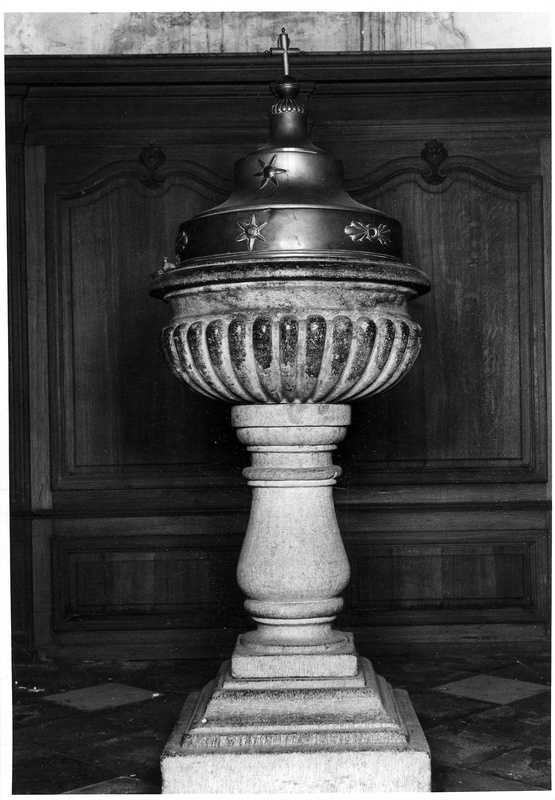
Image copyright © KIK-IRPA, Brussels (Belgium), 2026
CC-BY-4.0
Results: 3 records
view of font and cover
Copyright Statement: Image copyright © KIK-IRPA, Brussels (Belgium), 2026
Image Source: digital image of a 1975 B&W photograph [cliché M231391] by IRPA
Copyright Instructions: CC-BY-4.0
design element - patterns - gadrooned
Scene Description: all around
Copyright Statement: Image copyright © KIK-IRPA, Brussels (Belgium), 2026
Image Source: digital image of a 1975 B&W photograph [cliché M231391] by IRPA
Copyright Instructions: CC-BY-4.0
view of context
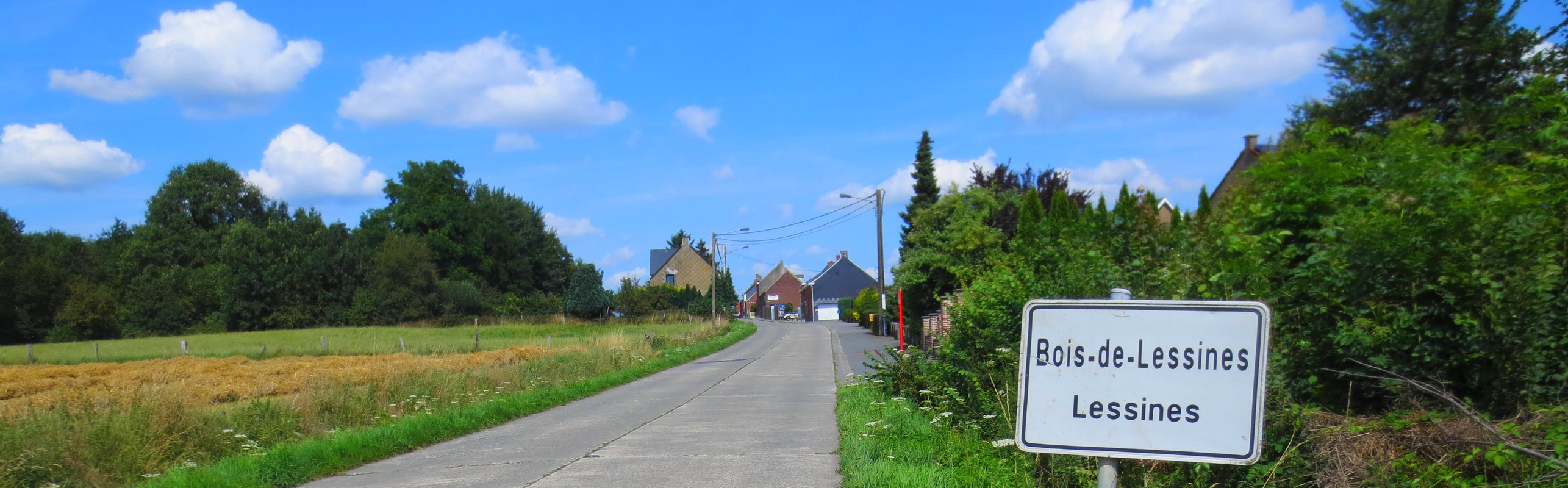
Copyright Statement: Image copyright © Herpoel, 2014
Image Source: digital photograph 5 August 2014 by Herpoel
Copyright Instructions: CC-BY-SA-4.0
INFORMATION
Font ID: 26331NBX
Object Type: Baptismal Font1
Font Century and Period/Style: 16th century (early?), Baroque
Workshop/Group/Artisan: Hainaut type font
Cognate Fonts: [cf. FontNotes]
Church / Chapel Name: Eglise Saints-Gervais et Protais à Bois-de-Lessines
Church Patron Saint(s): St. Gervasius & Protasius
Church Notes: [cf. FontNotes]
Church Address: Pl. de Bois-de-Lessines 12, 7866 Lessines, Belgium -- Tel.: +32 474 06 04 13
Site Location: Hainaut / Henegouwen, Wallonie / Wallonne, Belgium, Europe
Directions to Site: Located off (N) of Hwy E429, in the municipality and 5 km SE of Lessines
Ecclesiastic Region: Diocèse de Tournai / Bisdom Doornik
Additional Comments: disappeared font? (the one from the late-Medieval church here)
Town/City Wikipedia: https://fr.wikipedia.org/wiki/Bois-de-Lessines
Font Notes:
Click to view
Baptismal font of stone listed and illustrated in BALaT KIK-IRPA [https://balat.kikirpa.be/object/10039012] [accessed 22 April 2026]: "fonts baptismaux [...] pierre [...] Date: 1601 - 1700 [...] inscription, gravé, sur la cuve: NP PM PI PDB 1722: [...] hauteur avec couvercle: 173 cm [...] couvercle en cuivre et laiton h.56; Date: 1801 - 1810".
A communication to BSI from Pol Herman (e-mail of 28 March 2026) informs: "Bois-de-Lessines, église Saints-Gervais et Protais. Flemish name : Lessenbos. 1186 Bos de Lessines, 1213 Bos de Lecines. The village's origins are undeniably linked to the clearing of the woods around the town of Lessines. From 1252 to 1266, the hospital Notre-Dame à la Rose of Lessines acquired property in the newly reclaimed fields. The castle of the local lords (the Estriverie family), that still exists, is first mentioned at the end of the 13th century. Bois-de-Lessines was one of the villages that formed part of the "terres de débats” (lands of disputes) which, from the last quarter of the 13th century onwards, were a constant source of contention between the County of Hainaut and the County of Flanders. Its location on the border between these two counties and its proximity to Lessines also meant that it suffered from the conflicts and wars in which this border region was involved from the 15th century to the mid-18th century. The parish of Bois-de-Lessines is very old and may have resulted by a division of the Lessines parish. It is believed to have been founded in the 12th century by missionaries from the metropolitan chapter of Notre-Dame de Cambrai. At that time, it possessed a chapel dedicated to Our Lady of Cambrai, built at the highest point of the village. A Gothic building succeeded this chapel on the same site as the current church. Already in 1447, it had been dedicated to Saint Gervais and Saint Protais. The current classical church was built in 1784 and possesses a bell dating from 1363. It was enlarged in 1843. The church houses the reliquary containing the relics of Saint Fidelis of Sigmaringen (https://en.wikipedia.org/wiki/Fidelis_of_Sigmaringen). The provenance of his reliquary is the lost chapel of Saint-Nicolas at Lessines, that probably dated back to the 12th century, and lay in ruins in 1762. Saint Fidèle was the object of a major pilgrimage. Baptismal records : from 1603 onwards. Typical limestone baroque font from the beginning of the 17th century. Hainaut-type. Several neighbouring churches have similar fonts. Later (?) inscription on basin : NP PM PI PDB 1722:
https://balat.kikirpa.be/object/10039012 "
A communication to BSI from Pol Herman (e-mail of 28 March 2026) informs: "Bois-de-Lessines, église Saints-Gervais et Protais. Flemish name : Lessenbos. 1186 Bos de Lessines, 1213 Bos de Lecines. The village's origins are undeniably linked to the clearing of the woods around the town of Lessines. From 1252 to 1266, the hospital Notre-Dame à la Rose of Lessines acquired property in the newly reclaimed fields. The castle of the local lords (the Estriverie family), that still exists, is first mentioned at the end of the 13th century. Bois-de-Lessines was one of the villages that formed part of the "terres de débats” (lands of disputes) which, from the last quarter of the 13th century onwards, were a constant source of contention between the County of Hainaut and the County of Flanders. Its location on the border between these two counties and its proximity to Lessines also meant that it suffered from the conflicts and wars in which this border region was involved from the 15th century to the mid-18th century. The parish of Bois-de-Lessines is very old and may have resulted by a division of the Lessines parish. It is believed to have been founded in the 12th century by missionaries from the metropolitan chapter of Notre-Dame de Cambrai. At that time, it possessed a chapel dedicated to Our Lady of Cambrai, built at the highest point of the village. A Gothic building succeeded this chapel on the same site as the current church. Already in 1447, it had been dedicated to Saint Gervais and Saint Protais. The current classical church was built in 1784 and possesses a bell dating from 1363. It was enlarged in 1843. The church houses the reliquary containing the relics of Saint Fidelis of Sigmaringen (https://en.wikipedia.org/wiki/Fidelis_of_Sigmaringen). The provenance of his reliquary is the lost chapel of Saint-Nicolas at Lessines, that probably dated back to the 12th century, and lay in ruins in 1762. Saint Fidèle was the object of a major pilgrimage. Baptismal records : from 1603 onwards. Typical limestone baroque font from the beginning of the 17th century. Hainaut-type. Several neighbouring churches have similar fonts. Later (?) inscription on basin : NP PM PI PDB 1722:
https://balat.kikirpa.be/object/10039012 "
Credit and Acknowledgements: We are grateful to Pol Herman for bringing this font to our attention and for his help documenting it
COORDINATES
Latitude & Longitude (Decimal): 50.683, 3.883
Latitude & Longitude (DMS): 50° 40′ 58.8″ N, 3° 52′ 58.8″ E
MEDIUM AND MEASUREMENTS
Material: stone, limestone
Font Shape: hemispheric (mounted)
Basin Interior Shape: round
Basin Exterior Shape: round
Font Height (less Plinth): 117 cm [calculated]*
Notes on Measurements: *[cf. FontNotes]
INSCRIPTION
Inscription Language: Initials and numbers
Inscription Text: "NP PM PI PDB 1722:"
Inscription Notes: [cf. FontNotes]
Inscription Source: [cf. FontNotes]
LID INFORMATION
Date: 19th century
Material: brass? and/or copper?
Notes: [cf. FontNotes]
REFERENCES
- KIK-IRPA, BALaT KIK-IRPA, 2024. URL: https://balat.kikirpa.be/.