Bioul No. 1 / Biou / Bioulx / Biuel / Biulum / Bivel / Biwel / Buiscueles / Byoet / Byout
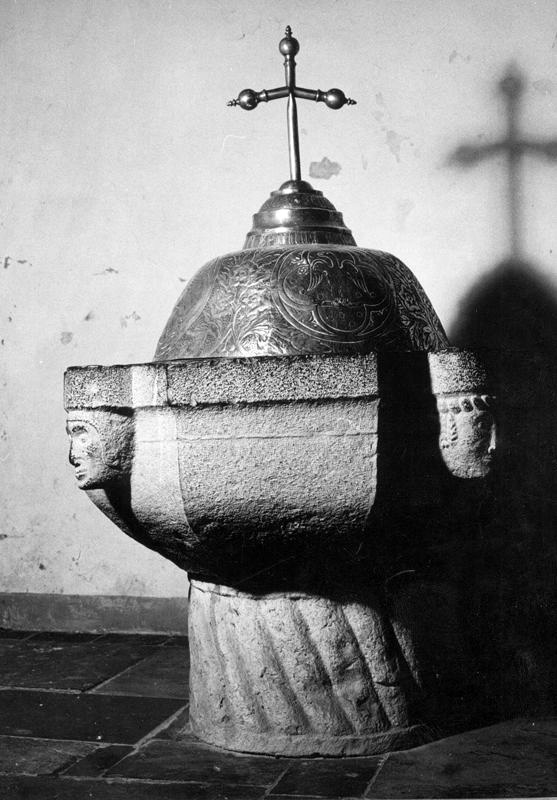
Image copyright © KIK-IRPA, Brussels (Belgium), 2026
CC-BY-4.0
Results: 5 records
view of font and cover
Copyright Statement: Image copyright © KIK-IRPA, Brussels (Belgium), 2026
Image Source: digital image of a 1972 B&W photograph [cliché M097442] by Renson, Jean-Pierre, IRPA
Copyright Instructions: CC-BY-4.0
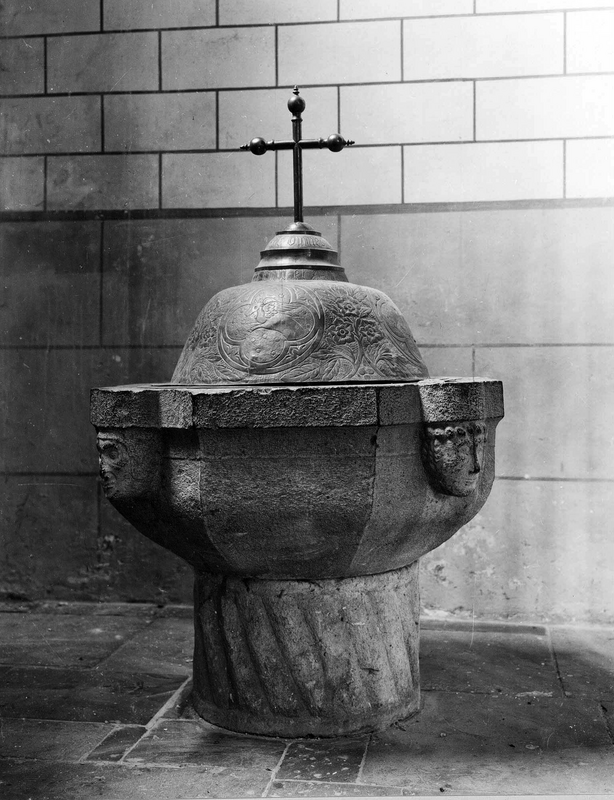
view of font and cover
Copyright Statement: Image copyright © KIK-IRPA, Brussels (Belgium), 2026
Image Source: digital image of a 1943 B&W photograph [cliché B023767] by the Commissariat général à la Restauration du Pays
Copyright Instructions: CC-BY-4.0
human figure - head - 4
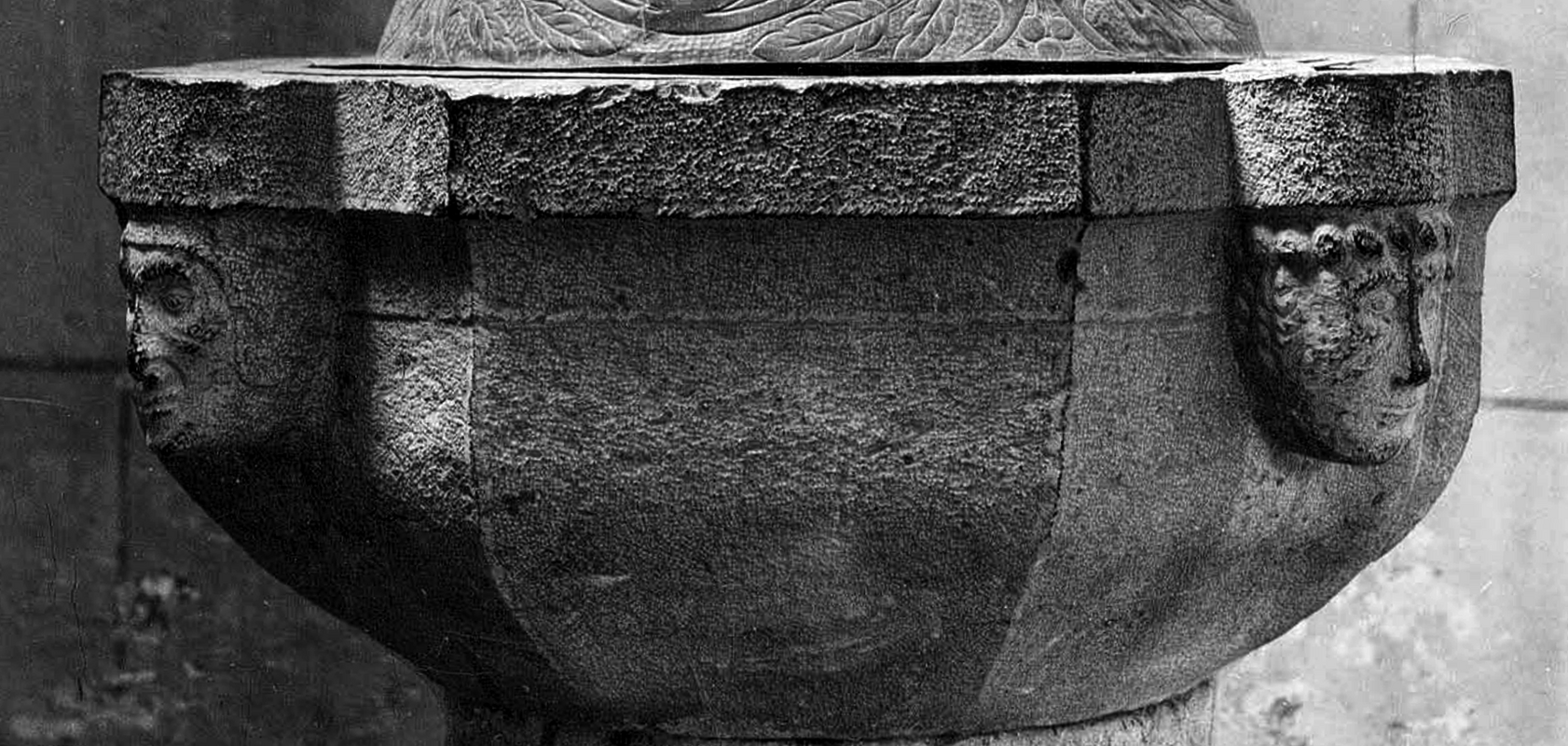
Scene Description: Two of them visible here, each one distinct
Copyright Statement: Image copyright © KIK-IRPA, Brussels (Belgium), 2026
Image Source: edited detail of a digital image of a 1972 B&W photograph [cliché M097442] by Renson, Jean-Pierre, IRPA
Copyright Instructions: CC-BY-4.0
view of church exterior - south view
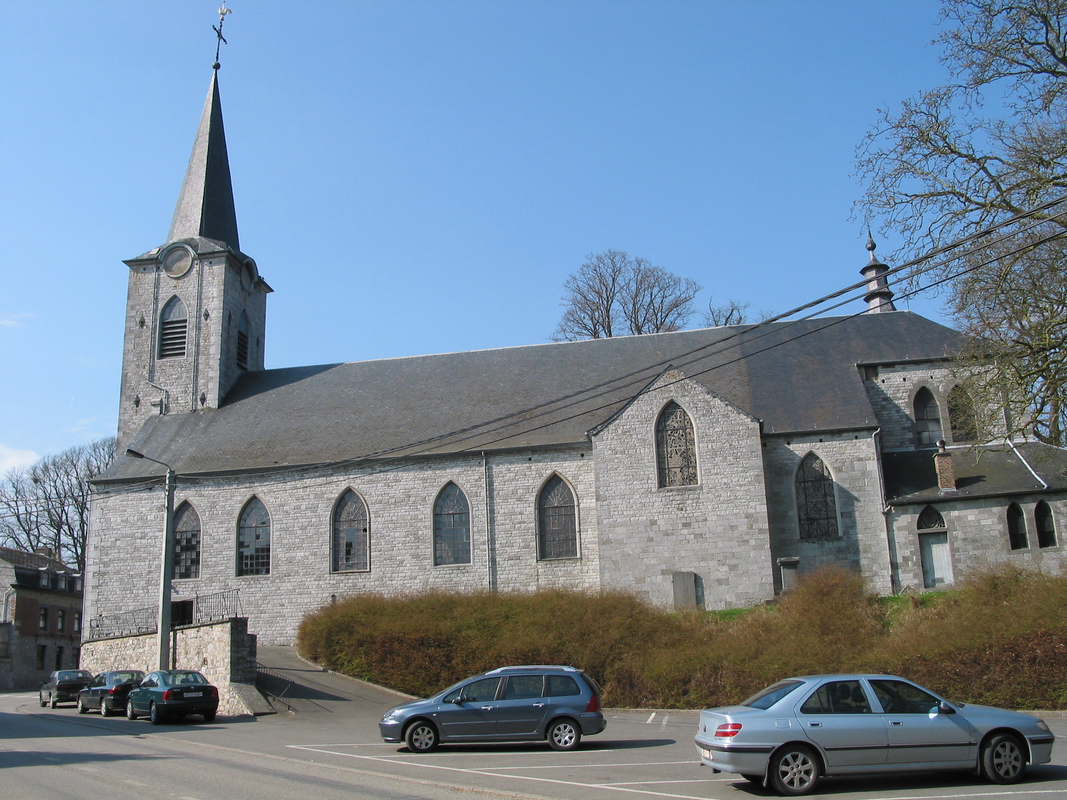
Scene Description: "Bioul (Belgique), l'église Saint-Barthélemy / Bioul (Belgium), the St. Bartholomew church / Biou (Bèljike), l'èglîje Sint-Biètrumé."
Copyright Statement: Image copyright © Jean-Pol Grandmont, 2005
Image Source: digital photograph 3 April 2005 by Jean-Pol Grandmont
Copyright Instructions: GFDL
view of font cover
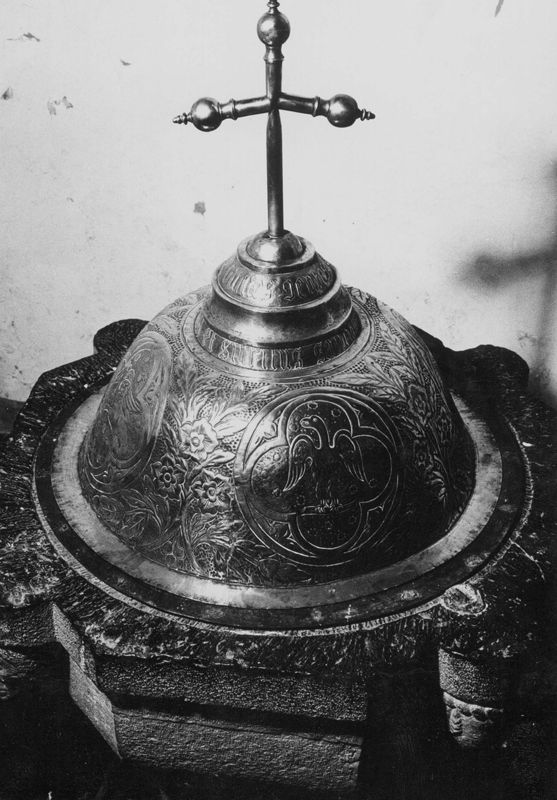
Copyright Statement: Image copyright © KIK-IRPA, Brussels (Belgium), 2026
Image Source: digital image of a 1972 B&W photograph [cliché M097443] by Renson, Jean-Pierre, IRPA
Copyright Instructions: CC-BY-4.0
INFORMATION
Font ID: 26283EWY
Object Type: Baptismal Font1
Font Century and Period/Style: 13th century [base only] [composite font], composite font
Church / Chapel Name: Eglise paroissiale Saint-Barthélémy de Bioul
Church Patron Saint(s): St. Bartholomew
Church Notes: present church mid-19thC [cf. FontNotes]
Church Address: Rue de Rouillon 7, 5537 Anhée, Belgium
Site Location: Namur, Wallonie / Wallonne, Belgium, Europe
Directions to Site: Located off the N932, in the municipality of Anhée, about 15 km SSW of Namur
Ecclesiastic Region: Diocèse de Namur
Additional Comments: composite font? [cf. FontNotes]
Town/City Wikipedia: https://fr.wikipedia.org/wiki/Bioul
Font Notes:
Click to view
Baptismal font listed and illustrated in BALaT KIK-IRPA [https://balat.kikirpa.be/object/10066716] [accessed 7 April 2026]: "fonts baptismaux [...] pierre [...] roman[style] [...] Date 1201-1210 [...] hauteur: 76 cm [...] têtes d'angle [...] [font cover] laiton [...] Date: 1501 - 1700".
A communication to BSI from Pol Herman (e-mail of 23 March 2026) informs: "Bioul, église Saint-Barthélémy. Buiscueles, 1219 Biulum, 1219 Biwel, Bivel, Biuel, 1238 Bioux, 1261 Byout, 1292 Byoet, Biweit, Bioulx https://www.matele.be/chateau-de-bioul-un-millenaire-entre-pierres-et-vignes
Bioul is mentioned in the 10th century. A first defensive tower was built in the 10th century, to which other buildings were added to form a square farmstead. Lords of Bioul existed before 1085. 1160: Henry, Bishop of Liège, acknowledged that the chapel of Buiscuelles, which Radulfus the Pagan had stolen, belonged to the Abbey of Saint-Médard in Soissons. The church knew several phases of construction and reconstruction. Little information exists. A Romanesque church survived until the mid-19th century. It was located next to the castle, and the first oratory was probably a private place of worship (eigenkirche). After 1379, the lords (the Jauche family) had the first defensive walls built around the estate: moats, a walled tower, thick walls, arrow slits, and machicolations. This proved fortunate, as it allowed the castle to withstand an attack by the inhabitants of Dinant in 1434, who, in their anger, instead went to plunder the village church. In 1554, the castle was burned by the troops of King Henry II of France. Of the original fortified castle, only a tower remains in the park of Bioul Castle. In the 16th century, the parish of Bioul was one of the most important in the County of Namur and encompassed Maredret, Sosoye, and Foy-Marteau. In 1487, also Annevoie and Warnant depended from Bioul. In 1846, the Church of Saint Bartholomew was rebuilt in a Neo-Gothic style. Baptismal records from 1450 exist. Systematically kept from 1584 onwards. Does the presence of an “expensive” Mosan font suggest the involvement of the lords of the local castle in the decoration of the church?
Baptismal font: Date by KIK-IRPA : 1201-1210. This could only be true for the column, of which the spiral fluting resembles some 12th century Romanesque fonts. The design of the basin, and of the four heads, is early gothic. Comparing with similar fonts, I would suggest around the year 1500, p.e. late 15th c. https://balat.kikirpa.be/object/10066716
Stoup: The rim of the basin carries the inscription : ce present benoitier a donné simon le bricteur l'an 1565. This could be a bricklayer who was involved in construction works. The column and the base do not seem original to me. I also have the impression that the lower part of the basis has been resculpted. https://balat.kikirpa.be/object/10066714".
A communication to BSI from Pol Herman (e-mail of 23 March 2026) informs: "Bioul, église Saint-Barthélémy. Buiscueles, 1219 Biulum, 1219 Biwel, Bivel, Biuel, 1238 Bioux, 1261 Byout, 1292 Byoet, Biweit, Bioulx https://www.matele.be/chateau-de-bioul-un-millenaire-entre-pierres-et-vignes
Bioul is mentioned in the 10th century. A first defensive tower was built in the 10th century, to which other buildings were added to form a square farmstead. Lords of Bioul existed before 1085. 1160: Henry, Bishop of Liège, acknowledged that the chapel of Buiscuelles, which Radulfus the Pagan had stolen, belonged to the Abbey of Saint-Médard in Soissons. The church knew several phases of construction and reconstruction. Little information exists. A Romanesque church survived until the mid-19th century. It was located next to the castle, and the first oratory was probably a private place of worship (eigenkirche). After 1379, the lords (the Jauche family) had the first defensive walls built around the estate: moats, a walled tower, thick walls, arrow slits, and machicolations. This proved fortunate, as it allowed the castle to withstand an attack by the inhabitants of Dinant in 1434, who, in their anger, instead went to plunder the village church. In 1554, the castle was burned by the troops of King Henry II of France. Of the original fortified castle, only a tower remains in the park of Bioul Castle. In the 16th century, the parish of Bioul was one of the most important in the County of Namur and encompassed Maredret, Sosoye, and Foy-Marteau. In 1487, also Annevoie and Warnant depended from Bioul. In 1846, the Church of Saint Bartholomew was rebuilt in a Neo-Gothic style. Baptismal records from 1450 exist. Systematically kept from 1584 onwards. Does the presence of an “expensive” Mosan font suggest the involvement of the lords of the local castle in the decoration of the church?
Baptismal font: Date by KIK-IRPA : 1201-1210. This could only be true for the column, of which the spiral fluting resembles some 12th century Romanesque fonts. The design of the basin, and of the four heads, is early gothic. Comparing with similar fonts, I would suggest around the year 1500, p.e. late 15th c. https://balat.kikirpa.be/object/10066716
Stoup: The rim of the basin carries the inscription : ce present benoitier a donné simon le bricteur l'an 1565. This could be a bricklayer who was involved in construction works. The column and the base do not seem original to me. I also have the impression that the lower part of the basis has been resculpted. https://balat.kikirpa.be/object/10066714".
Credit and Acknowledgements: We are grateful to Pol Herman for bringing this font to our attention and for his help documenting it
COORDINATES
UTM: 31U 627947 5577213
Latitude & Longitude (Decimal): 50.3331, 4.7978
Latitude & Longitude (DMS): 50° 19′ 59.16″ N, 4° 47′ 52.08″ E
MEDIUM AND MEASUREMENTS
Material: stone, limestone
Font Shape: octagonal (mounted)
Basin Interior Shape: round
Basin Exterior Shape: octagonal
Font Height (less Plinth): 76 cm*
Notes on Measurements: * [cf. FontNotes]
LID INFORMATION
Date: 16th-17th century?
Material: brass
Notes: dome-shaped with Latin-cross finial
REFERENCES
- KIK-IRPA, BALaT KIK-IRPA, 2024. URL: https://balat.kikirpa.be/.