Antwerp No. 5 / Amberes / Antwerpen / Anvers
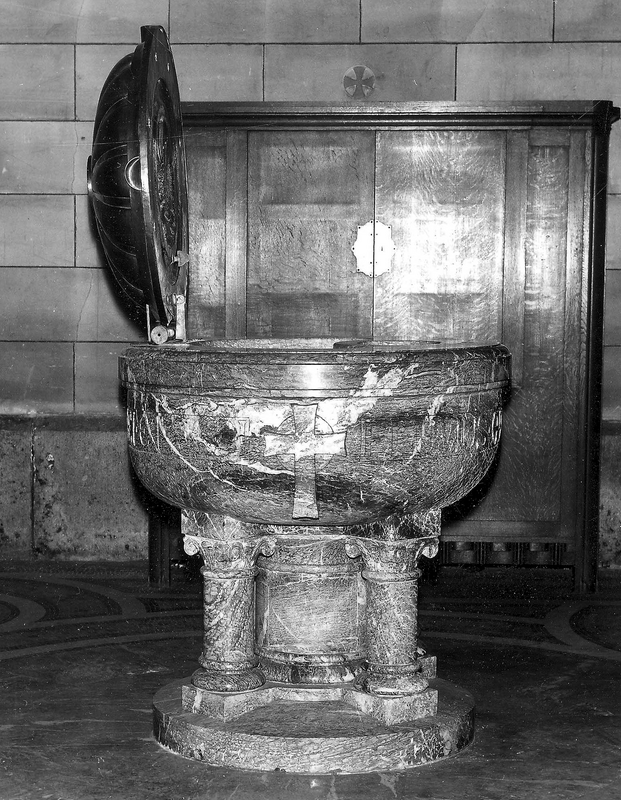
Image copyright © KIK-IRPA, Brussels (Belgium), 2026
CC-BY-4.0
Results: 4 records
view of font and cover
Scene Description: "Date: 1897 (ca) - 1897 (ca)"
Copyright Statement: Image copyright © KIK-IRPA, Brussels (Belgium), 2026
Image Source: digital image of a 1974 B&W photograph [cliché M087954] by Aerts, Paul, KIK
Copyright Instructions: CC-BY-4.0
view of church exterior in context - southwest end
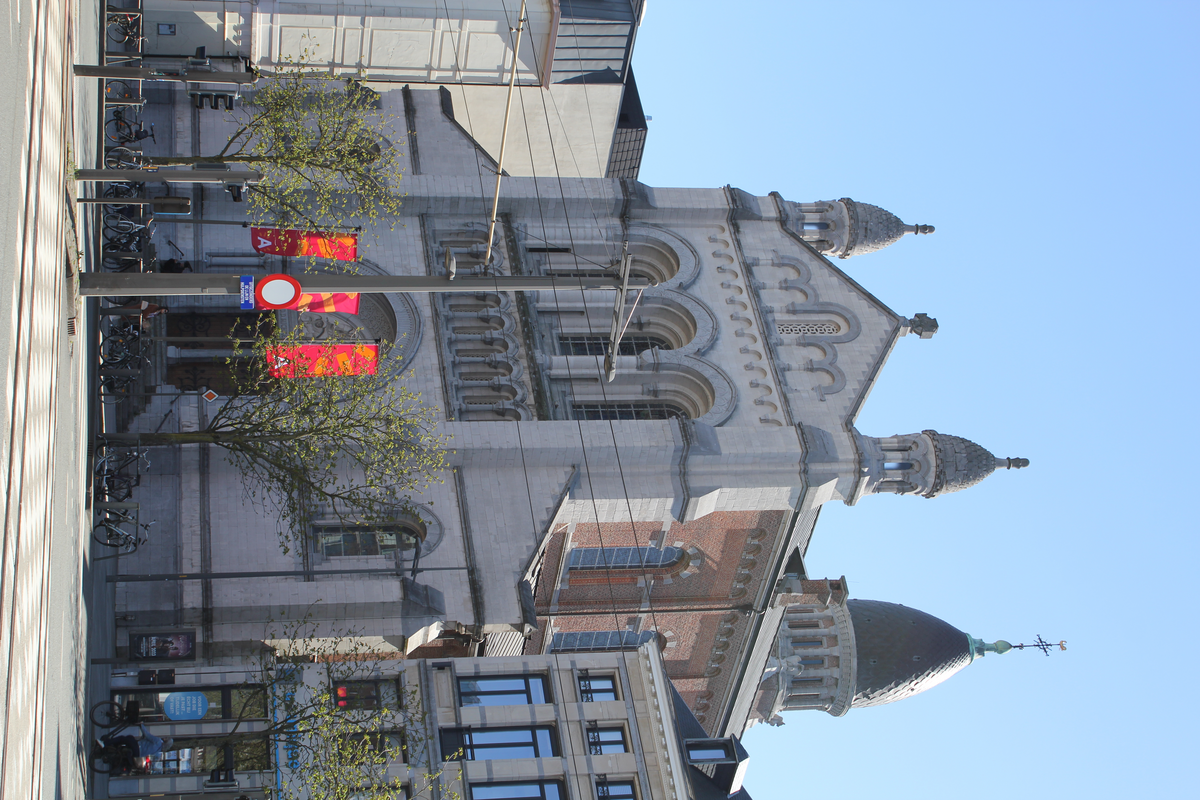
Scene Description: "Sint-Michiel-en-Sint-Petruskerk Amerikalei Antwerpen"
Copyright Statement: Image copyright © TheGoodEndedHappily, 2023
Image Source: digital photograph 3 April 2023 by TheGoodEndedHappily
Copyright Instructions: CC-BY-SA-4.0
view of font and cover in context
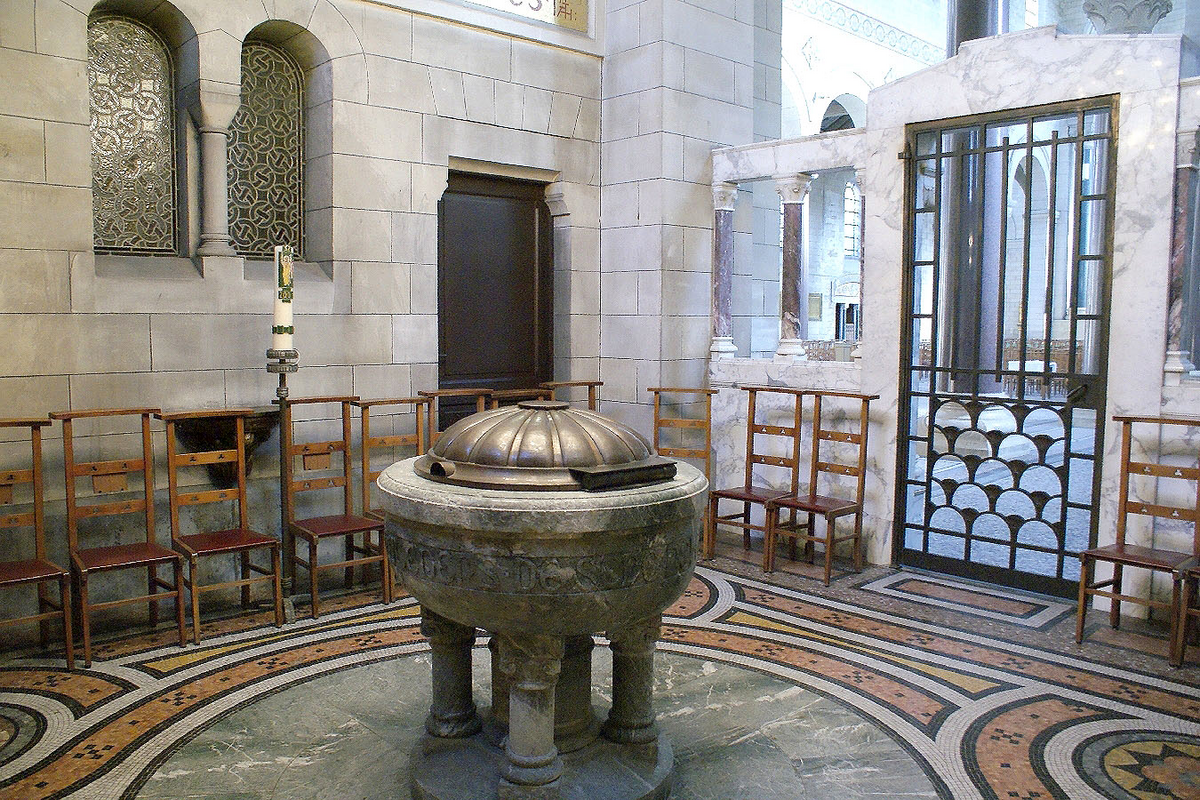
Scene Description: "Parochiekerk Sint-Michaël en Sint-Petrus - Antwerpen - Doopvont"
Copyright Statement: Image copyright © IDD5000, 2011
Image Source: digital photograph 22 September 2011 by IDD5000
Copyright Instructions: CC-BY-SA-3.0
view of church interior - chancel and east end
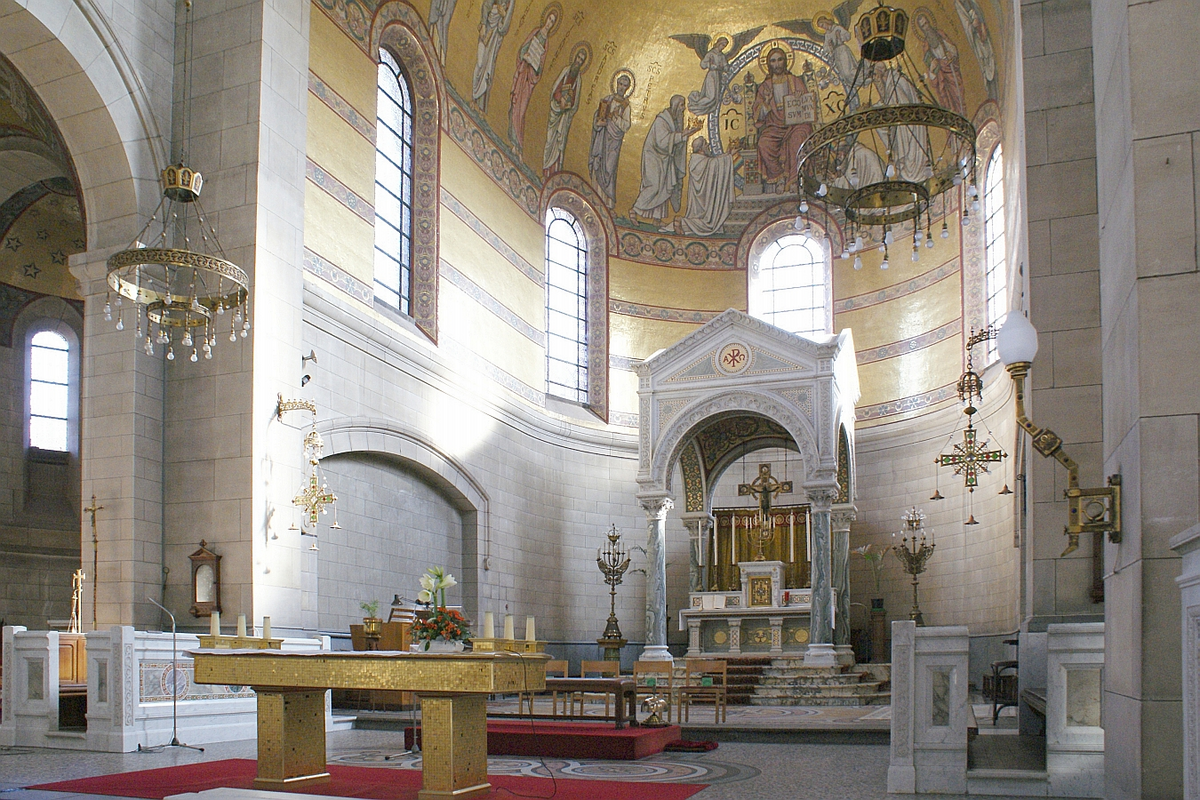
Scene Description: "Parochiekerk Sint-Michaël en Sint-Petrus - Antwerpen - Hoogkoor"
Copyright Statement: Image copyright © IDD5000, 2011
Image Source: digital photograph 22 September 2011 by IDD5000
Copyright Instructions: CC-BY-SA-3.0
INFORMATION
Font ID: 26193UIX
Object Type: Baptismal Font1
Font Century and Period/Style: 12th - 15th century (?)
Church / Chapel Name: Parochiekerk Sint-Michiel (en St.-Pieter) / Sint-Michiel-en-Sint-Petruskerk / Eglise paroissiale Saint-Michel
Font Location in Church: disappeared?
Church Wikidata: https://nl.wikipedia.org/wiki/Sint-Michiel-en-Sint-Petruskerk
Church Patron Saint(s): St. Michael
Other Dedications: St. Peter
Church Notes: [cf. FontNotes]
Church Address: Amerikalei 165/165 A, 2000 Antwerpen, Belgium
Site Location: Antwerp, Wallonie / Wallonne, Belgium, Europe
Directions to Site: Located on the border of the Zuid-Museum and Brederode neighbourhoods
Ecclesiastic Region: Antwerp
Additional Comments: disappeared font(s)? (the one(s) from the medieval church(es) here [cf. FontNotes])
Font Notes:
Click to view
The present font is modern, 19th-century; listed and illustrated in BALaT KIK-IRPA [https://balat.kikirpa.be/object/87286] [accessed 5 March 2026].
A communication to BSI from Pol Herman (e-mail of 7 November 2025) informs: "Antwerpen, Sint-Michielskerk, later Sint-Michielsabdij. The church apparently took over the parish rights in Antwerp after the previous St. Peter and Paul Church was destroyed by the Vikings. In 1219, having become an abbey church, these rights had to be ceded to the Church of Our Lady. The abbey has disappeared, as have any baptismal fonts.
A 1699 etching by Hendrik Causé, based on a drawing by Jacques van Croes, appears to show a Baroque baptismal font, but it could also be a stoup. https://nl.wikipedia.org/wiki/Sint-Michielsabdij_(Antwerpen). The first parish church of Antwerp, Saints-Peter-and-Paul, was probably destroyed by the Vikings. The Abbey of Echternach replaced it before 1096 with a new church, with the Archangel Michael as its patron saint. According to conventional historiography, the new church was founded on the hill where the old church stood. A secular chapter of 12 canons was associated with this then only Antwerp parish church. The chapter followed the monastic rule of Chrodegang (712-766). The castle chapel of the castle “Steen” was also served by this chapter. Because discipline was lacking, and to combat Tanchelm's anti-sacerdotalism, Saint Norbertus reformed the chapter in 1122. This was at the request of Bishop Burchard of Cambrai and of Hidophus, provost of the chapter. Norbert brought twelve followers from France with him, including Evermodus, later bishop of Ratzburg, Hendrik, later first abbot of Tongerlo, Walterus, the future abbot of Middelburg, and Waltmannus. Eight canons were dissatisfied with the new strict rule of life and moved to the Chapel of Our Lady on the “Staeksken” (the stick), which later developed into a church and, in 1559, into the current cathedral. The remaining four, together with the twelve companions of Norbert, formed a regular chapter around St. Michael's Church: a Norbertine monastic community, officially called Premonstratensians. Waltmannus was appointed superior of the new monastery by Norbert in 1123.
The letter of endowment by the provost and his chapter dates from 1124, and in that same year the bishop approved the foundation. The church was ceded, as were the cemetery chapels of St. Martin, St. Peter, and St. Magdalene. The community only truly began to develop when Pope Honorius II confirmed the foundation in 1126. Later, it turned into an abbey. The abbey's history reveals that it retained parochial rights after its foundation in 1124. After its transformation into an abbey, the Church of Our Lady took over as parish church. In 1219, under the rule of Abbot Arnoul d'Erpse, Saint-Michel was forced to relinquish these rights. Exactly what these rights were is unclear, but it could mean that the abbey also held the right to baptize until 1219. In 1235, Duke Henry granted permission to enclose the monastery with walls. This suggests that the abbey buildings had been unprotected until then. The tower collapsed during mass in 1241. A new abbey was built in the thirteenth century, the first phase of construction toke place under Abbot Gerardus de Lyra (1244-1258). It was further enlarged in 1400 by Abbot Petrus Breem. In 1527, a fire broke out in the tower due to the carelessness of plumbers, who had lit a fire on the church roof. The tower had to be rebuilt, and the church repaired. The religious unrest of the 16th century and the Spanish Fury in 1576 caused severe damage to the abbey. The French revolutionary regime in 1796 brought the abbey to an end. It was largely razed to the ground. Storerooms, workshops, and offices were set up in the church and abbey buildings spared from destruction. The abbey tower was equipped with a semaphore in 1807. After the fall of Napoleon, the former abbey became a depot for the Dutch military authorities that occupied Antwerp. On October 27, 1830, the Dutch commander David Hendrik Chassé set up his artillery there, but a major fire broke out due to burning ammunition and destroyed the last remnants. Archaeological research rediscovered the remains of the abbey in 2021 and 2022. The finds date primarily from the 13th and 14th centuries."
A communication to BSI from Pol Herman (e-mail of 7 November 2025) informs: "Antwerpen, Sint-Michielskerk, later Sint-Michielsabdij. The church apparently took over the parish rights in Antwerp after the previous St. Peter and Paul Church was destroyed by the Vikings. In 1219, having become an abbey church, these rights had to be ceded to the Church of Our Lady. The abbey has disappeared, as have any baptismal fonts.
A 1699 etching by Hendrik Causé, based on a drawing by Jacques van Croes, appears to show a Baroque baptismal font, but it could also be a stoup. https://nl.wikipedia.org/wiki/Sint-Michielsabdij_(Antwerpen). The first parish church of Antwerp, Saints-Peter-and-Paul, was probably destroyed by the Vikings. The Abbey of Echternach replaced it before 1096 with a new church, with the Archangel Michael as its patron saint. According to conventional historiography, the new church was founded on the hill where the old church stood. A secular chapter of 12 canons was associated with this then only Antwerp parish church. The chapter followed the monastic rule of Chrodegang (712-766). The castle chapel of the castle “Steen” was also served by this chapter. Because discipline was lacking, and to combat Tanchelm's anti-sacerdotalism, Saint Norbertus reformed the chapter in 1122. This was at the request of Bishop Burchard of Cambrai and of Hidophus, provost of the chapter. Norbert brought twelve followers from France with him, including Evermodus, later bishop of Ratzburg, Hendrik, later first abbot of Tongerlo, Walterus, the future abbot of Middelburg, and Waltmannus. Eight canons were dissatisfied with the new strict rule of life and moved to the Chapel of Our Lady on the “Staeksken” (the stick), which later developed into a church and, in 1559, into the current cathedral. The remaining four, together with the twelve companions of Norbert, formed a regular chapter around St. Michael's Church: a Norbertine monastic community, officially called Premonstratensians. Waltmannus was appointed superior of the new monastery by Norbert in 1123.
The letter of endowment by the provost and his chapter dates from 1124, and in that same year the bishop approved the foundation. The church was ceded, as were the cemetery chapels of St. Martin, St. Peter, and St. Magdalene. The community only truly began to develop when Pope Honorius II confirmed the foundation in 1126. Later, it turned into an abbey. The abbey's history reveals that it retained parochial rights after its foundation in 1124. After its transformation into an abbey, the Church of Our Lady took over as parish church. In 1219, under the rule of Abbot Arnoul d'Erpse, Saint-Michel was forced to relinquish these rights. Exactly what these rights were is unclear, but it could mean that the abbey also held the right to baptize until 1219. In 1235, Duke Henry granted permission to enclose the monastery with walls. This suggests that the abbey buildings had been unprotected until then. The tower collapsed during mass in 1241. A new abbey was built in the thirteenth century, the first phase of construction toke place under Abbot Gerardus de Lyra (1244-1258). It was further enlarged in 1400 by Abbot Petrus Breem. In 1527, a fire broke out in the tower due to the carelessness of plumbers, who had lit a fire on the church roof. The tower had to be rebuilt, and the church repaired. The religious unrest of the 16th century and the Spanish Fury in 1576 caused severe damage to the abbey. The French revolutionary regime in 1796 brought the abbey to an end. It was largely razed to the ground. Storerooms, workshops, and offices were set up in the church and abbey buildings spared from destruction. The abbey tower was equipped with a semaphore in 1807. After the fall of Napoleon, the former abbey became a depot for the Dutch military authorities that occupied Antwerp. On October 27, 1830, the Dutch commander David Hendrik Chassé set up his artillery there, but a major fire broke out due to burning ammunition and destroyed the last remnants. Archaeological research rediscovered the remains of the abbey in 2021 and 2022. The finds date primarily from the 13th and 14th centuries."
Credit and Acknowledgements: We are grateful to Pol Herman for bringing this font to our attention and for his help documenting it
COORDINATES
UTM: 31U 597470 5673727
Latitude & Longitude (Decimal): 51.206614, 4.395292
Latitude & Longitude (DMS): 51° 12′ 23.81″ N, 4° 23′ 43.05″ E
REFERENCES
- KIK-IRPA, BALaT KIK-IRPA, 2024. URL: https://balat.kikirpa.be/.