Antwerp No. 4 / Amberes / Antwerpen / Anvers
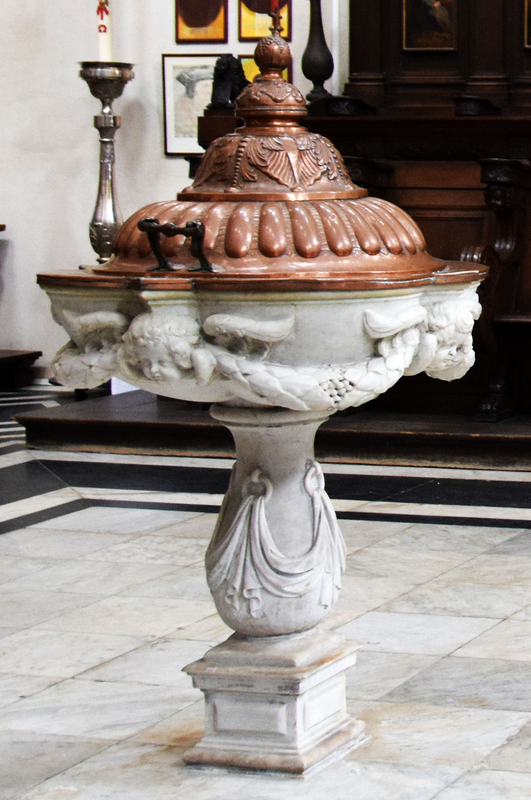
Image copyright © Jean Housen, 2021
CC-BY-SA-4.0
Results: 4 records
view of font and cover
Copyright Statement: Image copyright © Jean Housen, 2021
Image Source: edited detail of a digital photograph 26 June 2021 by Jean Housen
Copyright Instructions: CC-BY-SA-4.0
view of font and cover
![the former 19thC stoup converted to a font [cf. FontNotes]](/static-50478a99ec6f36a15d6234548c59f63da52304e5/compressed/1260305014_compressed.png)
Scene Description: the former 19thC stoup converted to a font [cf. FontNotes]
Copyright Statement: Image copyright © KIK-IRPA, Brussels (Belgium), 2026
Image Source: digital image of a 1942 B&W photograph [ cliché B029880] by the Commissariaat Generaal voor 's Lands Wederopbouw
Copyright Instructions: CC-BY-4.0
view of church exterior - southeast view - detail
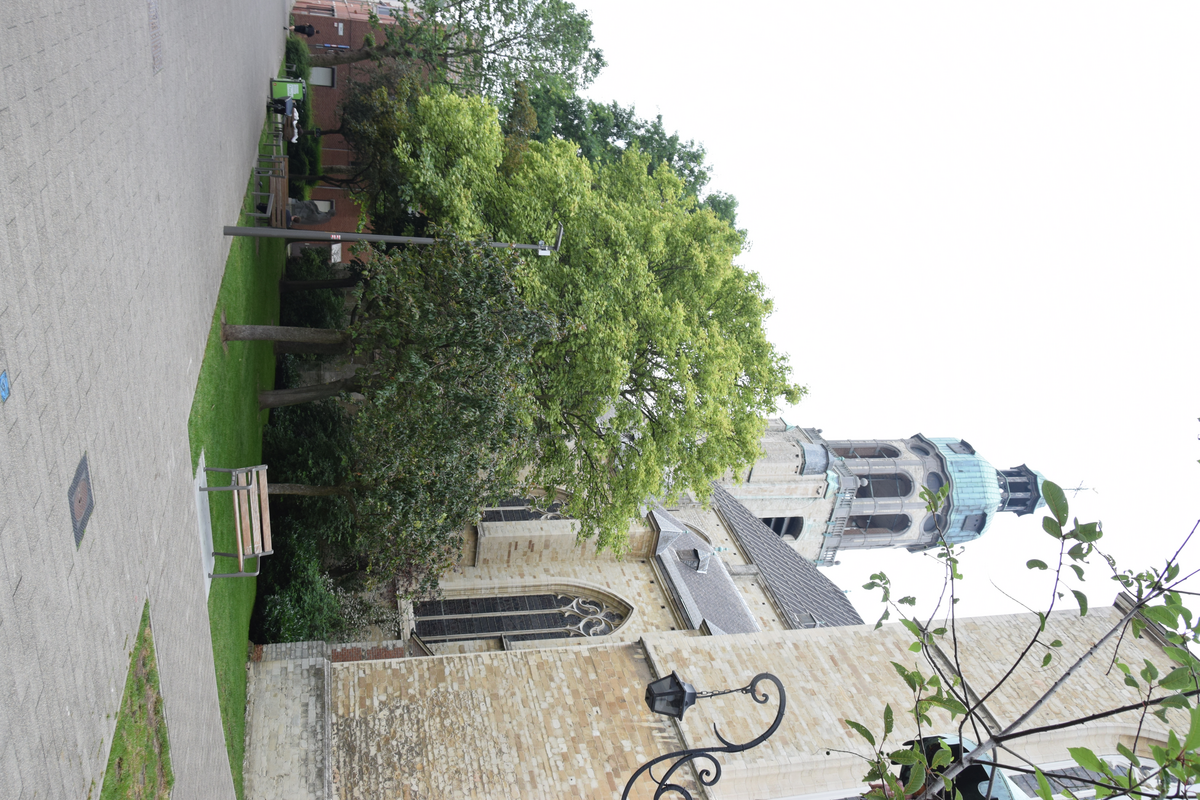
Scene Description: "Vue d'Anvers le samedi 26 juin 2021"
Copyright Statement: Image copyright © Jean Housen, 2021
Image Source: digital photograph 26 June 2021 by Jean Housen
Copyright Instructions: CC-BY-SA-4.0
view of font and cover in context
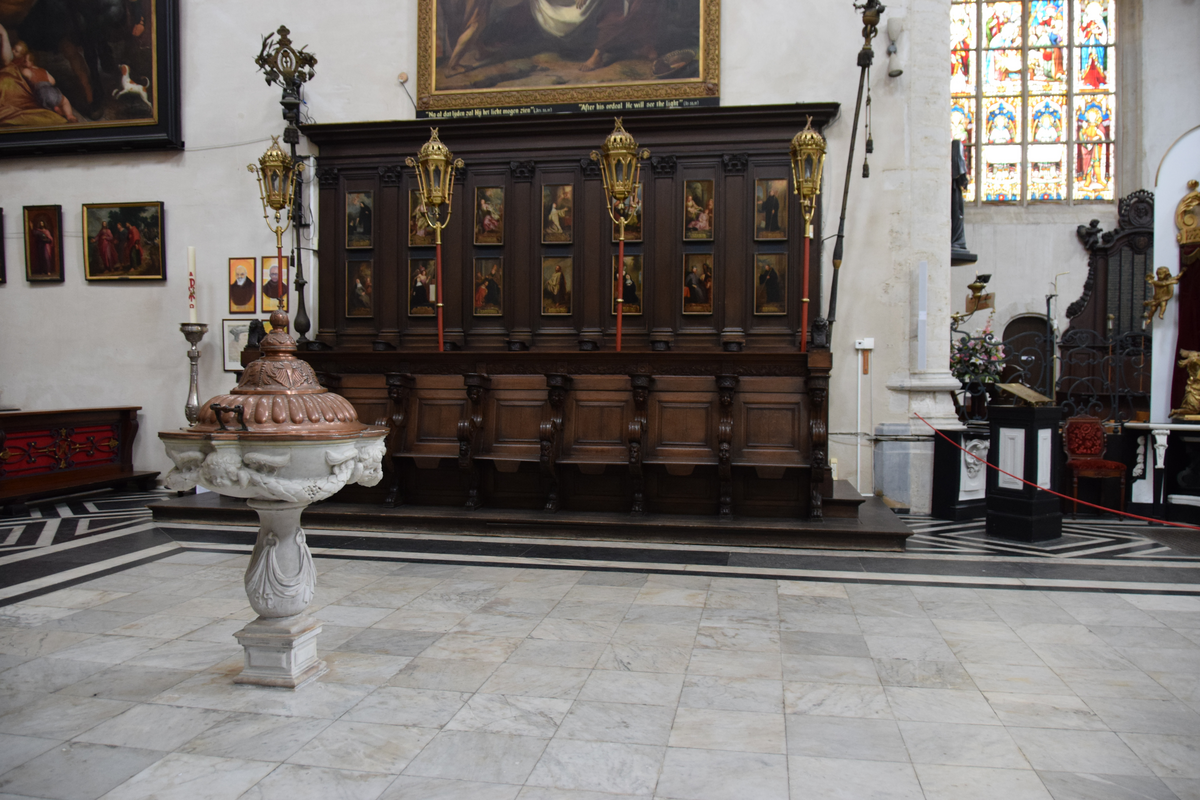
Scene Description: "Vue de l'église Saint-André à Anvers."
Copyright Statement: Image copyright © Jean Housen, 2021
Image Source: digital photograph 26 June 2021 by Jean Housen
Copyright Instructions: CC-BY-SA-4.0
INFORMATION
Font ID: 26192HPY
Object Type: Baptismal Font1
Font Date: 1620
Font Century and Period/Style: 17th century (early)
Church / Chapel Name: Sint-Andrieskerk / Eglise Saint-André à Anvers.
Church Wikidata: https://en.wikipedia.org/wiki/St._Andrew's_Church,_Antwerp
Church Patron Saint(s): St. Andrew
Church Notes: church built 16thC
Church Address: Waaistraat, 2000 Antwerpen, Belgium -- Tel.: +32 3 232 03 84
Site Location: Antwerp, Wallonie / Wallonne, Belgium, Europe
Directions to Site: Located in the Sint-Andries quarter of Antwerp
Additional Comments: present font was converted from a stoup [cf. FontNotes] -- disappeared font? (the one from 1620 [cf. FontNotes])
Town/City Wikipedia: https://en.wikipedia.org/wiki/Antwerp
Font Notes:
Click to view
Baptismal font of the early-19th century listed and illustrated in BALaT KIK-irpa [ttps://balat.kikirpa.be/object/53939] [accessed 5 March 3036]: "doopvont [...] Date: 1806 - 1806"; the same source notes that there was an earlier font dated to 1620 in this church: "Deze doopvont werd in 1806 door een heer De Wael geschonken, waarbij de doopvontkuip uit de kerk der Lieve-Vrouwe-Broeders zou gehaald zijn. Bron: Oude en nieuwe byzonderheden van S. Andries kerk te Antwerpen, door P. Visschers, priester, Ter Drukkery van P.J. Van Aarsen et C°, Beurzestraat, 1846 , pagina 11 (in het artikel is er sprake van een doopvont uit 1620, maar die wordt als “eerste doopvont” omschreven)."
A communication to BSI from Pol Herman (e-mail of 7 November 2025) informs: "
In the early 16th century, eight Augustinian observant monks from the Saxon Congregation, led by Prior Johannes van Mechelen, came to Antwerp from Enkhuizen (Netherlands). Citizens Joost Hoens and Marc Mussche donated a house and land to them. They built a chapel there, dedicated to the Holy Trinity in 1513. The Chapter of Our Lady of the cathedral resisted and initiated legal proceedings. An agreement was reached in 1514. The current St. Andrew's Church is the monastery church they began building shortly thereafter. In 1519, the Augustinians openly began to preach Lutheranism. The government dissolved the monastery and imprisoned all the brothers on October 6, 1522. With the permission of Emperor Charles V, the governor, Margaret, had the monastery demolished in early 1523. During the demolition of the monastery, the church, whose nave was completed up to the crossing, was spared. It was further completed as a parish church and consecrated to Saint Andrew on June 6, 1529. Construction of the tower began in 1541. The church was plundered during the iconoclasm of 1566. In 1755, the tower collapsed. In 1842, P. Visschers provides information about the baptismal font in “Werkjes over Verschillende Bijzonderheden van Sint-Andrieskerk te Antwerpen” (Works on Various Special Features of St. Andrew's Church in Antwerp). The first baptismal font chapel was made in 1620 by Otmaer van Ommele. With accessories, the cost was 560 guilders. In 1806, a new baptismal font chapel was built at the expense of Mr. De Wael. The marble basin of the baptismal font was originally a stoup that stood in the church of the Brothers of Our Lady. In the church inventory, following description: marble baptismal font with red copper lid, Baroque, 17th century, converted in 1806. In early 1806, the churchwardens purchased the large stoup that had previously stood in the center of the church of the Our Lady Brothers and had it converted into a baptismal font, which still remains in St. Andrew's Church. The current baptismal font is the stoup from a former monastery church, probably belonging to the Calf-Headed Carmelites, also known as the Our Lady Brothers, on the street Meir. Since its arrival in St. Andrew's Church in 1806, it has stood in the baptismal chapel at the back on the south side. In the 1880s, an average of more than a thousand newborns per year were baptized here. https://balat.kikirpa.be/object/53939".
Pol Herman [cf. supra] includes also a reference to the detailed of the object in an inventory (p. 61): "BIJLAGE 5: LIJST VAN VASTE INTERIEURELEMENTEN. De kerk werd beschermd door het Ministerieel besluit houdende bescherming als monument van de parochiekerk Sint-
Andries te Antwerpen op 25 maart 1938. Dit wil zeggen dat het gebouw beschermd werd met inbegrip van alle vaste interieurelementen. Deze lijst geeft een indicatie van de aanwezige elementen, maar is niet limitatief. Tenzij anders vermeld zijn alle foto’s en informatie in deze bijlage afkomstig uit de inventaris van de kerkfabriek [...] 3.5 DOOPVONT. Vervaardigd door: - Datering: 17de eeuw, omgebouwd in 1806 Stijl: Barok -- Beschrijving: Marmeren wijwatervat met deksel in rood koper Geschiedenis: In 't begin van 1806 hebben de kerkmeesters het groot wywatervat dat voortyds
in ’t midden van de kerk der Lieve Vrouw Broeders stond, aengekocht, en het zelven tot eene doopvont doen maken, welke nog in St. Andries kerk in we zen is. (Visschers, deel 3, p. 42) De huidige doopvont is het wijwatervat uit een voormalige kloosterkerk, waarschijnlijk van de geschoeide karmelieten, alias de onzelievevrouwebroeders, aan de Meir. Sinds haar komst naar de Sint-Andrieskerk in 1806 stond ze in de doopkapel, achteraan aan de zuidkant. In deze vont krijgen onder meer Hendrik Conscience (1812) en Lode Zielens (1901) het doopwater over zich heen.
In de jaren 1880 wordt hier aan gemiddeld meer dan duizend borelingen per jaar het heilig doopsel toegediend, 2,5 % van het inwoneraantal! Sinds de restauratie van de kerk in de jaren 1970–1975 staat de vont opgesteld in het koor, conform het Tweede Vaticaans Concilie (1962–1965), dat het accent legt op de gemeenschap waarin de dopeling in treedt. (Mannaerts, 2013) Situering: Hoogkoor Objectnr. inventaris: A0464"
A communication to BSI from Pol Herman (e-mail of 7 November 2025) informs: "
In the early 16th century, eight Augustinian observant monks from the Saxon Congregation, led by Prior Johannes van Mechelen, came to Antwerp from Enkhuizen (Netherlands). Citizens Joost Hoens and Marc Mussche donated a house and land to them. They built a chapel there, dedicated to the Holy Trinity in 1513. The Chapter of Our Lady of the cathedral resisted and initiated legal proceedings. An agreement was reached in 1514. The current St. Andrew's Church is the monastery church they began building shortly thereafter. In 1519, the Augustinians openly began to preach Lutheranism. The government dissolved the monastery and imprisoned all the brothers on October 6, 1522. With the permission of Emperor Charles V, the governor, Margaret, had the monastery demolished in early 1523. During the demolition of the monastery, the church, whose nave was completed up to the crossing, was spared. It was further completed as a parish church and consecrated to Saint Andrew on June 6, 1529. Construction of the tower began in 1541. The church was plundered during the iconoclasm of 1566. In 1755, the tower collapsed. In 1842, P. Visschers provides information about the baptismal font in “Werkjes over Verschillende Bijzonderheden van Sint-Andrieskerk te Antwerpen” (Works on Various Special Features of St. Andrew's Church in Antwerp). The first baptismal font chapel was made in 1620 by Otmaer van Ommele. With accessories, the cost was 560 guilders. In 1806, a new baptismal font chapel was built at the expense of Mr. De Wael. The marble basin of the baptismal font was originally a stoup that stood in the church of the Brothers of Our Lady. In the church inventory, following description: marble baptismal font with red copper lid, Baroque, 17th century, converted in 1806. In early 1806, the churchwardens purchased the large stoup that had previously stood in the center of the church of the Our Lady Brothers and had it converted into a baptismal font, which still remains in St. Andrew's Church. The current baptismal font is the stoup from a former monastery church, probably belonging to the Calf-Headed Carmelites, also known as the Our Lady Brothers, on the street Meir. Since its arrival in St. Andrew's Church in 1806, it has stood in the baptismal chapel at the back on the south side. In the 1880s, an average of more than a thousand newborns per year were baptized here. https://balat.kikirpa.be/object/53939".
Pol Herman [cf. supra] includes also a reference to the detailed of the object in an inventory (p. 61): "BIJLAGE 5: LIJST VAN VASTE INTERIEURELEMENTEN. De kerk werd beschermd door het Ministerieel besluit houdende bescherming als monument van de parochiekerk Sint-
Andries te Antwerpen op 25 maart 1938. Dit wil zeggen dat het gebouw beschermd werd met inbegrip van alle vaste interieurelementen. Deze lijst geeft een indicatie van de aanwezige elementen, maar is niet limitatief. Tenzij anders vermeld zijn alle foto’s en informatie in deze bijlage afkomstig uit de inventaris van de kerkfabriek [...] 3.5 DOOPVONT. Vervaardigd door: - Datering: 17de eeuw, omgebouwd in 1806 Stijl: Barok -- Beschrijving: Marmeren wijwatervat met deksel in rood koper Geschiedenis: In 't begin van 1806 hebben de kerkmeesters het groot wywatervat dat voortyds
in ’t midden van de kerk der Lieve Vrouw Broeders stond, aengekocht, en het zelven tot eene doopvont doen maken, welke nog in St. Andries kerk in we zen is. (Visschers, deel 3, p. 42) De huidige doopvont is het wijwatervat uit een voormalige kloosterkerk, waarschijnlijk van de geschoeide karmelieten, alias de onzelievevrouwebroeders, aan de Meir. Sinds haar komst naar de Sint-Andrieskerk in 1806 stond ze in de doopkapel, achteraan aan de zuidkant. In deze vont krijgen onder meer Hendrik Conscience (1812) en Lode Zielens (1901) het doopwater over zich heen.
In de jaren 1880 wordt hier aan gemiddeld meer dan duizend borelingen per jaar het heilig doopsel toegediend, 2,5 % van het inwoneraantal! Sinds de restauratie van de kerk in de jaren 1970–1975 staat de vont opgesteld in het koor, conform het Tweede Vaticaans Concilie (1962–1965), dat het accent legt op de gemeenschap waarin de dopeling in treedt. (Mannaerts, 2013) Situering: Hoogkoor Objectnr. inventaris: A0464"
Credit and Acknowledgements: We are grateful to Pol Herman for bringing this font to our attention and for his help documenting it
COORDINATES
UTM: 31U 597636 5674829
Latitude & Longitude (Decimal): 51.216495, 4.39797
Latitude & Longitude (DMS): 51° 12′ 59.38″ N, 4° 23′ 52.69″ E
REFERENCES
- KIK-IRPA, BALaT KIK-IRPA, 2024. URL: https://balat.kikirpa.be/.