Petit Hallet / Adence / Audince / Cleyne Haleir / Halectum Parvum / Hallai minoris / Hallei parvo / Hallei le Petit / Halleij / Klein-Halleer / Ptit-Halet
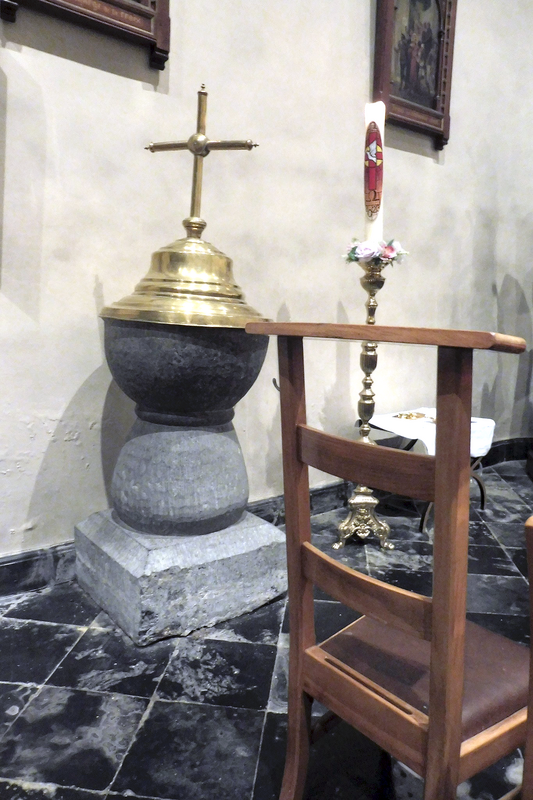
Image copyright © Les Murs de Pierre, 2026
Standing permission
Results: 5 records
view of font and cover
Copyright Statement: Image copyright © Les Murs de Pierre, 2026
Image Source: digital photograph by Les Murs de Pierre
Copyright Instructions: Standing permission
view of font
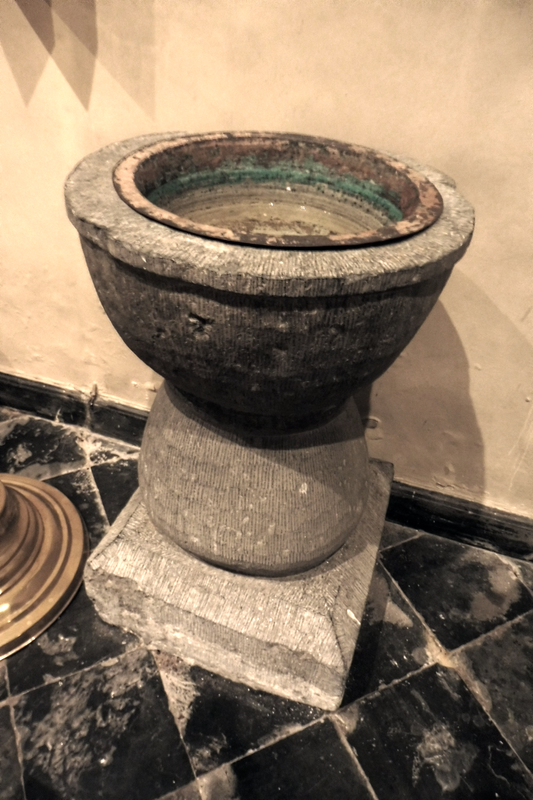
Scene Description: showing the metal basin insert -- the font cover is partailly visible on the ground, to the left
Copyright Statement: Image copyright © Les Murs de Pierre, 2026
Image Source: digital photograph by Les Murs de Pierre
Copyright Instructions: Standing permission
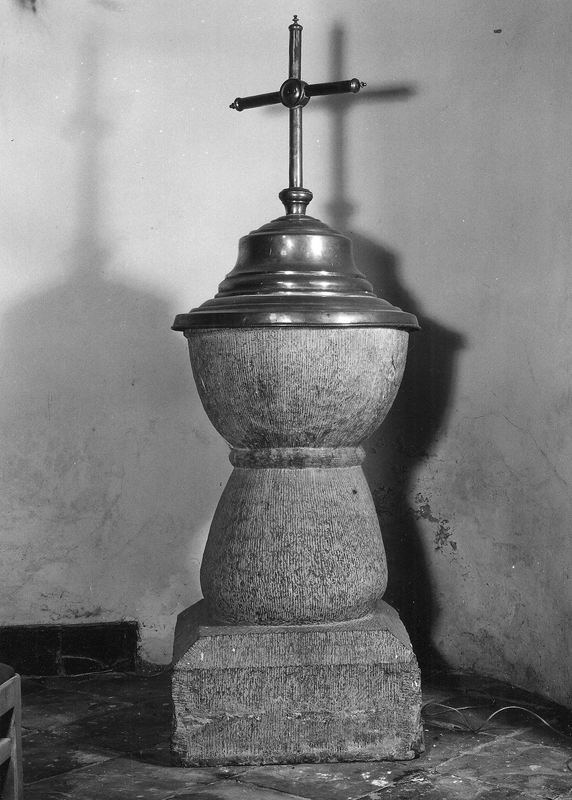
view of font and cover
Copyright Statement: Image copyright © KIK-IRPA, Brussels (Belgium), 2026
Image Source: digital image of a 1970 B&W photograph [cliché M055426] by Mahaux, Charles, IRPA
Copyright Instructions: CC-BY-4.0
view of church exterior - northwest view
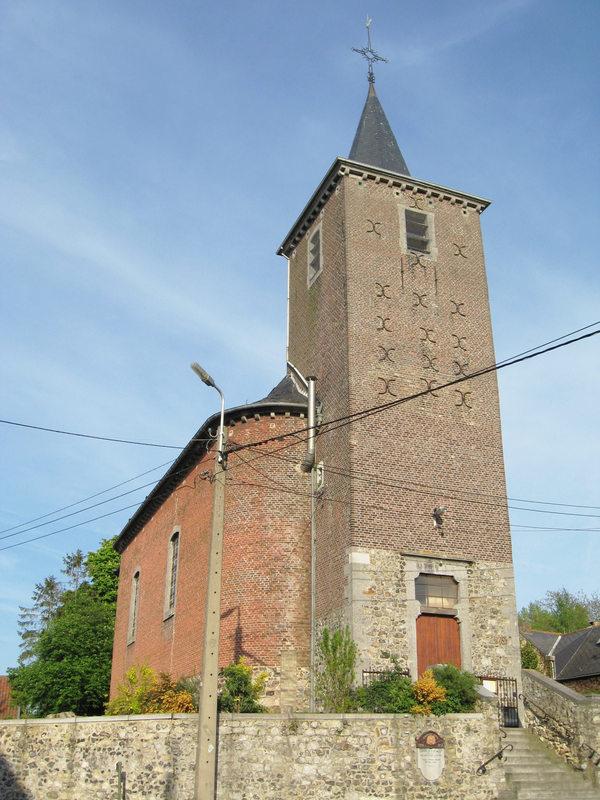
Scene Description: "Sint-Lambertuskerk in Petit-Hallet / Eglise Saint-Lambert à Petit-Hallet / Church of Saint Lambert in Petit-Hallet, Hannut, Liège, Belgium"
Copyright Statement: Image copyright © Sonuwe, 2008
Image Source: digital photograph 4 May 2008 by Sonuwe
Copyright Instructions: GFDL
view of font and cover in context
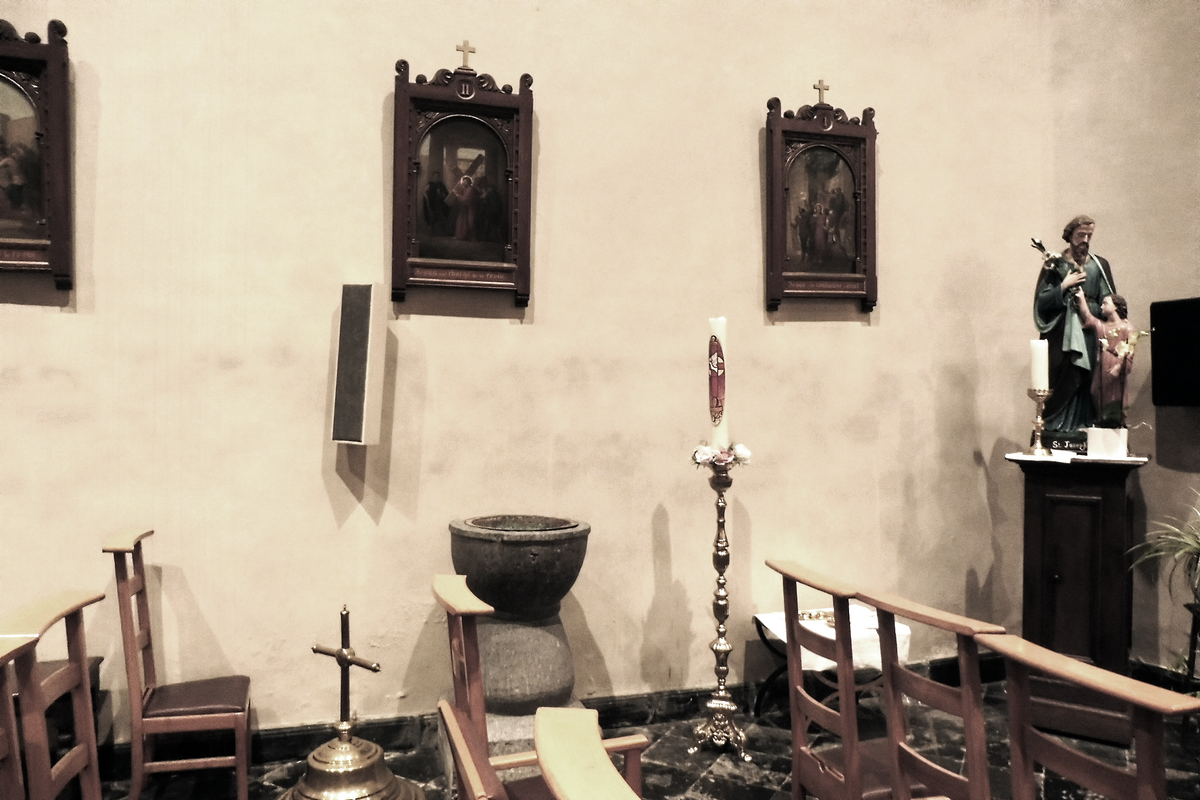
Copyright Statement: Image copyright © Les Murs de Pierre, 2026
Image Source: digital photograph by Les Murs de Pierre
Copyright Instructions: Standing permission
INFORMATION
Font ID: 26180ITU
Object Type: Baptismal Font1
Font Century and Period/Style: 17th century (?)
Workshop/Group/Artisan: Mosan type?
Church / Chapel Name: Eglise Saint-Lambert à Petit-Hallet
Font Location in Church: Inside, in the nave
Church Patron Saint(s): St. Lambertus
Church Notes: [cf. FontNotes]
Church Address: Rue Maria Gilles 5, 4280 Hannut, Belgium
Site Location: Liège / Luik, Wallonie / Wallonne, Belgium, Europe
Directions to Site: Located off (N) the N420, W of the N64, in the municipality and 5 km NW of Hannut, about 40 km NNE of Namur
Ecclesiastic Region: Diocèse de Liège / Bistum Lüttich
Town/City Wikipedia: https://fr.wikipedia.org/wiki/Petit-Hallet
Font Notes:
Click to view
Baptismal font listed and illustrated in BALaT KIK-IRPA [https://balat.kikirpa.be/object/10030023] [accessed 3 March 2026]: "fonts baptismaux [...] pierre [...] hauteur: 95 cm [...] Date: 1601 - 1700".
A communication to BSI from Pol Herman (e-mail of 14 February 2026) informs: "Petit-Hallet, église Saint-Lambert. 1221/1233 : Hallei parvo, 1228 : Halleij, 1235 Hallei le Petit, 1280 : apud Halectum Parvum, 1369 Cleyne Haleir, Hallai minoris. This small hamlet of Hallet is also called Adence or Audince, by the name of a local hill where Celtic dwellings were located (250-50 BC). The heart of the village was already inhabited in Roman times, as evidenced by the discovery of an octagonal temple and a villa. From the 9th century onwards, the village of Hallet (probably Petit- and Grand- together) was part of the county of Avernas. The village belonged to the chapter of Saint-Lambert in Liège since the 11th century. This is mentioned in 1116. The chapter was also the local lord. The local church likely dates from that period. The separation of the parish from Grand-Hallet likely occurred around that time. The church was first mentioned in 1139 as belonging to the deanery of Jodoigne. Its name appears as a parish required to offer sacrifices and participate in the processions of the “croix banales” of Sint-Truiden. 1220: The chapter of the cathedral of Liège acquires the tithes. 1465: Major destruction in the village by troops of the Prince-Bishopric of Liège. 1582: The chapter of cathedral of Liège sells its rights to abbey of Villers, who appoint a secular lord. From at least 1630 until the French Revolution, there was a “chateau-ferme” at Petit-Hallet, inhabited by a local lord. In the 17th and 18th centuries: the village suffered from famines and the passage of troops. 1672: Villers Abbey commissioned repairs.
In 1757/1758, the church was completely rebuilt on the foundations of the old church.The building was restored in 1829, following a violent earthquake that had damaged it the previous year. Baptismal records start in 1657. 17th century ( ?) limestone font of undefined style. Probably Mosan, as most fonts in this area are. https://balat.kikirpa.be/object/10030023 -- Pictures by Les Murs de Pierre".
A communication to BSI from Pol Herman (e-mail of 14 February 2026) informs: "Petit-Hallet, église Saint-Lambert. 1221/1233 : Hallei parvo, 1228 : Halleij, 1235 Hallei le Petit, 1280 : apud Halectum Parvum, 1369 Cleyne Haleir, Hallai minoris. This small hamlet of Hallet is also called Adence or Audince, by the name of a local hill where Celtic dwellings were located (250-50 BC). The heart of the village was already inhabited in Roman times, as evidenced by the discovery of an octagonal temple and a villa. From the 9th century onwards, the village of Hallet (probably Petit- and Grand- together) was part of the county of Avernas. The village belonged to the chapter of Saint-Lambert in Liège since the 11th century. This is mentioned in 1116. The chapter was also the local lord. The local church likely dates from that period. The separation of the parish from Grand-Hallet likely occurred around that time. The church was first mentioned in 1139 as belonging to the deanery of Jodoigne. Its name appears as a parish required to offer sacrifices and participate in the processions of the “croix banales” of Sint-Truiden. 1220: The chapter of the cathedral of Liège acquires the tithes. 1465: Major destruction in the village by troops of the Prince-Bishopric of Liège. 1582: The chapter of cathedral of Liège sells its rights to abbey of Villers, who appoint a secular lord. From at least 1630 until the French Revolution, there was a “chateau-ferme” at Petit-Hallet, inhabited by a local lord. In the 17th and 18th centuries: the village suffered from famines and the passage of troops. 1672: Villers Abbey commissioned repairs.
In 1757/1758, the church was completely rebuilt on the foundations of the old church.The building was restored in 1829, following a violent earthquake that had damaged it the previous year. Baptismal records start in 1657. 17th century ( ?) limestone font of undefined style. Probably Mosan, as most fonts in this area are. https://balat.kikirpa.be/object/10030023 -- Pictures by Les Murs de Pierre".
Credit and Acknowledgements: We are grateful to Pol Herman for bringing this font to our attention and for his help documenting it. We are also grateful to Les Murs de Pierre for the photographs of this font.
COORDINATES
Latitude & Longitude (Decimal): 50.6846, 5.0182
Latitude & Longitude (DMS): 50° 41′ 4.56″ N, 5° 1′ 5.52″ E
MEDIUM AND MEASUREMENTS
Material: stone, limestone
Font Shape: hemispheric (mounted)
Basin Interior Shape: round
Basin Exterior Shape: round
Drainage Notes: metal insert present
LID INFORMATION
Notes: moulded bell-shaped dome with cross finial
REFERENCES
- KIK-IRPA, BALaT KIK-IRPA, 2024. URL: https://balat.kikirpa.be/.