Amay / Amai / Amaî / Amanio / Amanium
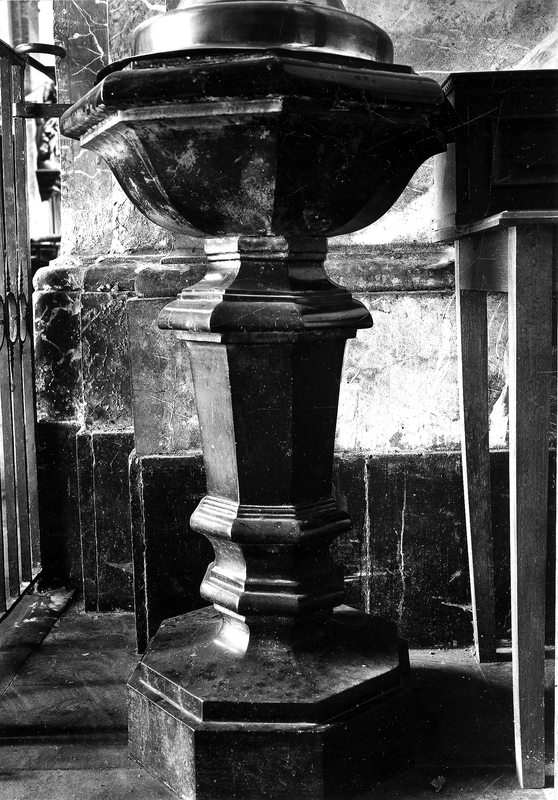
Image copyright © KIK-IRPA, Brussels (Belgium), 2026
CC-BY-SA-4.0
Results: 9 records
view of font and cover
Scene Description: the modern [18thC] font in this church
Copyright Statement: Image copyright © KIK-IRPA, Brussels (Belgium), 2026
Image Source: digital image of a 1942 B&W photograph [cliché B028749] by the Commissariat général à la Restauration du Pays
Copyright Instructions: CC-BY-SA-4.0
view of church exterior - southwest view
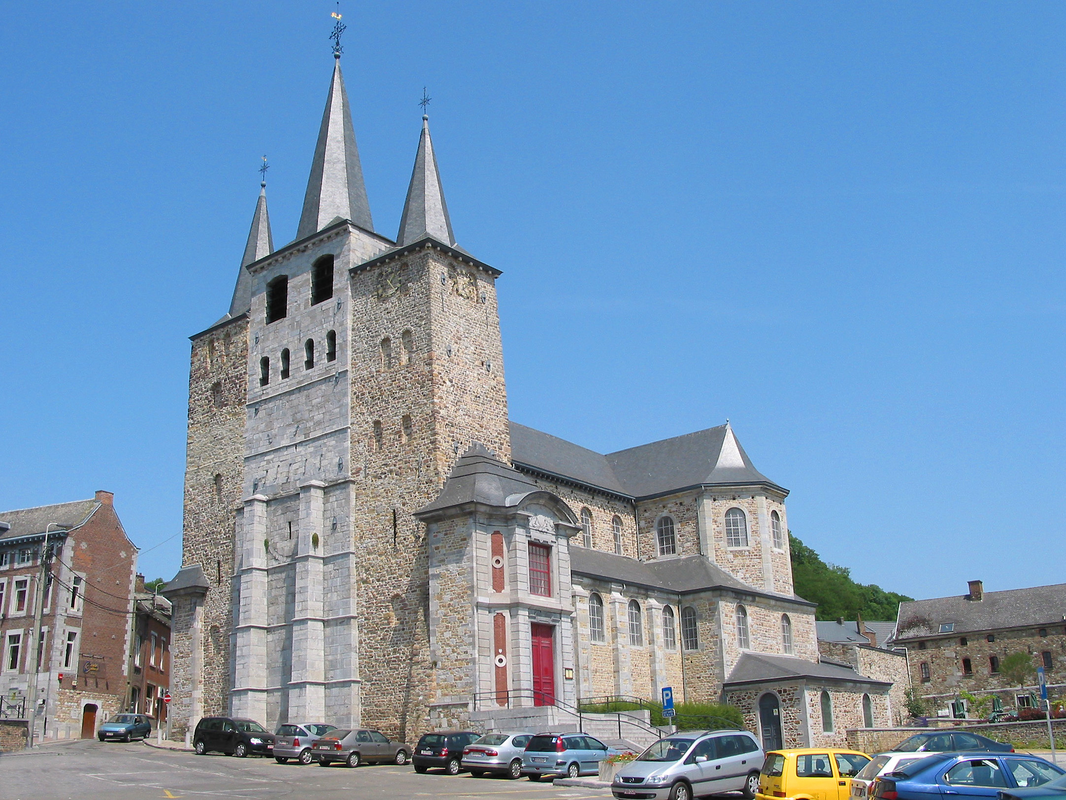
Scene Description: "Amay (Belgique), la collégiale Saint-George et Sainte-Ode (1089) / Amay (Belgium), the St. Paul and St. Ode Collegiate church (1089) / Amay (België), de collegiale kerk van Sint-Paulus en Sint-Oda (1089) / Amay (Belgien), die Stiftskirche St. Georg und Oda (1089) / Amaî (Bèljike), li Colègiale Sint-Paul èt Sinte-Oûde (1089)"
Copyright Statement: Image copyright © Jean-Pol Grandamont, 2005
Image Source: digital photograph 27 June 2005 by Jean-Pol Grandmont
Copyright Instructions: CC-BY-SA-3.0
view of church interior - tomb - St. Chrodoara d'Amay
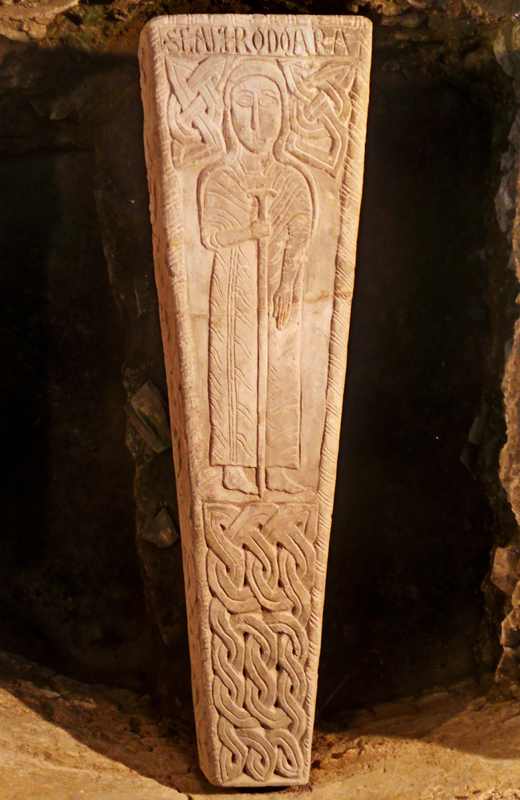
Scene Description: "Sarcophage mérovingien du 7ème siècle , visible par des vitres dans le sol du choeur de la collégiale Saint-Ode d'Amay à l'endroit où il fut découvert le 22 janvier 1977."
Copyright Statement: Image copyright © Okapi07, 2012
Image Source: digital photograph 3 June 2012 by Okapi07
Copyright Instructions: CC-BY-SA-4.0
view of church interior - tomb - St. Chrodoara d'Amay
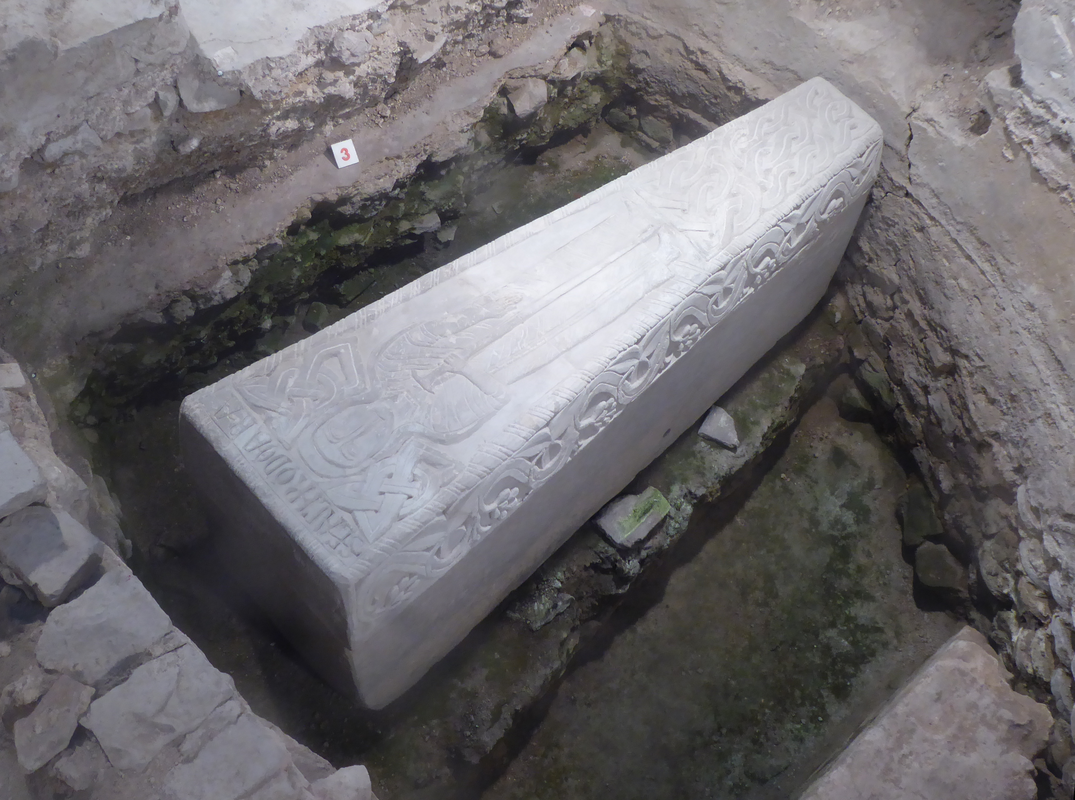
Scene Description: "Sarcophage mérovingien du 7ème siècle , visible par des vitres dans le sol du choeur de la collégiale Saint-Ode d'Amay à l'endroit où il fut découvert le 22 janvier 1977. Classé comme trésor de la Communauté Française le 12 février 2010."
Copyright Statement: Image copyright © Okapi07, 2017
Image Source: digital photograph 4 June 2017 by Okapi07
Copyright Instructions: CC-BY-SA-4.0
view of font and cover in context
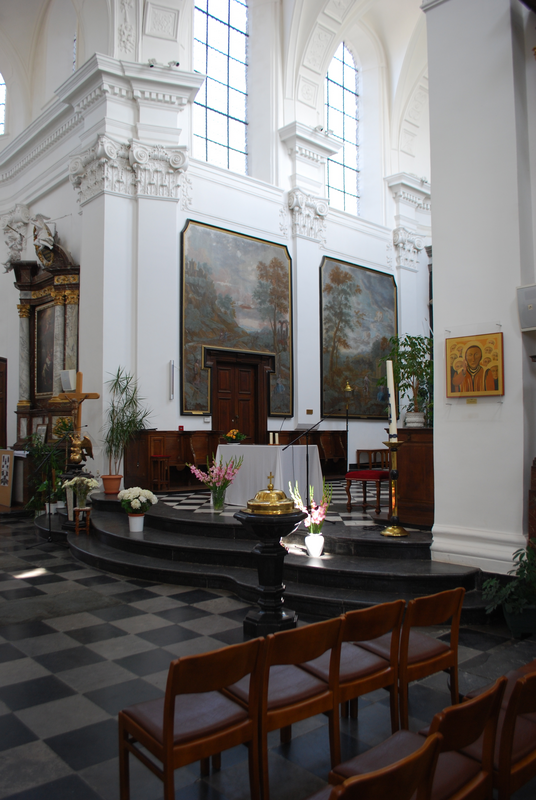
Scene Description: "Vue de l'intérieur de l'ancienne collégiale Saint-Georges et Sainte-Ode à Amay." -- showing the modern font and cover at the foot of the chancel steps
Copyright Statement: Image copyright © Jean Housen, 2012
Image Source: digital photograph 24 July 2012 by Jean Housen
Copyright Instructions: CC-BY-SA-3.0
view of church interior - reliquary casket - detail
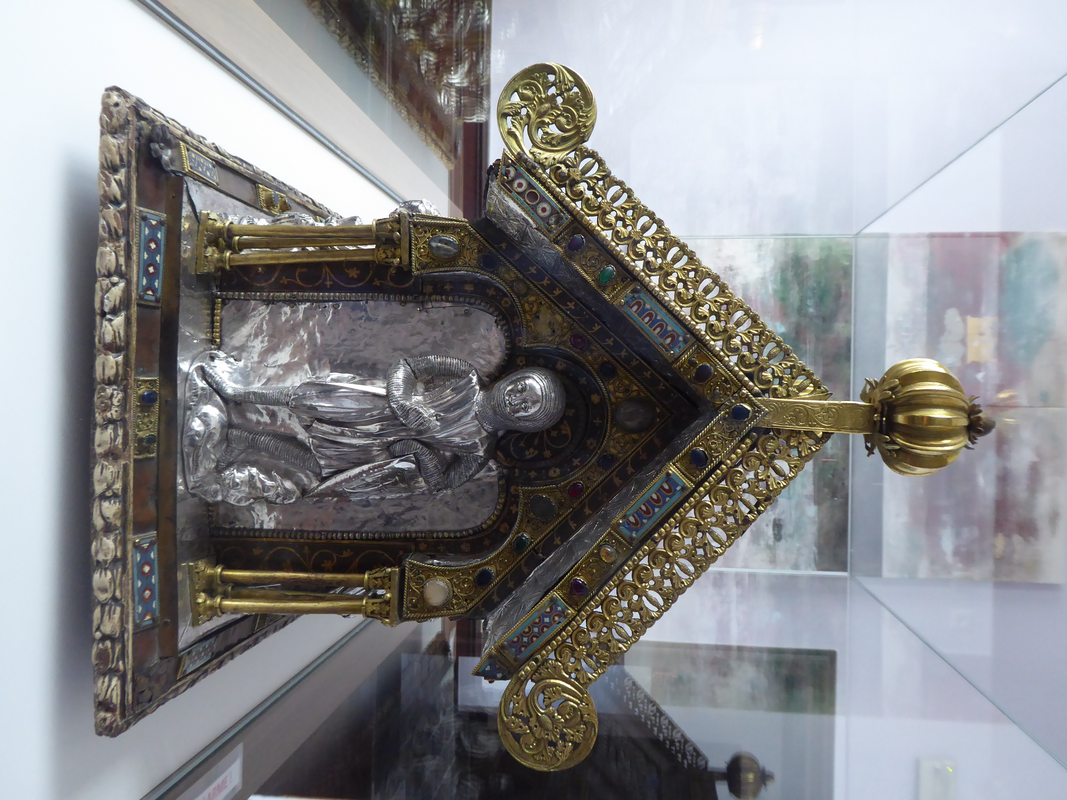
Scene Description: "Pignon de la châsse d'Amay représentant sainte Ode, réalisée vers 1245-1255. Classé comme trésor de la Communauté Française depuis le 23 Novembre 2010."
Copyright Statement: Image copyright © Okapi07, 2017
Image Source: digital photograph 4 June 2017 by Okapi07
Copyright Instructions: CC-BY-SA-4.0
view of church interior - reliquary casket - detail
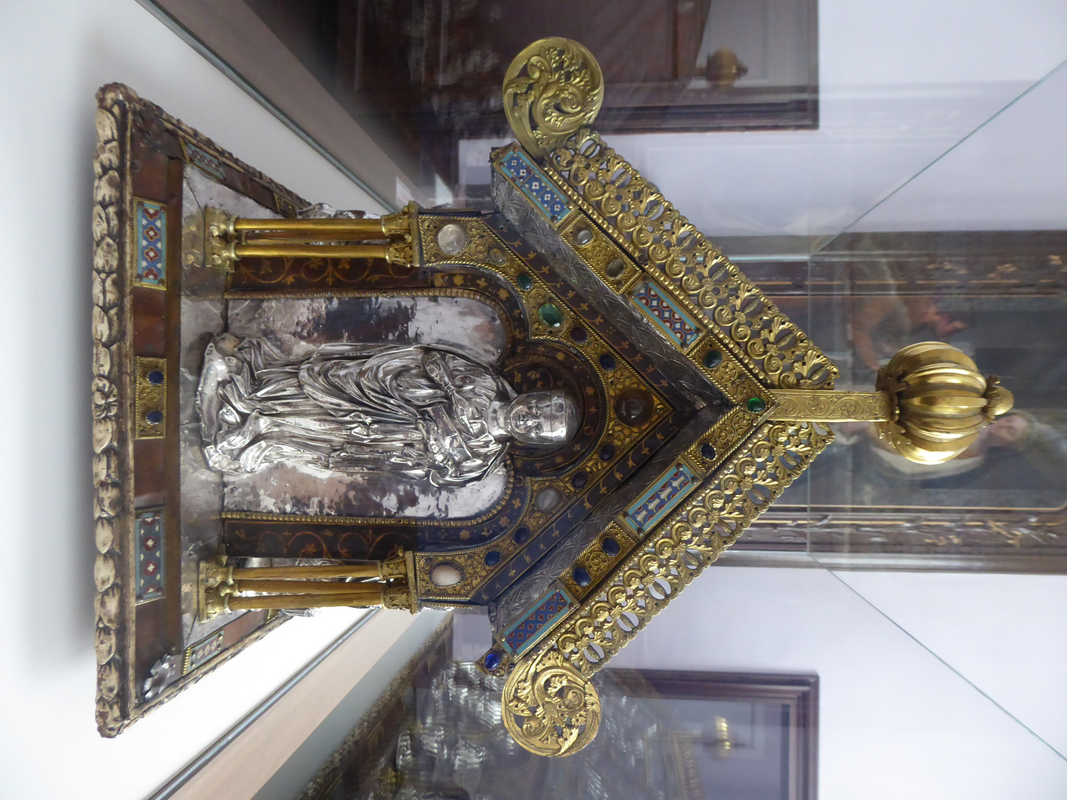
Scene Description: "Pignon de la châsse d'Amay représentant saint Georges, réalisée vers 1245-1255. Classé comme trésor de la Communauté Française depuis le 23 Novembre 2010."
Copyright Statement: Image copyright © Okapi07, 2017
Image Source: digital photograph 4 June 2017 by Okapi07
Copyright Instructions: CC-BY-SA-4.0
view of church interior - reliquary casket - detail
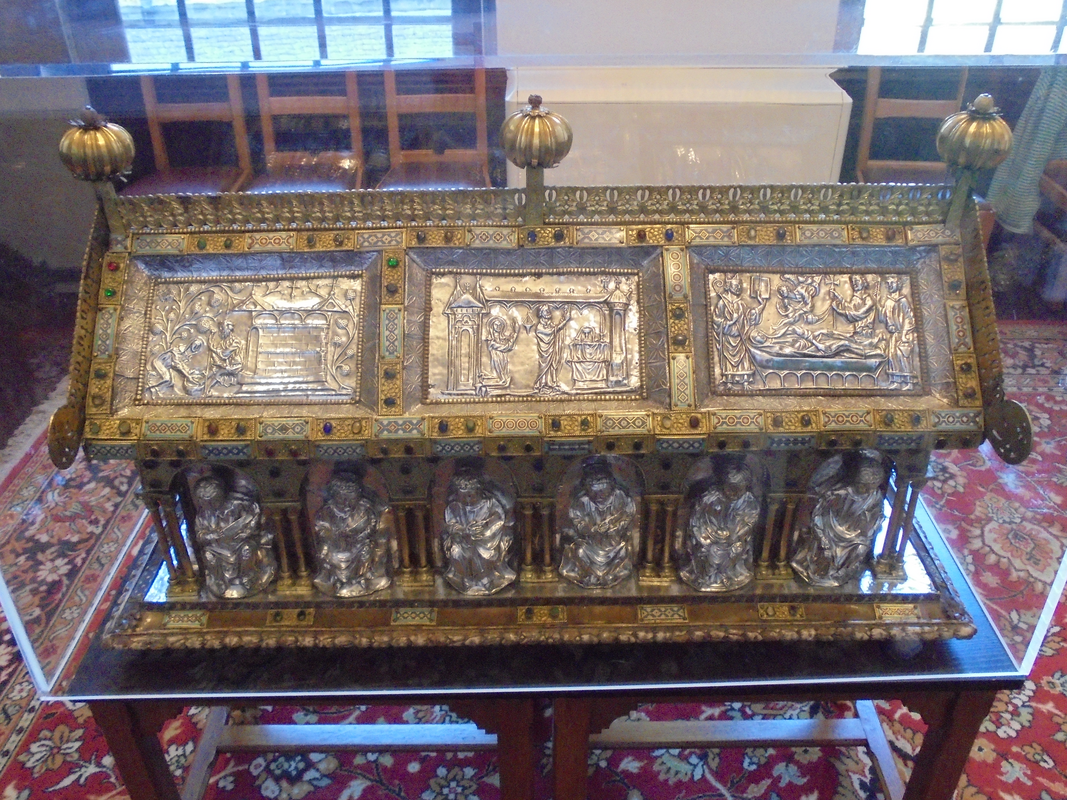
Scene Description: "Bâtière de Sainte Ode de la châsse d'Amay, réalisé vers 1245-1255. Classé comme trésor de la Communauté Française depuis le 23 Novembre 2010."
Copyright Statement: Image copyright © Okapi07, 2017
Image Source: digital photograph 4 June 2017 by Okapi07
Copyright Instructions: CC-BY-SA-4.0
view of church interior - reliquary casket - detail
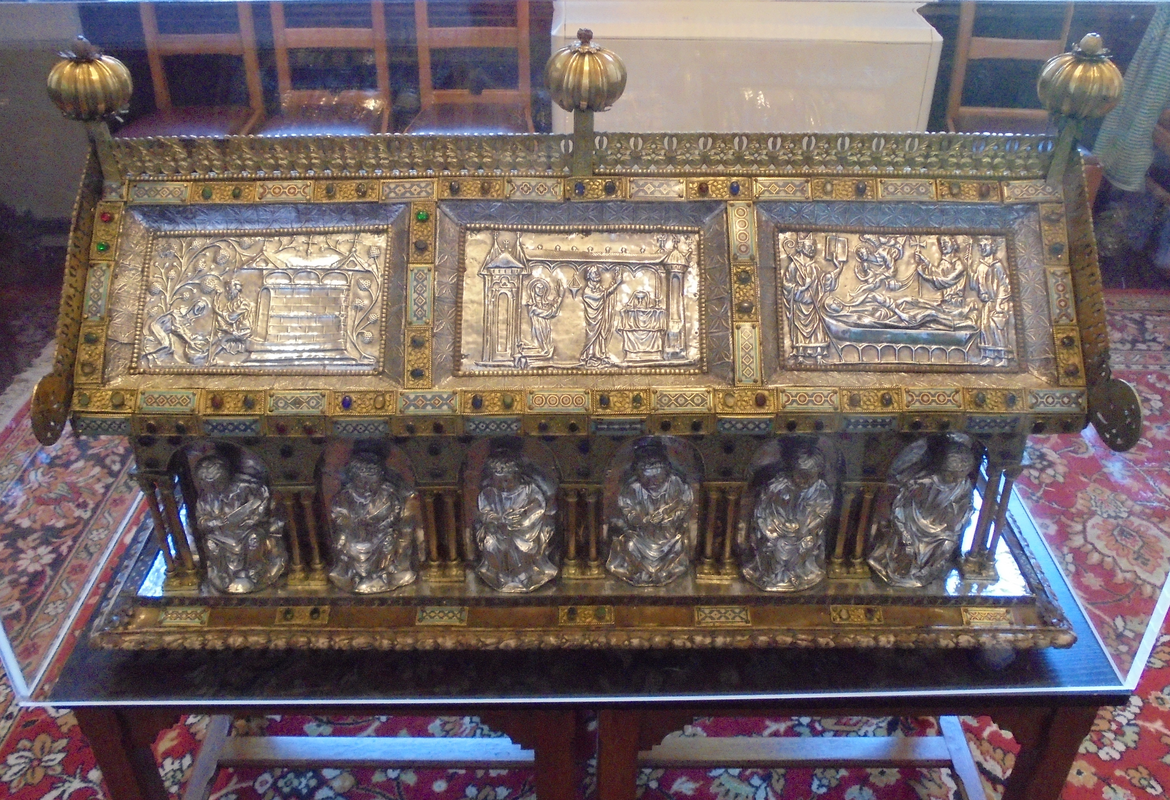
Scene Description: "Bâtière de Sainte Ode de la châsse d'Amay, réalisé vers 1245-1255. Classé comme trésor de la Communauté Française depuis le 23 Novembre 2010."
Copyright Statement: Image copyright © Okapi07, 2016
Image Source: digital photograph 10 September 2016 by Okapi07
Copyright Instructions: CC-BY-SA-4.0
INFORMATION
Font ID: 26169NOL
Object Type: Baptismal Font1
Church / Chapel Name: Collégiale Saint-Georges-et-Sainte-Ode
Church Patron Saint(s): St. George & St. Chrodoara d'Amay
Church Notes: original Gallo-Roman site; later Merovingian and Carolingian church; became collegiate 945
Church Address: Pl. Sainte-Ode, 4540 Amay, Belgium -- Tel.: +32 472 57 25 37
Site Location: Liège / Luik, Wallonie / Wallonne, Belgium, Europe
Directions to Site: Located off the N614-N617 crossroads, 6-7 km ENE of Huy, about 25 km WSW of Liège
Ecclesiastic Region: Diocèse de Liège / Bistum Lüttich
Additional Comments: disappeared font(s)? (the one(s) from the medieval church(es) here)
Town/City Wikipedia: https://fr.wikipedia.org/wiki/Amay
Font Notes:
Click to view
The baptismal font in this church is modern, listed and illustrated in BALaT KIK-IRPA [https://balat.kikirpa.be/object/10112757] [accessed 27 February 2026]: "fonts baptismaux [...] marbre noir [...] Date: 1701 - 1800 [...] hauteur: 105 cm".
A communication to BSI from Pol Herman (e-mail of 10 November 2025] informs: "Amay, Collégiale Saint-Georges-et-Sainte-Ode. From the 1st to the 4th centuries, Amay (Amanio, Amanium) was an important Roman vicus whose origins can be linked to the route of the Roman road Tongeren-Arlon road. It passed in Amay, crossing the Maas River initially at a ford, later over a bridge. Archaeological excavations have uncovered the foundations of a Gallo-Roman structure under the church, including part of a hypocaust. And also the foundations of earlier churches dating back to the Merovingian period (probably 6th and 7th centuries), the Carolingian period (late 8th to early 11th centuries), and the pre-Romanesque period (around the year 1000). The name Amay is mentioned in 634, in the will of Andelgise. The parish of Amay dates back at least to the 7th century. Besides Amay, the parish included Ampsin, Fize-Fontaine, Jehay, Rogerée, Ombret, and Rausa. In 1977, a magnificent sarcophagus dating from the 7th century was unearthed in the choir of the church. It proved to be the sarcophagus of Saint Chrodoara, a Frankish aristocrat. A legend attributes the church's founding to Saint Ode, who is believed to be the same person as Chrodoara. In 945, the church was elevated to the status of a collegiate church, with the establishment of a chapter of nine secular canons. This chapter held the spiritual and temporal authority over the town until the 18th century. The current building appears to have been rebuilt during the episcopate of Prince-Bishop Henry I of Verdun (1075-1091), who owned a domus (residence) here. It was likely completed under Bishop Henry II of Leez (1145-1164). Some structural wooden beams in the roof frame have been dendrochronologically dated to 1100-1125. The first major modifications took place in the 16th century. The village suffered during the wars of the 17th and 18th centuries. The present font is 18th c. https://balat.kikirpa.be/object/10112757 -- Older baptismal records prove that earlier fonts existed, of which there is no trace."
A communication to BSI from Pol Herman (e-mail of 10 November 2025] informs: "Amay, Collégiale Saint-Georges-et-Sainte-Ode. From the 1st to the 4th centuries, Amay (Amanio, Amanium) was an important Roman vicus whose origins can be linked to the route of the Roman road Tongeren-Arlon road. It passed in Amay, crossing the Maas River initially at a ford, later over a bridge. Archaeological excavations have uncovered the foundations of a Gallo-Roman structure under the church, including part of a hypocaust. And also the foundations of earlier churches dating back to the Merovingian period (probably 6th and 7th centuries), the Carolingian period (late 8th to early 11th centuries), and the pre-Romanesque period (around the year 1000). The name Amay is mentioned in 634, in the will of Andelgise. The parish of Amay dates back at least to the 7th century. Besides Amay, the parish included Ampsin, Fize-Fontaine, Jehay, Rogerée, Ombret, and Rausa. In 1977, a magnificent sarcophagus dating from the 7th century was unearthed in the choir of the church. It proved to be the sarcophagus of Saint Chrodoara, a Frankish aristocrat. A legend attributes the church's founding to Saint Ode, who is believed to be the same person as Chrodoara. In 945, the church was elevated to the status of a collegiate church, with the establishment of a chapter of nine secular canons. This chapter held the spiritual and temporal authority over the town until the 18th century. The current building appears to have been rebuilt during the episcopate of Prince-Bishop Henry I of Verdun (1075-1091), who owned a domus (residence) here. It was likely completed under Bishop Henry II of Leez (1145-1164). Some structural wooden beams in the roof frame have been dendrochronologically dated to 1100-1125. The first major modifications took place in the 16th century. The village suffered during the wars of the 17th and 18th centuries. The present font is 18th c. https://balat.kikirpa.be/object/10112757 -- Older baptismal records prove that earlier fonts existed, of which there is no trace."
Credit and Acknowledgements: We are grateful to Pol Herman for bringing this site to our attention and for his help documenting it
COORDINATES
UTM: 31U 664182 5602203
Latitude & Longitude (Decimal): 50.5487, 5.31777
Latitude & Longitude (DMS): 50° 32′ 55.32″ N, 5° 19′ 3.97″ E
REFERENCES
- KIK-IRPA, BALaT KIK-IRPA, 2024. URL: https://balat.kikirpa.be/.