Lieferinge / Leffrengen / Letfringen / Lieffringhen / Lifregem / Lifreghem
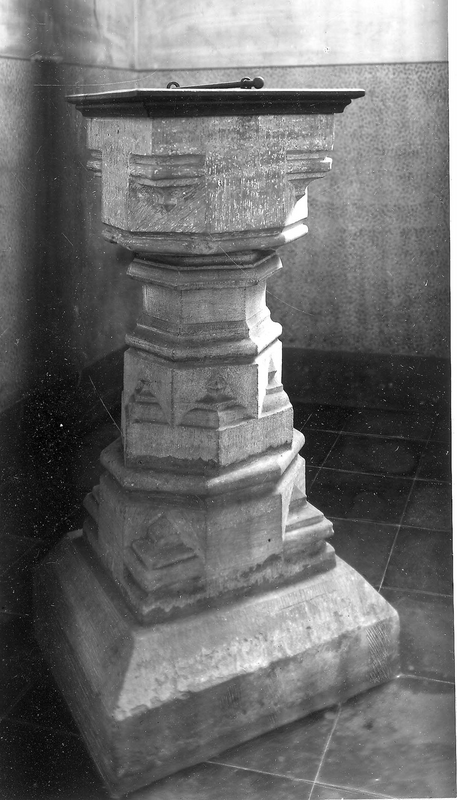
Image copyright © KIK-IRPA, Brussels (Belgium), 2026
CC-BY-4.0
Results: 7 records
view of font
Copyright Statement: Image copyright © KIK-IRPA, Brussels (Belgium), 2026
Image Source: digital image of a 1943 B&W photograph [cliché B040264] by the Commissariaat Generaal voor 's Lands Wederopbouw
Copyright Instructions: CC-BY-4.0
view of church exterior - northeast view
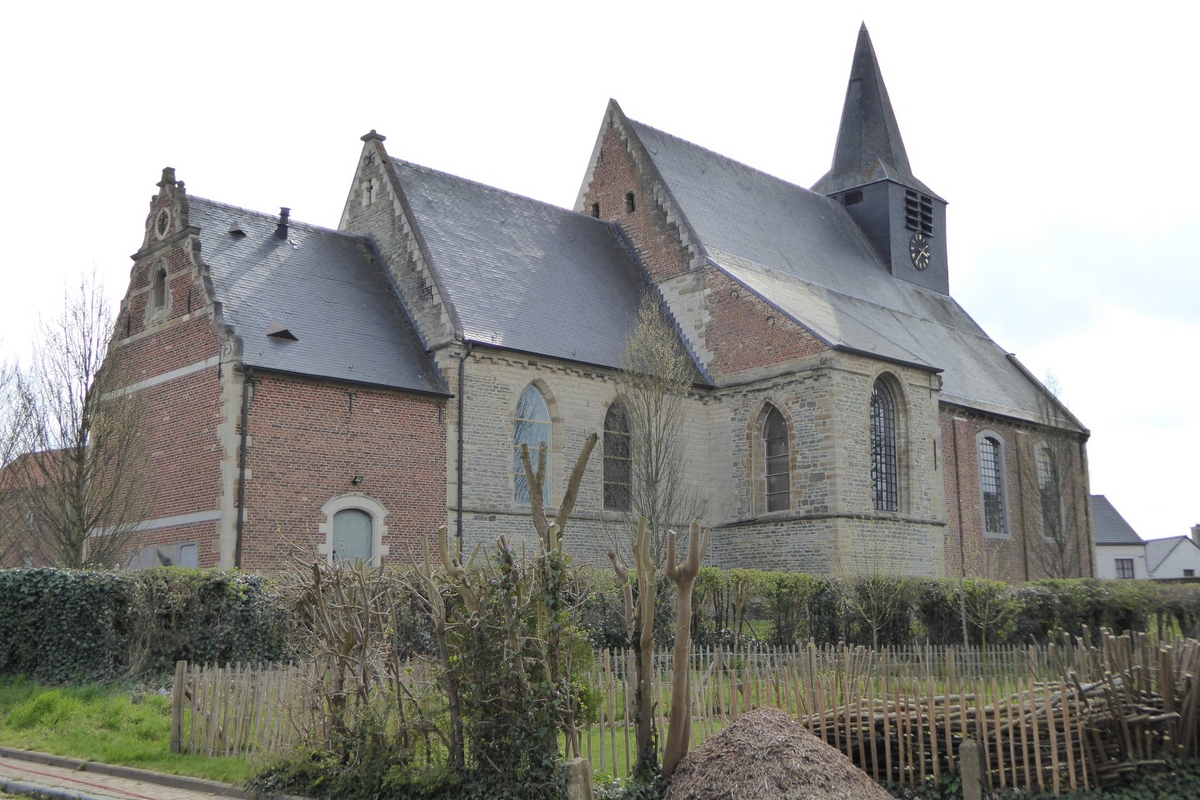
Scene Description: "Ninove Dorpskom Lieferinge Kasseide"
Copyright Statement: Image copyright © Jacobs, Els, 2016
Image Source: digital photograph 9 April 2016 by Jacobs, Els
Copyright Instructions: CC-BY-SA-4.0
design element - motifs - stop
Scene Description: at several levels where the pedestal base changes shape [cf. FontNotes]
Copyright Statement: Image copyright © KIK-IRPA, Brussels (Belgium), 2026
Image Source: digital image of a 1943 B&W photograph [cliché B040264] by the Commissariaat Generaal voor 's Lands Wederopbouw
Copyright Instructions: CC-BY-4.0
view of font and cover

Image Source: image source not available
Copyright Instructions: PERMISSION NOT AVAILABLE – IMAGE NOT FOR PUBLIC USE
view of font and cover
Image Source: image source not available
Copyright Instructions: PERMISSION NOT AVAILABLE – IMAGE NOT FOR PUBLIC USE
view of font - drawing
Image Source: image source not available
Copyright Instructions: PERMISSION NOT AVAILABLE – IMAGE NOT FOR PUBLIC USE
view of font and cover in context
Image Source: image source not available
INFORMATION
Font ID: 26159RQV
Object Type: Baptismal Font1
Font Century and Period/Style: 15th - 16th century (?), Late Gothic
Church / Chapel Name: Onze-Lieve-Vrouw-Lichtmiskerk, Lieferinge
Font Location in Church: Inside
Church Wikidata: https://nl.wikipedia.org/wiki/Onze-Lieve-Vrouwekerk_(Lieferinge)
Church Patron Saint(s): St. Mary the Virgin
Church Notes: 13thC church; modfied 18thC
Church Address: Lieferingeplaats 30, 9400 Ninove, Belgium
Site Location: Oost-Vlaanderen / Flandre Est, Vlaanderen / Flandres, Belgium, Europe
Directions to Site: Located off (W) the N26, in the municipality and 5-6 km SE of Ninove, 18-20 km NW of Halle
Town/City Wikipedia: https://nl.wikipedia.org/wiki/Lieferinge
Font Notes:
Click to view
Baptismal font listed and illustrated in BALaT KIK-IRPA [https://balat.kikirpa.be/object/19536 [accessed 25 February 2026]: "doopvont [...] arduin [...] hoogte: 120 cm [...] Date: 1401 - 1500".
A communication to BSI from Pol Herman (e-mail of 1 February 2026) informs: "Lieferinge, Onze-Lieve-Vrouw-Lichtmiskerk. 1051 Letfringen, 1126 Leffrengen, 1215 Lifregem, 1260 Lifreghem, 1437 Lieffringhen. Around 1030, bishop Gerard I of Cambrai donated to the Cambrai cathedral: Restaurationi novi operis octo mansus in Letfringen cum ecclesia delegavit (Gesta episcoporum Cameracensium). Lieferinge likely had an “eigenkirche” belonging to the adjacent court. 1126: pope Honorius II, at the request of bishop Burchard, confirmed the possession of the chapter of Notre Dame of Cambrai: in pago Bracbatensi villam Leffrengem cum altari et ecclesia et molendino. First known priest in 1215. Since 1362 and up to the French revolution, the lord of Lieferinge was the feudal lord of the chapter of Notre Dame of Cambrai. The church is built on an artificial eminence that clearly towers above the surrounding area. The appearance of the first place of worship is unclear. The building contains a Romanesque core, dated by KIK-IRPA to 1200-1210. Some of the remains of this old Romanesque church can still be found in the west facade. The fact that rubble stones were also recovered for the construction of other parts of the church besides the west façade, indicates that the old Romanesque church was larger than the current choir. Above the Romanesque base stood an early Gothic superstructure dating from the late 13th to early 14th century. The tower's construction cannot yet be dated. The building was later modified a second time in the late-Gothic style. Lieferinge was plagued by religious unrest between 1576 and 1585. In 1592, it was written: "Fabrica est omnino combusta." Only a quarter of the inhabitants survived. The new altar was consecrated in 1603, and the two side altars in 1639. In 1654, the baptismal font was found to be in good condition during an inspection. In 1775, the church was rebuild, mainly in brick, and given a rococo interior. The baptismal font is described and sketched in : Bulletin des Commissions Royales d’Art et d’Archéologie, Dixième année, 1871, Essai sur les fonts baptismaux remarquables des environs d’Audenarde et de Grammont, l’abbé Vande Vyvere, page 241. Baptismal records start in 1599. The limestone baptismal font is remarkable. The octagonal base and bowl appear identical and are in the late Gothic Mosan style. Between them is a hexagonal column that combines Mosan and Hainaut characteristics. The baptismal font is consistently dated to the fifteenth century, but it was made in the second half of the sixteenth century.
https://balat.kikirpa.be/object/19536"
A communication to BSI from Pol Herman (e-mail of 1 February 2026) informs: "Lieferinge, Onze-Lieve-Vrouw-Lichtmiskerk. 1051 Letfringen, 1126 Leffrengen, 1215 Lifregem, 1260 Lifreghem, 1437 Lieffringhen. Around 1030, bishop Gerard I of Cambrai donated to the Cambrai cathedral: Restaurationi novi operis octo mansus in Letfringen cum ecclesia delegavit (Gesta episcoporum Cameracensium). Lieferinge likely had an “eigenkirche” belonging to the adjacent court. 1126: pope Honorius II, at the request of bishop Burchard, confirmed the possession of the chapter of Notre Dame of Cambrai: in pago Bracbatensi villam Leffrengem cum altari et ecclesia et molendino. First known priest in 1215. Since 1362 and up to the French revolution, the lord of Lieferinge was the feudal lord of the chapter of Notre Dame of Cambrai. The church is built on an artificial eminence that clearly towers above the surrounding area. The appearance of the first place of worship is unclear. The building contains a Romanesque core, dated by KIK-IRPA to 1200-1210. Some of the remains of this old Romanesque church can still be found in the west facade. The fact that rubble stones were also recovered for the construction of other parts of the church besides the west façade, indicates that the old Romanesque church was larger than the current choir. Above the Romanesque base stood an early Gothic superstructure dating from the late 13th to early 14th century. The tower's construction cannot yet be dated. The building was later modified a second time in the late-Gothic style. Lieferinge was plagued by religious unrest between 1576 and 1585. In 1592, it was written: "Fabrica est omnino combusta." Only a quarter of the inhabitants survived. The new altar was consecrated in 1603, and the two side altars in 1639. In 1654, the baptismal font was found to be in good condition during an inspection. In 1775, the church was rebuild, mainly in brick, and given a rococo interior. The baptismal font is described and sketched in : Bulletin des Commissions Royales d’Art et d’Archéologie, Dixième année, 1871, Essai sur les fonts baptismaux remarquables des environs d’Audenarde et de Grammont, l’abbé Vande Vyvere, page 241. Baptismal records start in 1599. The limestone baptismal font is remarkable. The octagonal base and bowl appear identical and are in the late Gothic Mosan style. Between them is a hexagonal column that combines Mosan and Hainaut characteristics. The baptismal font is consistently dated to the fifteenth century, but it was made in the second half of the sixteenth century.
https://balat.kikirpa.be/object/19536"
Credit and Acknowledgements: We are grateful to Pol Herman for bringing this font to our attention and for his help documenting it
COORDINATES
UTM: 31U 574153 5627240
Latitude & Longitude (Decimal): 50.792156, 4.052086
Latitude & Longitude (DMS): 50° 47′ 31.76″ N, 4° 3′ 7.51″ E
MEDIUM AND MEASUREMENTS
Material: stone, limestone
Font Shape: octagonal (mounted)
Basin Interior Shape: round
Basin Exterior Shape: octagonal
Font Height (less Plinth): 120 cm*
Notes on Measurements: * [cf. FontNotes]
LID INFORMATION
Notes: flat and plain; appears modern
REFERENCES
- KIK-IRPA, BALaT KIK-IRPA, 2024. URL: https://balat.kikirpa.be/.