Bekegem

Image copyright © KIK-IRPA, Brussels (Belgium), 2026
CC-BY-4.0
Results: 3 records
view of font
Copyright Statement: Image copyright © KIK-IRPA, Brussels (Belgium), 2026
Image Source: digital image of a B&W photograph [cliché M045570]] by Renard, Jean-Pierre
Copyright Instructions: CC-BY-4.0
view of church exterior
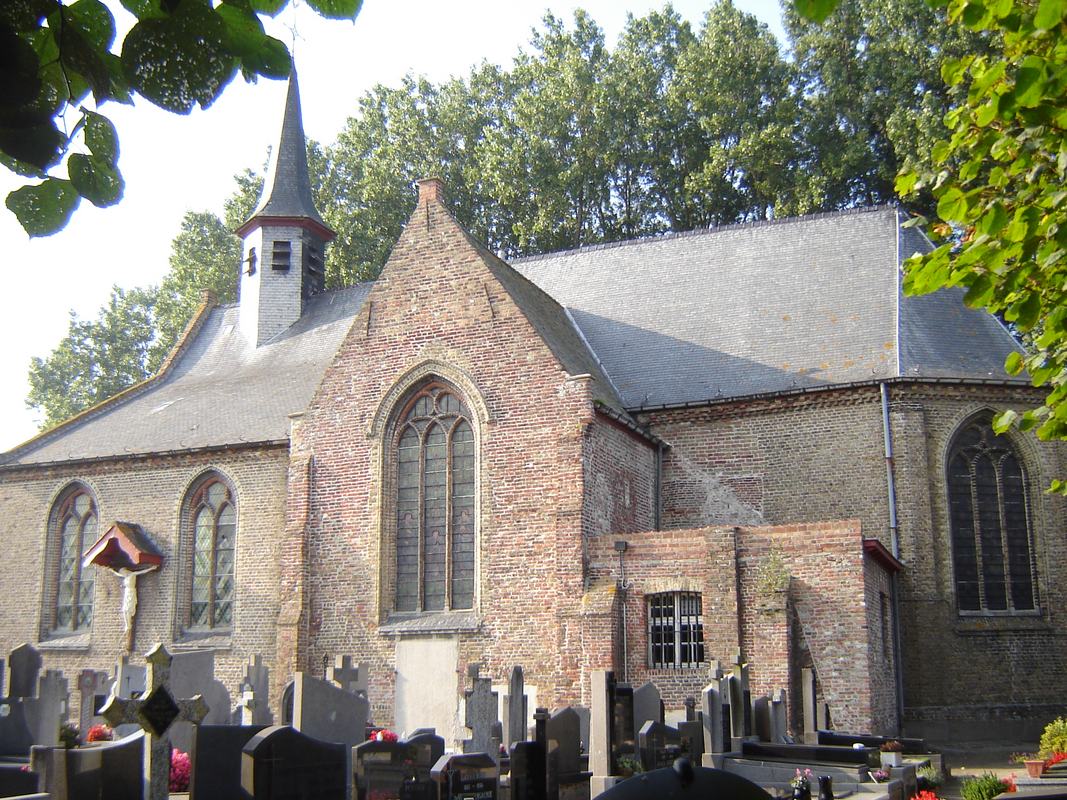
Scene Description: "Sint-Amanduskerk in Bekegem / Church of Saint Amand in Bekegem. Bekegem, Ichtegem, West Flanders, Belgium"
Copyright Statement: Image copyright © LimoWreck, 2007
Image Source: digital photograph 25 August 2007 by LimoWreck
Copyright Instructions: GFDL
inscription
![[cf. FontNotes]](/static-50478a99ec6f36a15d6234548c59f63da52304e5/others/permission_not_available.jpg)
Scene Description: [cf. FontNotes]
Image Source: image source not available
Copyright Instructions: PERMISSION NOT AVAILABLE – IMAGE NOT FOR PUBLIC USE
INFORMATION
Font ID: 26152MHA
Object Type: Baptismal Font1
Font Date: 1697?
Font Century and Period/Style: 17th century(late?) [composite font?], composite?
Church / Chapel Name: Sint-Amanduskerk Bekegem
Church Patron Saint(s): St. Amandus
Church Notes: [cf. FontNotes]
Church Address: Dorpstraat, 8480 Ichtegem, Belgium
Site Location: West-Vlaanderen / Flandre Occidentale, Vlaanderen / Flandres, Belgium, Europe
Directions to Site: Located off (SE) the N367-N368 crossroads, S of Hwy E40, in the municipality of Itchtegem, 11-12 km SE of Ostend
Ecclesiastic Region: Diocèse de Bruges / Bisdom Brugge
Additional Comments: altered font? / composite font? [cf. FontNotes]
Font Notes:
Click to view
Baptismal font listed and illustrated in BALaT KIK-IRPA [https://balat.kikirpa.be/object/35011] [accessed 23 February 2026]: "doopvont [...] arduin [...] Date: 1697 - 1697 [...] hoogte: 200 cm" [NB: 2 m. tall? an error?].
A communication to BSI from Pol Herman (e-mail of 28 January 2026) informs: "Because the church formed a unit with the most important farm of the village, it started probably as an “eigenkirche” of the local lord. Bekegem was first mentioned in 1107, as Bichengem. The Bishop of Tournai-Noyon granted the parish's patronage rights to the Abbey of Saint-Amand in Saint-Amand-les-Eaux. This was likely nothing more than confirmation of a situation that had existed since the 8th century. From 1227 onward, the patronage rights were held by the Abbey of Saint-Bertinus in Saint-Omer. Some sections of the walls are said to date from 1280-1291, although the first Romanesque stone church could have been older. The church was enlarged between 1235 and 1300. A big tower was added outside the church building, that made the small church look like a chapel (shown on the map of Pourbus). Probably financed by the chapter of Saint Donatius at Bruges. During the religious unrest of the 16th century, Bekegem suffered greatly from both Spanish troops and protestant Geuzen. The 13th-century church building was considerable damaged. From 1568 onward, the area was unsafe, and in 1581, there was an attack by Malcontents. By 1584, the village was almost completely depopulated, and only after 1604 (the fall of Ostend) did peace return. The bishop closed the church in 1628 because it was dilapidated and ruined. The tower was demolished. The ruined church was rebuilt in 1636 in the late Gothic style: a single-nave cruciform church described as "short and narrow, yet spacious enough for the population, and in the form of a cross”. Apparently, pilgrimages to Saint Lawrence took place, to whom the south altar was dedicated in 1652.
From 1666 to 1684, the village was ravaged by plundering troops during the Franco-Spanish War. The church was also set on fire and damaged.
The church had become unusable by 1775 and was restored. In 1830, Bekegem became an independent parish, separated from that of Zerkegem.
The church was renovated in 1857. Baptismal records start in 1675. Limestone, octagonal, Hainaut-type font. Inscription on the basin : DONO DNI WALTERY DE CLERCQ 1697 -- The design of the basin is very archaic for a late 17th c. font. Maybe the inscription was added on an older font ?
The base and column are said to be not original (renewed). https://balat.kikirpa.be/object/35011".
A communication to BSI from Pol Herman (e-mail of 28 January 2026) informs: "Because the church formed a unit with the most important farm of the village, it started probably as an “eigenkirche” of the local lord. Bekegem was first mentioned in 1107, as Bichengem. The Bishop of Tournai-Noyon granted the parish's patronage rights to the Abbey of Saint-Amand in Saint-Amand-les-Eaux. This was likely nothing more than confirmation of a situation that had existed since the 8th century. From 1227 onward, the patronage rights were held by the Abbey of Saint-Bertinus in Saint-Omer. Some sections of the walls are said to date from 1280-1291, although the first Romanesque stone church could have been older. The church was enlarged between 1235 and 1300. A big tower was added outside the church building, that made the small church look like a chapel (shown on the map of Pourbus). Probably financed by the chapter of Saint Donatius at Bruges. During the religious unrest of the 16th century, Bekegem suffered greatly from both Spanish troops and protestant Geuzen. The 13th-century church building was considerable damaged. From 1568 onward, the area was unsafe, and in 1581, there was an attack by Malcontents. By 1584, the village was almost completely depopulated, and only after 1604 (the fall of Ostend) did peace return. The bishop closed the church in 1628 because it was dilapidated and ruined. The tower was demolished. The ruined church was rebuilt in 1636 in the late Gothic style: a single-nave cruciform church described as "short and narrow, yet spacious enough for the population, and in the form of a cross”. Apparently, pilgrimages to Saint Lawrence took place, to whom the south altar was dedicated in 1652.
From 1666 to 1684, the village was ravaged by plundering troops during the Franco-Spanish War. The church was also set on fire and damaged.
The church had become unusable by 1775 and was restored. In 1830, Bekegem became an independent parish, separated from that of Zerkegem.
The church was renovated in 1857. Baptismal records start in 1675. Limestone, octagonal, Hainaut-type font. Inscription on the basin : DONO DNI WALTERY DE CLERCQ 1697 -- The design of the basin is very archaic for a late 17th c. font. Maybe the inscription was added on an older font ?
The base and column are said to be not original (renewed). https://balat.kikirpa.be/object/35011".
Credit and Acknowledgements: We are grateful to Pol Herman for bringing this font to our attention and for his help documenting it
COORDINATES
UTM: 31U 503215 5667608
Latitude & Longitude (Decimal): 51.159906, 3.045972
Latitude & Longitude (DMS): 51° 9′ 35.66″ N, 3° 2′ 45.5″ E
MEDIUM AND MEASUREMENTS
Material: stone, limestone
Font Shape: octagonal (mounted)
Basin Interior Shape: round
Basin Exterior Shape: octagonal
Notes on Measurements: [cf. FontNotes]
INSCRIPTION
Inscription Language: Latin
Inscription Text: "DONO DNI / WALTERY DE / CLERCQ / 1697"
Inscription Notes: [cf. FontNotes]
Inscription Source: [cf. FontNotes]
REFERENCES
- KIK-IRPA, BALaT KIK-IRPA, 2024. URL: https://balat.kikirpa.be/.