Villance / Aisance / Aise / Villa et aisantia / Villanche / Villancia / Villantia / Viyance
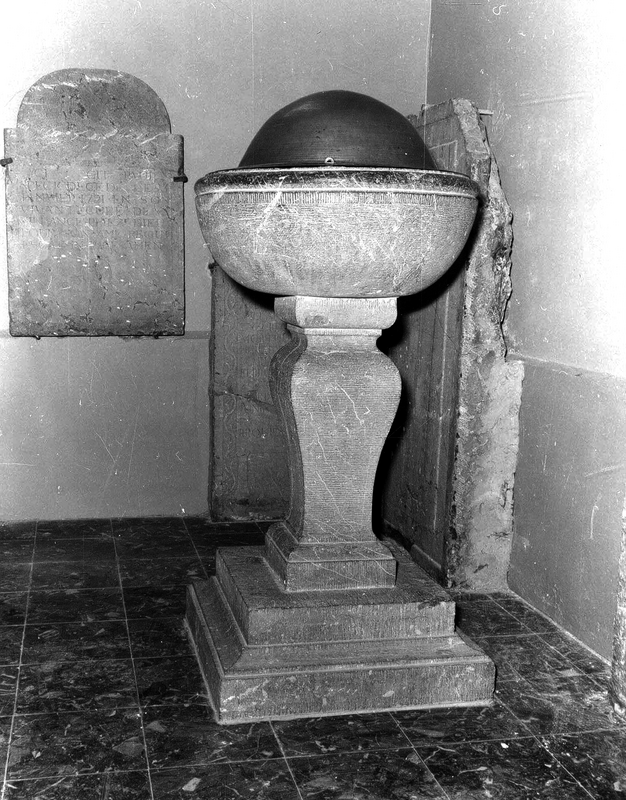
Image copyright © KIK-IRPA, Brussels (Belgium), 2026
CC-BY-4.0
Results: 2 records
view of font and cover
Copyright Statement: Image copyright © KIK-IRPA, Brussels (Belgium), 2026
Image Source: digital image of a 1976 B&W photograph [cliché M250126] by Dekemel, Raoul, IRPA
Copyright Instructions: CC-BY-4.0
view of church exterior - southeast view
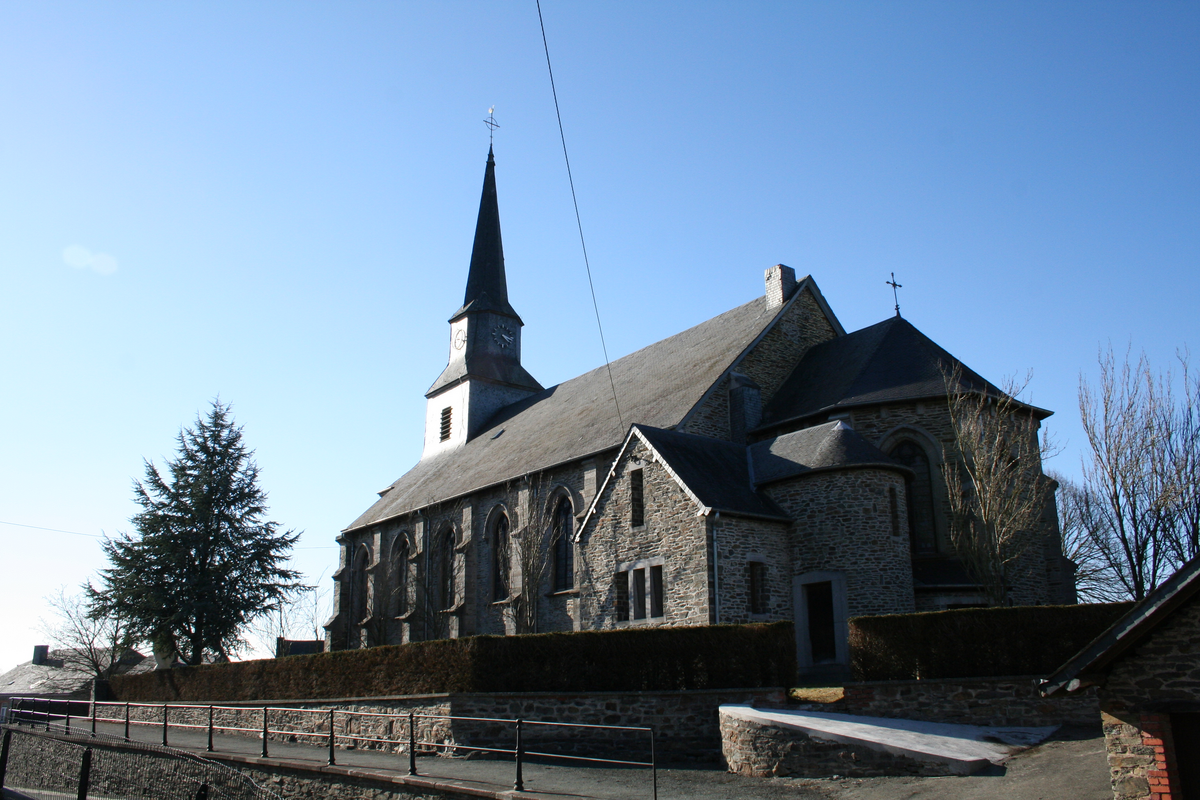
Scene Description: "Villance (Belgique), église du Saint-Sacrement (1865) / Villance (Belgium), church of the Holy Sacrament (1865) / Villance (België), kerk van het Heilig Sacrament (1865) / Viyance (Bèljike), èglîje Sint-Sacremint (1865).
Copyright Statement: Image copyright © Jean-Pol Grandmont, 2006
Image Source: digital photograph 20 March 2005 by Jean-Pol GRANDMONT
Copyright Instructions: GFDL
INFORMATION
Font ID: 26148CPI
Object Type: Baptismal Font1
Font Century and Period/Style: 17th century (?), Baroque
Church / Chapel Name: Eglise paroissiale Notre-Dame-du-Rosaire, today église du Saint-Sacrement
Font Location in Church: Inside
Church Patron Saint(s): St. Mary the Virgib
Church Notes: parish church mentioned 893; First known parish priest: 1342; demolished 1831; present church 19thC
Church Address: 6890 Villance, Belgium
Site Location: Luxembourg / Luxemburg, Wallonie / Wallonne, Belgium, Europe
Directions to Site: Located off the N808, W of Hwy E411, about 15 km NW of Libramont-Chevigny
Ecclesiastic Region: Diocèse de Namur
Additional Comments: disappeared font(s)? (the one(s) from the medieval church here)
Town/City Wikipedia: https://fr.wikipedia.org/wiki/Villance
Font Notes:
Click to view
The present font in this church is listed and illustrated in BALaT KIK-IRPA [https://balat.kikirpa.be/object/10006695] [accessed 22 February 2026]: "fonts baptismaux [...] pierre calcaire [...] hauteur: 130 cm [NB: probably includes the cover] [...] Date: 1651 - 1710 [...] couvercle en laiton, hauteur : 25 cm".
A communication to BSI from Pol Herman (e-mail of 26 January 2026) informs: "Villancia, Villantia, Villanche, Villa et aisantia, Aisance, Aise. Villance is once the site of two Gallo-Roman villas. As always, continuity of occupation is doubtful. Later, it was the centre of a Merovingian estate (its cemetery was excavated in 1953 near the Grand Moulin). Before 833, the village was part of a Carolingian domain and was inherited by king Louis the Pious, who gave it to a certain Richard. Richard died in 839 and had his brothers donate all his possessions, including the Villance estate, to the monks of Prüm. These arrangements were confirmed by charters of 842 by the emperor Lothaire and in 865 by the son of this emperor. The parish church is mentioned in the Prüm polyptych (893). The monks of the abbey gathered the former feudal territory of Villance (Villance itself, Transinne, Libin, Smuid, and, for a short period, Redu and Maissin) into a single primitive parish. According to Jean-Pierre Devroey, Villance consisted of a villa with a church. The archives of Prüm Abbey contain a great deal of information concerning the management of this estate. In 1139, Pope Innocent II confirmed that the parish of Villance owed offerings to the communal crosses (croix banales) of the Abbey of Saint-Hubert. Subsequently, through alliances, pledges, and conflicts, the Villance estate passed successively into the hands of the princes, dukes, and counts of Liège, Luxembourg, Namur, and Hainaut. The fortified tower from the 11th century, that stood on the site of the present-day church of Villance, witnessed the passage of many military troops. It was demolished in 1831. First known parish priest: 1342. In the 16th and 17th centuries, the rich forest estate of Villance aroused much covetousness, and the village was drawn into numerous conflicts that ultimately led to its near ruin. Household censuses dated 1625 and 1654 show that the population had fallen by two-thirds. The current church was built in 1865 on the site of a castle with a defensive tower. Dedicated to Our Lady. No information on older church and older font. Baptismal records starting in 1632. Baroque limestone font from the 17th century. https://balat.kikirpa.be/object/10006695. Some information about the church on:
https://www.youtube.com/watch?v=Pa7SELWI6Kk De la tour fortifiée à l'église de Villance... Reference : Autour des possessions de l'abbaye de Prüm (893) en Ardenne belge, Jean-Pierre Devroey, at the conference: De la mer du Nord à la Méditerranée: Francia Media, une région au coeur de l'Europe (c.840-c.1050). https://www.academia.edu/1190485/ La_hi%C3%A9rarchisation_des_p%C3%B4les_habit%C3%A9s_et_lespace_rural_Autour_des_possessions_de_labbaye_de_Pr%C3%BCm_893_en_Ardenne_belge".
A communication to BSI from Pol Herman (e-mail of 26 January 2026) informs: "Villancia, Villantia, Villanche, Villa et aisantia, Aisance, Aise. Villance is once the site of two Gallo-Roman villas. As always, continuity of occupation is doubtful. Later, it was the centre of a Merovingian estate (its cemetery was excavated in 1953 near the Grand Moulin). Before 833, the village was part of a Carolingian domain and was inherited by king Louis the Pious, who gave it to a certain Richard. Richard died in 839 and had his brothers donate all his possessions, including the Villance estate, to the monks of Prüm. These arrangements were confirmed by charters of 842 by the emperor Lothaire and in 865 by the son of this emperor. The parish church is mentioned in the Prüm polyptych (893). The monks of the abbey gathered the former feudal territory of Villance (Villance itself, Transinne, Libin, Smuid, and, for a short period, Redu and Maissin) into a single primitive parish. According to Jean-Pierre Devroey, Villance consisted of a villa with a church. The archives of Prüm Abbey contain a great deal of information concerning the management of this estate. In 1139, Pope Innocent II confirmed that the parish of Villance owed offerings to the communal crosses (croix banales) of the Abbey of Saint-Hubert. Subsequently, through alliances, pledges, and conflicts, the Villance estate passed successively into the hands of the princes, dukes, and counts of Liège, Luxembourg, Namur, and Hainaut. The fortified tower from the 11th century, that stood on the site of the present-day church of Villance, witnessed the passage of many military troops. It was demolished in 1831. First known parish priest: 1342. In the 16th and 17th centuries, the rich forest estate of Villance aroused much covetousness, and the village was drawn into numerous conflicts that ultimately led to its near ruin. Household censuses dated 1625 and 1654 show that the population had fallen by two-thirds. The current church was built in 1865 on the site of a castle with a defensive tower. Dedicated to Our Lady. No information on older church and older font. Baptismal records starting in 1632. Baroque limestone font from the 17th century. https://balat.kikirpa.be/object/10006695. Some information about the church on:
https://www.youtube.com/watch?v=Pa7SELWI6Kk De la tour fortifiée à l'église de Villance... Reference : Autour des possessions de l'abbaye de Prüm (893) en Ardenne belge, Jean-Pierre Devroey, at the conference: De la mer du Nord à la Méditerranée: Francia Media, une région au coeur de l'Europe (c.840-c.1050). https://www.academia.edu/1190485/ La_hi%C3%A9rarchisation_des_p%C3%B4les_habit%C3%A9s_et_lespace_rural_Autour_des_possessions_de_labbaye_de_Pr%C3%BCm_893_en_Ardenne_belge".
Credit and Acknowledgements: We are grateful to Pol Herman for bringing this font to our attention and for his help documenting it
COORDINATES
UTM: 31U 659299 5537818
Latitude & Longitude (Decimal): 49.971416, 5.221538
Latitude & Longitude (DMS): 49° 58′ 17.1″ N, 5° 13′ 17.54″ E
MEDIUM AND MEASUREMENTS
Material: stone, limestone
Font Shape: hemispheric (mounted)
Basin Interior Shape: round
Basin Exterior Shape: round
Notes on Measurements: * [cf. FontNotes]
LID INFORMATION
Material: metal, brass
Notes: plain dome [cf. FontNotes]
REFERENCES
- KIK-IRPA, BALaT KIK-IRPA, 2024. URL: https://balat.kikirpa.be/.