Quaregnon No. 2 / Cargnon / Couargnon / Cwargnon/ Karegnon / Karegnum / Quaregio / Quareum / Quaringnon / Quarinum / Quaterlesia / Quaterno
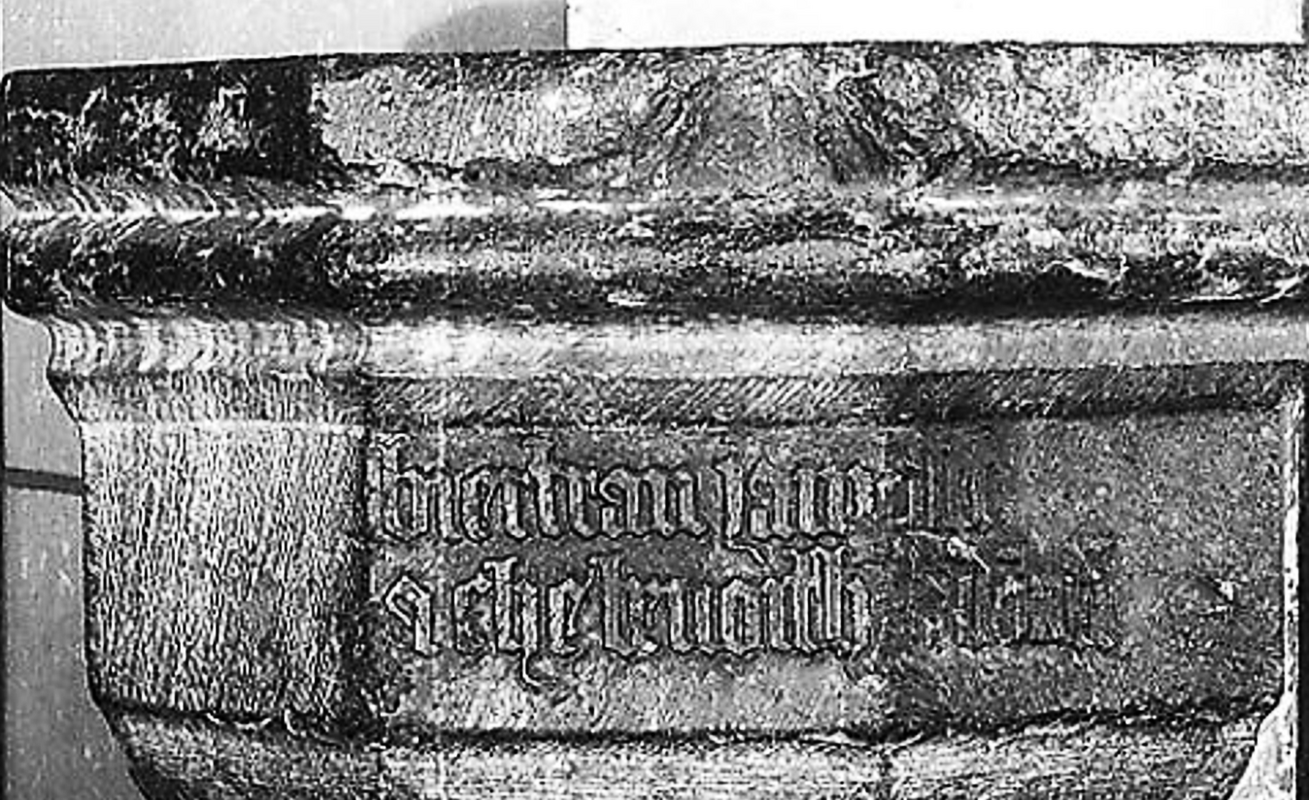
Image copyright © KIK-IRPA, Brussels (Belgium), 2026
CC-BY-4.0
Results: 2 records
inscription
Scene Description: gives the donor's name, Bertrand Jamolet
Copyright Statement: Image copyright © KIK-IRPA, Brussels (Belgium), 2026
Image Source: edited detail of a digital image of a 1973 B&W photograph [cliché M093962] by Ugeux, Brigitte
Copyright Instructions: CC-BY-4.0
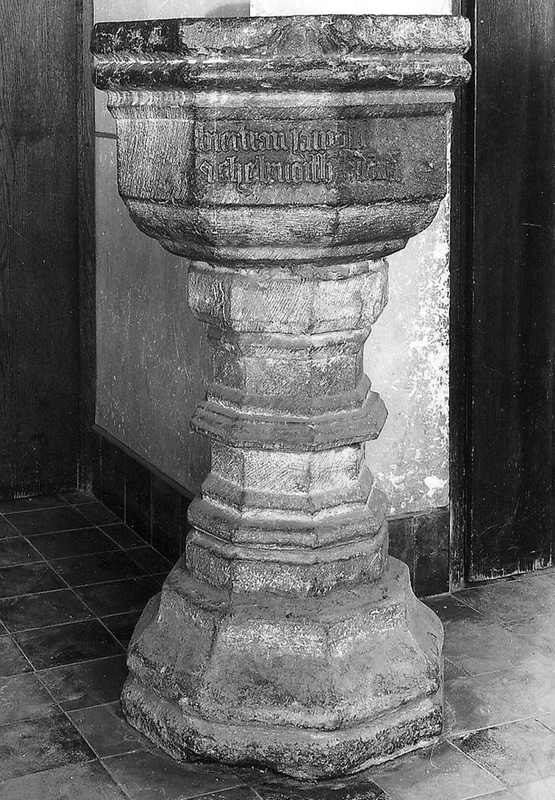
view of stoup
Copyright Statement: Image copyright © KIK-IRPA, Brussels (Belgium), 2026
Image Source: digital image of a 1973 B&W photograph [cliché M093962] by Ugeux, Brigitte
Copyright Instructions: CC-BY-4.0
INFORMATION
Font ID: 26141IKC
Object Type: Stoup
Font Century and Period/Style: 16th century (?), Renaissance
Church / Chapel Name: Eglise Saint-Quentin de Quatregnon
Font Location in Church: Inside
Church Patron Saint(s): St. Quentin
Church Notes: [cf. FontNotes] for details
Church Address: Rue Edouard Anseele 25, 7390 Quaregnon, Belgium -- Tel.: +32 65 72 89 31
Site Location: Hainaut / Henegouwen, Wallonie / Wallonne, Belgium, Europe
Directions to Site: Located off (SW) the N51-N545 crossroads, S of Hwy E42-A7, 6-7 km W of Mons
Historical Region: Borinage
Additional Comments: disappeared font? (the one from the medieval church here)
Town/City Wikipedia: https://fr.wikipedia.org/wiki/Quaregnon
Font Notes:
Click to view
Holy-water stoup of the 16th century listed and illustrated in BALaT KIK-IRPA [https://balat.kikirpa.be/object/10021453] [accessed 21 February 2026]: "bénitier [...] pierre [...] hauteur: 96 cm [...] Date: 1501 - 1600 [...] inscription, taillé, cuve: au nom du donateur: Bertrand Jamolet".
A communication to BSI from Pol Herman (e-mail of 25 January 2026) informs: "Quaterlesia (965), Quaternio (1018), Quaringnon (1071), Quaregio (1110, 1119), Quareum (1195), Quarinum, Quarignon, Karegnon, Karegnum, in villa Quaternione, in Quaternione, de Quaregione, Quaernum, Quarinium, Quarinon, Quarennum, Quarignun. Legend has it that a chapel dedicated to Saint-Quentin served as a meeting place for Sainte Waltrude and Saint Ghislain in the 7th century. Towards the end of their lives, around 686, they had this oratory built halfway between the monastery at Castrilocus (Mons) and the Abbey of Saint-Ghislain, on a site that later became the castle “catiau du diable” at Quaregnon. It was there that they met. It may have served as the first parish church for the local peasants. Later, it was reportedly converted into a leper colony or hospital. It is also said that the Normans destroyed it in 891. Today, only some stone walls remain. In 2008, archaeological excavations near the Romanesque tower of the church unearthed the remains of a Merovingian cemetery, evidence of activity in the region during the 7th and 8th centuries. In the 9th century, residential and storage structures were built over this necropolis. The archaeological findings suggest the existence of an early wooden Christian place of worship on this site, dating from the 9th or 10th century. Its existence is attested in a charter given at Nijmegen on the Kalends of May by which Emperor Otto in the year 965, confirming the possessions of the abbey of Saint-Ghislain: in villa Quaternione, ecclesiam unam. At that time, Hornu was the parish seat of a large territory encompassing Saint-Ghislain and Quaregnon. In 1018, German emperor Henry confirmed the possession of the abbey of Saint-Ghislain: in Quaternione, ecclesiam unam in honore Quintini martyris. In 1118, Pope Gelasius II and in 1119, Pope Callixtus II confirmed: altaria de Cella, cum ecclesia et appenditis suis Hornus et Quargione. In 1119, the monastery of Saint-Ghislain and the chapter of Saint-Waudru in Mons reached an agreement on the division of the tithes of Quaregnon. Built at the beginning of the 11th century, the church was constructed of stone in the Romanesque style. Its Romanesque tower was added in the 12th century and is preserved at some distance from the current church. https://balat.kikirpa.be/object/10021416. The parish of Quaregnon separated from Hornu at the beginning of the 13th century. Until the beginning of the 15th century, several alterations enlarged the building. Later during the 15th century, the church was almost entirely rebuilt. In the mid-18th century, this building was demolished.
A new church dated from 1726-1734. Destabilized by coalmining operations, the bell tower, the south nave, and the vaults, threatening to collapse, were demolished in 1909. The nave was demolished in 1922. It was replaced by a new church in 1932. Baptismal records from 1625 onwards.
Octagonal, limestone, Hainaut-type font, 16th c. https://balat.kikirpa.be/object/10021465 . Stoup 16th c. with inscription of donor name. Octagonal, limestone, Hainaut-type, renaissance. https://balat.kikirpa.be/object/10021453".
A communication to BSI from Pol Herman (e-mail of 25 January 2026) informs: "Quaterlesia (965), Quaternio (1018), Quaringnon (1071), Quaregio (1110, 1119), Quareum (1195), Quarinum, Quarignon, Karegnon, Karegnum, in villa Quaternione, in Quaternione, de Quaregione, Quaernum, Quarinium, Quarinon, Quarennum, Quarignun. Legend has it that a chapel dedicated to Saint-Quentin served as a meeting place for Sainte Waltrude and Saint Ghislain in the 7th century. Towards the end of their lives, around 686, they had this oratory built halfway between the monastery at Castrilocus (Mons) and the Abbey of Saint-Ghislain, on a site that later became the castle “catiau du diable” at Quaregnon. It was there that they met. It may have served as the first parish church for the local peasants. Later, it was reportedly converted into a leper colony or hospital. It is also said that the Normans destroyed it in 891. Today, only some stone walls remain. In 2008, archaeological excavations near the Romanesque tower of the church unearthed the remains of a Merovingian cemetery, evidence of activity in the region during the 7th and 8th centuries. In the 9th century, residential and storage structures were built over this necropolis. The archaeological findings suggest the existence of an early wooden Christian place of worship on this site, dating from the 9th or 10th century. Its existence is attested in a charter given at Nijmegen on the Kalends of May by which Emperor Otto in the year 965, confirming the possessions of the abbey of Saint-Ghislain: in villa Quaternione, ecclesiam unam. At that time, Hornu was the parish seat of a large territory encompassing Saint-Ghislain and Quaregnon. In 1018, German emperor Henry confirmed the possession of the abbey of Saint-Ghislain: in Quaternione, ecclesiam unam in honore Quintini martyris. In 1118, Pope Gelasius II and in 1119, Pope Callixtus II confirmed: altaria de Cella, cum ecclesia et appenditis suis Hornus et Quargione. In 1119, the monastery of Saint-Ghislain and the chapter of Saint-Waudru in Mons reached an agreement on the division of the tithes of Quaregnon. Built at the beginning of the 11th century, the church was constructed of stone in the Romanesque style. Its Romanesque tower was added in the 12th century and is preserved at some distance from the current church. https://balat.kikirpa.be/object/10021416. The parish of Quaregnon separated from Hornu at the beginning of the 13th century. Until the beginning of the 15th century, several alterations enlarged the building. Later during the 15th century, the church was almost entirely rebuilt. In the mid-18th century, this building was demolished.
A new church dated from 1726-1734. Destabilized by coalmining operations, the bell tower, the south nave, and the vaults, threatening to collapse, were demolished in 1909. The nave was demolished in 1922. It was replaced by a new church in 1932. Baptismal records from 1625 onwards.
Octagonal, limestone, Hainaut-type font, 16th c. https://balat.kikirpa.be/object/10021465 . Stoup 16th c. with inscription of donor name. Octagonal, limestone, Hainaut-type, renaissance. https://balat.kikirpa.be/object/10021453".
Credit and Acknowledgements: We are grateful to Pol Herman for bringing this stoup to our attention and for his help documenting it
COORDINATES
Latitude & Longitude (Decimal): 50.433, 3.867
Latitude & Longitude (DMS): 50° 25′ 58.8″ N, 3° 52′ 1.2″ E
MEDIUM AND MEASUREMENTS
Material: stone, limestone
INSCRIPTION
Inscription Language: [cf. FontNotes]
Inscription Location: basin side
Inscription Text: Bertrand Jamolet
Inscription Notes: [cf. FontNotes]
Inscription Source: [cf. FontNotes]
REFERENCES
- KIK-IRPA, BALaT KIK-IRPA, 2024. URL: https://balat.kikirpa.be/.