Szalmia / Salmey / Sclamei / Schalmey
No known copyright restriction / Fair Dealing
PD
Results: 5 records
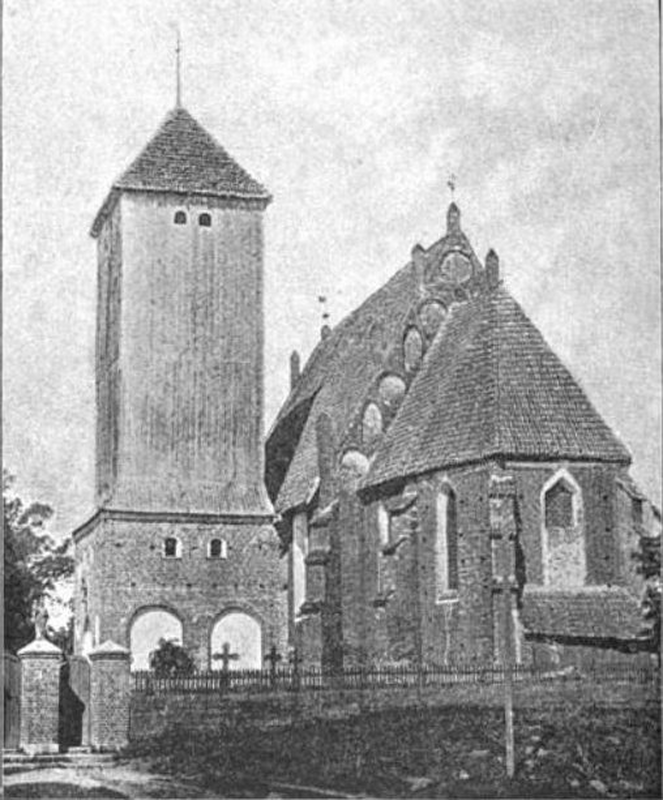
view of church exterior - southeast view
Scene Description: "Schalmey, Ostpreußen, katholische Dorfkirche St. Georg, um etwa 1895" [source: Adolf Boetticher: Die Bau- und Kunstdenkmäler der Provinz Ostpreußen. Band 4: Die Bau- und Kunstdenkmäler in Ermland. Königsberg 1894, S. 227–230]
Copyright Statement: No known copyright restriction / Fair Dealing
Image Source: digital image of a B&W illustration in Adolf Boetticher (1894)
Copyright Instructions: PD
view of church interior - looking east
!["Schalmey, Ostpreußen, Dorfkirche St. Georg, Teilansicht des Innenraums nach den 1904–1907 durchgeführten Restaurierungsmaßnahmen " [source: Kurt Matern: Die Kirche in Schalmey in Ostpreußén, in: Die Denkmalpflege, XIII. Jahrgang, Nr. 3, Berlin, 1. März 1911, S. 19–21]](/static-50478a99ec6f36a15d6234548c59f63da52304e5/compressed/0260214002_compressed.png)
Scene Description: "Schalmey, Ostpreußen, Dorfkirche St. Georg, Teilansicht des Innenraums nach den 1904–1907 durchgeführten Restaurierungsmaßnahmen " [source: Kurt Matern: Die Kirche in Schalmey in Ostpreußén, in: Die Denkmalpflege, XIII. Jahrgang, Nr. 3, Berlin, 1. März 1911, S. 19–21]
Copyright Statement: No known copyright restriction / Fair Dealing
Image Source: digital image of a B&W illustration in Kurt Matern (1909)
Copyright Instructions: PD
animal - mammal - lion - foliated tail - foliated tongue - passant
![several [cf. FontNotes]](/static-50478a99ec6f36a15d6234548c59f63da52304e5/compressed/0260214009_compressed.png)
Scene Description: several [cf. FontNotes]
Copyright Statement: No known copyright restriction / Fair Dealing
Image Source: digital image of a drawing in Geschichte und Altertumskunde Ermlands Siebzehnter Band, Heft 1-3, 1910, Page 334."
Copyright Instructions: PD
design element - motifs - floral and foliage
Scene Description: stylised as in the Frojelgruppen fonts? [cf. FontNotes]
Copyright Statement: No known copyright restriction / Fair Dealing
Image Source: digital image of a drawing in Geschichte und Altertumskunde Ermlands Siebzehnter Band, Heft 1-3, 1910, Page 334."
Copyright Instructions: PD
view of font
!["Schalmey, Ostpreußen, katholische Dorfkirche St. Georg, massives Taufbecken aus Gotländer Kalkstein, mit Zinnschüssel darin, erstmals 1609 erwähnt" [source: Kurt Matern: Die Kirche in Schalmey in Ostpreußén, in: Die Denkmalpflege, XIII. Jahrgang, Nr. 3, Berlin, 1. März 1911, S. 19–21]](/static-50478a99ec6f36a15d6234548c59f63da52304e5/compressed/0260214003_compressed.png)
Scene Description: "Schalmey, Ostpreußen, katholische Dorfkirche St. Georg, massives Taufbecken aus Gotländer Kalkstein, mit Zinnschüssel darin, erstmals 1609 erwähnt" [source: Kurt Matern: Die Kirche in Schalmey in Ostpreußén, in: Die Denkmalpflege, XIII. Jahrgang, Nr. 3, Berlin, 1. März 1911, S. 19–21]
Copyright Statement: No known copyright restriction / Fair Dealing
Image Source: digital image of a B&W illustration in Kurt Matern (1909)
Copyright Instructions: PD
INFORMATION
Font ID: 26116DMD
Object Type: Baptismal Font1
Font Century and Period/Style: 14th - 16th century (?), Gothic? / Renaissance?
Cognate Fonts: [cf. FontNotes]
Church / Chapel Name: Katholische Dorfkirche St. Georg [destroyed in 1945]
Font Location in Church: disappeared / destroyed
Church Patron Saint(s): St. George
Church Notes: the patronage of a church to be built here was assignated in 1289; the next documentation of a church here dates from 1782; restored 1904-1907; destroyed in 1945; never re-built
Site Location: Warmińsko-Mazurskie, Poland, Europe
Directions to Site: Located off (S) Hwy E28/S22, 5 km NW of Płoskinia (Plaßwich), 10 km SE of Braniewo (Braunsberg), about 37 km ENE of Elbląg (Elbing), about 20 km S of the coast
Historical Region: Warmia, East Prussia
Additional Comments: disappeared / destroyed font [cf. FontNotes]
Font Notes:
Click to view
A baptismal font said to have been made of Gotland limestone is noted and illustrated in the German Wikipedia [https://de.wikipedia.org/wiki/Szalmia] [accessed 14 February 2026] with reference to Kurt Matern: Die Kirche in Schalmey in Ostpreußén, in: Die Denkmalpflege, XIII. Jahrgang, Nr. 3, Berlin, 1. März 1911, S. 19–21.
A communication to BSI from Pol Herman (e-mail of 10 February 2026) informs: "The church of Sankt Georg was destroyed in 1940 and was never rebuilt. There is an article about the church and drawing of font in : Die Denkmalpflege, Herausgegeben von der Schriftleitung des Zentralblattes der Bauverwaltung ; Schriftleiter : Otto Sarrazin und Friedrich Schultze (Berlin: Verlag von Wilhelm Ernst & Sohn), XIII. Jahrgang, 1. März 1911 Nr. 2, Page 21. The church possessed a remarkable piece in the form of a massive baptismal font, first mentioned in a report from 1609. It is made of Gotland limestone. The bowl and stem are each carved from a single piece. Judging by the decorative band, one could attribute a great age to the stone; however, the overall form shows more of a Renaissance character. In any case, it was not a particularly skilled hand that wielded the chisel here. A baptismal font made of the same stone and with similar archaic features stands in Königsberg Cathedral. It is undoubtedly a Renaissance work and can be dated to the last decade of the 16th century."
[NB: the baptismal font in the cathedral at Kaliningrad does not look like the one shown in the above church in Szalmia at all, though it is quite likely also made on Gotland of its local limestone, one of the Frojelgruppen]
A follow-up communication from Pol Herman (e-mail of 14 February 2026) adds: "I think you are right to put a question mark on the comparison with the font at Kaliningrad. Although I can understand why a 19th century historian would see some resemblance between both. The same scene is depicted, but at Szalmia, it is compressed into a 25 cm wide frieze. Personnaly, I am fairly sure about how the font of Szalmai (Schlamey) looked.
Another source of information, with a better drawing of the font is in the Zeitschrift für die Geschichte und Altertumskunde Ermlands
Siebzehnter Band, Heft 1-3, 1910, Page 334.: "Im chor hatte auch der gewaltige Taufstein seinen Platz erhalten. Nach 1609 stand er vor dem Hochaltar, wohl vor der ersten Niche der Südwand. Er findet, was Grosse und Arbeit anbetrifft, im Ordensland nicht seines Gleichen. Das eigentliche Bechen ist aus einem mächtigen gelblich-rötlichem weichem Kalkstein gehauen. Es misst 115 cm im Äusseren, 87 cm im inneren Durchmesser. Die Höhlung ist so gross dass ein kind bequem in des wasser gelegt werden konnte. Der Immersionsritus kam aber schon seit dem 13. Jahrhundert mehr und mehr ausser übung, wenngleich noch die Ritualien des 16. Jahrhunderts auf dem Ritus bezug nehmen. Sicherlich hat der Taufstein ein hohes Alter. Bemerkenswert ist vor allem der Fries, der die Aussenseite des Steins umzieht. In einer Breite von 25 cm zeigt derselbe abwechselnd einen schreitenden Löwen und eine gotisch stilierte Blume (Lilie). Die Auffassung ist herb, heraldisch, die Ausführung zeugt von einer sicheren Hand. Die Färbung des Grundes tritt jetzt der frühen kaum sichtbare Bilderfries klar heraus. Der wuchtige Kelch trägt ein runder Stiel und eine abgeschrägte Plinthe vom gleichem Material." -- Translation: "Also the enormous baptismal font found its place in the chancel. After 1609, it stood before the high altar, probably in front of the first niche in the south wall. In terms of size and craftsmanship, it is unparalleled in the territory of the Teutonic Order. The actual basin is hewn from a massive, yellowish-red, soft limestone. It measures 115 cm in diameter on the outside and 87 cm on the inside. The cavity is large enough for a child to be comfortably placed in the water. However, the immersion rite had been falling out of practice since the 13th century, although the rituals of the 16th century still refer to it. The baptismal font is certainly very old. Particularly noteworthy is the frieze that encircles the outside of the stone. At a width of 25 cm, it alternates between a striding lion and a Gothic-style stylized flower (lily). The design is austere and heraldic, the execution demonstrating a sure hand. The background colour now stands out clearly against the earlier barely visible frieze of images. The substantial chalice supports a round stem and a beveled plinth of the same material."
A communication to BSI from Pol Herman (e-mail of 10 February 2026) informs: "The church of Sankt Georg was destroyed in 1940 and was never rebuilt. There is an article about the church and drawing of font in : Die Denkmalpflege, Herausgegeben von der Schriftleitung des Zentralblattes der Bauverwaltung ; Schriftleiter : Otto Sarrazin und Friedrich Schultze (Berlin: Verlag von Wilhelm Ernst & Sohn), XIII. Jahrgang, 1. März 1911 Nr. 2, Page 21. The church possessed a remarkable piece in the form of a massive baptismal font, first mentioned in a report from 1609. It is made of Gotland limestone. The bowl and stem are each carved from a single piece. Judging by the decorative band, one could attribute a great age to the stone; however, the overall form shows more of a Renaissance character. In any case, it was not a particularly skilled hand that wielded the chisel here. A baptismal font made of the same stone and with similar archaic features stands in Königsberg Cathedral. It is undoubtedly a Renaissance work and can be dated to the last decade of the 16th century."
[NB: the baptismal font in the cathedral at Kaliningrad does not look like the one shown in the above church in Szalmia at all, though it is quite likely also made on Gotland of its local limestone, one of the Frojelgruppen]
A follow-up communication from Pol Herman (e-mail of 14 February 2026) adds: "I think you are right to put a question mark on the comparison with the font at Kaliningrad. Although I can understand why a 19th century historian would see some resemblance between both. The same scene is depicted, but at Szalmia, it is compressed into a 25 cm wide frieze. Personnaly, I am fairly sure about how the font of Szalmai (Schlamey) looked.
Another source of information, with a better drawing of the font is in the Zeitschrift für die Geschichte und Altertumskunde Ermlands
Siebzehnter Band, Heft 1-3, 1910, Page 334.: "Im chor hatte auch der gewaltige Taufstein seinen Platz erhalten. Nach 1609 stand er vor dem Hochaltar, wohl vor der ersten Niche der Südwand. Er findet, was Grosse und Arbeit anbetrifft, im Ordensland nicht seines Gleichen. Das eigentliche Bechen ist aus einem mächtigen gelblich-rötlichem weichem Kalkstein gehauen. Es misst 115 cm im Äusseren, 87 cm im inneren Durchmesser. Die Höhlung ist so gross dass ein kind bequem in des wasser gelegt werden konnte. Der Immersionsritus kam aber schon seit dem 13. Jahrhundert mehr und mehr ausser übung, wenngleich noch die Ritualien des 16. Jahrhunderts auf dem Ritus bezug nehmen. Sicherlich hat der Taufstein ein hohes Alter. Bemerkenswert ist vor allem der Fries, der die Aussenseite des Steins umzieht. In einer Breite von 25 cm zeigt derselbe abwechselnd einen schreitenden Löwen und eine gotisch stilierte Blume (Lilie). Die Auffassung ist herb, heraldisch, die Ausführung zeugt von einer sicheren Hand. Die Färbung des Grundes tritt jetzt der frühen kaum sichtbare Bilderfries klar heraus. Der wuchtige Kelch trägt ein runder Stiel und eine abgeschrägte Plinthe vom gleichem Material." -- Translation: "Also the enormous baptismal font found its place in the chancel. After 1609, it stood before the high altar, probably in front of the first niche in the south wall. In terms of size and craftsmanship, it is unparalleled in the territory of the Teutonic Order. The actual basin is hewn from a massive, yellowish-red, soft limestone. It measures 115 cm in diameter on the outside and 87 cm on the inside. The cavity is large enough for a child to be comfortably placed in the water. However, the immersion rite had been falling out of practice since the 13th century, although the rituals of the 16th century still refer to it. The baptismal font is certainly very old. Particularly noteworthy is the frieze that encircles the outside of the stone. At a width of 25 cm, it alternates between a striding lion and a Gothic-style stylized flower (lily). The design is austere and heraldic, the execution demonstrating a sure hand. The background colour now stands out clearly against the earlier barely visible frieze of images. The substantial chalice supports a round stem and a beveled plinth of the same material."
Credit and Acknowledgements: We are grateful to Pol Herman for bringing this font to our attention and for his help documenting it
COORDINATES
UTM: 34U 426757 6017593
Latitude & Longitude (Decimal): 54.300972, 19.874472
Latitude & Longitude (DMS): 54° 18′ 3.5″ N, 19° 52′ 28.1″ E
MEDIUM AND MEASUREMENTS
Material: stone, limestone ((from Gotland)
Font Shape: hemispheric (mounted)
Basin Interior Shape: round
Basin Exterior Shape: round
Drainage Notes: metal insert [cf. FontNotes]
Diameter (inside rim): 87 cm*
Diameter (includes rim): 110 cm*
Notes on Measurements: * cf. FontNotes]