Baaigem / Badengem / Badingahem
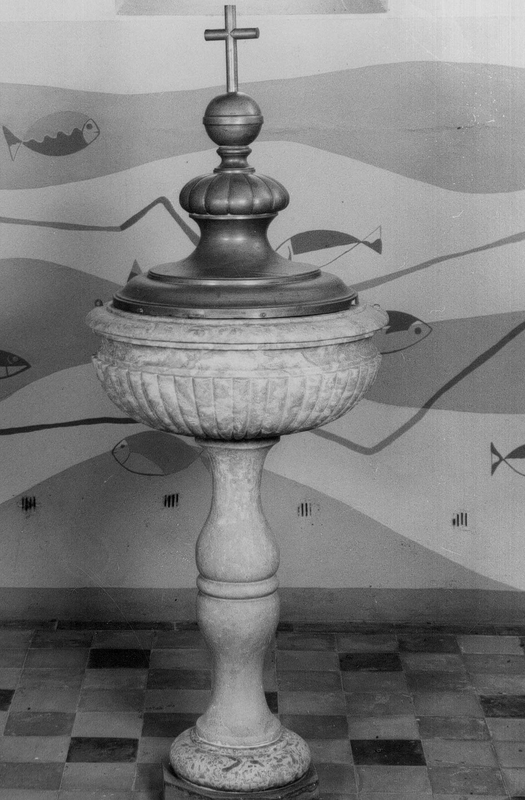
Image copyright © KIK-IRPA, Brussels (Belgium), 2026
CC-BY-4.0
Results: 5 records
view of font and cover
Scene Description: the present font in this church
Copyright Statement: Image copyright © KIK-IRPA, Brussels (Belgium), 2026
Image Source: digital image of a 1977 B&W photograph [cliché M257128] by Wildemeersch[studio], KIK https://balat.kikirpa.be/photo.php?objnr=11255
Copyright Instructions: CC-BY-4.0
design element - motifs - torus-scotia
Copyright Statement: Image copyright © KIK-IRPA, Brussels (Belgium), 2026
Image Source: digital image of a 1977 B&W photograph [cliché M257128] by Wildemeersch[studio], KIK https://balat.kikirpa.be/photo.php?objnr=11255
Copyright Instructions: CC-BY-4.0
design element - patterns - gadrooned
Copyright Statement: Image copyright © KIK-IRPA, Brussels (Belgium), 2026
Image Source: digital image of a 1977 B&W photograph [cliché M257128] by Wildemeersch[studio], KIK https://balat.kikirpa.be/photo.php?objnr=11255
Copyright Instructions: CC-BY-4.0
view of church exterior - southeast view
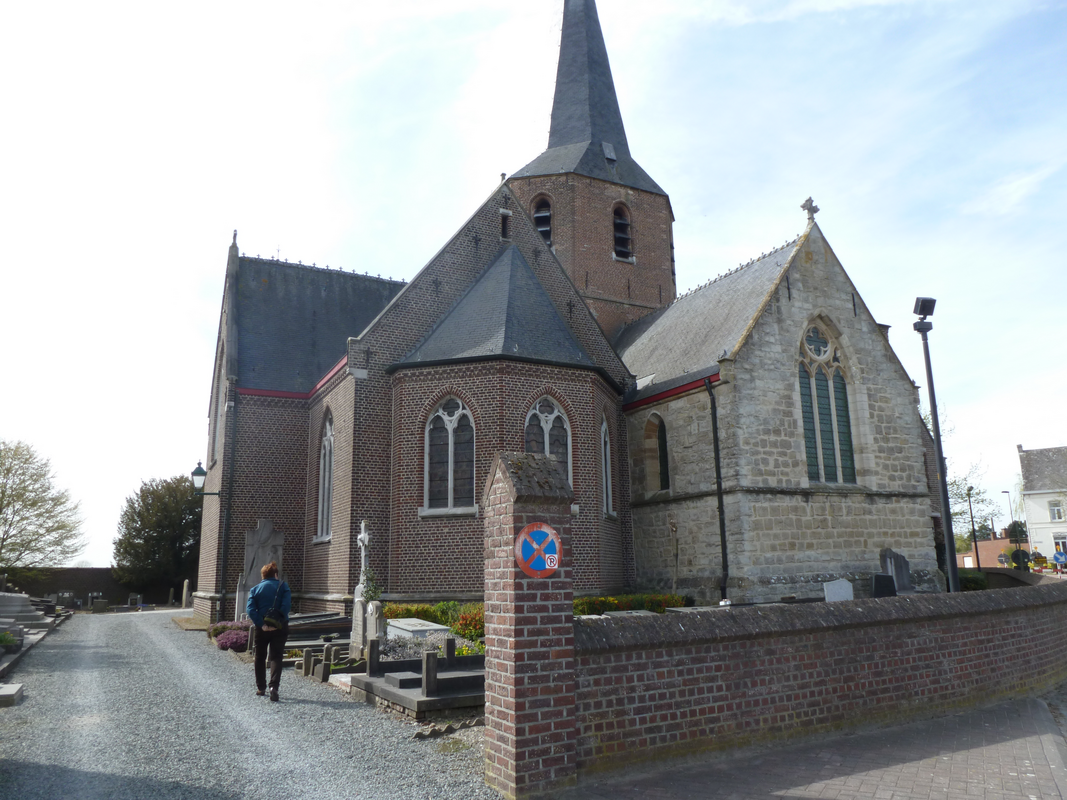
Scene Description: "Gavere Baaigem KH"
Copyright Statement: Image copyright © Joeri Mertens, 2015
Image Source: digital photograph 17 April 2015 by Joeri Mertens
Copyright Instructions: CC-BY-SA-4.0
design element - motifs - moulding
Copyright Statement: Image copyright © KIK-IRPA, Brussels (Belgium), 2026
Image Source: digital image of a 1977 B&W photograph [cliché M257128] by Wildemeersch[studio], KIK https://balat.kikirpa.be/photo.php?objnr=11255
Copyright Instructions: CC-BY-4.0
INFORMATION
Font ID: 26084FUY
Object Type: Baptismal Font1
Font Century and Period/Style: 17th century, Baroque
Church / Chapel Name: Parochiekerk Sint-Bavo in Baaigem
Font Location in Church: Inside
Church Wikidata: https://nl.wikipedia.org/wiki/Sint-Bavokerk_(Baaigem)
Church Patron Saint(s): St. Bavo
Church Notes: church here documented 1020 [cf. FontNotes]
Church Address: Baaigemstraat 352a, 9890 Gavere, Belgium -- Tel.: +32 9 385 42 40
Site Location: Oost-Vlaanderen / Flandre Est, Vlaanderen / Flandres, Belgium, Europe
Directions to Site: Located off (W) the N444, in the municipality and 5 km E of Gavere, S of Ghent
Ecclesiastic Region: Bisdom Gent / Diocèse de Gand
Additional Comments: destroyed font? (the one from the medieval church here) [cf. FontNotes]
Town/City Wikipedia: https://nl.wikipedia.org/wiki/Baaigem
Font Notes:
Click to view
Baptismal font listed and illustrated in BALaT KIK-IRPA [https://balat.kikirpa.be/object/11255] [accessed 28 January 2026]: "doopvont [...] arduin, koper ]...] hoogte: 100 cm; hoogte: 163 cm [with the cover] Date: 1601 - 1700".
A communication to BSI from Pol Herman (e-mail of 6 January 2026) informs: "villa Badingahem, Badengem. The dedication to Saint Bavo stemmed from the connection with Saint Bavo's Abbey in Ghent. The village likely goes back to an early medieval foundation (between the late 7th and mid-9th century) of Saint Bavo's Abbey on its own grounds. The church was first mentioned around 1020 in a letter from the abbot of that abbey to Otgiva of Luxembourg, Countess of Flanders. It had previously been taken away from Saint Bavo's Abbey by Count Arnulf I. In 1096, at the behest of the Bishop of Cambrai, the right of patronage passed into the hands of Saint Peter's Abbey in Dikkelvenne, which wa s soon relocated and became Saint Adrian's Abbey in Geraardsbergen. Even later, the Bishop of Cambrai granted this right to Anchin Abbey. The church was part of the villa Badengem. At the end of the 10th century and the beginning of the 11th century, a small Romanesque building was constructed from irregular blocks of Tournai limestone. A westward extension was added as early as the second half of the twelfth century. In the following centuries, many Gothic modifications were made, using Balegem sandstone. Iconoclasts in the 16th century primarily targeted the church's interior. Almost every object was destroyed or removed in 1566. As a result of the religious unrest, there was no resident priest between 1587 and 1625. The Anchin Abbey only began the reconstruction in the early 17th century. Repeated modifications did not affect the building's essence. In 1913, the church was reconsecrated after a significant expansion. Baptismal registers from 1669 onwards. 17th century limestone baroque Hainaut-type font with baluster column and gadroons. Design of column and of gadroons point to second halve of 17th c. Could for example be 1669. Older font was probably destroyed in 1566. https://balat.kikirpa.be/object/11255"
A communication to BSI from Pol Herman (e-mail of 6 January 2026) informs: "villa Badingahem, Badengem. The dedication to Saint Bavo stemmed from the connection with Saint Bavo's Abbey in Ghent. The village likely goes back to an early medieval foundation (between the late 7th and mid-9th century) of Saint Bavo's Abbey on its own grounds. The church was first mentioned around 1020 in a letter from the abbot of that abbey to Otgiva of Luxembourg, Countess of Flanders. It had previously been taken away from Saint Bavo's Abbey by Count Arnulf I. In 1096, at the behest of the Bishop of Cambrai, the right of patronage passed into the hands of Saint Peter's Abbey in Dikkelvenne, which wa s soon relocated and became Saint Adrian's Abbey in Geraardsbergen. Even later, the Bishop of Cambrai granted this right to Anchin Abbey. The church was part of the villa Badengem. At the end of the 10th century and the beginning of the 11th century, a small Romanesque building was constructed from irregular blocks of Tournai limestone. A westward extension was added as early as the second half of the twelfth century. In the following centuries, many Gothic modifications were made, using Balegem sandstone. Iconoclasts in the 16th century primarily targeted the church's interior. Almost every object was destroyed or removed in 1566. As a result of the religious unrest, there was no resident priest between 1587 and 1625. The Anchin Abbey only began the reconstruction in the early 17th century. Repeated modifications did not affect the building's essence. In 1913, the church was reconsecrated after a significant expansion. Baptismal registers from 1669 onwards. 17th century limestone baroque Hainaut-type font with baluster column and gadroons. Design of column and of gadroons point to second halve of 17th c. Could for example be 1669. Older font was probably destroyed in 1566. https://balat.kikirpa.be/object/11255"
Credit and Acknowledgements: We are grateful to Pol Herman for bringing this font to our attention and for his help in documenting it
COORDINATES
UTM: 31U 550481 5642594
Latitude & Longitude (Decimal): 50.932769, 3.718378
Latitude & Longitude (DMS): 50° 55′ 57.97″ N, 3° 43′ 6.16″ E
MEDIUM AND MEASUREMENTS
Material: stone, limestone
Font Shape: hemispheric (mounted)
Basin Interior Shape: round
Basin Exterior Shape: round
Font Height (less Plinth): 100 cm*
Notes on Measurements: * [cf. FontNotes]
LID INFORMATION
Material: metal, copper
Notes: round cake-shaped with orb-and-cross finial