Cherain / Charancheo / Charancho / Charango / Cherein / Karanco / Keren
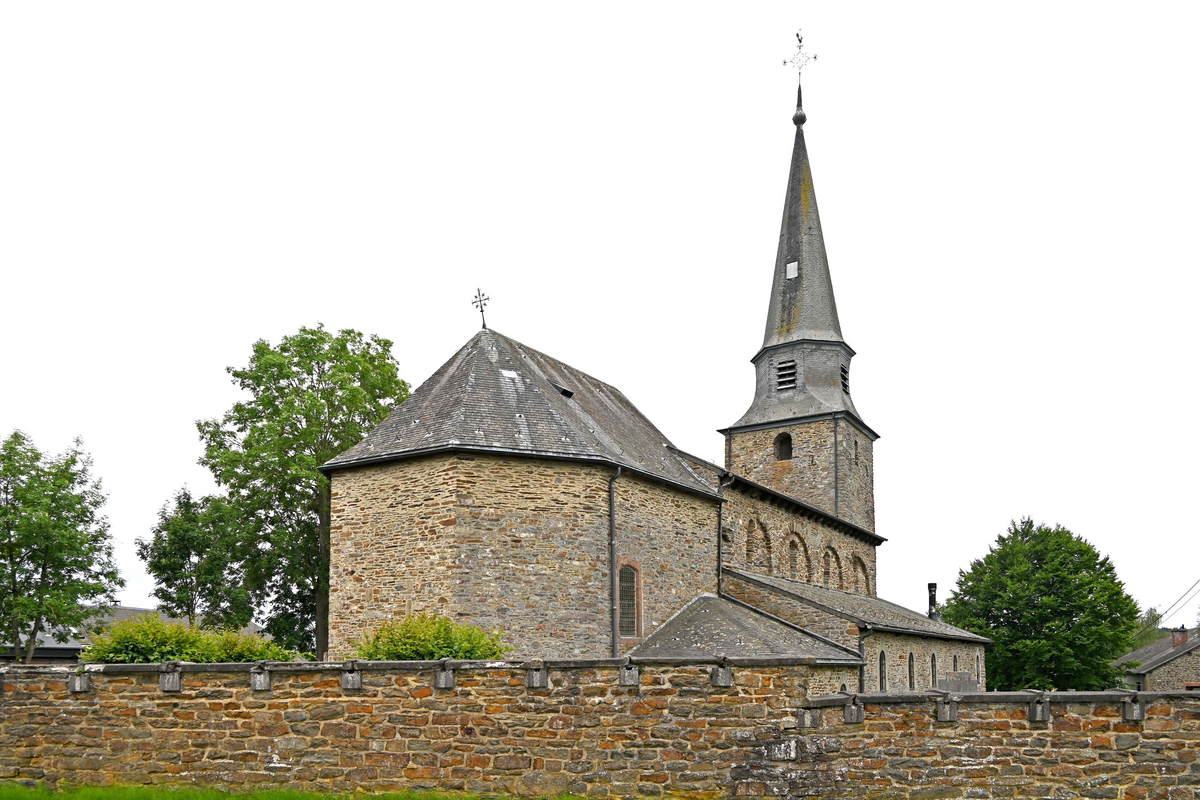
Image copyright © Thomas Hummel, 2022
CC-BY-SA-4.0
Results: 2 records
view of church exterior - northeast view
Scene Description: "St. Vincent (Cherain) von Nordosten"
Copyright Statement: Image copyright © Thomas Hummel, 2022
Image Source: digital photograph 22 June 2022 by Thomas Hummel
Copyright Instructions: CC-BY-SA-4.0
view of stoup
!["Date: 1691 (ca) - 1700 (ca) [...] pied récent en bois"](/static-50478a99ec6f36a15d6234548c59f63da52304e5/compressed/1260127007_compressed.png)
Scene Description: "Date: 1691 (ca) - 1700 (ca) [...] pied récent en bois"
Copyright Statement: Image copyright © KIK-IRPA, Brussels (Belgium), 2026
Image Source: digital image of a 1970 B&W photograph by Dekemel, Raoul, Archives centrales iconographiques d'Art national et le Laboratoire central des musées de Belgique https://balat.kikirpa.be/object/10083287
Copyright Instructions: CC-BY-4.0
INFORMATION
Font ID: 26080ULK
Object Type: Baptismal Font1
Font Century and Period/Style: 12th century (?), Romanesque
Church / Chapel Name: Eglise Saint-Vincent de Cherain
Font Location in Church: Inside
Church Wikidata: https://fr.wikipedia.org/wiki/Église_Saint-Vincent_de_Cherain
Church Patron Saint(s): St. Vincent
Church Notes: church here documented 814, 1131, 1235;
Church Address: Cherain Eglise, 6673 Gouvy, Belgium
Site Location: Luxembourg / Luxemburg, Wallonie / Wallonne, Belgium, Europe
Directions to Site: Located off the N827, E of Hwy E25, in the municipality and 6 km W of Gouvy, about 33 km NNE of Bastogne
Ecclesiastic Region: Diocèse de Namur
Town/City Wikipedia: https://fr.wikipedia.org/wiki/Cherain
Font Notes:
Click to view
Baptismal font listed and illustrated in BALaT KIK-IRPA [https://balat.kikirpa.be/object/10083288] [accessed 27 January 2026]: "fonts baptismaux [...] pierre calcaire [...] Roman [...] Dimensions: hauteur: 76 cm; diamètre: 103 cm [...] Date: 1101 - 1200". The same source [https://balat.kikirpa.be/object/10083287] [accessed 27 January 2027] lists and illustrates a holy-water stoup made of marble in the late-17th century.
A communication to BSI from Pol Herman (e-mail of 2 January 2026) informs: "606, 667, 814, 888, 950 : Charancheo, Charancho, Charango, Keren, Karanco, Cherein. Originally, the settlement was a hunting lodge for the lords of Houffalize, within the Frankish royal domain (curtis). The area was part of the possessions of Stavelot Abbey from 648 to 670. On September 6, 670, Childeric II, King of the Franks, at the request of Abbot Remacle, confirmed to the monasteries of Stavelot and Malmedy the twelve-thousand-miles-territory granted to them by King Sigibert III. However, he reduced it by half "on the side of Amblève (Amblavam), Cherain (Charango), and Lierneux (Ledernae)." In 814, Emperor Louis the Pious confirmed this possession and recognized their ownership of a number of churches and tithes, which had been given to them by their predecessors, including Cherain. A place of worship already existed in Cherain, but it may have been built before 670. In 888, Lothair II and Emperor Arnulf granted the Charango area to the chapter of Our Lady of Aachen. The church is mentioned during the abbacy of Saint Popon (1020-1048), in 1131, and in 1235. The Romanesque parish church dates back to the early 11th century, replacing an earlier place of worship already mentioned in 814. The church was restored in 1884. First baptismal record 1615. Simple baptismal font made of local arkose stone, attributed to the 12th century. Its design makes it difficult to date, but Henry d'Otreppe de Bouvette has researched the history of churches and fonts made of arkose : "Cuves baptimales romanes en Arkose" (1997). Marble stoup, end of 17th century. In the style of a wine bottle cooler https://balat.kikirpa.be/object/10083287 -- https://balat.kikirpa.be/object/10083288".
A communication to BSI from Pol Herman (e-mail of 2 January 2026) informs: "606, 667, 814, 888, 950 : Charancheo, Charancho, Charango, Keren, Karanco, Cherein. Originally, the settlement was a hunting lodge for the lords of Houffalize, within the Frankish royal domain (curtis). The area was part of the possessions of Stavelot Abbey from 648 to 670. On September 6, 670, Childeric II, King of the Franks, at the request of Abbot Remacle, confirmed to the monasteries of Stavelot and Malmedy the twelve-thousand-miles-territory granted to them by King Sigibert III. However, he reduced it by half "on the side of Amblève (Amblavam), Cherain (Charango), and Lierneux (Ledernae)." In 814, Emperor Louis the Pious confirmed this possession and recognized their ownership of a number of churches and tithes, which had been given to them by their predecessors, including Cherain. A place of worship already existed in Cherain, but it may have been built before 670. In 888, Lothair II and Emperor Arnulf granted the Charango area to the chapter of Our Lady of Aachen. The church is mentioned during the abbacy of Saint Popon (1020-1048), in 1131, and in 1235. The Romanesque parish church dates back to the early 11th century, replacing an earlier place of worship already mentioned in 814. The church was restored in 1884. First baptismal record 1615. Simple baptismal font made of local arkose stone, attributed to the 12th century. Its design makes it difficult to date, but Henry d'Otreppe de Bouvette has researched the history of churches and fonts made of arkose : "Cuves baptimales romanes en Arkose" (1997). Marble stoup, end of 17th century. In the style of a wine bottle cooler https://balat.kikirpa.be/object/10083287 -- https://balat.kikirpa.be/object/10083288".
Credit and Acknowledgements: We are grateful to Pol Herman for bringing this font to our attention and for his help in documenting it
COORDINATES
UTM: 31U 704564 5562680
Latitude & Longitude (Decimal): 50.18095, 5.86535
Latitude & Longitude (DMS): 50° 10′ 51.42″ N, 5° 51′ 55.26″ E
MEDIUM AND MEASUREMENTS
Material: stone, limestone
Font Shape: tub-shaped
Basin Interior Shape: round
Basin Exterior Shape: round
Diameter (includes rim): 103 cm*
Font Height (less Plinth): 76 cm*
Notes on Measurements: * [cf. FontNotes]
LID INFORMATION
Material: metal
Notes: round and plain, with side lock
REFERENCES
- KIK-IRPA, BALaT KIK-IRPA, 2024. URL: https://balat.kikirpa.be/.