Baasrode / Baceroth / Baestroey / Basserode / Bastroe
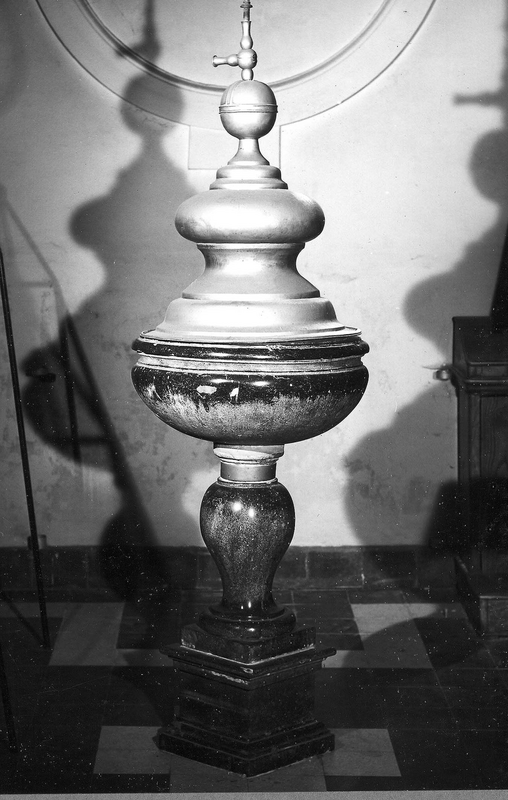
Image copyright © KIK-IRPA, 2026
CC-BY-NA-4.0
Results: 2 records
view of font and cover
Copyright Statement: Image copyright © KIK-IRPA, 2026
Image Source: digital image of a 1976 B&W photograph [cliché M247217] by KIK [https://balat.kikirpa.be/object/71283] [accessed 19 January 2026]
Copyright Instructions: CC-BY-NA-4.0
view of church exterior - southeast view
![Dendermonde Sint-Ursmarusstraat zonder nummer [https://id.erfgoed.net/afbeeldingen/139838]](/static-50478a99ec6f36a15d6234548c59f63da52304e5/compressed/1260119005_compressed.png)
Scene Description: Dendermonde Sint-Ursmarusstraat zonder nummer [https://id.erfgoed.net/afbeeldingen/139838]
Copyright Statement: Image copyright © Kris Vandevorst, 2025
Image Source: digital photograph 2005 by Kris Vandevorst [https://commons.wikimedia.org/wiki/File:Dendermonde_Sint-Ursmarusstraat_zonder_nummer_-_139838_-_onroerenderfgoed.jpg] [accessed 19 January 2026]
Copyright Instructions: CC-BY-SA-4.0
INFORMATION
Font ID: 26050IJX
Object Type: Baptismal Font1
Font Century and Period/Style: 17th century (mid?), Baroque
Church / Chapel Name: Sint-Ursmaruskerk, Baasrode
Font Location in Church: Inside
Church Wikidata: https://nl.wikipedia.org/wiki/Sint-Ursmaruskerk_(Baasrode)
Church Patron Saint(s): St. Ursmarus
Church Notes: 12thC church; re-built ca. 1500; much damaged, restored and re-built since
Church Address: Sint-Ursmarusstraat 89, 9200 Dendermonde, Belgium -- Tel.: +32 497 26 25 35
Site Location: Oost-Vlaanderen / Flandre Est, Vlaanderen / Flandres, Belgium, Europe
Directions to Site: Located off the N17, on the W banks of the Scheldt river, in the municipality and 5-6 km E of Dendermonde
Ecclesiastic Region: Diocèse de Ghand / Bistum Ghent
Additional Comments: disappeared font? (the one from the medieval church here)
Town/City Wikipedia: https://nl.wikipedia.org/wiki/Baasrode
Font Notes:
Click to view
The entry for this church in the Onroerend Erfgoed [https://inventaris.onroerenderfgoed.be/erfgoedobjecten/48901] [accessed 19 January 2026] reports a 1650 font with a 19th-century copper font cover: "Doopvont in gepolijste hardsteen van omstreeks 1650 met een koperen deksel (19de eeuw)." The entry in the Belgian Wikipedia [https://nl.wikipedia.org/wiki/Sint-Ursmaruskerk_(Baasrode)] [accessed 19 January 2026] reports a baptismal font of 1650: "Het doopvont is van 1650". Listed and illustrated in BALaT KIK_IRPA [https://balat.kikirpa.be/object/71283] [accessed 19 January 2026] as a baptismal font of marble with date "1801 - 1900" [cf. infra], "hoogte kuip: 111 cm" and a total height (including the cover) of 196 cm.
A communication to BSI from Pol Herman (e-mail of 6 January 2026) informs: "In 822, a charter of Louis the Pious, King of France, mentions "Baceroth." In 1139, Baasrode was donated to the Abbey of Affligem by the Bishop of Cambrai. The monks presumably built a small church there. The establishment of a parish was approved by Pope Eugene III on April 3, 1148. Baasrode developed into a thriving trading town on the Scheldt River. This church became too small, and around 1500, a new Gothic church was built with a double transept and a west tower. It was only then that Saint Ursmarus became the patron saint. In 1561, the sea canal between Brussels and the Scheldt was completed, allowing shipping to avoid the detour around Baasrode. As a result, its port, which was often plagued by river flooding, lost much of its importance. In 1566, Pieter Breugel made a pen drawing of the city and church of Baasrode, now in the Staatliche Museen in Berlin. In 1567, the church suffered from the iconoclasm by a fleet of Protestant refugees. In August 1578, Baasrode was besieged, captured, and burned down by Ghent Protestants. The final blow, however, came a year later, at dawn on August 15, 1579, when the fortified village centre was captured and destroyed by 600 Walloon Catholic soldiers during the Battle of Baasrode, at the hands of four banners of Ghent rebels, in a failed but particularly bloody attempt by the Spanish authorities to capture rebel leader William of Orange. All the recently restored buildings, including the church, were set on fire again. Only the tower remained standing.
Most of the population did not survive these turbulent years or had moved away. By 1590, only 47 families remained in the municipality. Due to subsequent wars, restorations of the church were not begun until 1654. By 1677, it was completely restored. The current Renaissance-style tower top dates from 1677. The nave of the church was significantly expanded in 1779 and 1830. From 1777 until the mid-twentieth century, Baasrode was one of the most important shipbuilding centres in the Southern Netherlands. Baptismal records: from 1610 onwards. The Baroque baptismal font in Hainaut limestone dates from around 1650. The dating of 1801-1900 by KIK-IRPA is believed to be incorrect. The brass lid was made in 1781 by Jean-Baptist Vandamme. https://balat.kikirpa.be/object/71283".
A communication to BSI from Pol Herman (e-mail of 6 January 2026) informs: "In 822, a charter of Louis the Pious, King of France, mentions "Baceroth." In 1139, Baasrode was donated to the Abbey of Affligem by the Bishop of Cambrai. The monks presumably built a small church there. The establishment of a parish was approved by Pope Eugene III on April 3, 1148. Baasrode developed into a thriving trading town on the Scheldt River. This church became too small, and around 1500, a new Gothic church was built with a double transept and a west tower. It was only then that Saint Ursmarus became the patron saint. In 1561, the sea canal between Brussels and the Scheldt was completed, allowing shipping to avoid the detour around Baasrode. As a result, its port, which was often plagued by river flooding, lost much of its importance. In 1566, Pieter Breugel made a pen drawing of the city and church of Baasrode, now in the Staatliche Museen in Berlin. In 1567, the church suffered from the iconoclasm by a fleet of Protestant refugees. In August 1578, Baasrode was besieged, captured, and burned down by Ghent Protestants. The final blow, however, came a year later, at dawn on August 15, 1579, when the fortified village centre was captured and destroyed by 600 Walloon Catholic soldiers during the Battle of Baasrode, at the hands of four banners of Ghent rebels, in a failed but particularly bloody attempt by the Spanish authorities to capture rebel leader William of Orange. All the recently restored buildings, including the church, were set on fire again. Only the tower remained standing.
Most of the population did not survive these turbulent years or had moved away. By 1590, only 47 families remained in the municipality. Due to subsequent wars, restorations of the church were not begun until 1654. By 1677, it was completely restored. The current Renaissance-style tower top dates from 1677. The nave of the church was significantly expanded in 1779 and 1830. From 1777 until the mid-twentieth century, Baasrode was one of the most important shipbuilding centres in the Southern Netherlands. Baptismal records: from 1610 onwards. The Baroque baptismal font in Hainaut limestone dates from around 1650. The dating of 1801-1900 by KIK-IRPA is believed to be incorrect. The brass lid was made in 1781 by Jean-Baptist Vandamme. https://balat.kikirpa.be/object/71283".
Credit and Acknowledgements: We are grateful to Pol Herman for his help documenting this font
COORDINATES
UTM: 31U 581693 5654765
Latitude & Longitude (Decimal): 51.038611, 4.165208
Latitude & Longitude (DMS): 51° 2′ 19″ N, 4° 9′ 54.75″ E
MEDIUM AND MEASUREMENTS
Material: stone, limestone
Font Shape: hemispheric (mounted)
Basin Interior Shape: round
Basin Exterior Shape: round
LID INFORMATION
Date: 1781
Material: metal, copper
Notes: [cf. FontNotes]