Cras-Avernas / Auernas minor / Avernas-le-Petit / Crås-Inmna / Évernais le Crausse
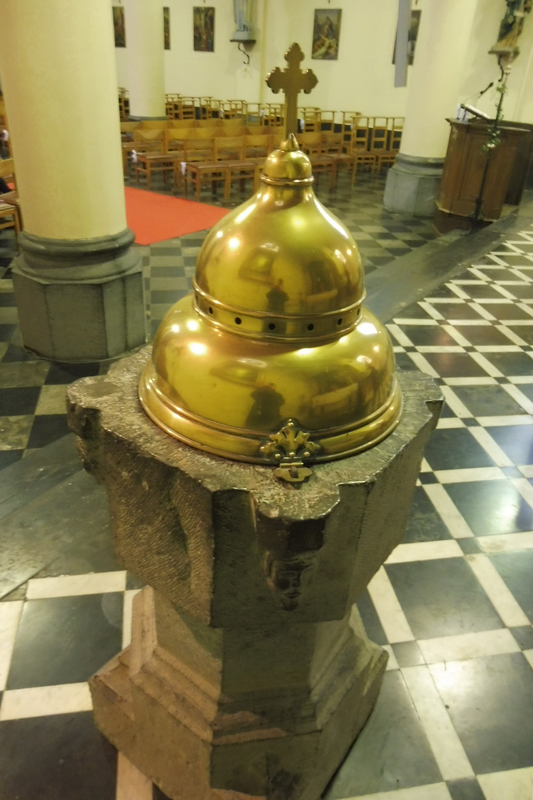
Image copyright © Les Murs de Pierre, 2026
Standing permission received from the author
Results: 10 records
view of font and cover
Copyright Statement: Image copyright © Les Murs de Pierre, 2026
Image Source: digital photograph by Les Murs de Pierre
Copyright Instructions: Standing permission received from the author
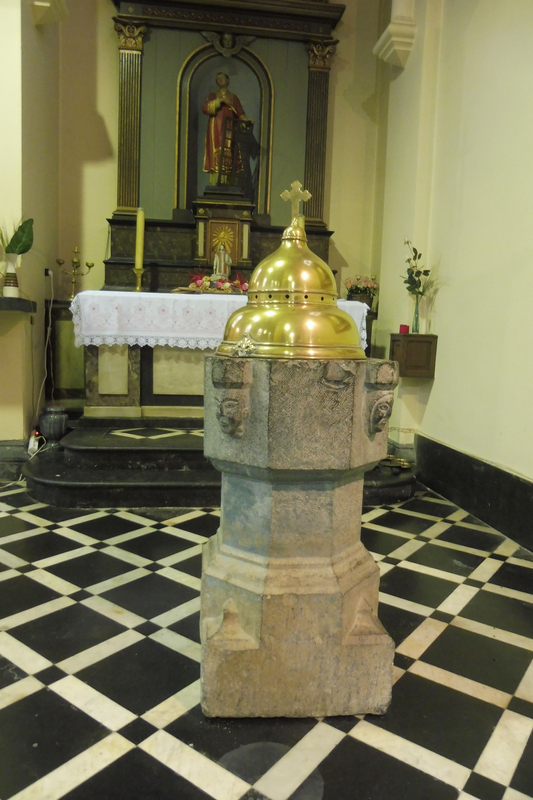
view of font and cover in context
Copyright Statement: Image copyright © Les Murs de Pierre, 2026
Image Source: digital photograph by Les Murs de Pierre
Copyright Instructions: Standing permission received from the author
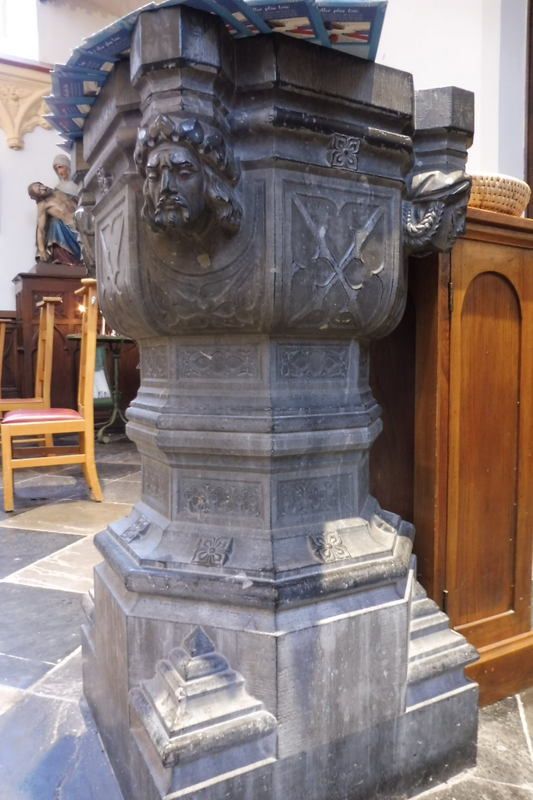
view of font and cover
Copyright Statement: Image copyright © Les Murs de Pierre, 2026
Image Source: digital photograph by Les Murs de Pierre
Copyright Instructions: Standing permission received from the author
view of font and cover

Scene Description: as shown in a1968 photograph
Copyright Statement: Image copyright © KIK-IRPA, 2026
Image Source: digital image of a 1968 B&W photograph [cliché M027907] by Mahaux, Charles, IRPA [https://balat.kikirpa.be/object/10029442] [accessed 14 January 2026]
Copyright Instructions: CC-NY-SA-4.0
view of basin and cover

Copyright Statement: Image copyright © Les Murs de Pierre, 2026
Image Source: digital photograph by Les Murs de Pierre
Copyright Instructions: Standing permission received from the author
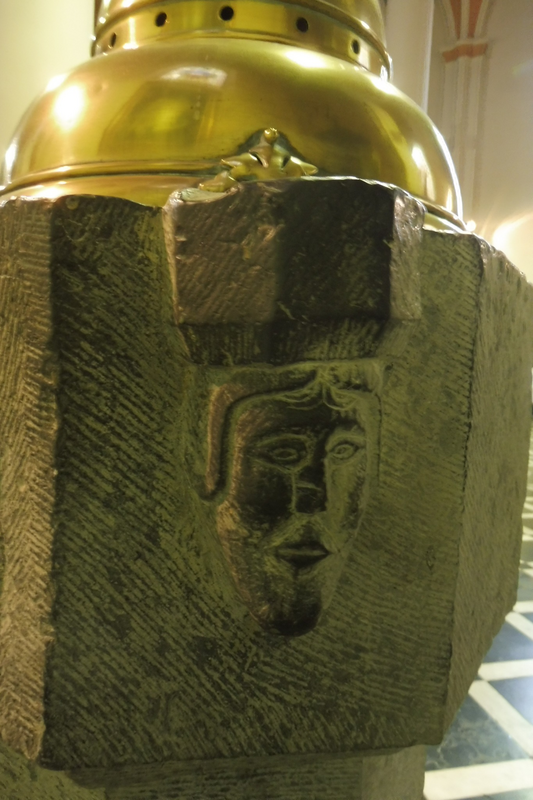
human figure - head - female
Copyright Statement: Image copyright © Les Murs de Pierre, 2026
Image Source: digital photograph by Les Murs de Pierre
Copyright Instructions: Standing permission received from the author
view of basin

Copyright Statement: Image copyright © Les Murs de Pierre, 2026
Image Source: digital photograph by Les Murs de Pierre
Copyright Instructions: Standing permission received from the author
human figure - head - male - bearded
Scene Description: seen here on the left
Copyright Statement: Image copyright © Les Murs de Pierre, 2026
Image Source: digital photograph by Les Murs de Pierre
Copyright Instructions: Standing permission received from the author
human figure - head - male
Scene Description: seen here on the right
Copyright Statement: Image copyright © Les Murs de Pierre, 2026
Image Source: digital photograph by Les Murs de Pierre
Copyright Instructions: Standing permission received from the author
human figure - head - male - bearded
Copyright Statement: Image copyright © Les Murs de Pierre, 2026
Image Source: digital photograph by Les Murs de Pierre
Copyright Instructions: Standing permission received from the author
INFORMATION
Font ID: 26042RTF
Object Type: Baptismal Font1
Font Century and Period/Style: 16th century, Renaissance
Workshop/Group/Artisan: Mosan font
Church / Chapel Name: Eglise Saint-Laurent
Font Location in Church: Inside
Church Patron Saint(s): St. Lawrence
Church Notes: cuurent church 1852
Church Address: Rue Roi Albert 7, 4280 Hannut, Belgium
Site Location: Liège, Wallonie / Wallonne, Belgium, Europe
Directions to Site: Located off the A3/E40, in the municipality and 5-6 km NE of Hannut, abour 40 km W of Liège
Ecclesiastic Region: Diocèse de Liège / Bistum Lüttich
Additional Comments: moved font? / re-purposed stouP [cf. FontNotes]
Font Notes:
Click to view
Baptismal font listed and illustrated in BALaT KIK-IRPA [https://balat.kikirpa.be/object/10029442] [accessed 14 January 2026]: "fonts baptismaux [...] gothique [...] Date: 1591 - 1600 [...] hauteur: 98 cm".
A communication to BSI from Pol Herman (e-mail of 14 Janury 2026) informs: " Auernas minor, Avernas-le-Petit, Évernais le Crausse. In 929 pops up the name Auernacsce, that had developed into Auernas in 946. In 1262 the name of the village was "Evernay le Craie" and in 1497 "Avernas le Crassie”. It was not until around the 15th century that the name of the village gradually changed - via "Avernas-le-Gras" - to its current name. The church: It seems that the village originally belonged to the Abbey of Saint-Trond. However, from 1083 onwards the village was owned by the Saint-Laurentius Abbey in Liège, hence probably the choice of the patron saint. The village was ecclesiastically dependent on the mother parish of Bertrée. No documents exist describing the old church of Cras-Avernas. Before 1852, the building used for parish purposes was a modest wooden chapel built on the site of the current church. Nothing remains of it except the doorway. After the Concordat of 1801, an independent parish dedicated to Saint Lawrence was established in Cras-Avernas. The current church was built in 1852, replacing a wooden church that had apparently survived the centuries and of which no information exists. Building enlarged around 1900. Baptismal font: For the villages of Cras-Avernas and Poucet, baptisms continued to be celebrated in the mother church of Bertrée until 1793. After which those churches were closed by the French revolutionaries only to reopen in 1801. It is therefore (relatively) acceptable that baptismal records start in 1796. However, the presence of a Mosan, octagonal, limestone, late 16th century font seems bizarre. Two possible explanations: The old font of some neighbouring church had been moved to Cras-Avernas or Around 1800, it was still possible to order fonts with the old-style look. This is certainly true: around 1850 the priest of Retinne was able to order a new stoup in old design, see picture. This is a phenomenon about which Jean-Claude Ghislain has warned me several times: a primitive or old look does not guarantee that the font is ancient. This being said, I believe that the font at Cras-Avernas is indeed from the late 16th c. I wouldn’t be surprised that is was originally a stoup. Pictures by Les Murs de Pierre -- KIK IRPA entry: https://balat.kikirpa.be/object/10029442"
A communication to BSI from Pol Herman (e-mail of 14 Janury 2026) informs: " Auernas minor, Avernas-le-Petit, Évernais le Crausse. In 929 pops up the name Auernacsce, that had developed into Auernas in 946. In 1262 the name of the village was "Evernay le Craie" and in 1497 "Avernas le Crassie”. It was not until around the 15th century that the name of the village gradually changed - via "Avernas-le-Gras" - to its current name. The church: It seems that the village originally belonged to the Abbey of Saint-Trond. However, from 1083 onwards the village was owned by the Saint-Laurentius Abbey in Liège, hence probably the choice of the patron saint. The village was ecclesiastically dependent on the mother parish of Bertrée. No documents exist describing the old church of Cras-Avernas. Before 1852, the building used for parish purposes was a modest wooden chapel built on the site of the current church. Nothing remains of it except the doorway. After the Concordat of 1801, an independent parish dedicated to Saint Lawrence was established in Cras-Avernas. The current church was built in 1852, replacing a wooden church that had apparently survived the centuries and of which no information exists. Building enlarged around 1900. Baptismal font: For the villages of Cras-Avernas and Poucet, baptisms continued to be celebrated in the mother church of Bertrée until 1793. After which those churches were closed by the French revolutionaries only to reopen in 1801. It is therefore (relatively) acceptable that baptismal records start in 1796. However, the presence of a Mosan, octagonal, limestone, late 16th century font seems bizarre. Two possible explanations: The old font of some neighbouring church had been moved to Cras-Avernas or Around 1800, it was still possible to order fonts with the old-style look. This is certainly true: around 1850 the priest of Retinne was able to order a new stoup in old design, see picture. This is a phenomenon about which Jean-Claude Ghislain has warned me several times: a primitive or old look does not guarantee that the font is ancient. This being said, I believe that the font at Cras-Avernas is indeed from the late 16th c. I wouldn’t be surprised that is was originally a stoup. Pictures by Les Murs de Pierre -- KIK IRPA entry: https://balat.kikirpa.be/object/10029442"
Credit and Acknowledgements: We are grateful to Pol Herman for his help documenting this font
COORDINATES
UTM: 31U 649994 5618305
Latitude & Longitude (Decimal): 50.6972, 5.1239
Latitude & Longitude (DMS): 50° 41′ 49.92″ N, 5° 7′ 26.04″ E
MEDIUM AND MEASUREMENTS
Material: stone, limestone
Font Shape: octagonal - mounted
Basin Interior Shape: round
Basin Exterior Shape: octagonal
Font Height (less Plinth): 98 cm*
Notes on Measurements: 98 cm* [cf. FontNotes\
LID INFORMATION
Material: metal, brass
Notes: double-come shape with Latin-cross finial