Dieupart / Dieupart in Aywaille / Djèpårt
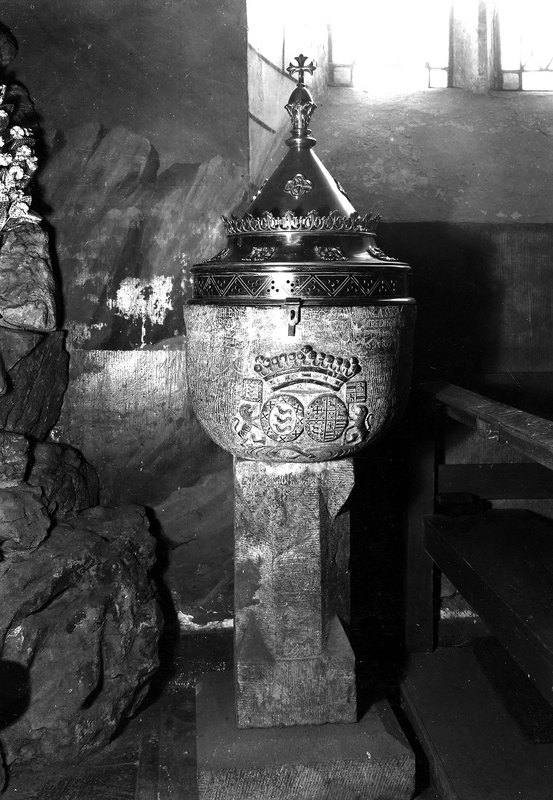
Image copyright © KIK-IRPA, Brussels (Belgium), 2026
CC-BY-4.0
Results: 4 records
view of font and cover
Copyright Statement: Image copyright © KIK-IRPA, Brussels (Belgium), 2026
Image Source: digital image of a 1943 B&W photograph [cliché B046288] by the Commissariat général à la Restauration du Pays
Copyright Instructions: CC-BY-4.0
view of church exterior - west view
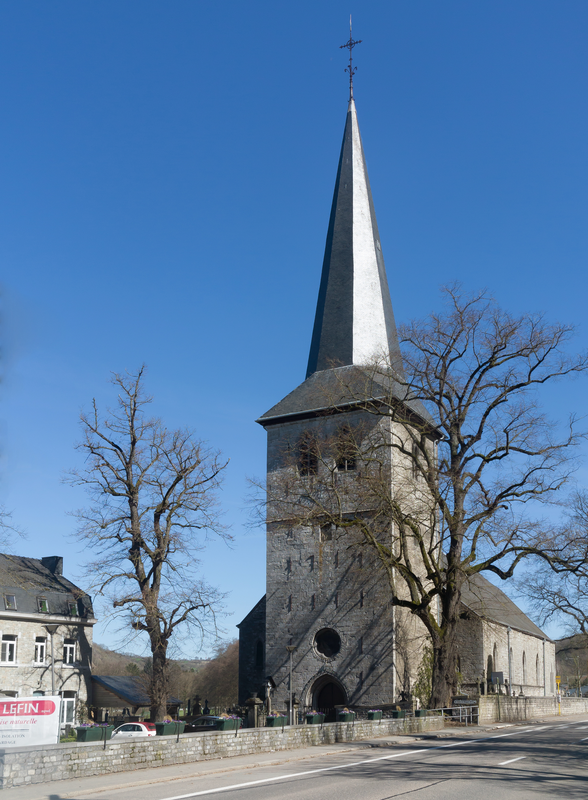
Scene Description: NB: the caption reads "Dieupart, l'église des Saints-Anges" but the church is usually known as "Eglise Notre-Dame de Dieupart"
Copyright Statement: Image copyright © Michielverbeek, 2017
Image Source: digital photograph 27 March 2017 by Michielverbeek
Copyright Instructions: CC-BY-SA-4.0
symbol - shield - coat of arms - Salamanca Family
![[cf. FontNotes]](/static-50478a99ec6f36a15d6234548c59f63da52304e5/compressed/1260302006_compressed.png)
Scene Description: [cf. FontNotes]
Copyright Statement: Image copyright © KIK-IRPA, Brussels (Belgium), 2026
Image Source: digital image of a 1943 B&W photograph [cliché B044826] by the Commissariat général à la Restauration du Pays
Copyright Instructions: CC-BY-4.0
symbol - shield - coat of arms - Villegas Family
Scene Description: [cf. FontNotes]
Copyright Statement: Image copyright © KIK-IRPA, Brussels (Belgium), 2026
Image Source: digital image of a 1943 B&W photograph [cliché B044826] by the Commissariat général à la Restauration du Pays
Copyright Instructions: CC-BY-4.0
INFORMATION
Font ID: 25959DIE
Object Type: Baptismal Font1
Font Date: 1699?
Font Century and Period/Style: 15th century (?) / 17th century (?), Late Gothic?
Workshop/Group/Artisan: heraldic font
Church / Chapel Name: Eglise Notre-Dame de Dieupart (Aywaille) / Eglise des Saints-Anges
Font Location in Church: cf. FontNotes
Church Patron Saint(s): St. Mary the Virgin
Other Dedications: All Saints
Church Address: Dieupart, 4920 Aywaille, Belgium -- Tel.: +32 4 384 42 53
Site Location: Liège, Wallonie / Wallonne, Belgium, Europe
Directions to Site: Located off the N30-N633 confluence, W of Hwy N697/A26, 15-20 km SSE of Liège
Ecclesiastic Region: Diocèse de Liège
Additional Comments: altered font? (was the inscription added later?)
Font Notes:
Click to view
Baptismal font listed and illustratedd in BALaT KIK-IRPA [https://balat.kikirpa.be/object/10108492] [accessed 21 November 2025]: "fonts baptismaux [...] pierre [...] Date: 1401 - 1500 [...] hauteur: 125 cm; diamètre: 64 cm [...] inscription rajoutée en 1699"; additionally the KIK-IRPA entry identifies the armourial devices present on this font: "Salamanca" and "Villegas" families.
A communication to BSI from Pol Herman (e-mail of 19 November 2025) addresses several issues related to this font giving an extensive background: "This Gothic church, built of limestone rubble originating from the old castle of Vieux-Montjardin, is said to date back to the 12th century. Between 1260 and 1320, the Cluniac monks of the Aywaille priory would have authorized the commoners to build an ‘ecclesia integra’ – a parish church – on land they donated, in exchange for certain rights they reserved for themselves: such as the right to present the candidate parish priest to the bishop and to collect the tithe. However, if it is probable that rubble of the old castle was used, then this building material was only available after 1286, when the castle was destroyed by Jean I, duke of Brabant. Therefore the church could date from the beginning of the 13thC.
1340 – A crypt is built beneath the north chapel.
1491 – The tower with its pyramidal spire, topped by a bulla surmounted by a cross, is erected.
1590 – Restoration in a Gothic/Renaissance style.
1654 – On March 12, French troops under Marshal Faber set fire to the church. Of the 60 inhabitants who had taken refuge in the tower, 17 perished in the blaze. Only the charred woodwork and walls of the church remained. Thanks to the generosity of the inhabitants, Godefroid de Sélys, mayor of Liège and master of the Dieupart ironworks, and the Count of Suys, lord of Harzé, the church was rebuilt and enlarged.
It was burned again in 1691 and was fully restored in 1714.
Since 1785, it has served as the main church of Aywaille.
1798 – On February 27, the church was seized by the French revolutionary administration and reopened for worship in April 1802.
1903 – Major Neo-Gothic restoration
A Mosan-type limestone font of rather unusual design. Coat of armes of the families de Salamanca and de Villegas.
https://balat.kikirpa.be/object/10108492
KIK-IRPA attributes this font to the 15th c. And notes that an inscription has been added in 1699.
The date seems hardly likely because the earliest trace of the Spanish/Portuguese trading family “de Villegas” in Belgium dates from 1536 (in Antwerp).
In the “Histoire de la seigneurie de Montjardin et de la porallée miraculeuse“ by le chevalier Joseph de Theux de Montjardin, 1869, I read the following: In 1655, Louis Gallo de Salamanca inherited the nearby castle of Montjardin. (https://fr.wikipedia.org/wiki/Ch%C3%A2teau_de_Montjardin). He died in 1657. His son, Louis-Jacques Gallo de Salamanca (1657-1711) married Isabelle-Lucie de Villegas in 1684. His only son Antoine-Joseph-Fernand Gallo de Salamanca was a bachelor, who died in 1726. The castle was then inherited on 1730 by his first cousin Louis de Villegas, who kept it between until 1734. After which he sold it.
Therefore the font must have been donated by the couple Louis de Salamca/Isabelle de Villegas in 1699, after the fire in 1691. Or is it true what other sources say : the basin was redesigned in 1699?
It then also makes sense that an older gothic font was damaged in 1691, and the remnants thereof now stand at the église Saint-Pierre of Aywaille." [NB: see BSI entry for Aywaille for related complementary information]
A communication to BSI from Pol Herman (e-mail of 19 November 2025) addresses several issues related to this font giving an extensive background: "This Gothic church, built of limestone rubble originating from the old castle of Vieux-Montjardin, is said to date back to the 12th century. Between 1260 and 1320, the Cluniac monks of the Aywaille priory would have authorized the commoners to build an ‘ecclesia integra’ – a parish church – on land they donated, in exchange for certain rights they reserved for themselves: such as the right to present the candidate parish priest to the bishop and to collect the tithe. However, if it is probable that rubble of the old castle was used, then this building material was only available after 1286, when the castle was destroyed by Jean I, duke of Brabant. Therefore the church could date from the beginning of the 13thC.
1340 – A crypt is built beneath the north chapel.
1491 – The tower with its pyramidal spire, topped by a bulla surmounted by a cross, is erected.
1590 – Restoration in a Gothic/Renaissance style.
1654 – On March 12, French troops under Marshal Faber set fire to the church. Of the 60 inhabitants who had taken refuge in the tower, 17 perished in the blaze. Only the charred woodwork and walls of the church remained. Thanks to the generosity of the inhabitants, Godefroid de Sélys, mayor of Liège and master of the Dieupart ironworks, and the Count of Suys, lord of Harzé, the church was rebuilt and enlarged.
It was burned again in 1691 and was fully restored in 1714.
Since 1785, it has served as the main church of Aywaille.
1798 – On February 27, the church was seized by the French revolutionary administration and reopened for worship in April 1802.
1903 – Major Neo-Gothic restoration
A Mosan-type limestone font of rather unusual design. Coat of armes of the families de Salamanca and de Villegas.
https://balat.kikirpa.be/object/10108492
KIK-IRPA attributes this font to the 15th c. And notes that an inscription has been added in 1699.
The date seems hardly likely because the earliest trace of the Spanish/Portuguese trading family “de Villegas” in Belgium dates from 1536 (in Antwerp).
In the “Histoire de la seigneurie de Montjardin et de la porallée miraculeuse“ by le chevalier Joseph de Theux de Montjardin, 1869, I read the following: In 1655, Louis Gallo de Salamanca inherited the nearby castle of Montjardin. (https://fr.wikipedia.org/wiki/Ch%C3%A2teau_de_Montjardin). He died in 1657. His son, Louis-Jacques Gallo de Salamanca (1657-1711) married Isabelle-Lucie de Villegas in 1684. His only son Antoine-Joseph-Fernand Gallo de Salamanca was a bachelor, who died in 1726. The castle was then inherited on 1730 by his first cousin Louis de Villegas, who kept it between until 1734. After which he sold it.
Therefore the font must have been donated by the couple Louis de Salamca/Isabelle de Villegas in 1699, after the fire in 1691. Or is it true what other sources say : the basin was redesigned in 1699?
It then also makes sense that an older gothic font was damaged in 1691, and the remnants thereof now stand at the église Saint-Pierre of Aywaille." [NB: see BSI entry for Aywaille for related complementary information]
Credit and Acknowledgements: We are grateful to Pol Herman for bringing this font to our attention and for his help documenting it
COORDINATES
UTM: 31U 690706 5594928
Latitude & Longitude (Decimal): 50.475278, 5.687778
Latitude & Longitude (DMS): 50° 28′ 31″ N, 5° 41′ 16″ E
MEDIUM AND MEASUREMENTS
Material: stone, limestone
Font Shape: tub-shaped (mounted)
Basin Interior Shape: round
Basin Exterior Shape: round
Diameter (includes rim): 64 cm*
Font Height (less Plinth): 125 cm*
Notes on Measurements: * KIK-IRPA
LID INFORMATION
Material: metal
Apparatus: no
Notes: crown-shaped conical cover
REFERENCES
- KIK-IRPA, BALaT KIK-IRPA, 2024. URL: https://balat.kikirpa.be/.