Herkenrode / Heckenrode
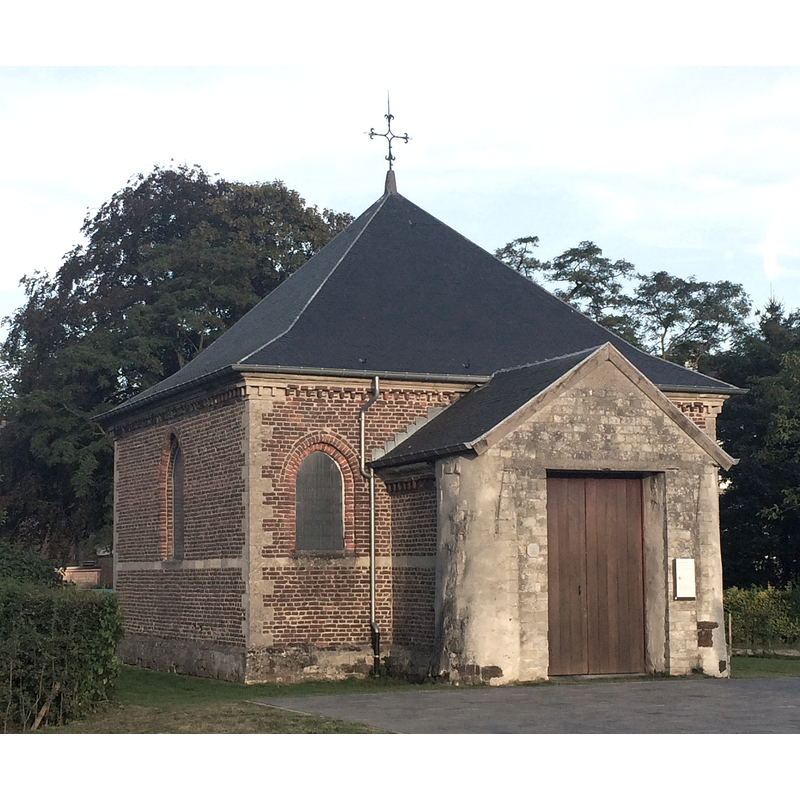
Image copyright © Hispalois, 2016
CC-BY-SA-4.0
Results: 3 records
view of church exterior - chapel
Scene Description: Source caption: "Herkenrode Abbey. Chapel of the Sacrament." [cf. FontNotes]
Copyright Statement: Image copyright © Hispalois, 2016
Image Source: digital photograph 10 September 2016 by Hispalois [https://commons.wikimedia.org/wiki/File:Herkenrode_Chapel_of_the_Sacrament.jpg] [accessed 11 September 2024]
Copyright Instructions: CC-BY-SA-4.0
view of church interior - detail
![the blue arrows point to the presumed location of the baptismal font inside the abbey church [cf. FontNotes]](/static-50478a99ec6f36a15d6234548c59f63da52304e5/compressed/1240911002_compressed.png)
Scene Description: the blue arrows point to the presumed location of the baptismal font inside the abbey church [cf. FontNotes]
Copyright Statement: Image copyright © Pol Herman, 2024
Image Source: composite image from different sources by Pol Herman
Copyright Instructions: Standing permission
information
Copyright Statement: Image copyright © [in the public domain]
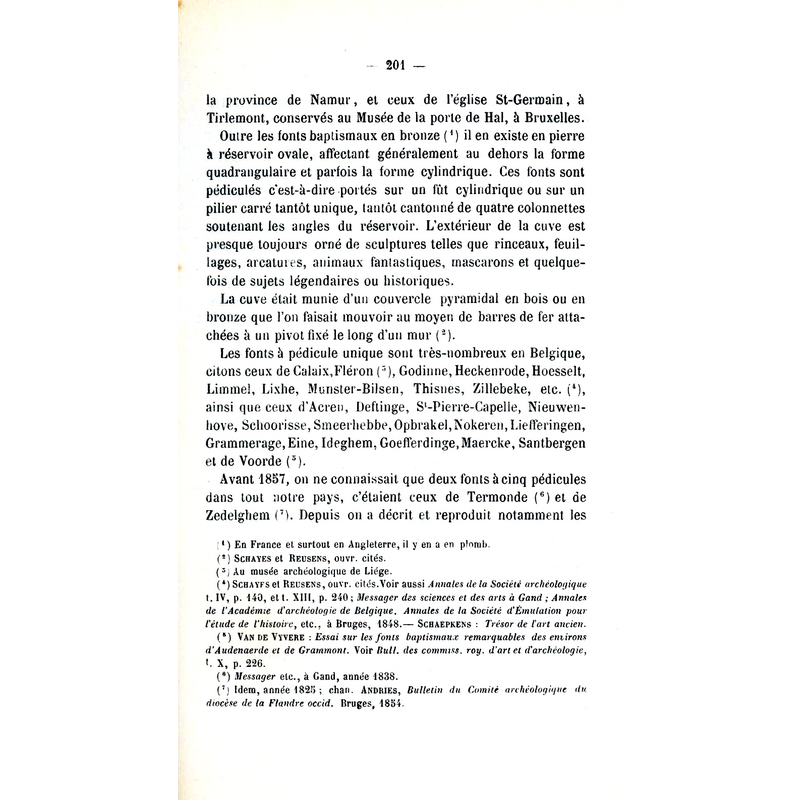
Image Source: digital image of content [p. 201] from D. van de Casteele's Fonts baptismaux à Huy, à Seraing et à Esneu [https://archive.org/details/bulletindelinsti13inst/page/201/mode/1up?q=Heckenrode&view=theater] [accessed 11 September 2024]
Copyright Instructions: PD
INFORMATION
Font ID: 25692HER
Object Type: Baptismal Font1?
Font Date: n.d.
Font Century and Period/Style: 12th - 13th century, Medieval
Church / Chapel Name: Cisterciënzerinnen Abdij van Herkenrode
Font Location in Church: [cf. FontNotes]
Church Notes: late-12thC church of Cistercian nunnery/abbey; abbey abolished 13 November 1796; church used for noncult purposes; destroyed by fire 1826; demolished 1844
Church Address: Herkenrodeabdij 4, 3511 Hasselt, Belgium
Site Location: Limburg, Vlaanderen / Flandres, Belgium, Europe
Directions to Site: Located off the A13/E313, in Kuringen, in the municipality and 6-7 km NW of Hasselt
Ecclesiastic Region: Bistum Hasselt
Additional Comments: disappeared font? [cf. FontNotes]
Font Notes:
Click to view
The baptismal font of the abbey of Herkenrode [the alternative name Heckenrode is used] is mentioned in a list of Belgian "fonts à pédicule" in Van de Casteele (1877).
A communication to BSI from Pol Herman (e-mail of 27 August 2024) gives the above reference and adds: "The abbey was founded in 1192. The church was destroyed by a fire in 1826 and demolished in 1844. Therefore, the mention of a baptismal font in 1877 must be based on older information? Anyway, Herkenrode is the odd man out in the usual list of well-known baptismal fonts at that time. The abbey's baptismal font could have been a "festive" font (Silvia Schlegel, Festive Vessels or Everyday Fonts?: New Considerations on the Liturgical Functions of Medieval Baptismal Fonts in Germany, in The visual culture of baptism in the Middle Ages, 2013). During archaeological excavations in 2004-2006, a circular foundation was found in the church's nave. It was designed to carry a heavy object. A drawing of 1363 shows no entrance to the church through the tower, but instead the frequently observed two doors in the north wall. My personal opinion is therefore that this foundation could have carried the lost baptismal font. This is based on: Mona Solhaug, The architectural setting of baptism : rituals, norms and practices in Scandinavia : ca 1050-ca 1250, in Schweizerische numismatische Rundschau, 2019. -- The director of the abbey finds this an interesting and plausible hypothesis, but there will probably never be proof of it. Paul Lambrechts, Senior adviseur & Directeur Abdij van Herkenrode, Herita vzw, Oude Beurs 27, 2000 Antwerpen Herkenrodeabdij 4, 3511 Hasselt -- Tel.: +32 (0)487250700".
A communication to BSI from Pol Herman (e-mail of 27 August 2024) gives the above reference and adds: "The abbey was founded in 1192. The church was destroyed by a fire in 1826 and demolished in 1844. Therefore, the mention of a baptismal font in 1877 must be based on older information? Anyway, Herkenrode is the odd man out in the usual list of well-known baptismal fonts at that time. The abbey's baptismal font could have been a "festive" font (Silvia Schlegel, Festive Vessels or Everyday Fonts?: New Considerations on the Liturgical Functions of Medieval Baptismal Fonts in Germany, in The visual culture of baptism in the Middle Ages, 2013). During archaeological excavations in 2004-2006, a circular foundation was found in the church's nave. It was designed to carry a heavy object. A drawing of 1363 shows no entrance to the church through the tower, but instead the frequently observed two doors in the north wall. My personal opinion is therefore that this foundation could have carried the lost baptismal font. This is based on: Mona Solhaug, The architectural setting of baptism : rituals, norms and practices in Scandinavia : ca 1050-ca 1250, in Schweizerische numismatische Rundschau, 2019. -- The director of the abbey finds this an interesting and plausible hypothesis, but there will probably never be proof of it. Paul Lambrechts, Senior adviseur & Directeur Abdij van Herkenrode, Herita vzw, Oude Beurs 27, 2000 Antwerpen Herkenrodeabdij 4, 3511 Hasselt -- Tel.: +32 (0)487250700".
Credit and Acknowledgements: We are grateful to Pol Herman for bringing this font to our attention and for his help in documenting it
COORDINATES
UTM: 31U 660024 5647393
Latitude & Longitude (Decimal): 50.9559, 5.2785
Latitude & Longitude (DMS): 50° 57′ 21.24″ N, 5° 16′ 42.6″ E
REFERENCES
- Van de Casteele, D., "Fonts baptismaux à Huy, à Seraing et à Esneux", 13, Bulletin de l'Institut archéologique liégeois, 1877, pp. 195-214; p. 201