Grendon Underwood / Crenedon / Grandon / Grendon Underwode / Grendun / Grenedon / Grennedone
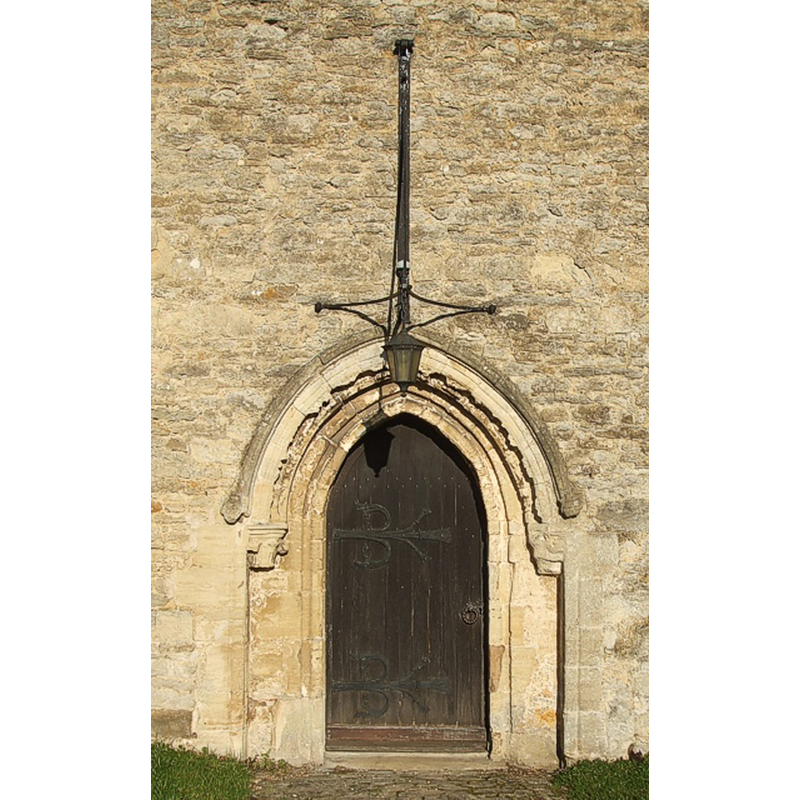
Image copyright © Rob Farrow, 2008
CC-BY-SA-2.0
Results: 3 records
view of church exterior - south portal
Copyright Statement: Image copyright © Rob Farrow, 2008
Image Source: digital photograph taken 12 January 2008 by Rob Farrow [www.geograph.org.uk/photo/658143] [accessed 5 December 2014]
Copyright Instructions: CC-BY-SA-2.0
view of church exterior - southeast view
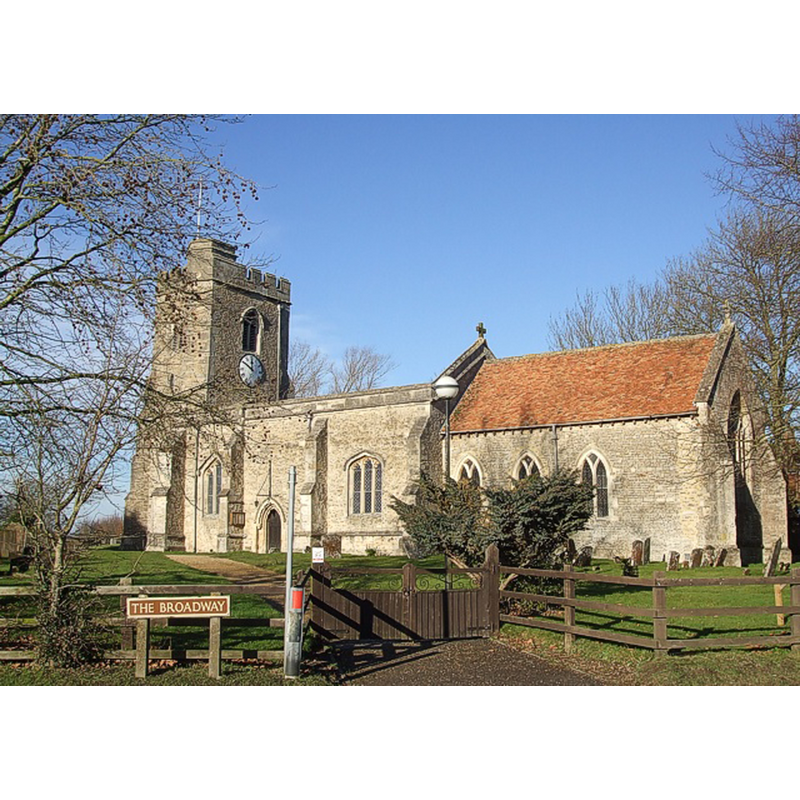
Scene Description: Source caption: "The church of St. Leonard in Grendon Underwood is situated at the very northwestern end of the village opposite a T-junction. This church has stood here for about 800 years though it has undergone considerable modifications over the centuries.
Copyright Statement: Image copyright © Rob Farrow, 2008
Image Source: digital photograph taken 12 January 2008 by Rob Farrow [www.geograph.org.uk/photo/658098] [accessed 5 December 2014]
Copyright Instructions: CC-BY-SA-2.0
view of church interior - nave - looking east
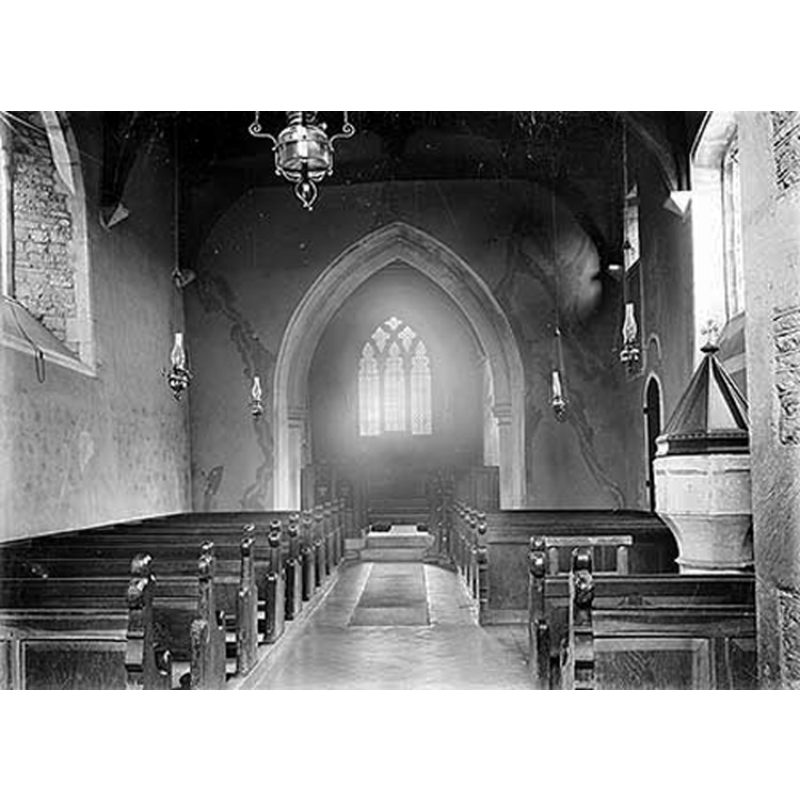
Scene Description: the interior of St. Leonard's showing the font and cover on the right (south) side, probably ca. 1890-1910
Copyright Statement: Image copyright © English Heritage, 2011
Image Source: B&W photograph in English Heritage, National Monument Record [ref. BB98/02287] [http://viewfinder.english-heritage.org.uk/search/detail.aspx?uid=85000]
Copyright Instructions: No known copyright restriction – Fair Dealing
INFORMATION
Font ID: 17335GRE
Object Type: Baptismal Font1
Font Century and Period/Style: 15th century [re-tooled], Perpendicular [altered?]
Church / Chapel Name: Parish Church of St. Leonard
Font Location in Church: Inside the church, at the W end of the nave, S side
Church Patron Saint(s): St. Leonard
Church Address: The Broadway, Grendon Underwood, Buckinghamshire HP18 0SY
Site Location: Buckinghamshire, South East, England, United Kingdom
Directions to Site: Located off the A41, near the border with Oxon.
Ecclesiastic Region: Diocese of Oxford
Historical Region: Hundred of Ashendon [in Domesday]
Additional Comments: disappeared font? (the one from the original 12thC church here)
Font Notes:
Click to view
There is an entry for Grendon [Underwood] [variant spelling] in the Domesday Survey [http://domesdaymap.co.uk/place/SP6820/grendon-underwood/] [accessed 5 December 2014], but it mentions neither cleric nor church in it. A font here is noted in Lipscomb (1831- ): "The font is antient and octagonal, supported by a short column". Ditto in Sheahan (1862). The Victoria County History (Buckingham, vol. 4, 1927) notes: "The nave is probably in part of the 12th century, though having no details earlier than c. 1230 [...] The first mention of the church, which is a rectory, occurs in 1223 [...] The octagonal font is plain 15th-century work retooled". The font consists of an octagonal basin with vertical sides and a tall slightly concave chamfer ending on the bottom is a thin moulding; raised on a pedestal base [NB: not known to what degree the basin has been re-tooled]. The wooden cover is an octagonal pyramid with well-defined arrises and a metal cross finial; appears modern.
COORDINATES
UTM: 30U 636447 5749916
Latitude & Longitude (Decimal): 51.8833, -1.0175
Latitude & Longitude (DMS): 51° 52′ 59.88″ N, 1° 1′ 3″ W
MEDIUM AND MEASUREMENTS
Material: stone
Font Shape: octagonal, mounted
Basin Interior Shape: round
Basin Exterior Shape: octagonal
LID INFORMATION
Date: modern?
Material: wood, oak
Apparatus: no
Notes: [cf. FontNotes]
REFERENCES
- Victoria County History [online], University of London, 1993-. URL: https://www.british-history.ac.uk.
- Lipscomb, George, The History and Antiquities of the County of Buckingham, London: J.B. Nichols, 1831-1843, vol. 1: 259
- Sheahan, James Joseph, History and topography of Buckinghamshire, comprising a general survey of the county, preceded by an epitome of the early history of Great Britain, London; Pontefract: Longman, Green, Longman, and Roberts; William Edward Bonas [...], 1862, p. 385