Dalby nr. Spilsby
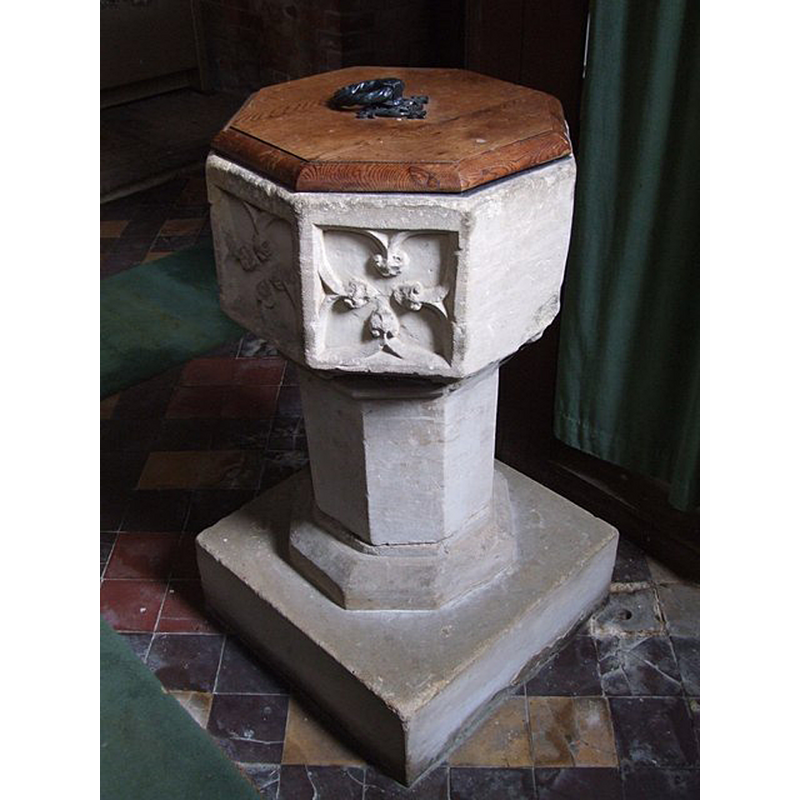
Image copyright © Dave Hitchborne, 2008
CC-BY-SA-2.0
Results: 4 records
view of font and cover
Scene Description: one of the eight panels is blank, uncarved
Copyright Statement: Image copyright © Dave Hitchborne, 2008
Image Source: digital photograph taken 24 April 2008 by Dave Hitchborne [www.geograph.org.uk/photo/776282] [accessed 2 December 2019]
Copyright Instructions: CC-BY-SA-2.0
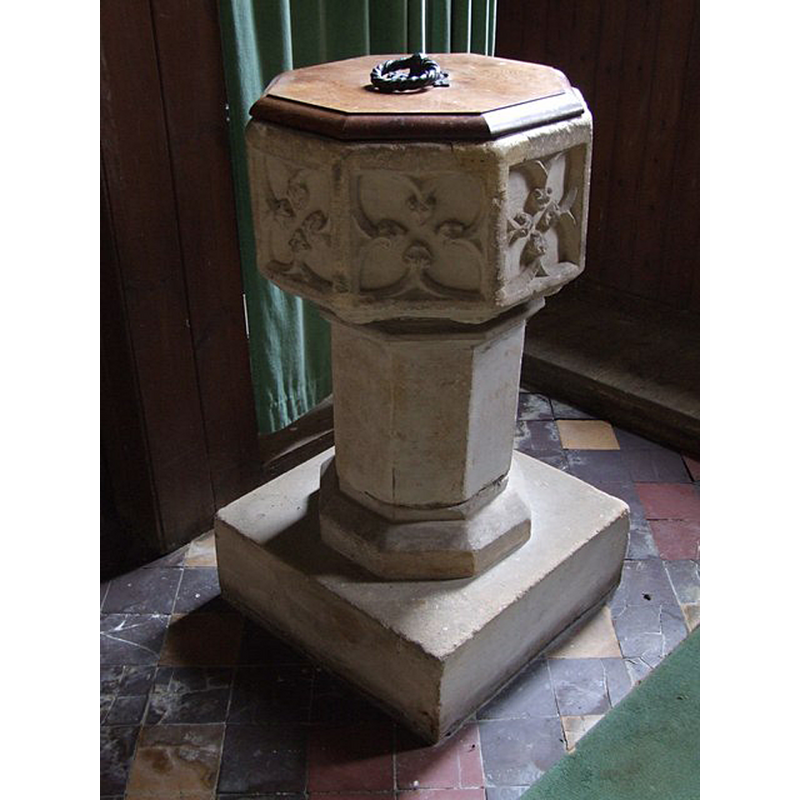
design element - motifs - panel - quatrefoiled - cusped quatrefoil - 7
Copyright Statement: Image copyright © Dave Hitchborne, 2008
Image Source: digital photograph taken 24 April 2008 by Dave Hitchborne [www.geograph.org.uk/photo/776279] [accessed 2 December 2019]
Copyright Instructions: CC-BY-SA-2.0
view of church exterior - southwest view
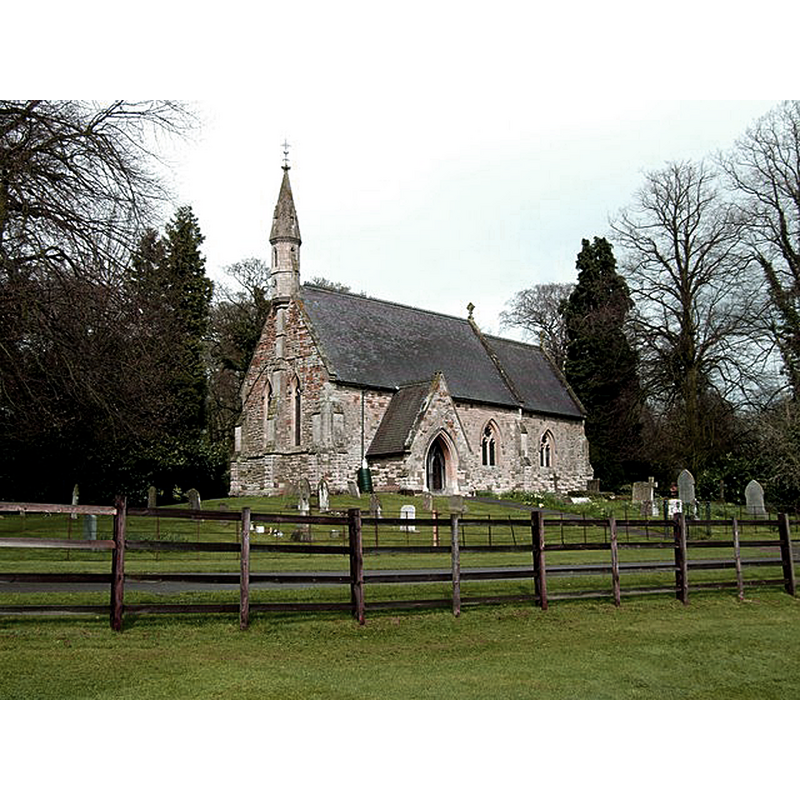
Scene Description: Source caption: "Two churches were mentioned in the Domesday Book as being in Dalby, but one of them is thought to have been in Dexthorpe. The old Dalby church was thatched and contained a Norman chancel arch, but it became so dilapidated that it was demolished in 1862. The present church, designed by James Fowler of Louth, was built on the same foundations using the stone from the old church for the outside walls. Building was started in June 1862. It was opened for Divine service by the Lord Bishop of Lincoln on 14th October of that year. The church contains two 17th century monuments to the Llandon family. These and the bell came from the old church. There is no record of Dalby church having been dedicated to any patron saint prior to 1960."
Copyright Statement: Image copyright © Dave Hitchborne, 2008
Image Source: digital photograph taken 24 April 2008 by Dave Hitchborne [www.geograph.org.uk/photo/776262] [accessed 2 December 2019]
Copyright Instructions: CC-BY-SA-2.0
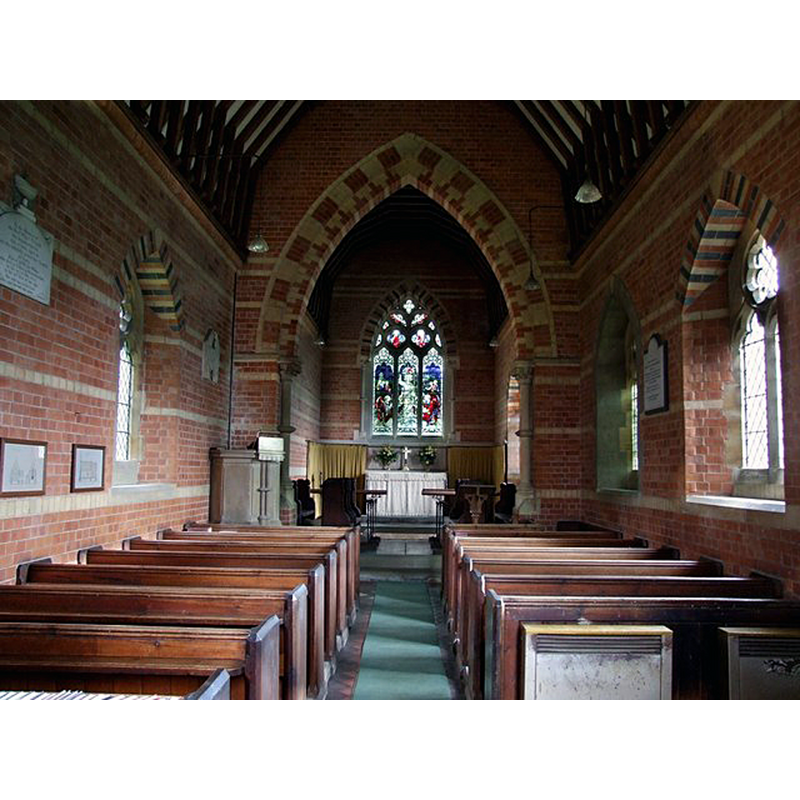
view of church interior - looking east
Copyright Statement: Image copyright © Dave Hitchborne, 2008
Image Source: digital photograph taken 24 April 2008 by Dave Hitchborne [www.geograph.org.uk/photo/776525] [accessed 2 December 2019]
Copyright Instructions: CC-BY-SA-2.0
INFORMATION
Font ID: 12587DAL
Object Type: Baptismal Font1
Font Century and Period/Style: 14th century, Perpendicular
Church / Chapel Name: Parish Church of St. Lawrence and Bishop Edward King
Font Location in Church: Inside the new church, at the W end
Church Patron Saint(s): St. Lawrence [aka Laurence] & Bishop Edward King [new dedication a/o 1960 -- earlier dedication unknown]
Church Notes: Domesday-time church demolished 1862; re-built same year
Church Address: Dalby Hall Ln, Dalby, Lincolnshire PE23 4PN, UK
Site Location: Lincolnshire, East Midlands, England, United Kingdom
Directions to Site: Located 6 km N of Spilsby
Ecclesiastic Region: Diocese of Lincoln
Historical Region: Hundred of Candleshoe
Additional Comments: disappeared font? (the one from the medieval church here demolished 1862)
Font Notes:
Click to view
There is a multiple-place entry for this Dalby [variamt spelling] in the Domesday survey [https://opendomesday.org/place/TF4070/dalby/] [accessed 2 December 2019]; it mentions two churches in it. Pevsner, Harris and Antram (1989) note: "Font. Octagonal, with quatrefoil panels." The entry for this church in Historic England [Listing NGR: TF4094370081] notes: "Parish church. 1862. James Fowler of Louth. Re-using some material from the former church. [...] C14 octagonal ashlar font with quatrefoil panels." The octagonal font has seven panels decorated with cusped quatrefoils that have the internal angles floriated; the eighth panel is unfinished, blank; the pedestal base and lower base are octagonal and plain; the plinth, which appears modern, is square. The wooden font cover is flat, with moulded edges; metal ring handle; appears modern.
COORDINATES
UTM: 31U 306958 5899418
Latitude & Longitude (Decimal): 53.20897, 0.1092
Latitude & Longitude (DMS): 53° 12′ 32.29″ N, 0° 6′ 33.12″ E
MEDIUM AND MEASUREMENTS
Material: stone
Number of Pieces: three
Font Shape: octagonal, mounted
Basin Interior Shape: round
Basin Exterior Shape: octagonal
LID INFORMATION
Date: modern
Material: wood, oak?
Apparatus: no
Notes: [cf. FontNotes]
REFERENCES
- Pevsner, Nikolaus, Lincolnshire, London: Penguin, 1989, p. 246