Normanton nr. Wakefield / Normatune / Normetune
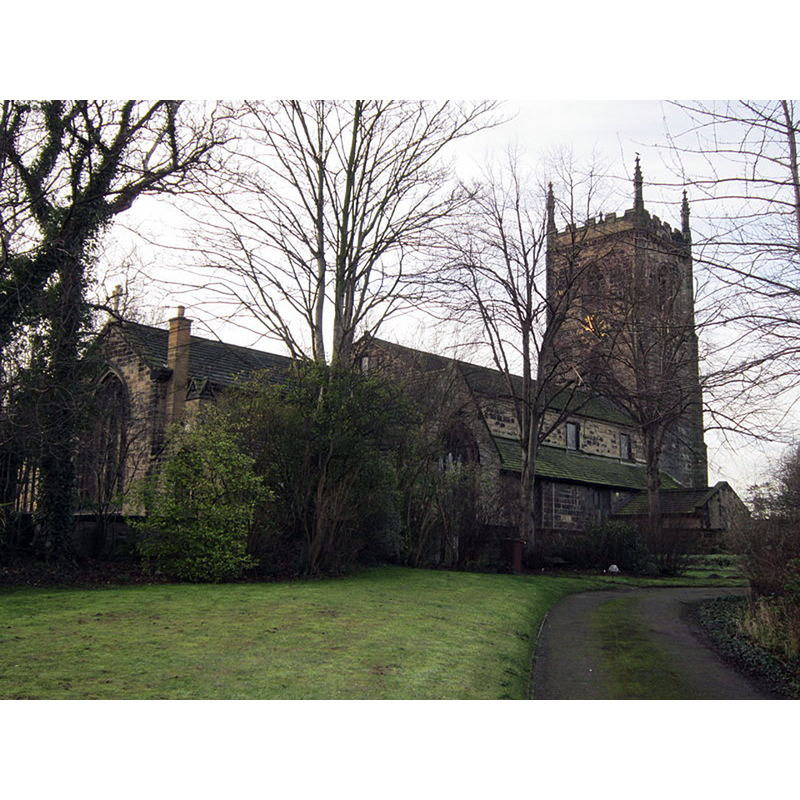
Image copyright © Ian S, 2012
CC-BY-SA-2.0
Results: 3 records
view of church exterior - northeast view
Copyright Statement: Image copyright © Ian S, 2012
Image Source: digital photograph taken 13 January 2012 by Ian S [www.geograph.org.uk/photo/2762278] [accessed 14 July 2015]
Copyright Instructions: CC-BY-SA-2.0
view of church exterior - southeast view
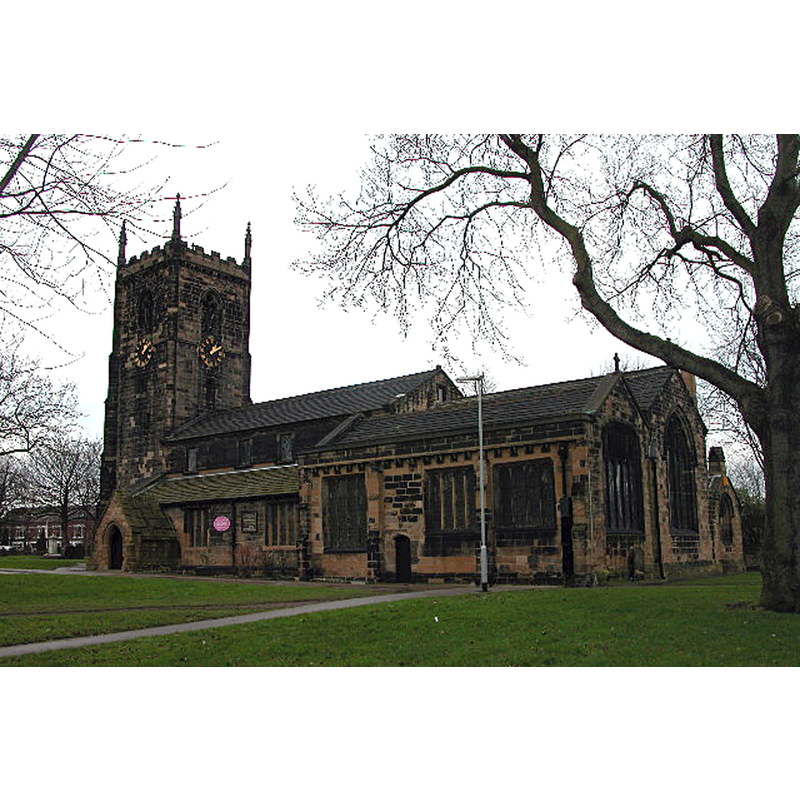
Scene Description: Source caption: "All Saints church, Normanton. This church has existed since at least 1256, and has been re-built a number of times. It has one of the oldest altar stones in England, which was discovered during remodelling work concealed in the floor of the church."
Copyright Statement: Image copyright © Martyn Pattison, 2007
Image Source: digital photograph taken 1 January 2007 by Martyn Pattison [www.geograph.org.uk/photo/99353] [accessed 14 July 2015]
Copyright Instructions: CC-BY-SA-2.0
design element - patterns - tracery
![[cf. Font notes]](/static-50478a99ec6f36a15d6234548c59f63da52304e5/others/image_not_available.jpg)
Scene Description: [cf. Font notes]
![[cf. Font notes]](/static-50478a99ec6f36a15d6234548c59f63da52304e5/bsi-testing-site/others/image_not_available.jpg)
INFORMATION
Font ID: 11191NOR
Object Type: Baptismal Font1
Font Century and Period/Style: 15th century / 17th century, Post-Reformation
Church / Chapel Name: Parish Church of All Saints
Font Location in Church: Inside the church
Church Patron Saint(s): All Saints
Church Address: High Street, Normanton, West Yorkshire, WF6 1NR, United Kingdom -- Tel.: +44 1924 220868
Site Location: West Yorkshire, Yorkshire and the Humber, England, United Kingdom
Directions to Site: Located 7-8 km NE of Wakefield
Ecclesiastic Region: Diocese of West Yorkshire and the Dales
Historical Region: Hundred of Agbrigg [in Domesday]
Additional Comments: disappeared font? (the fonts of the two Domesday-time churches here?)
Font Notes:
Click to view
There are two entries for this Normanton [variant spelling] in the Domesday survey [http://opendomesday.org/place/SE3822/normanton/] [accessed 14 July 2015]; the first entry reports a church with three hides of church lands; the second entry reports a church with one half a hide of church lands. Noted in Morris (1932): "Large octagonal Perp[endicular] font with elaborately carved panels." Mee (1941) has: "The 500-year old font has fine panels of varied tracery". Pevsner (1986 c1967), however, writes: "Font. A very interesting piece, octagonal, with uncommonly dainty carved tracery motifs, wheels with mouchettes or quatrefoils, window-heads, etc. Somehow a pre-Reformation date is not wholly convincing. The crispness is almost like Coade stone" ['coade stone' was a stone-like ceramic finished in a kiln and made from ground stone and clay (?); it was invented in Britain in 18th century and is no longer in use]. Ditto in Harman & Pevsner (2017). The entry for this church in Ryder (1993) mentions "a puzzling font that might be 15th-century" in it. [NB: we have no information on the earlier font(s) of this church]
COORDINATES
UTM: 30U 604602 5951056
Latitude & Longitude (Decimal): 53.69772, -1.415624
Latitude & Longitude (DMS): 53° 41′ 51.79″ N, 1° 24′ 56.24″ W
MEDIUM AND MEASUREMENTS
Material: stone
Font Shape: octagonal, mounted
Basin Interior Shape: round
Basin Exterior Shape: octagonal
REFERENCES
- Harman, Ruth, Yorkshire West Riding: Sheffield and the South, New Haven; London: Yale University Press, 2017, p. 419
- Mee, Arthur, The King's England, Yorkshire, West Riding, London: Hodder & Stoughton, 1941, p. 268
- Morris, Joseph Ernest, The West Riding of Yorkshire, London: Methuen & Co., 1932, p. 367
- Pevsner, Nikolaus, Yorkshire: the West Riding, Harmondsworth: Penguin Books, 1986 c1967, p. 379
- Ryder, Peter, Medieval churches of West Yorkshire, [Leeds?]: West Yorkshire Archaeology Service, 1993, p. 168