Jodoigne / Djodogne / Geldenaken
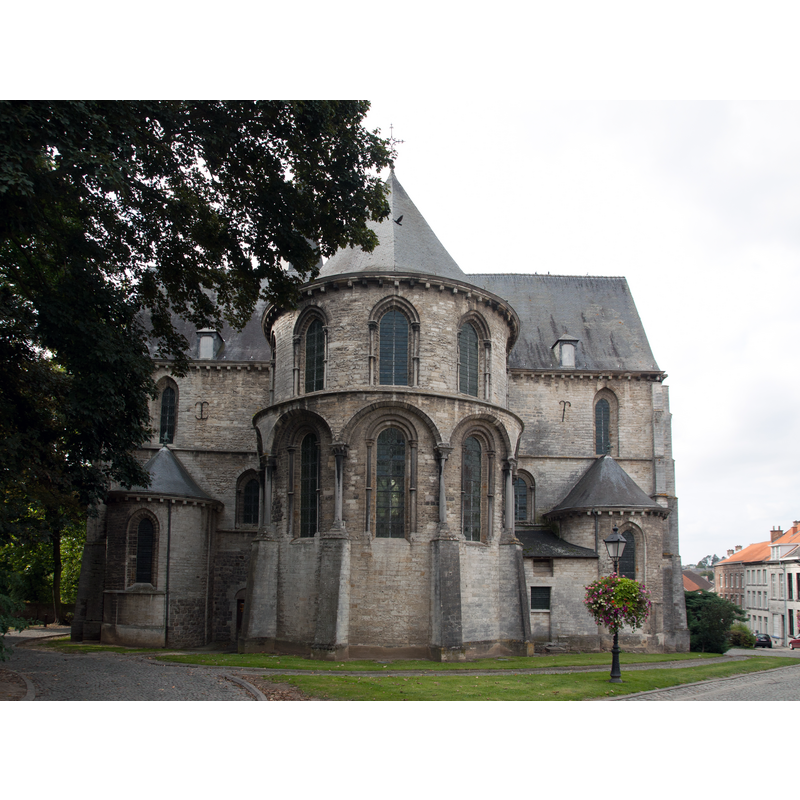
Image copyright © Johan Bakker, 2012
CC-BY-SA-3.0
Results: 3 records
B01: design element - architectural - arcade - blind - round arches


view of church exterior - east view
Copyright Statement: Image copyright © Johan Bakker, 2012
Image Source: digital photograph taken 15 September 2012 by Johan Bakker [http://commons.wikimedia.org/wiki/File:25048-CLT-0001-01_Sint_Medard.jpg] [accessed 5 April 2015]
Copyright Instructions: CC-BY-SA-3.0
view of church exterior - northwest view
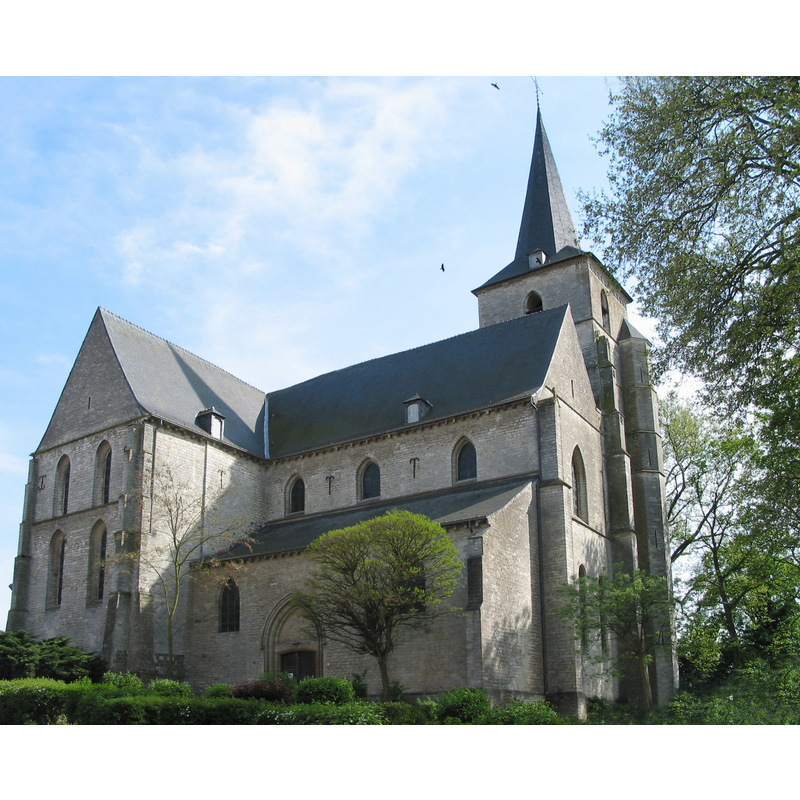
Copyright Statement: Image copyright © Jean-Pol Grandmont, 2005
Image Source: digital photograph taken 1 May 2005 by Jean-Pol Grandmont [
Copyright Instructions: CC-BY-SA-2.0
INFORMATION
Font ID: 10868JOD
Object Type: Baptismal Font1, fragment
Font Date: ca. 1155-1160?
Font Century and Period/Style: 12th century (mid?), Romanesque
Workshop/Group/Artisan: Namur font / affiliation de Saint-Séverin-en-Condroz [Ghislain]
Cognate Fonts: Jupille-sur-Meuse [cf. FontNotes]
Church / Chapel Name: Église paroissiale Saint-Médard / Sint-Medarduskerk
Font Location in Church: [cf. FontNotes]
Church Patron Saint(s): St. Medard [aka Medardus]
Church Notes: original church here probably 11th or 12thC
Church Address: 1370 Jodoigne, Brabant, Belgium
Site Location: Brabant Wallon / Wallon Brabant, Wallonie / Wallonne, Belgium, Europe
Directions to Site: Located near Nivelles, 20 km S of Louvain, 40 SE of Brussels, 60 km NW of Liège
Ecclesiastic Region: Diocèse de Liège / Archidiocèse de Malines-Bruxelles
Historical Region: Brabant et la Hesbaye
Additional Comments: damaged font / buried font (Ghislain (2009) suggests the font was destroyed in the late-16thC wars of religion; fragments discovered in 1972 buried under the central nave
Font Notes:
Click to view
Described in Ghislain (1986) as an exception to the more common type of Mosan font: this font and the one at Jupille [cf. Index entry] share some of the other characteristics, but do not have heads at the basin angles. Catalogued and illustrated in Ghislain (2009) as fragments of the basin of a baptismal font of the Namurois group, filiation de Saint-Séverin-en-Condroz, made of limestone (calcaire de Meuse) ca. 1155-1160; the fragments were dicovered in 1972 during excavations for the restoration of the church, buried under the central nave; Ghislain suggests the font may have been destroyed in the fires resulting from the wars of religion in 1568 and 1578; he describes the basin as circular with an arcade of round blind arches all around; the arches rest on well-rendered capitals, and there are trefoiled palmettes in the spandrels; fortunately a similar font has survived in better shape, the one from Jupille-sur-Meuse, which provides for a good sense of what this font looked like. Ghislain (ibid.) gives the location of the remaing fragments [one has disappeared] as "Presbytère" [i.e., the rectory/vicarage]. The BALaT database, KIK-IRPA, Brussels (Belgium), reports a stone baptismal font from the 18th century in this church.
COORDINATES
UTM: 31U 631921 5620484
Latitude & Longitude (Decimal): 50.721163, 4.868924
Latitude & Longitude (DMS): 50° 43′ 16.19″ N, 4° 52′ 8.12″ E
MEDIUM AND MEASUREMENTS
Material: stone, limestone (calcaire de Meuse)
Number of Pieces: fragment
Font Shape: cylindrical, mounted
Basin Interior Shape: round
Basin Exterior Shape: round
REFERENCES
- Ghislain, Jean-Claude, "La cuve baptismale romane de Wauthier-Braine", VII, Annales du Cercle historique et folklorique de Braine-le-Château, Tubize et des Régions voisines, 1986, pp. 89-[120]; p. 97 and fig. 11
- Ghislain, Jean-Claude, Les fonts baptismaux romans en pierre bleue des ateliers du Namurois (ca. 1150-1175), Namur: Musée provincial des arts anciens du Namurois, 2009, catalogue entry no. 47, p. 157-158