Fairon / Fèron (Liège)
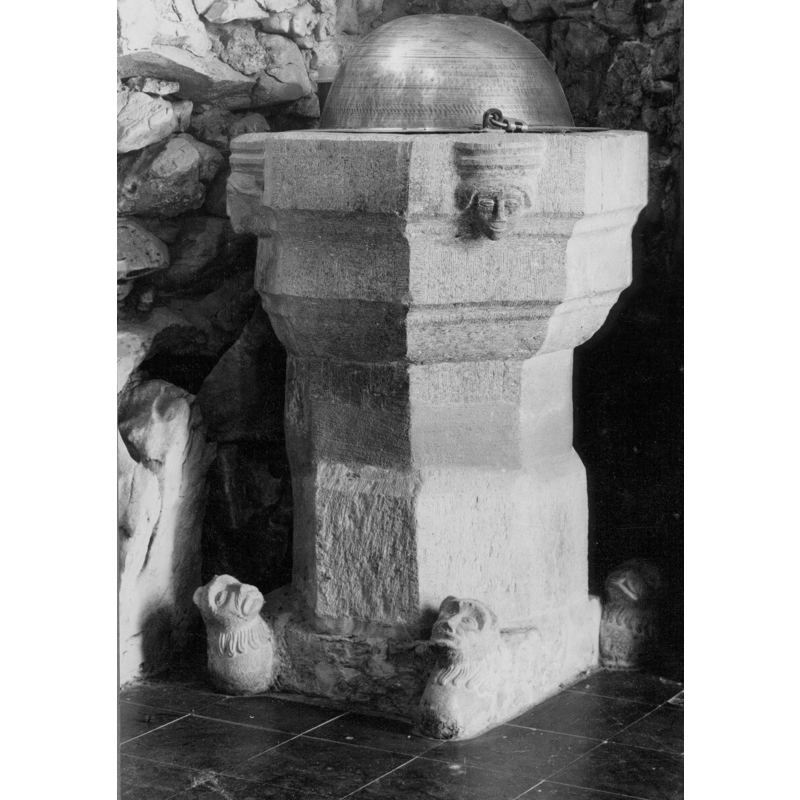
Image copyright © KIK-IRPA, Brussels (Belgium), 2015
Reproduced in accordance with KIK-IRPA guidelines
Results: 8 records
view of font and cover
Scene Description: the composite font [cf. FontNotes]
Copyright Statement: Image copyright © KIK-IRPA, Brussels (Belgium), 2015
Image Source: B&W photograph taken in 1970 by Serge Pluymiers [KIK-IRPA, Brussels (Belgium), cliché M56005]
Copyright Instructions: Reproduced in accordance with KIK-IRPA guidelines
human figure - head - 4
Scene Description: [cf. FontNotes]
Copyright Statement: Image copyright © KIK-IRPA, Brussels (Belgium), 2015
Image Source: B&W photograph taken in 1970 by Serge Pluymiers [KIK-IRPA, Brussels (Belgium), cliché M56005]
Copyright Instructions: Reproduced in accordance with KIK-IRPA guidelines
view of church exterior - northeast view
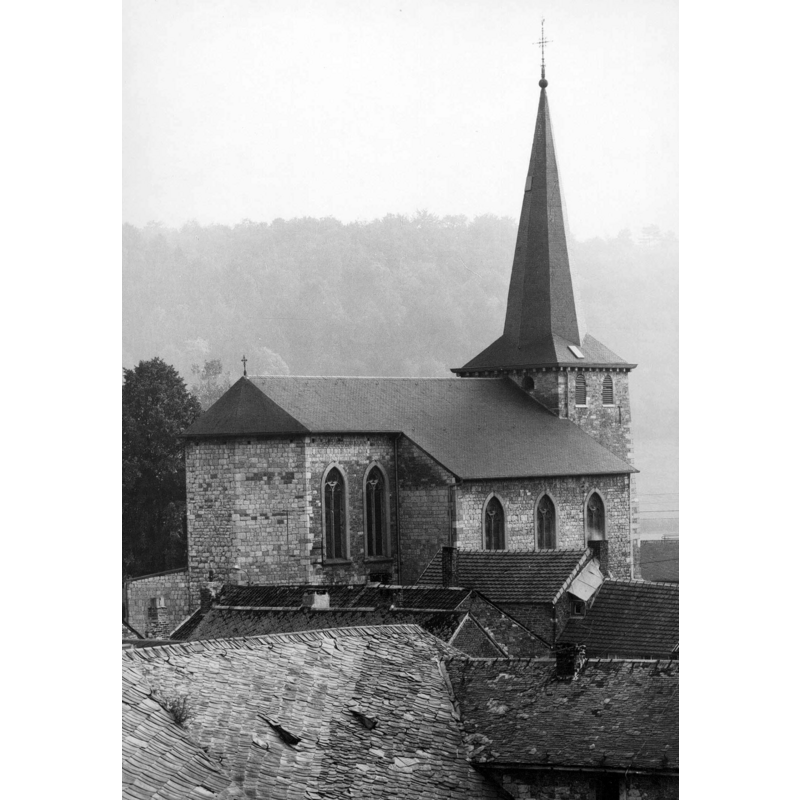
Scene Description: Source caption: "Fairon comptait certainement un sanctuaire (probablement fondé plus tôt) fin de la première moitié du XIIIème siècle. La tour quadrangulaire occidentale est romane. Un sacristie basse a été aménagée au sud du choeur. Fairon devint paroisse en 1856."
Copyright Statement: Image copyright © KIK-IRPA, Brussels (Belgium), 2015
Image Source: B&W photograph taken in 1970 by Serge Pluymiers [KIK-IRPA, Brussels (Belgium), cliché M56012]
Copyright Instructions: Reproduced in accordance with KIK-IRPA guidelines
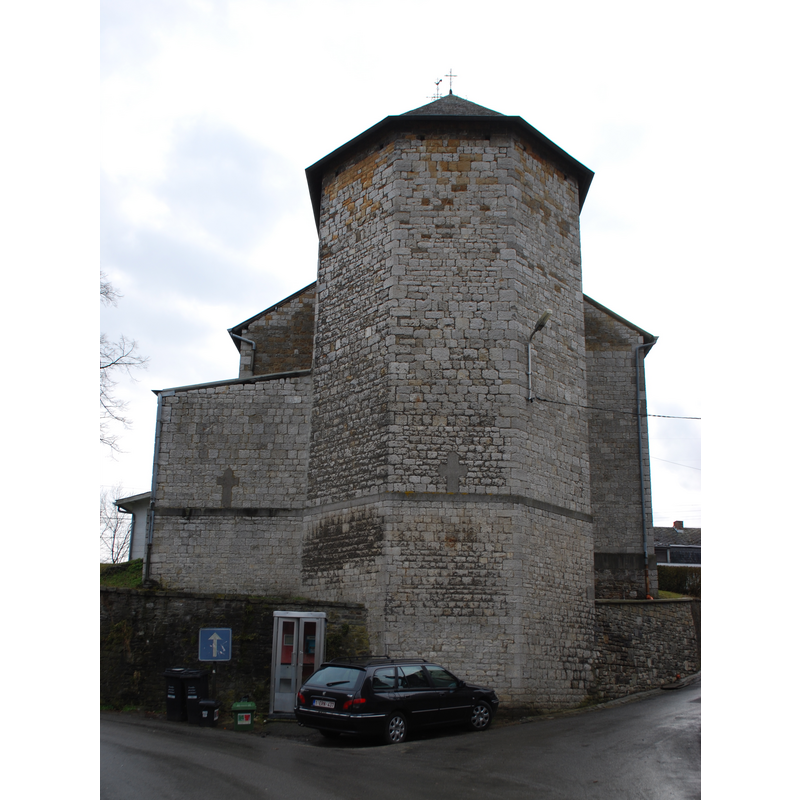
view of church exterior - east view
Copyright Statement: Image copyright © Jean Housen, 2013
Image Source: digital photograph taken 10 April 2013 by Jean Housen [http://commons.wikimedia.org/wiki/File:20130410_fairon28.JPG] [accessed 21 March 2015]
Copyright Instructions: CC-BY-SA-3.0
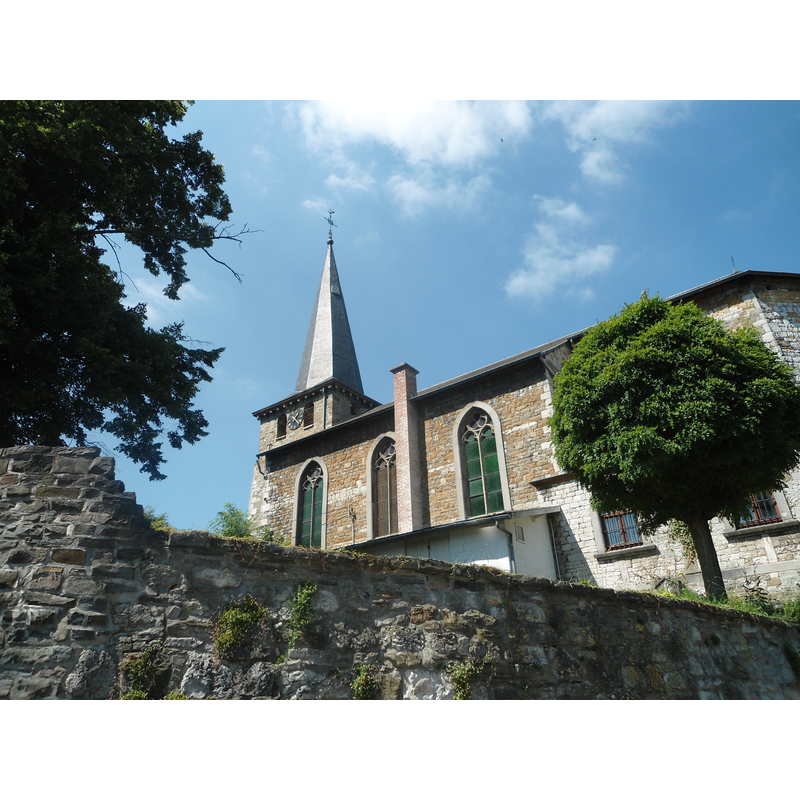
view of church exterior - southeast view
Copyright Statement: Image copyright © Rebexho, 2012
Image Source: digital photograph taken 10 August 2012 by Rebexho [http://commons.wikimedia.org/wiki/File:FAIRON610.JPG] [accessed 21 March 2015]
Copyright Instructions: CC-BY-SA-3.0
view of church interior - nave - looking west
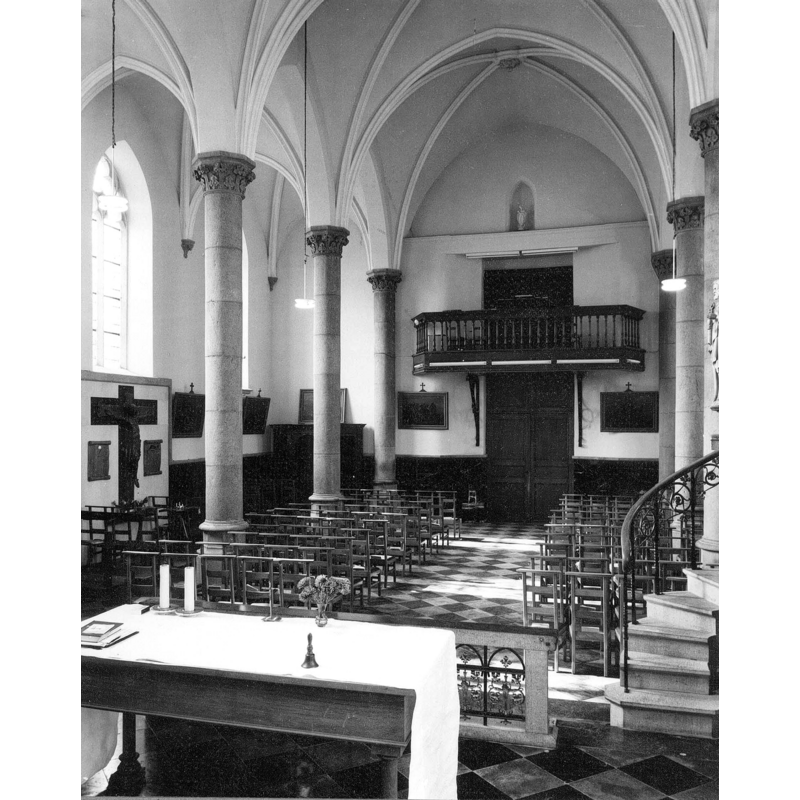
Copyright Statement: Image copyright © KIK-IRPA, Brussels (Belgium), 2015
Image Source: B&W photograph taken in 1970 by Serge Pluymiers [KIK-IRPA, Brussels (Belgium), cliché M55987]
Copyright Instructions: Reproduced in accordance with KIK-IRPA guidelines
view of church interior - nave - looking east
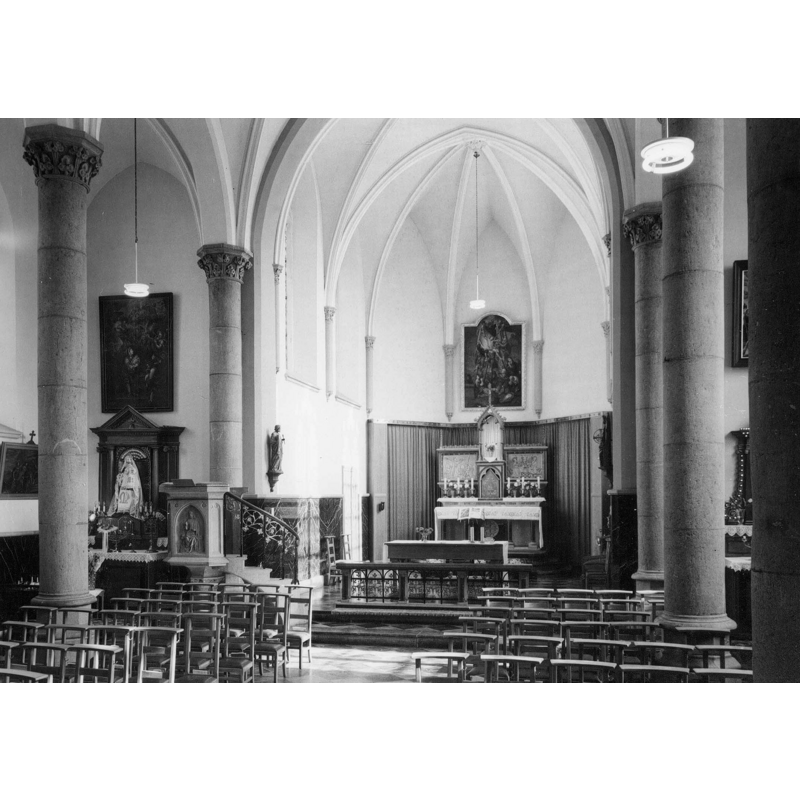
Copyright Statement: Image copyright © KIK-IRPA, Brussels (Belgium), 2015
Image Source: B&W photograph taken in 1970 by Serge Pluymiers [KIK-IRPA, Brussels (Belgium), cliché M55986]
Copyright Instructions: Reproduced in accordance with KIK-IRPA guidelines
animal - mammal - lion - protome - 3
![only three of the original four from the 12thC font have survived, and have been incorporated into the later font [cf. FontNotes]](/static-50478a99ec6f36a15d6234548c59f63da52304e5/compressed/1150321046_compressed.png)
Scene Description: only three of the original four from the 12thC font have survived, and have been incorporated into the later font [cf. FontNotes]
Copyright Statement: Image copyright © KIK-IRPA, Brussels (Belgium), 2015
Image Source: detail of a B&W photograph taken in 1970 by Serge Pluymiers [KIK-IRPA, Brussels (Belgium), cliché M56005]
Copyright Instructions: Reproduced in accordance with KIK-IRPA guidelines
INFORMATION
Font ID: 10832FAI
Object Type: Baptismal Font1
Font Date: ca. 1155-1160?
Font Century and Period/Style: 12th century (mid?) [lower base only] / 15th - 16th century[basin and stem only] [composite font], Medieval [composite]
Cognate Fonts: [cf. FontNotes]
Church / Chapel Name: Église paroissiale Saint-Martin
Font Location in Church: Inside the church
Church Patron Saint(s): St. Martin of Tours
Church Notes: the Bulletin des Commissions royales d'art et d'archéologie (vol. 5, 1866: 325) and (vol. 8, 1869: 154, 201) reports the plans and decisions for the re-construction of the church at Fairon
Church Address: rue de l'Eglise, 4180 Fairon, Belgium
Site Location: Liège, Wallonie / Wallonne, Belgium, Europe
Directions to Site: Located on the N654, in the municipality of Hamoir, near Huy
Ecclesiastic Region: Diocèse de Liège
Additional Comments: fragment of a font / altered font / composite font (only the three lion protomes remain from the original mid-12thC font here)
Font Notes:
Click to view
The font here is described in Hartog (2002), after Timmers (1980), as a baptismal font of the early Renaissance period mounted on four couchant lions in the style of the earlier Romanesque type. Ghislain (2009), however, states that the three lion protomes of the base are actually the original ones from a baptismal font of the Namurois group, filiation Furneaux, made of limestone (calcaire de Meuse) ca. 1155-1160, and remarks on the similarities with those of the fonts at Furneaux, Othée and Saint-Séverin-en-Condroz. The present font is obviously a composite one; it consists of an octagonal basin with protruding human heads on four of the sides, raised on an octagonal pedestal base; the lower base appears to have been made of fragments from ther original mid-12th century font, and includes three lion heads or protomes. The dome-shaped metal [brass?] cover is typical of the area, 17th-century, or a 19th-century replica.
A communication from Pol Herman to Jean-Claude Ghislain (e-mail of 11 February 2022 [cc'd to BSI]) suggests a similarity of the font base at Rotterdam No. 2 with the bases of those at Fairon and Saint-Severin-en-Condroz. The similarity is closest to Condroz; the animals on the Fairon base are definitely lion protomes with healthy manes, and the lower base shape matches the polygonal stem.
A communication from Pol Herman to Jean-Claude Ghislain (e-mail of 11 February 2022 [cc'd to BSI]) suggests a similarity of the font base at Rotterdam No. 2 with the bases of those at Fairon and Saint-Severin-en-Condroz. The similarity is closest to Condroz; the animals on the Fairon base are definitely lion protomes with healthy manes, and the lower base shape matches the polygonal stem.
MEDIUM AND MEASUREMENTS
Material: stone
Font Shape: octagonal, mounted
Basin Interior Shape: round
Basin Exterior Shape: octagonal
Notes on Measurements: [NB: KIK-IRPA, Brussels (Belgium) gives 140 cm as the total height, which includes that of the cover]
LID INFORMATION
Date: 17th century? / 19th century?
Material: metal, brass?
Apparatus: no
Notes: [cf. FontNotes]
REFERENCES
- Ghislain, Jean-Claude, Les fonts baptismaux romans en pierre bleue des ateliers du Namurois (ca. 1150-1175), Namur: Musée provincial des arts anciens du Namurois, 2009, catalogue entry no. 23, p. 92-93
- Hartog, Elizabeth den, Romanesque sculpture in Maastricht, Maastricht: Bonnefantenmuseum Maastricht, 2002, p. 525
- Timmers, Jan Joseph Marie, De Kunst van het Maasland II, 1980, p. 232