Nieuwstad
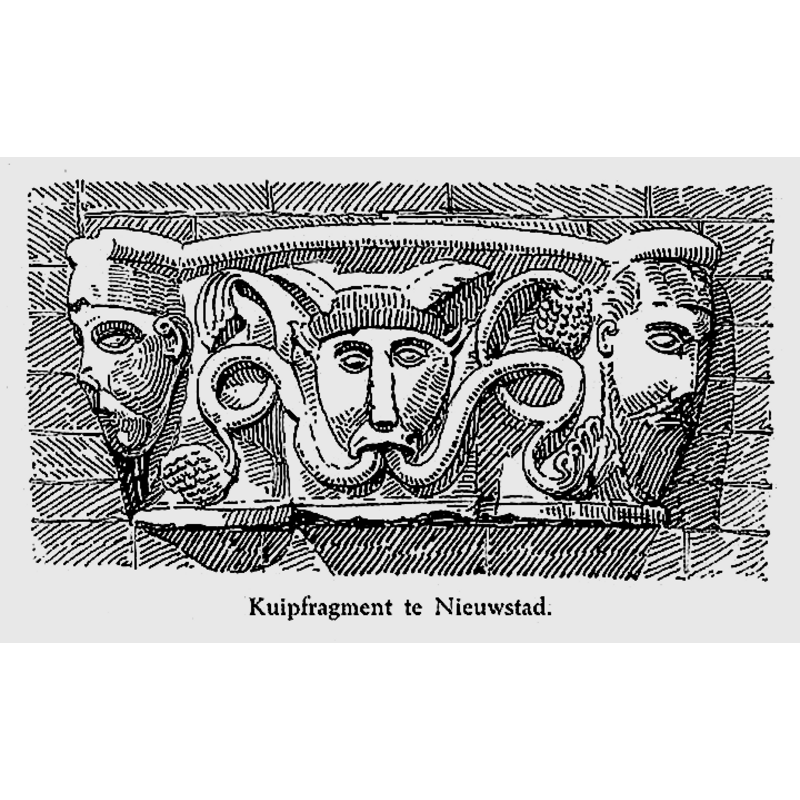
Image copyright © [in the public domain]
PD
Results: 12 records
human figure - head - 4
Scene Description: the head on the leaft is clean-shaven; the head on the right is male and bearded
Copyright Statement: Image copyright © [in the public domain]
Image Source: drawing in Ligtenberg (1915: 236)
Copyright Instructions: PD
human figure - head - grotesque or fantastic - foliage stemming from the mouth
Scene Description: identified as a devil's head in Hartog [cf. Font notes]
Copyright Statement: Image copyright © [in the public domain]
Image Source: drawing in Ligtenberg (1915: 236)
Copyright Instructions: PD
design element - motifs - vine - acanthus
Scene Description: with one leaf at two ends of the vine; the other two ends have fruit (arum)
Copyright Statement: Image copyright © [in the public domain]
Image Source: drawing in Ligtenberg (1915: 236)
Copyright Instructions: PD
view of church exterior - northeast view
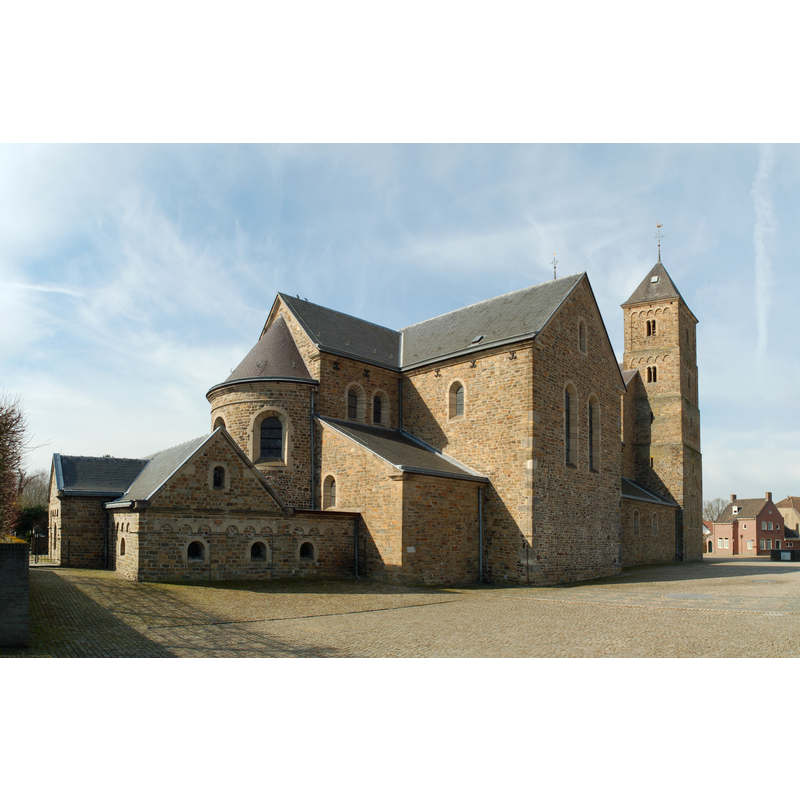
Scene Description: the former abbey church Sint-Salvator, now re-built as the Rooms-Katholieke Sint-Amelbergabasiliek, Susteren
Copyright Statement: Image copyright © Alupus, 2011
Image Source: digital photograph taken 20 March 2011 by Alupus [stitched by Alchemist-hp] [https://commons.wikimedia.org/wiki/File:St_Amelbergachurch_in_Susteren_Netherlands_Pano.jpg] [accessed 3 February 2016]
Copyright Instructions: CC-BY-SA-3.0
view of church exterior - west end
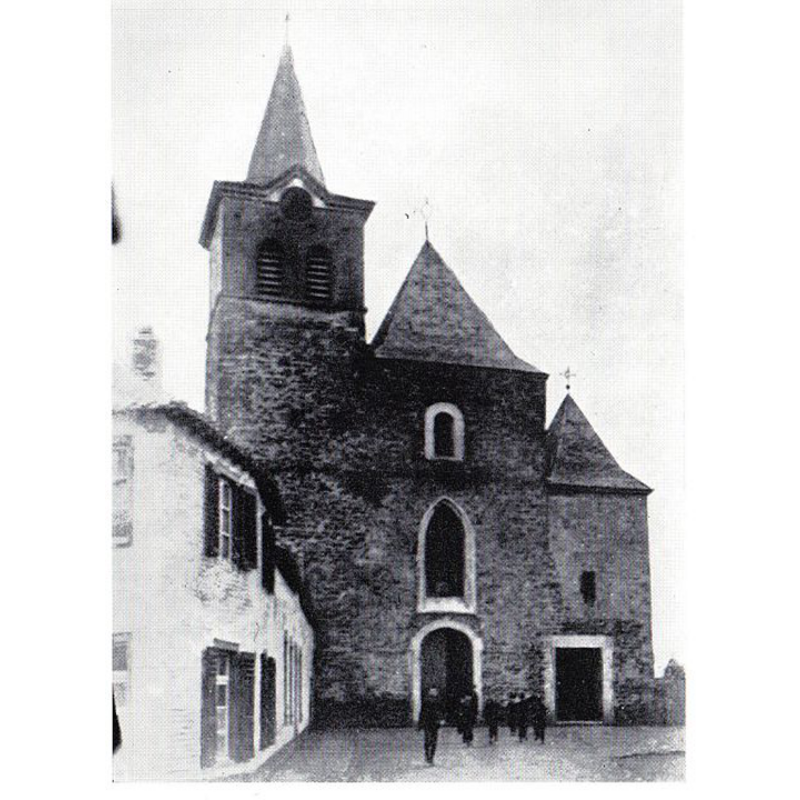
Scene Description: the demolished abbey church of Sint-Salvator, Susteren, as it was in 1887 -- Source caption: ""De Sint Salvator. De oude abdijkerk van Susteren" door N. Roozen c.m. 1961, met dank aan Sander van Daal "
Copyright Statement: Image copyright © Stichting Databank Kerkgebouwen in Limburg, 2005
Image Source: B&W photograph taken in 1887, in the Stichting Databank Kerkgebouwen in Limburg [www.kerkgebouwen-in-limburg.nl/kerken/susteren/amelberga] [accessed 3 February 2015]
Copyright Instructions: No known copyright restriction / Fair Dealing
view of church exterior - southeast view
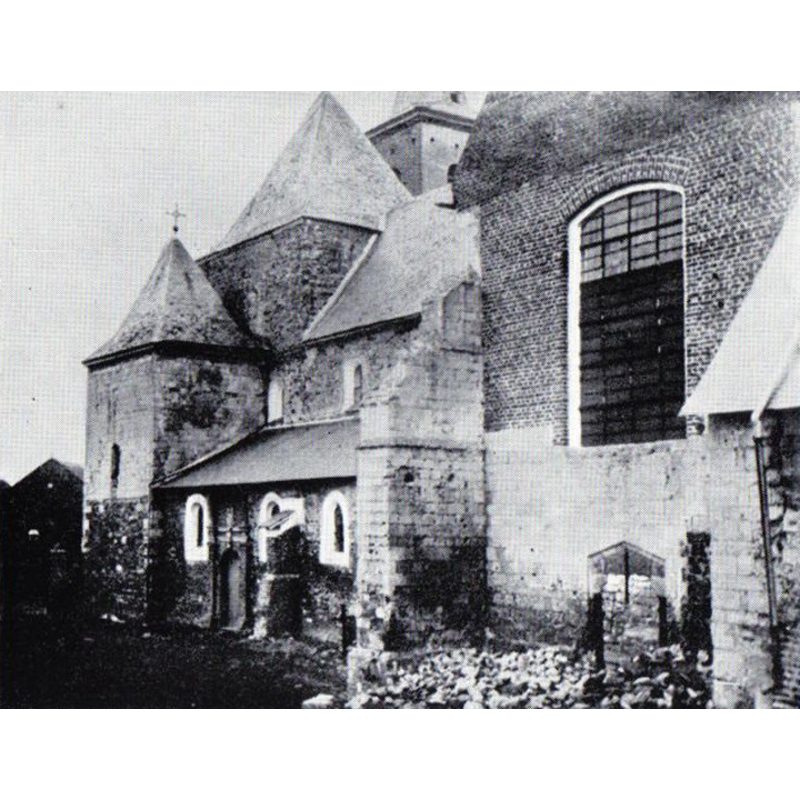
Scene Description: the demolished abbey church of Sint-Salvator, Susteren, as it was in 1887 -- Source caption: ""De Sint Salvator. De oude abdijkerk van Susteren" door N. Roozen c.m. 1961, met dank aan Sander van Daal "
Copyright Statement: Image copyright © Stichting Databank Kerkgebouwen in Limburg, 2005
Image Source: B&W photograph taken in 1887, in the Stichting Databank Kerkgebouwen in Limburg [www.kerkgebouwen-in-limburg.nl/kerken/susteren/amelberga] [accessed 3 February 2015]
Copyright Instructions: No known copyright restriction / Fair Dealing
view of font in context
![undated photograph showing the font in the context of the interior of the abbey church of St. Salvator, in Susteren [cf. FontNotes]](/static-50478a99ec6f36a15d6234548c59f63da52304e5/compressed/1160203028_compressed.png)
Scene Description: undated photograph showing the font in the context of the interior of the abbey church of St. Salvator, in Susteren [cf. FontNotes]
Copyright Statement: Image copyright © Euregionaal Historisch Centrum, Sittard-Geleen, 2016
Image Source: B&W photograph in Limburgs Erfgoed [www.limburgserfgoed.nl/detail/EHC/D455AF59-101A-4773-E044-D6E81C5C6972] [accessed 3 February 2016]
Copyright Instructions: No known copyright restriction / Fair Dealing
view of fragment

Copyright Statement: Image copyright © E. den Hartog, Noordwijkerhout, 2002
Image Source: Hartog (2002)
Copyright Instructions: PERMISSION NOT AVAILABLE - IMAGE NOT FOR PUBLIC USE
view of basin - detail
Scene Description: one of the two surviving heads: bearded
Copyright Statement: Image copyright © E. den Hartog, Noordwijkerhout, 2002
Image Source: Hartog (2002)
Copyright Instructions: PERMISSION NOT AVAILABLE - IMAGE NOT FOR PUBLIC USE
view of basin - detail
Scene Description: one of the two surviving heads: clean-shaven
Copyright Statement: Image copyright © E. den Hartog, Noordwijkerhout, 2002
Image Source: Hartog (2002)
Copyright Instructions: PERMISSION NOT AVAILABLE - IMAGE NOT FOR PUBLIC USE
animal - reptile - snake or dragon?

Scene Description: Hartog (2002) describes it as "a fragment of a curled snake's tail with pierced beading"

design element - motifs - ball, bead or pellet
Scene Description: adorning the tail of the snake (?)
INFORMATION
Font ID: 10830NEU
Object Type: Baptismal Font1, fragment
Font Century and Period/Style: 12th century, Romanesque
Workshop/Group/Artisan: Mosan font (Namurois)?
Cognate Fonts: The font at Givonne, for example
Museum: Bonnefantenmuseum, Limburgs Museum voor Kunst en Oudhoden, Maastricht, BF 3046-4833 [old no. Nijst inventory 991]
Church / Chapel Name: [found in a farm in Nieuwstad; may have been originally from the Sint-Salvator abbey church in Susteren -- the church is now the Rooms-Katholieke Sint-Amelbergakerk]
Font Location in Church: [reported acquired by a museum in 1920]
Church Patron Saint(s): St. Amelberga [formerly Our Saviour, St. Peter & St. Paul]
Church Notes: original abbey church early-8thC; destroyed late-9thC by Normans/Vikings; re-built 11thC; expanded 12thC; became parish church 18thC; restored ca. 1890; restored again 1948;
Church Address: Salvatorplein 1, 6114 HE Susteren
Site Location: Limburg, Netherlands, Europe
Directions to Site: Susteren is located 7 km NW of Sittard, in the municipality of Echt-Susteren since 2003. Nieuwstad was a hamlet of Susteren, when this was a municipality -- The Bonnefantenmuseum is located at 5 Dominikanerplein, Maastricht
Additional Comments: abandoned font / damaged font / recycled font: "A Nieuwstad une terrine à soupe remplace les anciens fonts baptismaux [...] Dans la même comune nous avons trouvé maçonné dans un mur de la grange de M. le bourgmestre Buysmans, le fragment notable d'un font baptismal, qu'on disait provenir de Susteren. C'est une oeuvre magnifiquement travaillé, ornée de têtes et des rinceaux. Nous pensons qu'elle date du XIVme siècle". [cf. FontNotes abd BIB01801 for the 1871 source of this quote] -- MUST USE
Font Notes:
Click to view
Noted and illustrated in Ligtenberg (1915) as the fragment of the basin of a baptismal made of limestone; the fragment, which appears to consists of one full size of the basin, has two full human heads (one bearded) prominent at the angles; between them on the round side is a horned (?) mask with two acanthus branches bearing fruit stemming from its mouth, similar to the way lion heads are represented on fonts of this type. An old photograph in Limburgs Erfgoed [www.limburgserfgoed.nl/detail/EHC/D455AF59-101A-4773-E044-D6E81C5C6972] [accessed 3 February 2016] is captioned "Interieur voormalige abdijkerk St. Salvator te Susteren", thereby identifying the original church as the former abbey church of St. Salvator in Susteren; the caption further notes that the four heads that decorate the sides of the basin at 90-degree angles are symbols for the four rivers of Paradise, Euphrates, Tigris, Gehon and Phison. [NB: the undated B&W photograph is labeled "Beeldbank E.H.C. Sittard-Geleen", and the site gives the Euregionaal Historisch Centrum, Sittard-Geleen, ref. no. D455AF59-101A-4773-E044-D6E81C5C6972 as source]. Hartog (2002) quotes from a 1920 acquisition record entry by W. Goosens in the 'Maasgouw' journal of the Rijksarchief in Limburg. Archief Limburgs Geschied- en Oudheidkundig Genootschap, which refers to the basin fragment from a Romanesque baptismal font originally from the church at Nieuwstad: "Kuipfragmentvan een Rom. doopvont, dat te Nieuwstad in den muur eener boerderij was ingemetseld. Afgestaan door den hr. Kruyen, onder voorwaarde, dat het ter beschikking blijft van de kerk van Nieuwstad, als deze de doopvomt wil laten aanvullen en herstellen." Hartog (2002) discribes and illustrates the fragment: "Only one side of this baptismal font has survived. It is cracked both on the left and the right. On top, the basin is curved with protruding round corners with heads underneath. At the bottom the basin is more or less tripartite: curved under the corner heads and straight in the middle". Hartog (ibid.) describes the two surviving heads -one bearded, one not- in detail, noting the "pretzel-like" ears on both heads, a "demon's head with straight hair, two horns, tiny ears, large eyes, a long nose and sagging cheeks" between the heads, and remarks on the thick vegetal strands that stem from its mouth and have split ends with foliage and grape bucnches. Hartog (ibid.) also notes "a fragment of a curled snake's tail with pierced beading" to the right of the bearded head. This side of the basin is like one of the sides of the font at Givonne, in France, and not unlike several other fonts of the Mosan type produced at about the same time in the Namurois. Hartog (ibid.) cites a 1871 source that places the fragment "maçonné dans un mur de la grange de M. le bourgmestre Buysmans" at the time and suggests a rather late date of the 14th century for the piece. This same 1871 source mentions that the fragment is said to have originated in Susteren. The fragment is now [2003] in the Bonnefantenmuseum, Limburgs Museum voor Kunst en Oudhoden, Maastricht]
COORDINATES
UTM: 31U 699 762 5660488
Latitude & Longitude (Decimal): 51.061111, 5.850833
Latitude & Longitude (DMS): 51° 3′ 40″ N, 5° 51′ 3″ E
MEDIUM AND MEASUREMENTS
Material: stone, limestone (calcaire viséen)?
Number of Pieces: fragment
Font Shape: round, mounted
Basin Interior Shape: round
Basin Exterior Shape: round (with heads)
Basin Total Height: 39 cm*
Trapezoidal Basin: 89 cm* [given as width]
Notes on Measurements: * Hartog (2002)
REFERENCES
- "Vandalisme dans les églises du duché de Limbourg", 8, Publications de la Société historique at archéologique dans le Limbourg, 1871, pp. 435; p. 435
- Hartog, Elizabeth den, Romanesque sculpture in Maastricht, Maastricht: Bonnefantenmuseum Maastricht, 2002, p. 25 and fn24, 50
- Rijksarchief in Limburg. Archief Limburgs Geschied- en Oudheidkundig Genootschap, Maasgouw, 1864-