Hermitage
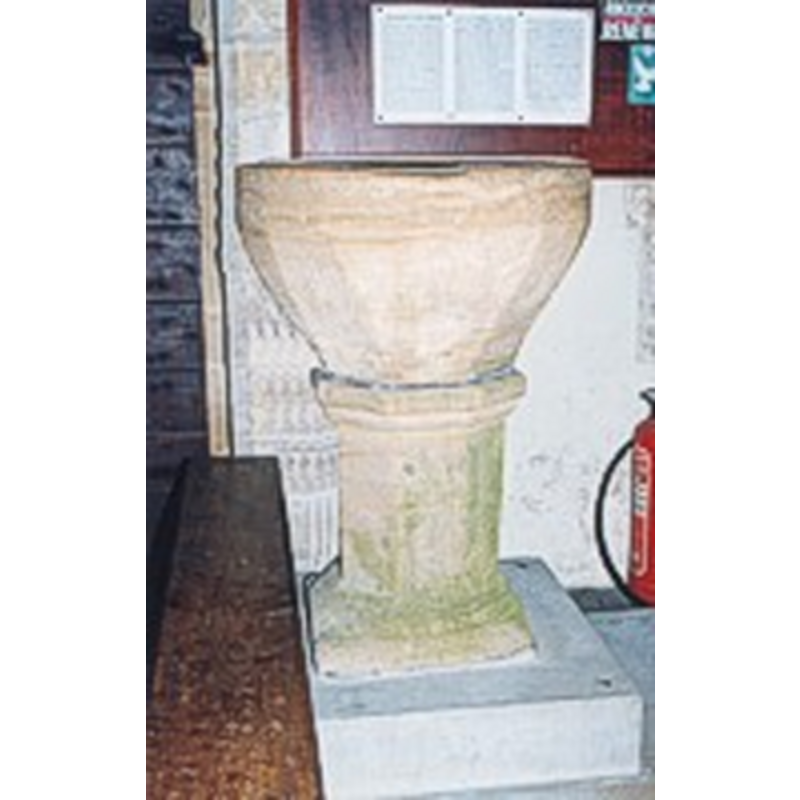
Image copyright © The Dorset Historic Churches Trust, 2005
Standing permission
Results: 1 records
view of font
Copyright Statement: Image copyright © The Dorset Historic Churches Trust, 2005
Image Source: The Dorset Historic Churches Trust, 2005 [http://dorsethistoricchurchestrust.co.uk]
Copyright Instructions: Standing permission
INFORMATION
Font ID: 09346HER
Object Type: Baptismal Font1
Font Century and Period/Style: 17th century
Church / Chapel Name: St. Mary's Church [formerly known as 'Priory of Hermitage juxta Dorchester']
Font Location in Church: Inside the church
Church Patron Saint(s): St. Mary the Virgin [formerly St. Lawrence]
Site Location: Dorset, South West, England, United Kingdom
Directions to Site: Located between the A37 and the A352, 11-12 km S of Sherborne
Font Notes:
Click to view
Noted in the 3rd ed. of Hutchins (1973 c1861-1874): "The font is of Ham-hill stone; the bowl round, ending below in an octagon, and resting on an octagonal stem." Long (1923) describes this font as "of very uncommon design" and lists it among the fonts of the Perpendicular period. Described in the Wriggle Valley benefice web page: Baptismal font made of Ham-hill stone, probably of the 17th century [www.wrigglevalleybenefice.com/churchc/page.asp]. In The Dorset Historic Churches Trust site [http://dorsethistoricchurchestrust.co.uk/hermitage.htm]. The basin is cut into a polygonal shape [octagonal?] as if by a local apprentice, and is raised on an octagonal-to-square pedestal.
Credit and Acknowledgements: We are grateful to Robin Adeney and The Dorset Historic Churches Trust [www.dorsethistoricchurchestrust.co.uk], for the photograph of this font
MEDIUM AND MEASUREMENTS
Material: stone, Ham Hill stone
Font Shape: octagonal, mounted
Basin Interior Shape: round
Basin Exterior Shape: octagonal
REFERENCES
- Hutchins, John, The History and Antiquities of the County of Dorset, Wakefield: E.P. Pub. Ltd., 1973, vol. 4: 468
- Long, E.T., "Dorset church fonts", 44, Proceedings of the Dorset Natural History and Antiquarian Field Club, 1923, pp. 62-76; p. 72, 76