Childerditch / Ciltedic / Ciltendis
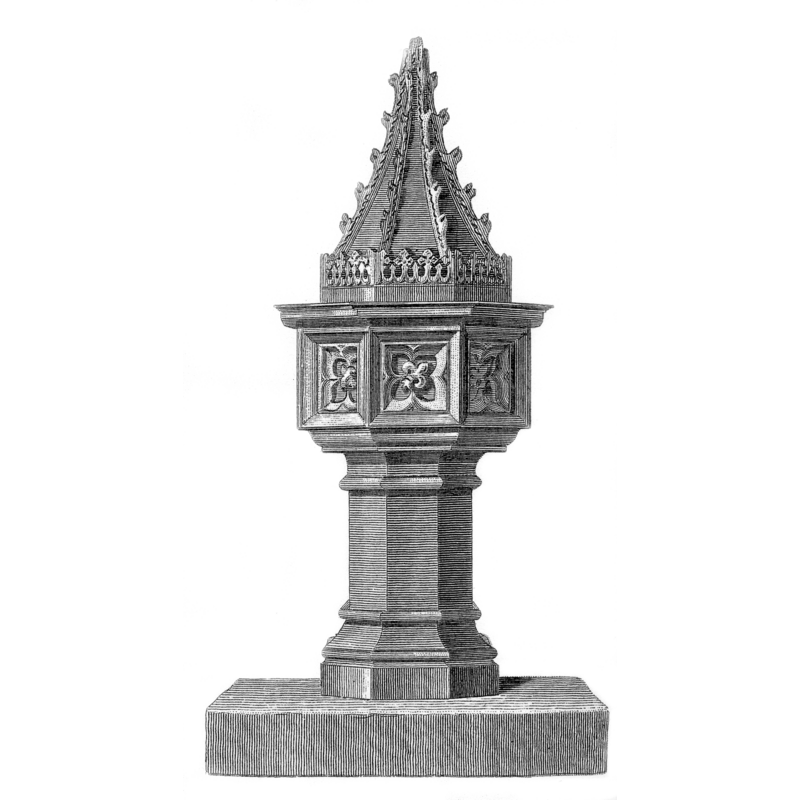
Image copyright © [in the public domain]
PD
Results: 13 records
view of font and cover
Copyright Statement: Image copyright © [in the public domain]
Image Source: digital image of an engraving by J. Basire in Repton (1812)
Copyright Instructions: PD
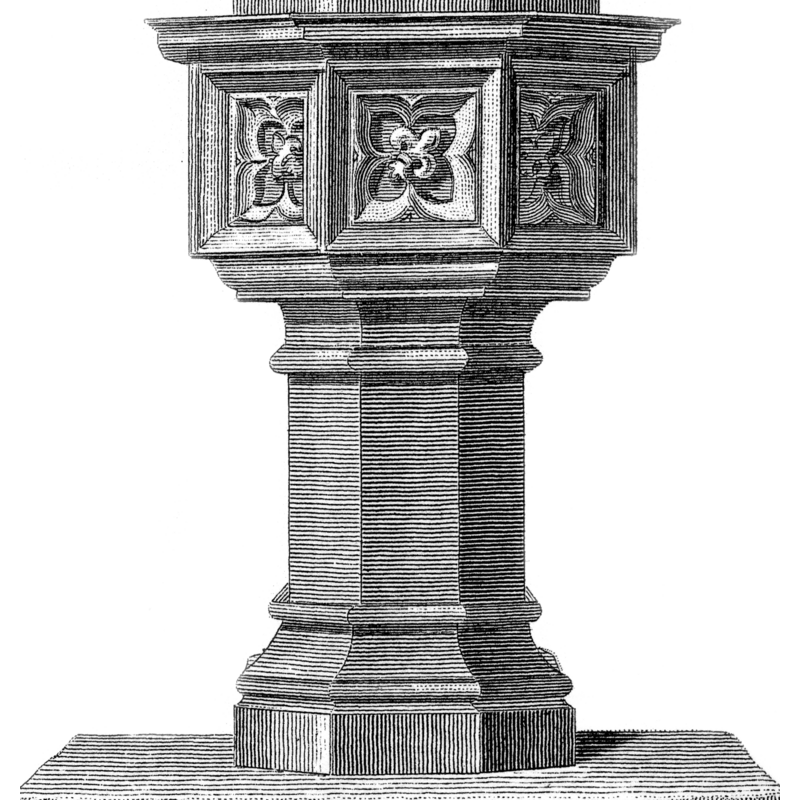
design element - motifs - moulding
Copyright Statement: Image copyright © [in the public domain]
Image Source: digital image of an engraving by J. Basire in Repton (1812)
Copyright Instructions: PD
design element - motifs - floral - fleur-de-lis - in a quatrefoil
Scene Description: some of these may be the ones identified as the badges of Henry VIII and Catherine of Aragon [cf. Font notes]
Copyright Statement: Image copyright © [in the public domain]
Image Source: digital image of an engraving by J. Basire in Repton (1812)
Copyright Instructions: PD
design element - motifs - moulding - graded
Copyright Statement: Image copyright © [in the public domain]
Image Source: digital image of an engraving by J. Basire in Repton (1812)
Copyright Instructions: PD
view of church exterior - southwest view
![EXT SW digital photograph taken 24 Match 2011 by Glyn Baker [www.geograph.org.uk/photo/2322708] [accessed 14 May 2018]](/static-50478a99ec6f36a15d6234548c59f63da52304e5/compressed/1180514028_compressed.png)
Scene Description: EXT SW digital photograph taken 24 Match 2011 by Glyn Baker [www.geograph.org.uk/photo/2322708] [accessed 14 May 2018]
Copyright Statement: Image copyright © Glyn Baker, 2011
Image Source: digital photograph taken 24 Match 2011 by Glyn Baker [www.geograph.org.uk/photo/2322708] [accessed 14 May 2018]
Copyright Instructions: CC-BY-SA-2.0
view of font - detail
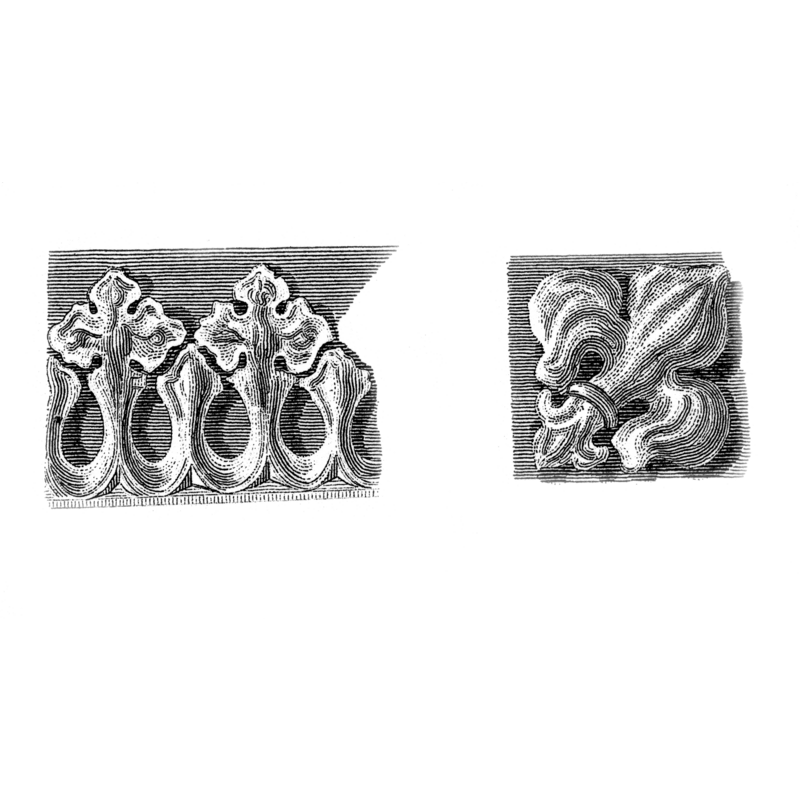
Scene Description: on the left the patern from the crown of the font cover -- on the right the fleur-de-lis motif inscribed in the quatrefoil windows of the basin panels
Copyright Statement: Image copyright © [in the public domain]
Image Source: digital image of an engraving by J. Basire in Repton (1812)
Copyright Instructions: PD
design element - motifs - moulding
Copyright Statement: Image copyright © [in the public domain]
Image Source: digital image of an engraving by J. Basire in Repton (1812)
Copyright Instructions: PD
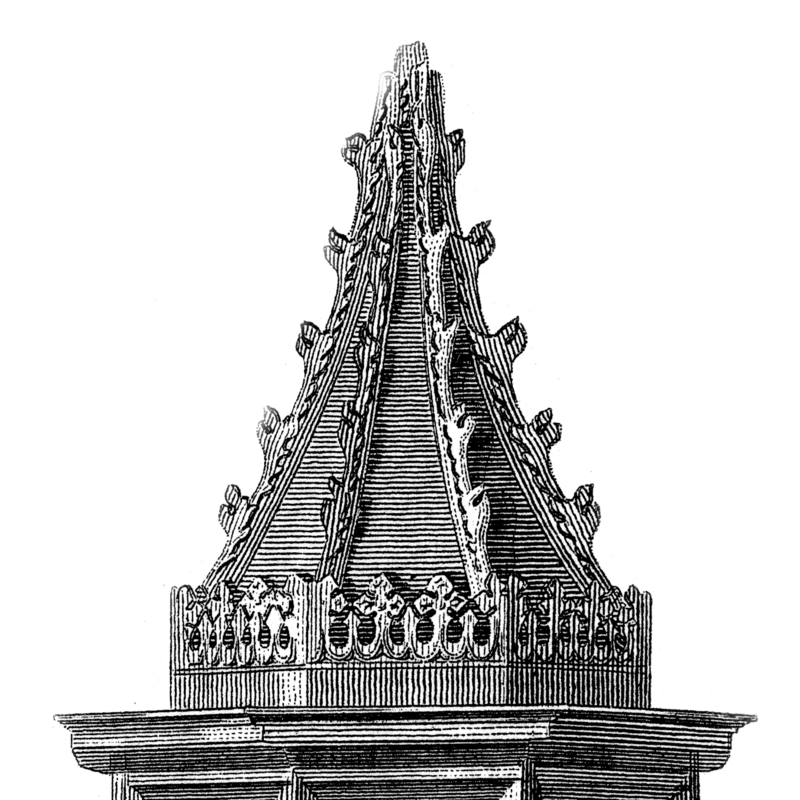
view of font cover
Copyright Statement: Image copyright © [in the public domain]
Image Source: digital image of an engraving by J. Basire in Repton (1812)
Copyright Instructions: PD
design element - motifs - floral - rose - in a quatrefoil
![some of these may be the ones identified as the badges of Henry VIII and Catherine of Aragon [cf. Font notes]](/static-50478a99ec6f36a15d6234548c59f63da52304e5/others/image_not_available.jpg)
Scene Description: some of these may be the ones identified as the badges of Henry VIII and Catherine of Aragon [cf. Font notes]
![some of these may be the ones identified as the badges of Henry VIII and Catherine of Aragon [cf. Font notes]](/static-50478a99ec6f36a15d6234548c59f63da52304e5/bsi-testing-site/others/image_not_available.jpg)
animal - mammal - leopard - head - in a quatrefoil
Scene Description: some of these may be the ones identified as the badges of Henry VIII and Catherine of Aragon [cf. Font notes]
symbol - fruit - pomegranate
Scene Description: some of these may be the ones identified as the badges of Henry VIII and Catherine of Aragon [cf. Font notes]
symbol - emblem - rose and pomegranate - dimidiated
Scene Description: some of these may be the ones identified as the badges of Henry VIII and Catherine of Aragon [cf. Font notes]
design element - motifs - foliage
Scene Description: [cf. Font notes]
INFORMATION
Font ID: 06719CHI
Object Type: Baptismal Font1
Font Century and Period/Style: 15th - 16th century, Perpendicular
Workshop/Group/Artisan: heraldic font
Church / Chapel Name: Church of All Saints and St. Faith [originally from the old church]
Font Location in Church: Inside the new (19th-century) church
Church Patron Saint(s): All Saints & St. Faith
Church Address: Childerditch Ln, Childerditch, Brentwood CM13 3EQ, UK -- Tel.: 01277 500490
Site Location: Essex, East, England, United Kingdom
Directions to Site: Located off (N) the A127, 5 km SSE of Brentwood, 8 km SW of Billericay
Ecclesiastic Region: Diocese of Chelmsford
Historical Region: Hundred of Chafford
Additional Comments: disappeared font? (the one from the 12thC church here)
Font Notes:
Click to view
There are three entries for Childerditch [variant spelling]s in the Domesday survey [http://opendomesday.org/place/TQ6089/childerditch/] [accessed 14 May 2018], none of which mentions cleric or church in it. Described and illustrated with an engraving by J. Basire in Repton (1812) as a baptismal font "from about the reign of King Henry the Sixth to that of Henry the Eighth" [i.e., 1422-1509+]. An entry in the 'Proceedings of the Central Comittee' of 10 September 1845 (Journal of the British Archaeological Association, vol. 1, 1846: 314) notes: "Messrs Smith and Waller reported the result of their visits to Childerditch and East Horndon churches in Essex, among which: "The little church of Childerditch is being restored under the superintendance of the rector, who has cleansed the font, formerly concealed by dirt and rubbish. It is an elegant monument of the art of the Tudor period, of octagonal shape, each face containing a quatrefoil, in the centre of which occur the badges of Henry VIII and Catherine of Arragon [sic]; and is further remarkable for an inscription cut round three sides, in the following words: 'This is the cost of Jhon the ostelier and Ceceli his wiffe'". Listed in Cox & Harvey (1907) as a baptismal font of the Decorated period. Noted in the Royal Commission on Historical Monuments (Essex, 1916-1923): "Font: octagonal bowl with quatrefoiled panelsenclosing carved rose, leopards' heads, pomegranate, rose and pomegranate dimidiated, fleur-de-lis and foliage; round upper edge black-letter inscription, 'This is the cost of Jhon Throsscher and Ceceli his wife', moulded base, early 16th-century." The entry for this parish in the Victoria County History (Essex, vol. 8, 1983) notes: "There was a priest at Childerditch in 1232 [...] In 1858 the church was a small building comprising nave of flint rubble, thought to date from the 12th century, brick chancel of recent date, timber belfry, and south porch. [...] It was then ruinous, but the debate as to whether it should be restored or rebuilt was not settled until 1869, when the old church was demolished and replaced by a new one. [...] The font, which dates from the early 16th century, has a blackletter inscription recording the fact that it was given by John Throsscher (Thresher) and his wife." Bettley & Pevsner (2007) date the font to the early-16th century. The font, of the later Gothic period, consists of an octagonal basin with protruding moulded upper rim, the sides decorated with pointed quatrefoil windows with inscribed fleur-de-lis; graded chamfered underbowl; octagonal pedestal base with mouldings at the top and botom of the stem, and on the lower base; octagonal pyramidal font cover, perhaps of the 16th or 1th century, the lower volume crown-shaped, the upper pyramidal section with crocketted arrises; it appears to have lost its finial.
COORDINATES
UTM: 31U 314938 5717696
Latitude & Longitude (Decimal): 51.5799, 0.329
Latitude & Longitude (DMS): 51° 34′ 47.64″ N, 0° 19′ 44.4″ E
MEDIUM AND MEASUREMENTS
Material: stone
Font Shape: octagonal, mounted
Basin Interior Shape: round
Basin Exterior Shape: octagonal
INSCRIPTION
Inscription Language: English
Inscription Location: around the upper edge of the basin
Inscription Text: "This is the cost of Jhon the ostelier and Ceceli his wiffe" /[or: "THIS IS THE COST OF JHON THROSSCHER AND CECILI HIS WIFE"]
Inscription Notes: [cf. FontNotes]
Inscription Source: 'Proceedings of the Central Comittee' of 10 September 1845 / RCHM (Essex, 1916-1923, vol. 4: 25)
LID INFORMATION
Date: 16th - 17th century?
Material: wood
Apparatus: no
Notes: [cf. FontNotes]
REFERENCES
- Victoria County History [online], University of London, 1993-. URL: https://www.british-history.ac.uk.
- Bettley, James, Essex, New Haven and London: Yale University Press, 2007, p. 232
- Cox, John Charles, English Church Furniture, New York: E.P. Dutton & Co., 1907, p. 199
- Great Britain. Royal Commission on Historical Monuments, An Inventory of the historical monuments in Essex, London: H.M. Stationary Office, 1916-1923, vol. 4: 25
- Repton, John Adey, "Specimens of Fonts, collected from different Churches, by John Adey Repton, Esq. F.A.S. In a Letter addressed to Craven Ord, Esq. F.R.S. and F.A.S.V.P., read 12th March, 1807", XVI, Archaeologia, 1812, pp. 335-337 and pl. XXXVII-XLV; p. 336-337 and pl. XLII fig 2