Coddington nr. Ledbury / Cotingtune
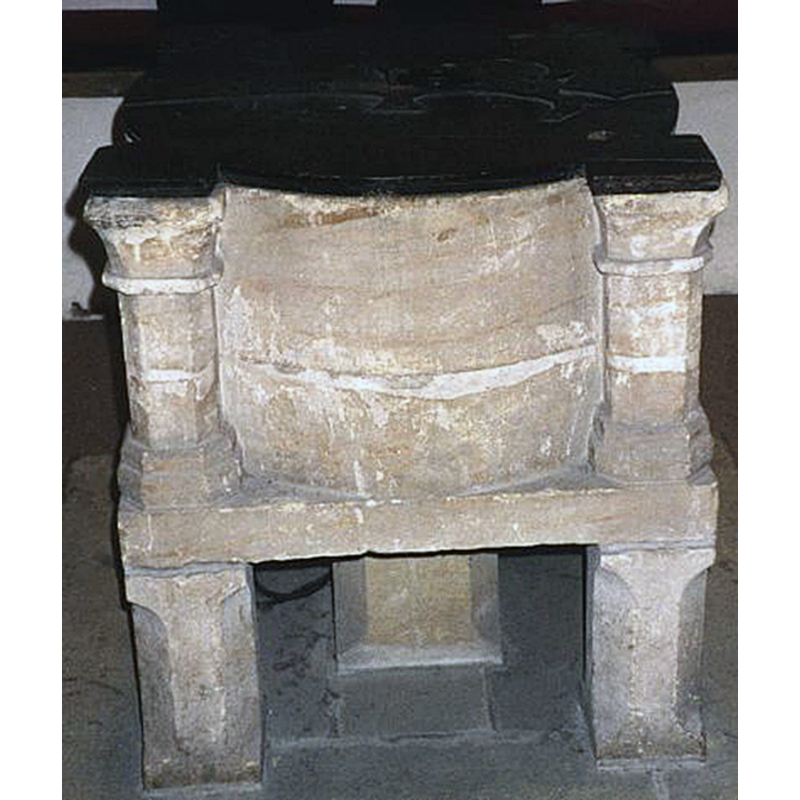
Image copyright © Peter Fairweather, 2004
Standing permission
Results: 3 records
view of font and cover
Copyright Statement: Image copyright © Peter Fairweather, 2004
Image Source: Peter Fairweather (Lincol, England)
Copyright Instructions: Standing permission
view of church exterior - southeast view
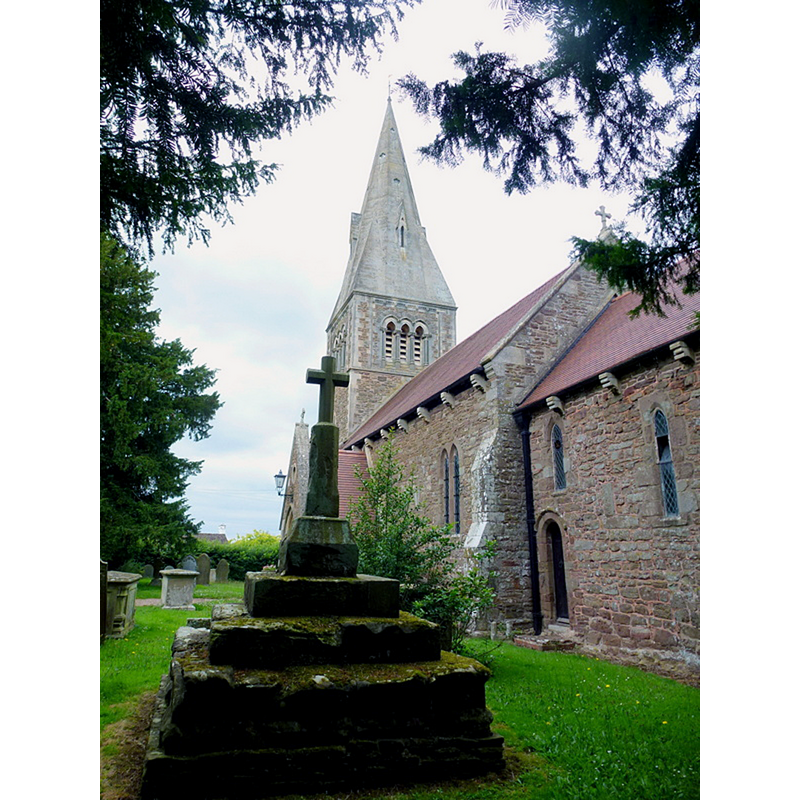
Copyright Statement: Image copyright © Jonathan Billinger, 2014
Image Source: digital photograph taken 14 July 2014 by Jonathan Billinger [www.geograph.org.uk/photo/4072918] [accessed 7 September 2018]
Copyright Instructions: CC-BY-SA-2.0
view of church interior - nave - looking east
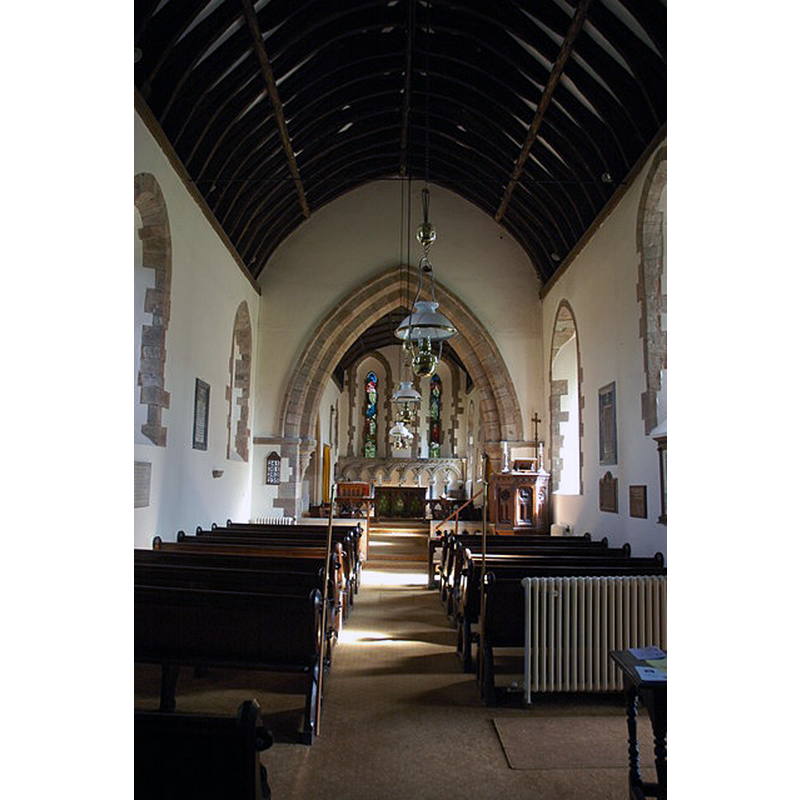
Copyright Statement: Image copyright © Philip Halling, 2008
Image Source: digital photograph taken 13 September 2008 by Philip Halling [www.geograph.org.uk/photo/963145] [accessed 7 September 2018]
Copyright Instructions: CC-BY-SA-2.0
INFORMATION
Font ID: 06134COD
Object Type: Baptismal Font1
Font Century and Period/Style: 13th century (early) [base only] [composite font], Medieval [composite]
Church / Chapel Name: Parish Church of All Saints
Font Location in Church: Inside the church
Church Patron Saint(s): All Saints
Church Notes: 12thC church; renovated 1865-1866
Church Address: Coddington, Ledbury HR8 1JJ, UK
Site Location: Herefordshire, West Midlands, England, United Kingdom
Directions to Site: Located off (E) the B4220, 5 km N of Ledbury
Ecclesiastic Region: Diocese of Hereford
Historical Region: Hundred of Wimundestreu
Additional Comments: recycled font?: the font appears to have been altered
Font Notes:
Click to view
There is an entry for this Coddington [variant spelling] in the Domesday survey [https://opendomesday.org/place/SO7142/coddington/] [accessed 7 September 2018] but it mentions neither cleric nor church in it. The entry for this parish in the Royal Commission inventory of Herefordshire (1931-1934, vol. II: p. 50) notes: "Font: modern but incorporating square stem with four attached shafts, moulded necking and base, early 13th-century." The entry for this church in Historic England [Listing NGR: SO7183642680] notes: "Font: bowl and plinth C19; stem consisting of block with attached shafts probably C13." This baptismal font is a somewhat of a conundrum, and does not seem to match exactly the description of the RCHM inventory. The basin is quasi-cylindrical but has a column at each corner; these colums have square capitals but the drums and the bases are octagonal; the whole is set on a quadrangular stone; the base consists of a broad central pillar plus four outer shafts slightly thinner than the central one; the are square but their corners have been cut at the centre, making most of the column octagonal with the exception of the capital and tha base; a flat wooden lid reinforced with a large iron motif has the shape of the upper plan of the basin. It must be noted that the font is made of many blocks, though it is not clear whether these blocks were orginally so or they have resulted from the break up of the font at some point. It is also possibly even likely, that this font has been greatly altered from its original shape.
Credit and Acknowledgements: We are grateful to Peter Fairweather of Lincoln, England, for bringing this font to our attention and for supplying the accompanying image.
COORDINATES
UTM: 30U 540252 5770259
Latitude & Longitude (Decimal): 52.0818, -2.4124
Latitude & Longitude (DMS): 52° 4' 54" N, 2° 24' 44" W
MEDIUM AND MEASUREMENTS
Material: stone
Font Shape: cylindrical, mounted, with corner columns
Basin Interior Shape: round
Basin Exterior Shape: round (with corner columns)
LID INFORMATION
Material: wood, oak?
Apparatus: no
REFERENCES
- Great Britain. Royal Commission on Historical Monuments (England), An Inventory of the Historical Monuments in Herefordshire, London: H.M. Stationary Office, 1931-1934, vol. II: p. 50