Villefranche-de-Conflent No. 1 / Vilafranca de Conflent
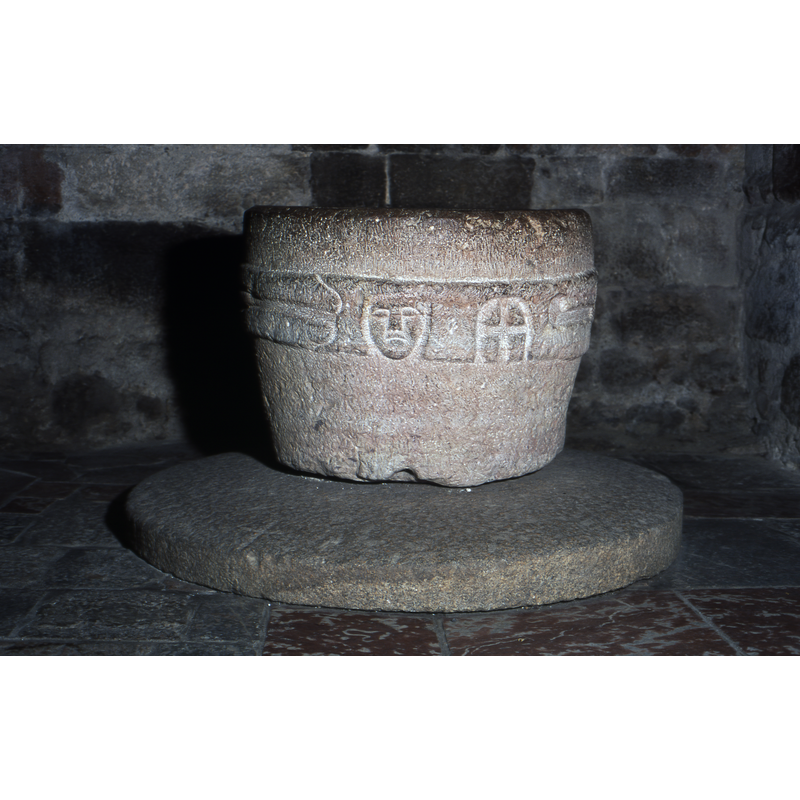
Image copyright © Baptisteria Sacra Index, 2023
CC-BY-NC-ND-4.0
Results: 19 records
view of font
Copyright Statement: Image copyright © Baptisteria Sacra Index, 2023
Image Source: digital image of a photograph taken 20 June 2001 by BSI
Copyright Instructions: CC-BY-NC-ND-4.0
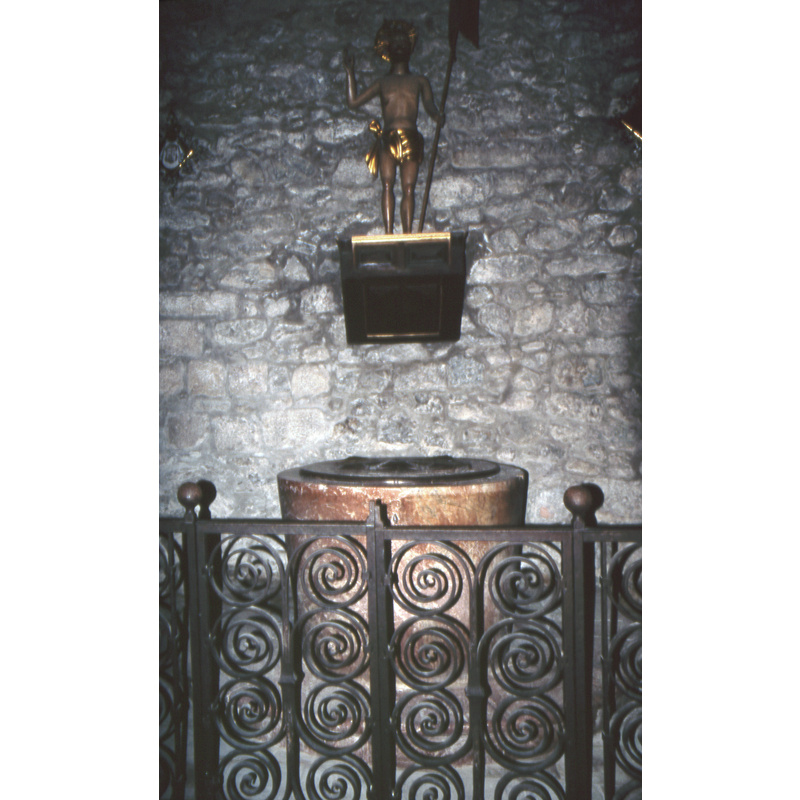
view of font in context
Copyright Statement: Image copyright © Baptisteria Sacra Index, 2023
Image Source: digital image of a photograph taken 20 June 2001 by BSI
Copyright Instructions: CC-BY-NC-ND-4.0
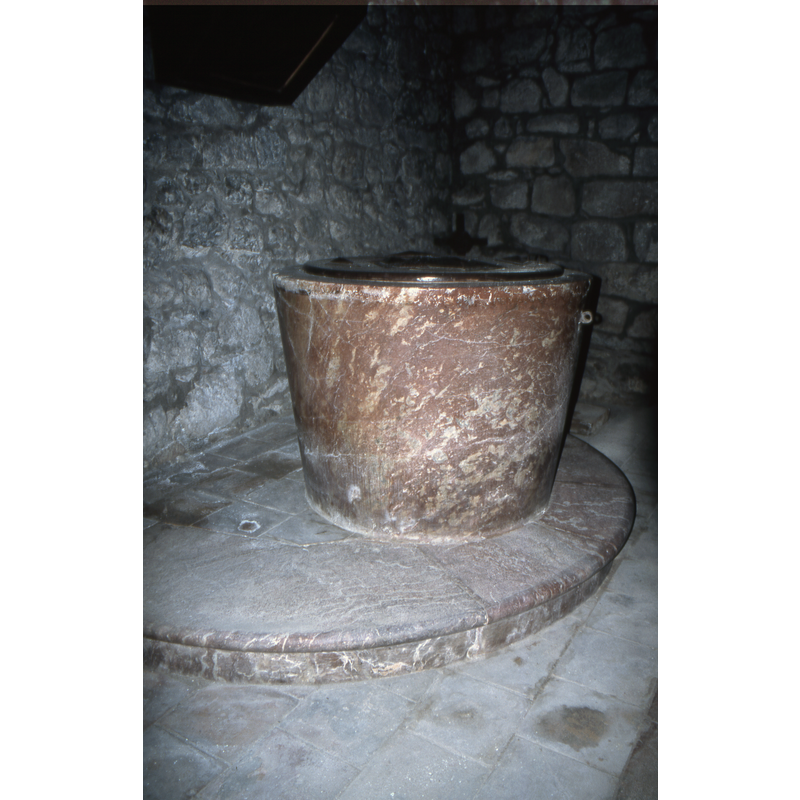
view of font
Copyright Statement: Image copyright © Baptisteria Sacra Index, 2023
Image Source: digital image of a photograph taken 20 June 2001 by BSI
Copyright Instructions: CC-BY-NC-ND-4.0
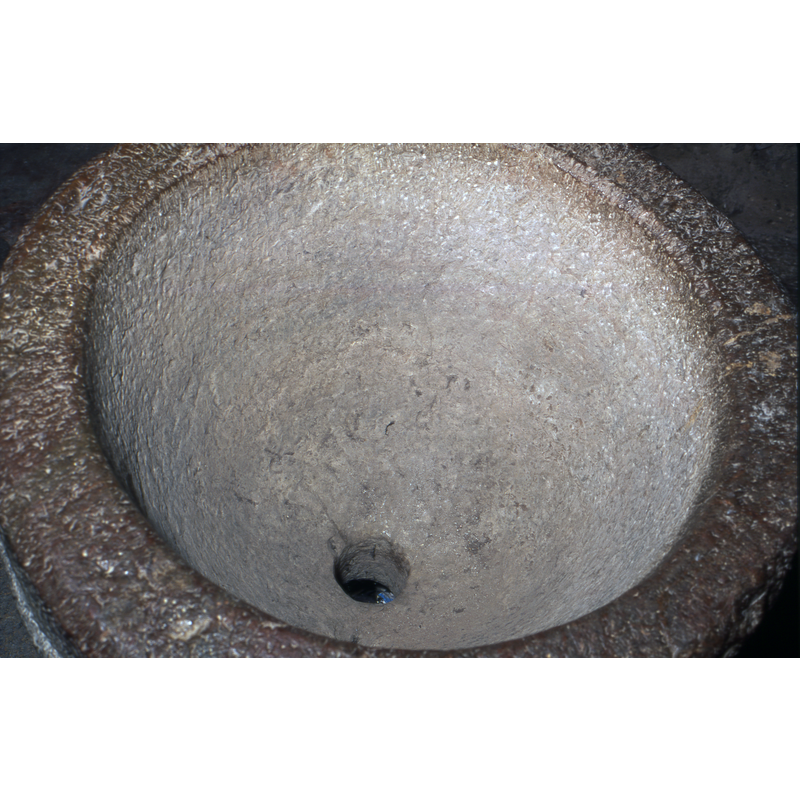
view of basin - interior
Copyright Statement: Image copyright © Baptisteria Sacra Index, 2023
Image Source: digital image of a photograph taken 20 June 2001 by BSI
Copyright Instructions: CC-BY-NC-ND-4.0
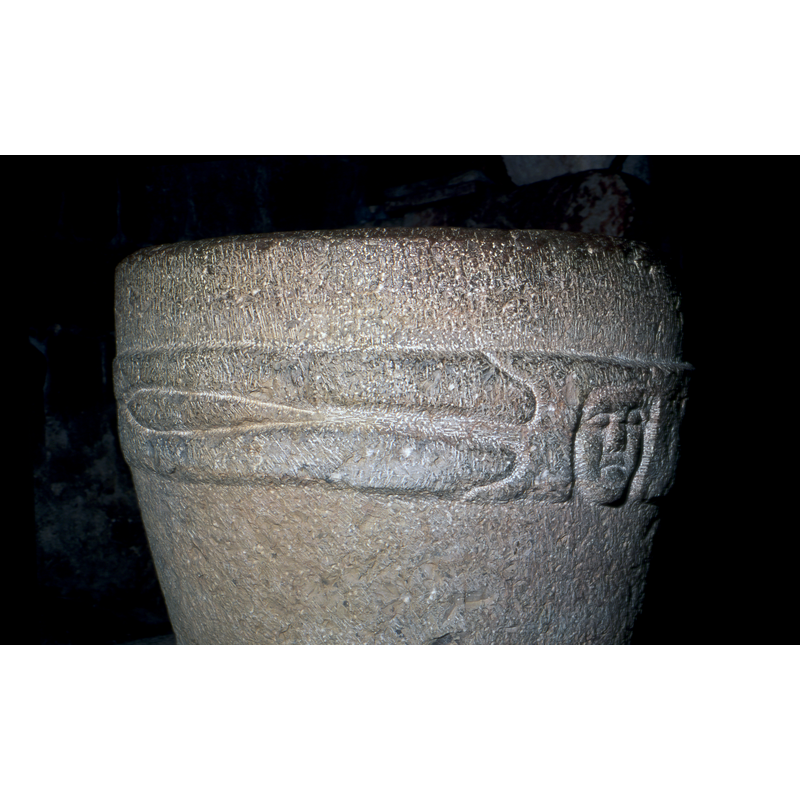
design element - motifs - anchor?
Copyright Statement: Image copyright © Baptisteria Sacra Index, 2023
Image Source: digital image of a photograph taken 20 June 2001 by BSI
Copyright Instructions: CC-BY-NC-ND-4.0
symbol - spoon? (palette?)
![[cf. Font notes]](/static-50478a99ec6f36a15d6234548c59f63da52304e5/compressed/VIL0107122_compressed.png)
Scene Description: [cf. Font notes]
Copyright Statement: Image copyright © Baptisteria Sacra Index, 2023
Image Source: digital image of a photograph taken 20 June 2001 by BSI
Copyright Instructions: CC-BY-NC-ND-4.0
design element - architectural - arch - round arch
Copyright Statement: Image copyright © Baptisteria Sacra Index, 2023
Image Source: digital image of a photograph taken 20 June 2001 by BSI
Copyright Instructions: CC-BY-NC-ND-4.0
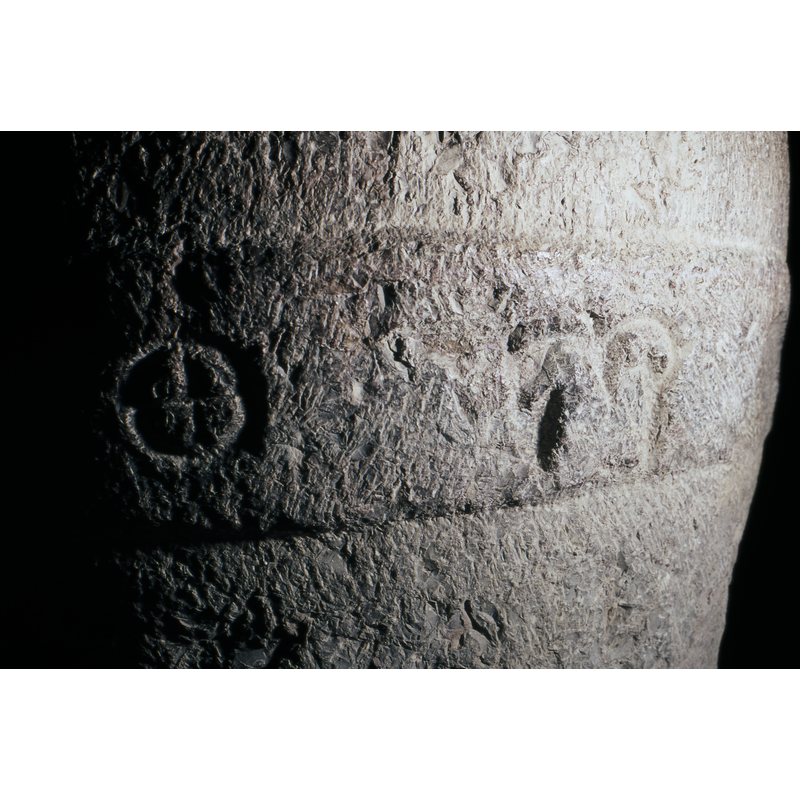
symbol - cross - in a circle
Copyright Statement: Image copyright © Baptisteria Sacra Index, 2023
Image Source: digital image of a photograph taken 20 June 2001 by BSI
Copyright Instructions: CC-BY-NC-ND-4.0
symbol - cross - in a circle
Copyright Statement: Image copyright © Baptisteria Sacra Index, 2023
Image Source: digital image of a photograph taken 20 June 2001 by BSI
Copyright Instructions: CC-BY-NC-ND-4.0
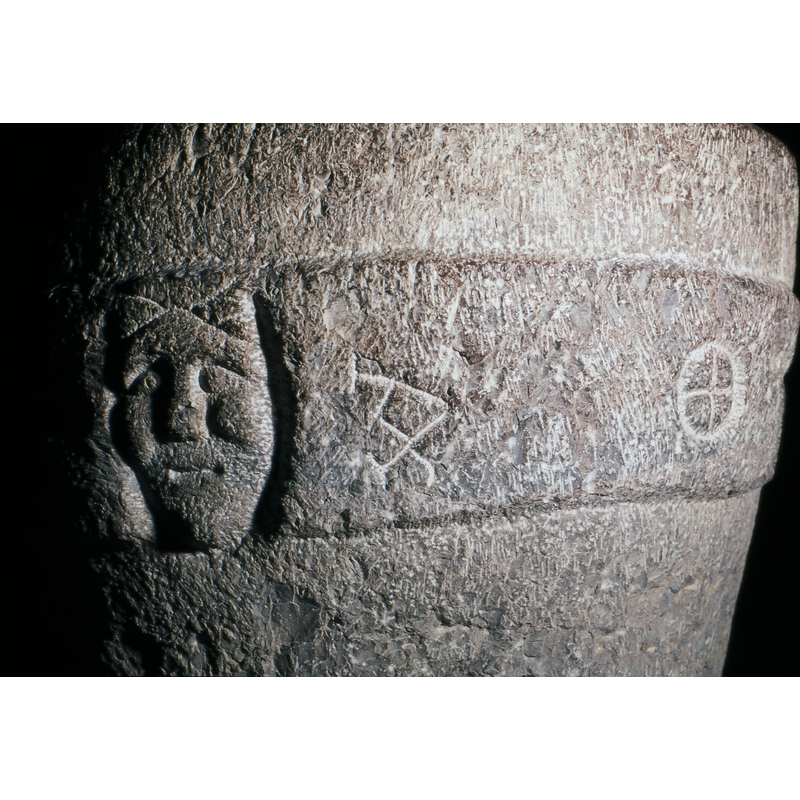
Christ - monogram - Alpha and Omega? (builder's marking?)
Copyright Statement: Image copyright © Baptisteria Sacra Index, 2023
Image Source: digital image of a photograph taken 20 June 2001 by BSI
Copyright Instructions: CC-BY-NC-ND-4.0
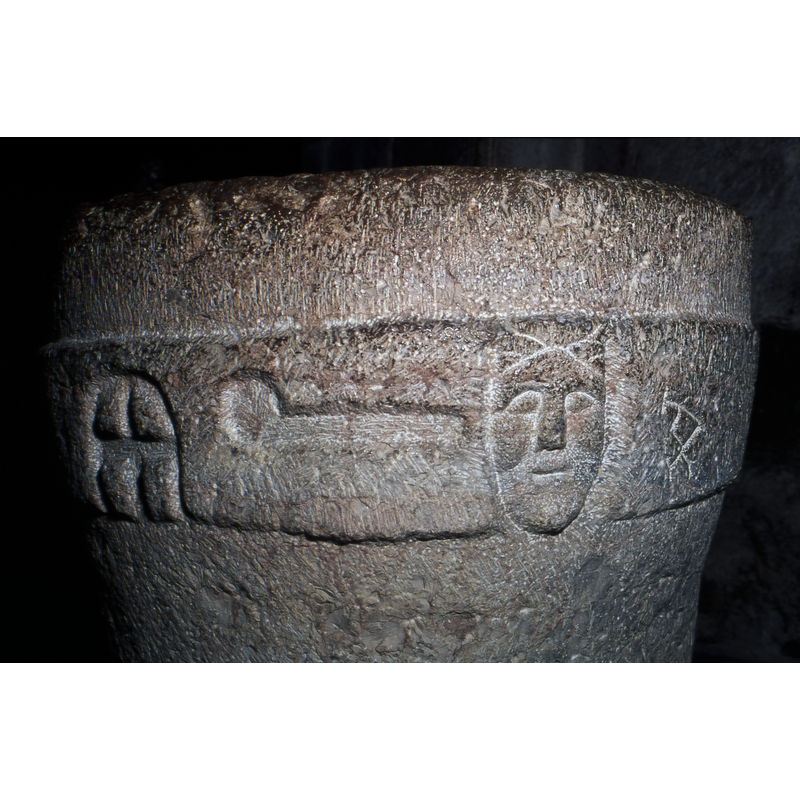
symbol - baculum?
Copyright Statement: Image copyright © Baptisteria Sacra Index, 2023
Image Source: digital image of a photograph taken 20 June 2001 by BSI
Copyright Instructions: CC-BY-NC-ND-4.0
human figure - head - grotesque or fantastic? cat-like?
Copyright Statement: Image copyright © Baptisteria Sacra Index, 2023
Image Source: digital image of a photograph taken 20 June 2001 by BSI
Copyright Instructions: CC-BY-NC-ND-4.0
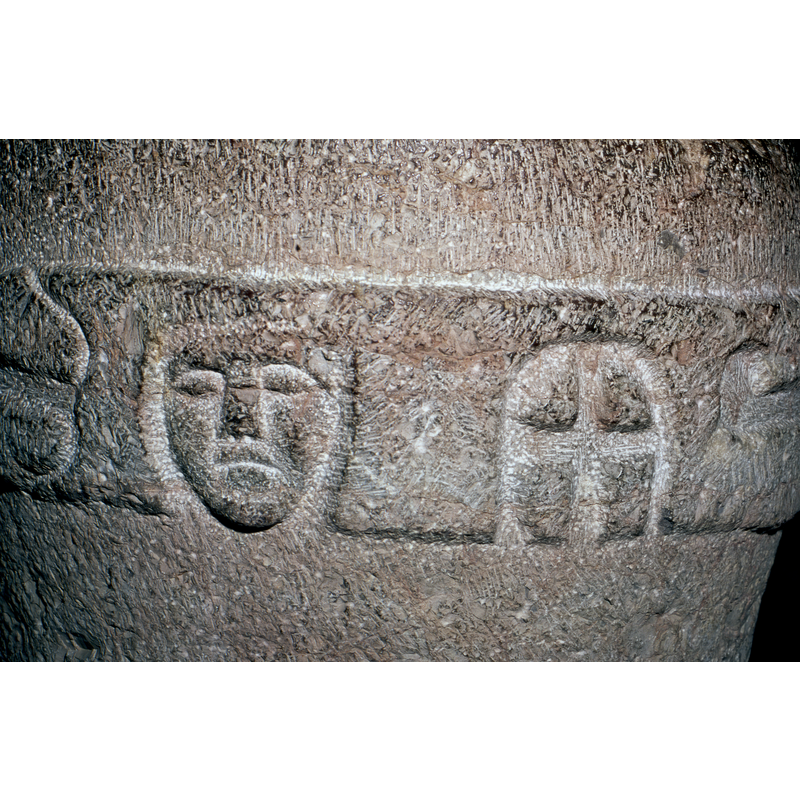
symbol - cross - in an arch
Copyright Statement: Image copyright © Baptisteria Sacra Index, 2023
Image Source: digital image of a photograph taken 20 June 2001 by BSI
Copyright Instructions: CC-BY-NC-ND-4.0
human figure - head - face
Copyright Statement: Image copyright © Baptisteria Sacra Index, 2023
Image Source: digital image of a photograph taken 20 June 2001 by BSI
Copyright Instructions: CC-BY-NC-ND-4.0
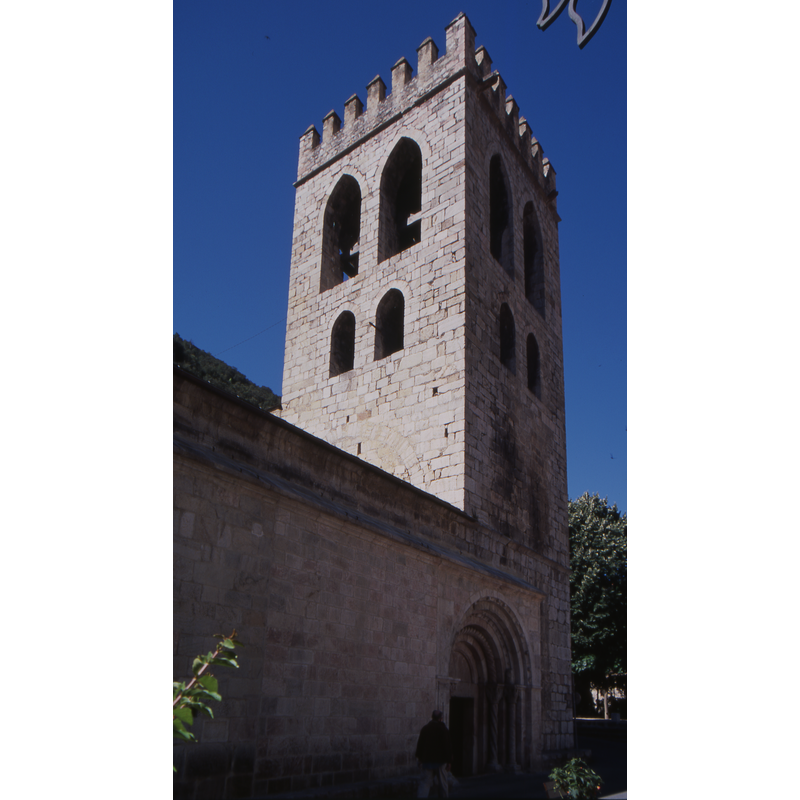
view of church exterior
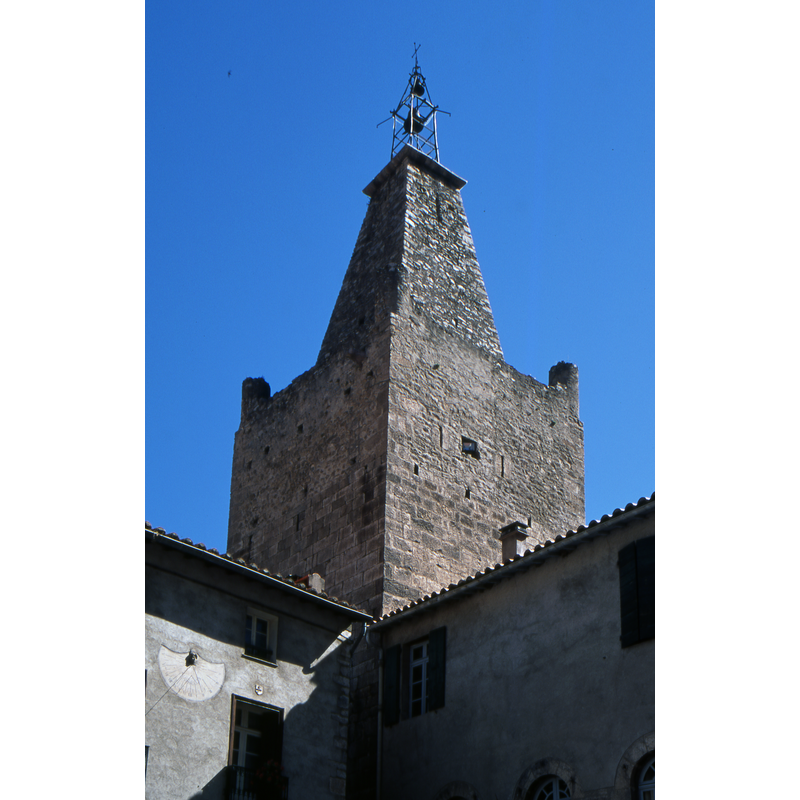
view of church exterior
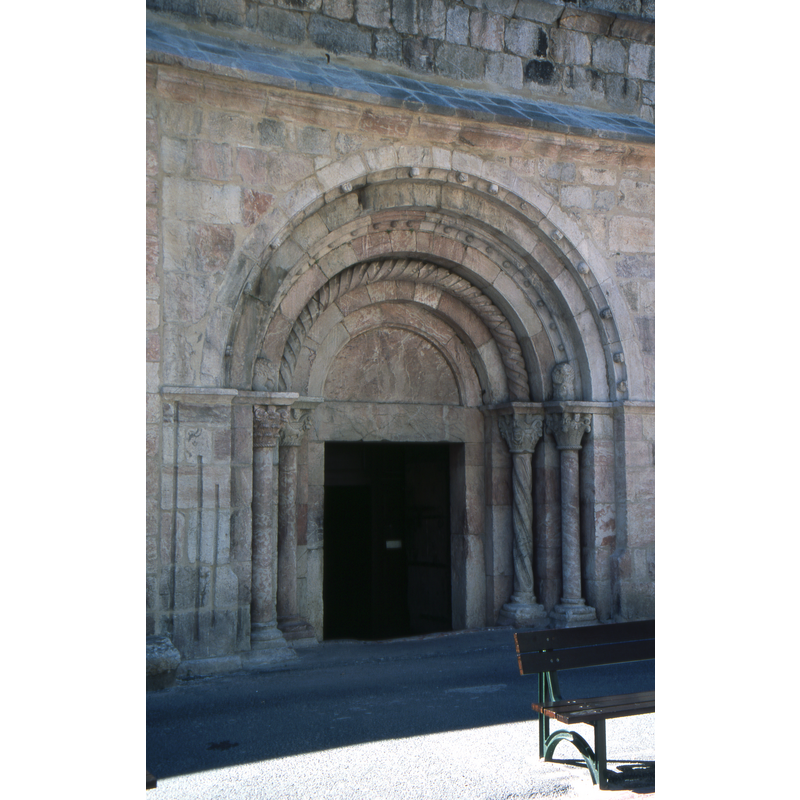
view of church exterior - portal
information

Copyright Statement: Image copyright © Baptisteria Sacra Index, 2023
Image Source: digital image of field notes taken 20 June 2001 by BSI
Copyright Instructions: CC-BY-NC-ND-4.0
information
Copyright Statement: Image copyright © Baptisteria Sacra Index, 2023
Image Source: digital image of field notes taken 20 June 2001 by BSI
Copyright Instructions: CC-BY-NC-ND-4.0
INFORMATION
Font ID: 03454VIL
Object Type: Baptismal Font1
Date Visited: 2001-06-20
Font Century and Period/Style: 12th century, Romanesque
Church / Chapel Name: Église paroissiale Saint-Jacques / Església de Sant Jaume [orig. from the church of St-André de Belloch / Sant Andreu de Bell-Lloc -- later at Saint-Michel-de-Cuxa]
Font Location in Church: Inside the church, at the W end, N side
Church Patron Saint(s): St. James
Previous Font Location(s): originally from Belloch / Bell-Lloc and Saint-Michel-de-Cuxa (Codalet)
Church Notes: 12thC church with later modifications listed in Mérimée [ref.: PA00104148]: "12e siècle ; 13e siècle ; 17e siècle"
Church Address: 66500 Villefranche-de-Conflent, France
Site Location: Pyrénées-Orientales, Occitanie, France, Europe
Directions to Site: Located in the Conflent area, S of Conat, N of Fouilla, on the N116, about 8 kms SW of Saint-Michel-de-Cuxa
Ecclesiastic Region: Diocèse de Perpignan-Elne
Historical Region: Le Conflent
Additional Comments: recycled font: originally at the church of St-Andre in nearby Bell-Lloc; the base is a re-used mill-stone
Font Notes:
Click to view
Round tub-like unmounted font believed to be of the 13th century; the material appears to be a calcareous stone but is identified by Corblet (1881-1882) as a red marble. The round plinth is of a different type of stone -it is actually a mill-stone- and has a cross incised on one of the sides. Delcor (1973) identifies an alpha-and-omega, a head [or two?] and a circled cross on it and gives some measurements as well; he also mentions that this font is originally from Belloch (ibid.). The Dictionnaire des églises... (1966- ) entry by Durliat mentions that "la cuve était curieusement ouvragé". Described and illustrated in Catalunya romànica (1984- , vol. VII: 540-541) where it is dated to the 12th century. Listed in Palissy [ref.: PM66000941]: "Vasque servant de fonts baptismaux [...] Provenant de l'ancien prieuré Notre-Dame de Belloch et ultérieurement abbaye Saint-Michel-de-Cuxa [...] 12e siècle". On-site notes: the large tub-shaped font is rather typical of the area and, one hastens to add, so are the cryptic motifs which ornament the band around the basin sides [cf. also the fonts at Ur and Beuda for other such challenging iconography]: there is a broad rounded rim underlined by an incised line parallel to the top; below it a band of ornamentation made up of several motifs [L->R]: an anchor-like motif, a human face, a cross inscribed in a window-like frame, a horizontal motif looking like s cane or baculum, a grotesque or animal head, an anagram of builder's mark (perhaps an alpha-omega anagram?), a cross inscribed in a circle, a bird? or other animal? inscribed in a window or building, a blind round arch, a spoon or palette/spatula; the rest of the basin side is totally plain. L' abbé Cazes [cf. below] gives its origin as the nearby church of St-André de Bell-Lloc and describes it as "en très beau marbre et curieusement ouvragée" (Cazes, [s.d.],: 11); he gives a suggested reading, "sous toute réserve" as follows: "framed by a sideways Alpha-and-Omega are four motifs that we [i.e., Monsieur l'abbé] interpret thus: starting with the Alpha -which entails commencement- the head of a child still wearing the laces of new-born clothing, therefore evoquing birth; next is the spoon or ladle [Fr. "louche"] symbolising baptism, of which it used to be the traditional implemnent [l'abbé Cazes has an article on this implement, "La louche baptismale", published in the Revue de Conflent (no. 2000, p. 31-32)]; after that comes the Eucharist, symbolised here by the motif showing a cross inside a circle and, finally, the head of old-age eyeing the Omega of death, the latter shaped here like a cross-bow. [our translation of Cazes ([s.d.]: 36)]. It was not a given to us that all the motifs be from the same period and by the same hand; there is a marked difference between some of the shallow incisions and the high-relief carvings; nor are we convinced that the two faces represent the new-born vs. the ageing (if anything, the unadorned face appears younger to us that the one with the cat-like hairdo). Like the iconography at the Ur font, it is an atypical representation and not one to easily give away its meaning, whatever this may be. The cross-in-an-arch is a definite religious motif of easy recognition, as possibly the other inscribed cross, unless it is heraldic, not a likely motif of this period; the "sideways alpha and omega" may or may not be so, perhaps a builder's mark; the "louche" is as good a guess as anyone else could put forward; and so on. There is one other baptismal font in this church: a 18th-century red-marble resembling a tub-font of the Romanesque period [not listed in the Index - image available in Images area].
Credit and Acknowledgements: We are grateful to M. l'abbé of Villefranche-de-Conflent, Albert Cazes, for all his help and patience, and for the information and research materials he so generously provided. We are also grateful to Brian Catlos, Montserrat Estela, Juan Antonio Olañeta and to all others who have contributed their photographs and interpretations to this project
COORDINATES
UTM: 31T 448003 4715104
Latitude & Longitude (Decimal): 42.5866, 2.3663
Latitude & Longitude (DMS): 42° 35′ 11.76″ N, 2° 21′ 58.68″ E
MEDIUM AND MEASUREMENTS
Material: stone, marble (red/pink) - (granite base)
Number of Pieces: two
Font Shape: tub-shaped
Basin Interior Shape: round
Basin Exterior Shape: round
Drainage System: centre hole in basin
Drainage Notes: there are two drain holes; the larger one measures 10 cm in diameter
Rim Thickness: 10-12 cm*
Diameter (inside rim): 69 cm* / 70 cm**
Diameter (includes rim): 92 cm*
Basin Depth: 48 cm*
Basin Total Height: 70 cm* / 71 cm**
Font Height (less Plinth): 70 cm* / 71 cm**
Font Height (with Plinth): 80 cm*
Notes on Measurements: * BSI on-site / ** Delcor (1973)
INSCRIPTION
Inscription Language: Greek
Inscription Location: basin side
Inscription Text: [alpha - omega?]
Inscription Notes: as identified in Delcor and Cazes -- cf. FindNotes for further views on this motif
Inscription Source: Delcor (1973: 109); Cazes ([s.d.], p. 36)
REFERENCES
- Dictionnaire des églises de France, Belgique, Luxembourg, Suisse, Paris: R. Laffont, 1966-, II C 167-168
- Cazes, Albert (abbé), Villefranche de Conflent, [Prades?]: Imprimérie Catalane / MaisonComet, [1980?], p. 11, 35-36
- Corblet, Jules, Histoire dogmatique, liturgique et archéologique du sacrement de baptême, Paris: V. Palme, 1881-1882, vol. 2, p. 135
- Delcor, M., "Cuves romanes et leur figuration en Roussillon, Cerdagne et Conflent", 1973, no. 4, Cahiers de Saint-Michel de Cuxa, 1973, pp. 96-109; p. 109 and footnote 40
- Fundació Enciclopèdia Catalana, Catalunya romànica, Barcelona: Fundació Enciclopèdia Catalana, 1984-, vol. VII: 540-541