Rethel no. 2
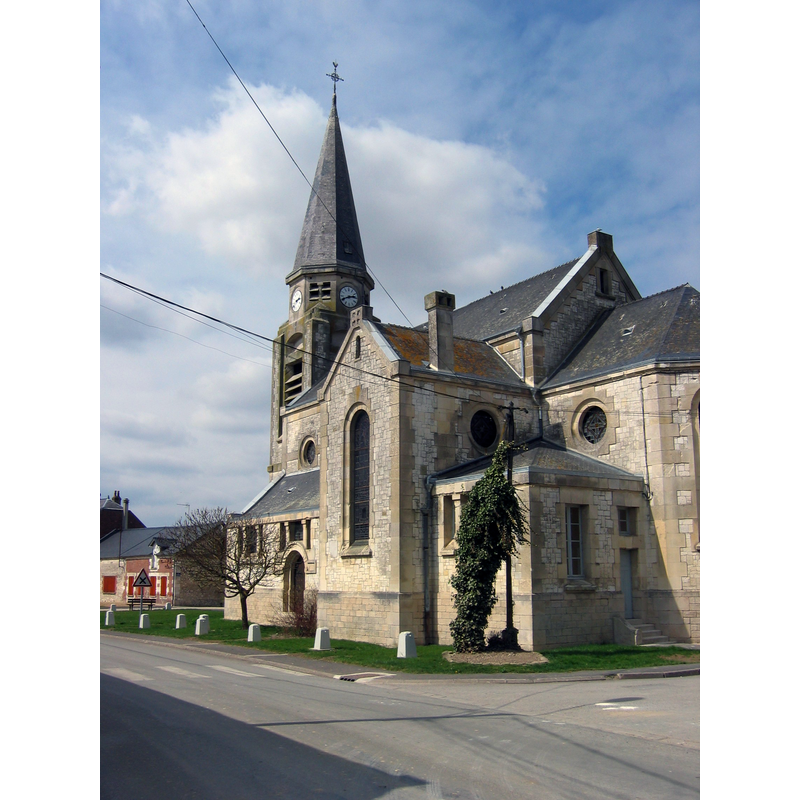
Image copyright © Henri Docquin, 2012
CC-BY-SA-4.0
Results: 7 records
view of church exterior - southeast view
Scene Description: Source caption: "Église de Saint-Quentin-le-Petit Ardennes France" [NB: the old font from La Valroy abbey is said to be in this church now [2014?]]
Copyright Statement: Image copyright © Henri Docquin, 2012
Image Source: digital photograph taken 8 April 2012 by Henri Docquin [https://commons.wikimedia.org/wiki/File:Eglise_Saint-Quentin-le-Petit_Ardennes_France.jpg] [accessed 12 June 2016]
Copyright Instructions: CC-BY-SA-4.0
view of building exterior
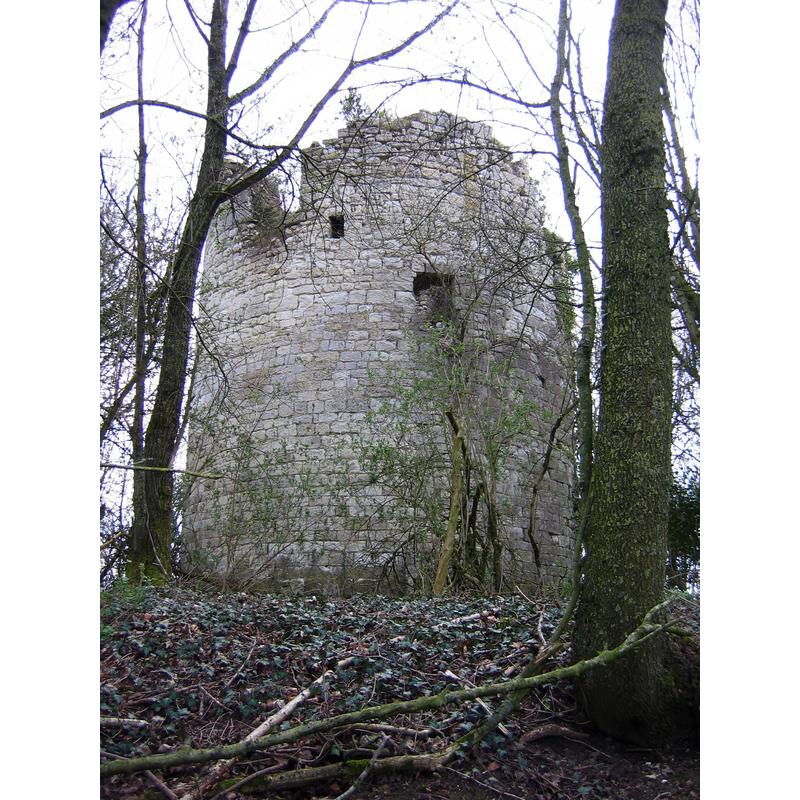
Scene Description: the largest remaining ruin of the abbey: the mill
Copyright Statement: Image copyright © Henri Docquin, 2015
Image Source: digital photograph taken 5 April 2015 by Henri Docquin [https://commons.wikimedia.org/wiki/File:Moulin_abbaye_Valroy_Saint-Quentin-le-Petit_04.JPG] [accessed 12 June 2016]
Copyright Instructions: CC-BY-SA-4.0
animal - mammal - lion - passant - 2

Scene Description: Two lions, one after the other, passant toward the right
Copyright Statement: Image copyright © Collins, 1981
Image Source: Collins (1981: pl. 27)
Copyright Instructions: PERMISSION NOT AVAILABLE -- IMAGE NOT FOR PUBLIC USE
animal - fabulous animal or monster - griffin - couchant - 2
Scene Description: Two couchant griffins (?) face each other
Copyright Statement: Image copyright © Collins, 1981
Image Source: Collins (1981: pl. 27)
Copyright Instructions: PERMISSION NOT AVAILABLE -- IMAGE NOT FOR PUBLIC USE
animal - fabulous animal or monster - dragon
Scene Description: a monster with a coiled tail (dragon?), on one of the sides of the basin
Copyright Statement: Image copyright © Collins, 1981
Image Source: Collins (1981: pl. 28)
Copyright Instructions: PERMISSION NOT AVAILABLE -- IMAGE NOT FOR PUBLIC USE
design element - motifs - floral - in a circle
Scene Description: four rosettes and four 4-petal flours, all on the circular band that frames the basin well
Copyright Statement: Image copyright © Collins, 1981
Image Source: Collins (1981: pl. 28)
Copyright Instructions: PERMISSION NOT AVAILABLE -- IMAGE NOT FOR PUBLIC USE
design element - motifs - foliage - 4
Scene Description: a large leaf at each spandrel
Copyright Statement: Image copyright © Collins, 1981
Image Source: Collins (1981: pl. 28)
Copyright Instructions: PERMISSION NOT AVAILABLE -- IMAGE NOT FOR PUBLIC USE
INFORMATION
Font ID: 02479RET
Object Type: Baptismal Font1, basin only
Font Century and Period/Style: 11th - 12th century, Romanesque
Workshop/Group/Artisan: Ardennes group of Mosan fonts [Collin]
Cognate Fonts: see Tournai-type fonts
Museum: Rethel, Ardennes
Church / Chapel Name: [may have originated at the Abbaye cistercienne de La Valroy, in Saint-Quentin-le-Petit]
Font Location in Church: [cf. FontNotes]
Church Notes: mid-12thC abbey
Church Address: NB: coordinates given for the abbey]
Site Location: Ardennes, Grand Est, France, Europe
Directions to Site: The abbey site is S of the D30, SE of Saint-Quentin-le-Petit, WNW of Rethel. Rethel is about 40 kms N-E of Reims on the N51-E46 (N)
Ecclesiastic Region: Diocèse de Reims
Font Notes:
Click to view
***THERE APPEARS TO BE A CONFLICT BETWEEN THIS AND RETHEL No. 1 -- TO BE RESOLVED***
Listed and illustrated in Collins (1981: 48, pl. 27, 28). This font, now at the museum in Rethel, is said to have originated at the ancient abbey of La Val Roy [aka Valroy, Valroye]. This font is discussed and illustrated, among several others (Wasigny, Sapogne, etc.), in Jean-Luc Collignon [http://jeanluccollignon.blog4ever.net/wasigny-faire-parler-la-pierre] [accessed 12 June 2016], who notes that the font had been at the time (2014?) moved to theparish church of Saint-Quentin-le-Petit [not corroborated yet]. It is a Tournai-like font of external square shape with long but shallow sides. The parts visible in the source show, partly, three of the sides with the following ornamentation: 1)coiled snake-like animal, 2)two lions in profile, tails up walking towards the right, 3)two winged lions (or griffons?) sedentes facing each other; the visible upper surface shows a typical Tournai-type decoration with a well executed rim and floral motifs in the spandrels, as well as rosettes on the band delineating the round well. The underbowl is rounded and plain. The original base is missing (?).
Listed and illustrated in Collins (1981: 48, pl. 27, 28). This font, now at the museum in Rethel, is said to have originated at the ancient abbey of La Val Roy [aka Valroy, Valroye]. This font is discussed and illustrated, among several others (Wasigny, Sapogne, etc.), in Jean-Luc Collignon [http://jeanluccollignon.blog4ever.net/wasigny-faire-parler-la-pierre] [accessed 12 June 2016], who notes that the font had been at the time (2014?) moved to theparish church of Saint-Quentin-le-Petit [not corroborated yet]. It is a Tournai-like font of external square shape with long but shallow sides. The parts visible in the source show, partly, three of the sides with the following ornamentation: 1)coiled snake-like animal, 2)two lions in profile, tails up walking towards the right, 3)two winged lions (or griffons?) sedentes facing each other; the visible upper surface shows a typical Tournai-type decoration with a well executed rim and floral motifs in the spandrels, as well as rosettes on the band delineating the round well. The underbowl is rounded and plain. The original base is missing (?).
MEDIUM AND MEASUREMENTS
Material: stone, type unknown
Number of Pieces: one [base missing]
Font Shape: square, mounted
Basin Interior Shape: round
Basin Exterior Shape: square
REFERENCES
- Collin, Hubert, Champagne romane, La Pierre-qui-vire, Yonne: Zodiaque, 1981, p. 48 and pl. 27, 28