Santurde de Rioja
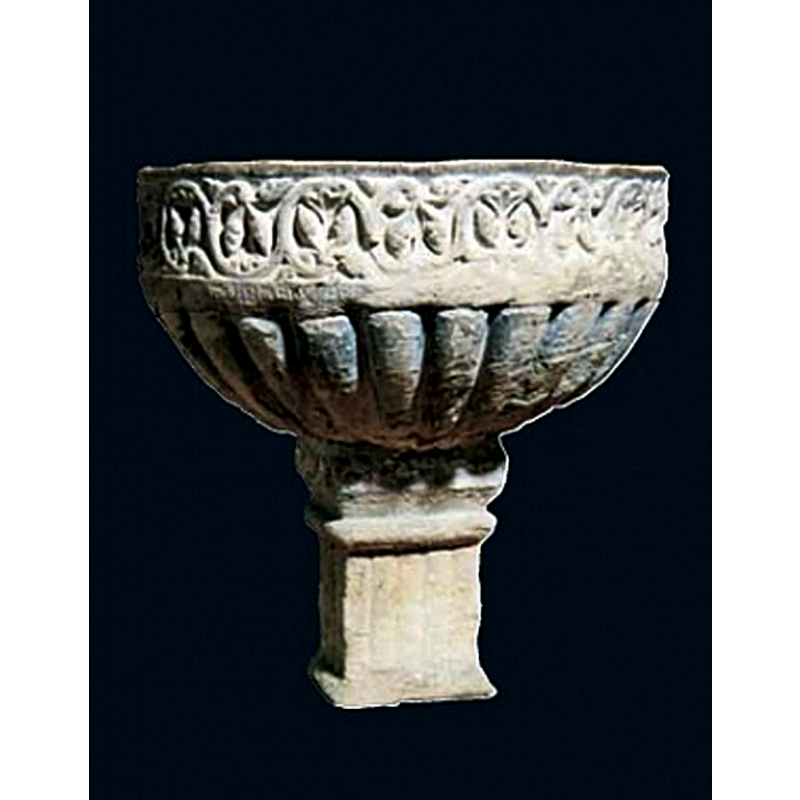
Image copyright © Rioja Románica, 2020
No known copyright restriction / Fair Dealing
Results: 6 records
view of font
Copyright Statement: Image copyright © Rioja Románica, 2020
Image Source: digital image in Rioja Románica [https://www.riojaromanica.com/categorias/pilas-bautismales#] [accessed 22 November 2020]
Copyright Instructions: No known copyright restriction / Fair Dealing
design element - motifs - vine
Copyright Statement: Image copyright © Rioja Románica, 2020
Image Source: digital image in Rioja Románica [https://www.riojaromanica.com/categorias/pilas-bautismales#] [accessed 22 November 2020]
Copyright Instructions: No known copyright restriction / Fair Dealing
design element - patterns - ribbed
Copyright Statement: Image copyright © Rioja Románica, 2020
Image Source: digital image in Rioja Románica [https://www.riojaromanica.com/categorias/pilas-bautismales#] [accessed 22 November 2020]
Copyright Instructions: No known copyright restriction / Fair Dealing
view of church exterior - southeast view
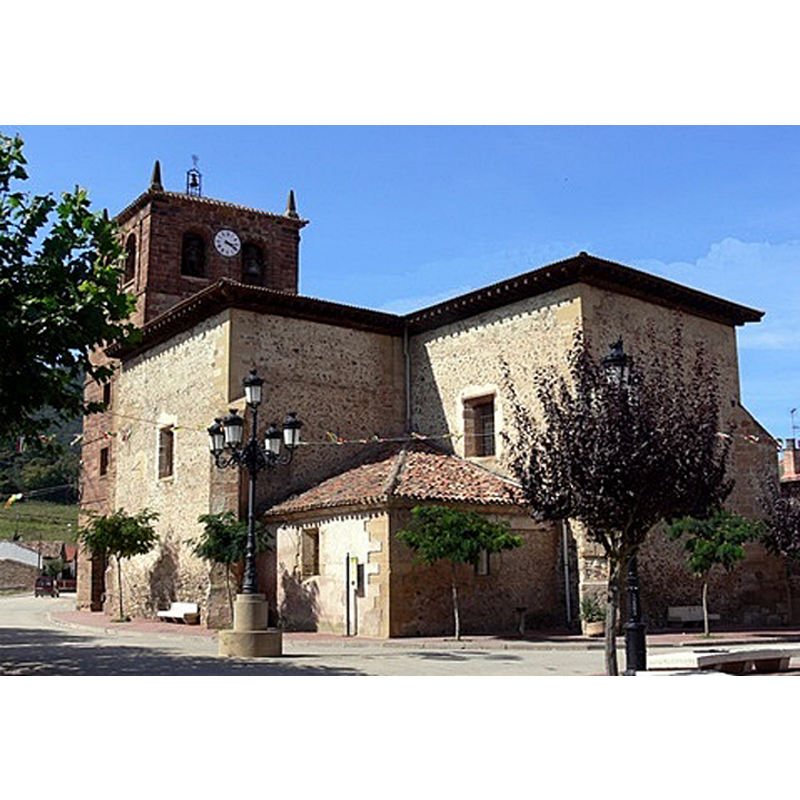
Scene Description: Source caption: "Iglesia de San Andrés. Aunque está iglesia parroquial es del siglo XVI conserva una pila bautismal de finales del siglo XII."
Copyright Statement: Image copyright © Rioja Románica, 2020
Image Source: digital image in Rioja Románica [https://www.riojaromanica.com/poblacion/santurde-de-rioja] [accessed 22 November 2020]
Copyright Instructions: No known copyright restriction / Fair Dealing
design element - motifs - moulding
Copyright Statement: Image copyright © Rioja Románica, 2020
Image Source: digital image in Rioja Románica [https://www.riojaromanica.com/categorias/pilas-bautismales#] [accessed 22 November 2020]
Copyright Instructions: No known copyright restriction / Fair Dealing
inscription - partial

Scene Description: part of the inscription is discernible in this photograph
Copyright Statement: Image copyright © López de Silanes Valgañón, 2000
Image Source: digital image of a B&W photograph in López de Silanes Valgañón (2000: 106)
Copyright Instructions: PERMISSION NOT AVAILABLE -- IMAGE NOT FOR PUBLIC USE
INFORMATION
Font ID: 02269SAN
Object Type: Baptismal Font1
Font Century and Period/Style: 12th - 13th century [basin only], Medieval / composite
Workshop/Group/Artisan: Oja-Tirón workshop
Cognate Fonts: Of similar type are the fonts at Baños de Rioja, Santasensio los Cantos, Ojacastro, Ezcaray, Valgañón and Anguta [now at Valgañón]; also the font at Grañón
Church / Chapel Name: Iglesia Parroquial de San Andrés
Font Location in Church: Inside the church, in the presbitery, N side
Church Patron Saint(s): St. Andrew
Church Notes: present church 16thC
Church Address: Plaza del Fundador, 26260 Santurde de Rioja, La Rioja, Spain -- Tel.: +34 941 34 15 13
Site Location: La Rioja, La Rioja, Spain, Europe
Directions to Site: Located off the LR-414, 7 km S of Santo Domingo de la Calzada, 55 km WSW of Logroño capital
Ecclesiastic Region: Diócesis de Calahorra y La Calzada-Logroño
Historical Region: Comarca de Santo Domingo de la Calzada / Provincia de Logroño
Additional Comments: painted font: paint remains still on it / altered font? (later-date base?}
Font Notes:
Click to view
Listed in Cobreros (1993) as a baptismal font of the Romanesque period. Described and illustrated in López de Silanes Valgañón (2000) as a baptismal font probably of the 13th century, of a type not uncommon in the boundary area of Burgos-La Rioja: a hemispherical basin decorated with a garland around the upper basin side, and with a ribbed pattern around the sides and underbowl; the base is a square pedestal with mouldings. This last source (ibid.) gives the fonts at Baños de Rioja, Santasensio los Cantos, Ojacastro, Ezcaray, Valgañón and Anguta [now at Valgañón]. Described and illustrated in Sáenz Rodríguez (2004) and in the Encilopedia del románico en La Rioja (2008) with date to the late 12th century and attribution to the Oja-Tirón workshop. There is a partially visible inscription located between the upper vine decoration on the basin sides and the ribbeed pattern of the underbowl, similar to those found in the fonts at Barbadillo de Herreros, Eterna, Fresneda de la Sierra Tiron and Grañón; unfortunately the date is not visible in this inscription, but it all points to a similar date towards the end of the 12th century. Noted and illustrated in Rioja Románica [https://www.riojaromanica.com/categorias/pilas-bautismales#] [accessed 22 November 2020]: "Esta pila bautismal tiene una taza gallonada sobre un pilar prismático . La parte superior de la taza está bordeada por una inscripción latina bajo un friso de guirnaldas que encierran hojas. Está en un buen estado de conservación y conserva restos de policromía. La inscripción, de la que pueden leerse sólo algunas palabras, hace referencia al pecado original y a la nueva vida que proporciona el Bautismo."
COORDINATES
UTM: 30T 501646 4693017
MEDIUM AND MEASUREMENTS
Material: stone, type unknown
Number of Pieces: two?
Font Shape: hemispheric, mounted
Basin Interior Shape: round
Basin Exterior Shape: round
Drainage Notes: no lining
Diameter (includes rim): 110 cm*
Basin Total Height: 58 cm*
Height of Base: 54 cm*
Font Height (less Plinth): 112 cm*
Notes on Measurements: * Sáenz Rodríguez (2004)
INSCRIPTION
Inscription Language: Latin
Inscription Location: on the basin side, below the frieze
Inscription Text: "MATRIS PECATV[m] NOBIS AB O[rigine] (…) Q[uo]Q[ue] FONTE FUGATU[m] (...) N S T +"
Inscription Notes: [cf. FontNotes]
Inscription Source: Sáenz Rodríguez (2004)
REFERENCES
- Cobreros, Jaime, Románico en España (Guías Periplo), Madrid: Incafo, 1993, p. 381
- Fundación Santa María la Real, Enciclopedia del románico en la Rioja, Aguilar de Campoo: Fundación Santa María la Real, Centro de Estudios del Románico, 2008, vol. 1: 340; vol. 2: 707-708, 845
- López de Silanes Valgañón, F. J. Ignacio, Rutas románicas en La Rioja, Madrid: Encuentro, 2000, p. 105 and ill. on p. 106
- Sáenz Rodríguez, Minerva, "Las pilas bautismales del arte románico en la Rioja", Arte medieval en la Rioja: prerrománico y románico. VIII Jornadas de arte y patrimonio regional, Logroño: Instituto de Estudios Riojanos, 2004, p. 264-265