Luxulyan / Logsulyan / Luxilion / Luxillian / Luxulian / Luxullian
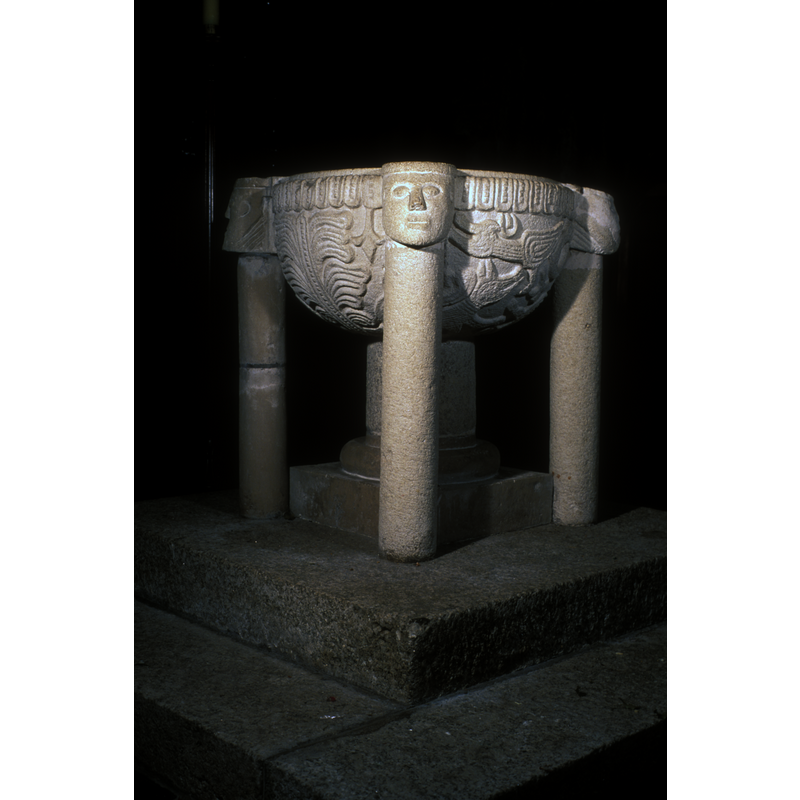
Image copyright © Baptisteria Sacra Index, 2023
CC-BY-NC-ND-4.0
Results: 23 records
view of font
Copyright Statement: Image copyright © Baptisteria Sacra Index, 2023
Image Source: digital image of a photograph taken 21 July 2000 by BSI
Copyright Instructions: CC-BY-NC-ND-4.0
animal - mammal - lion - couchant-gardant - 2
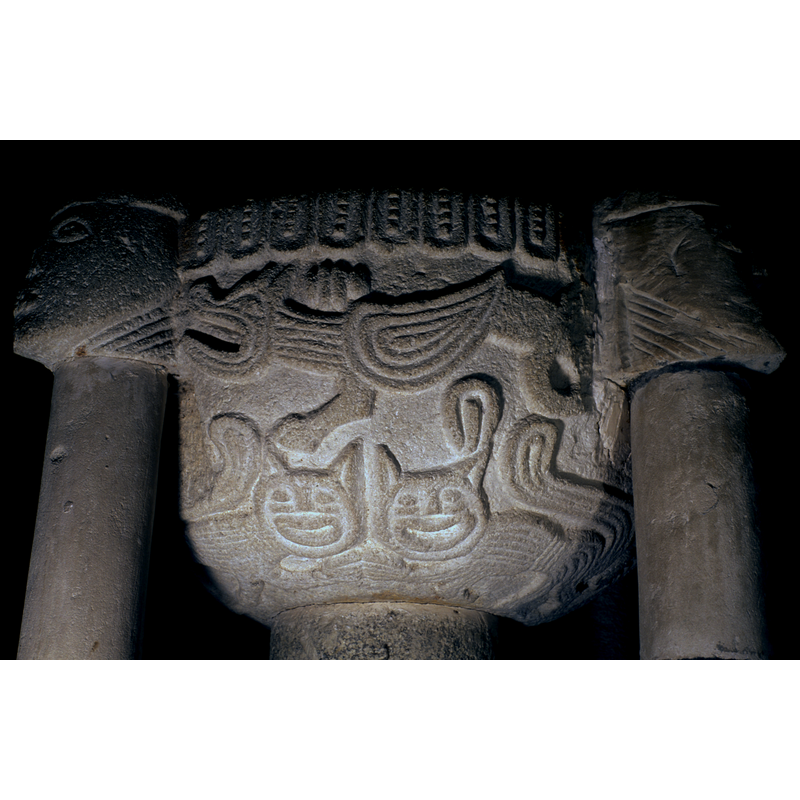
Scene Description: smiling and cat-like, but the position of their tails suggests their leonine nature
Copyright Statement: Image copyright © Baptisteria Sacra Index, 2023
Image Source: digital image of a photograph taken 21 July 2000 by BSI
Copyright Instructions: CC-BY-NC-ND-4.0
animal - fabulous animal or monster - dragon
Copyright Statement: Image copyright © Baptisteria Sacra Index, 2023
Image Source: digital image of a photograph taken 21 July 2000 by BSI
Copyright Instructions: CC-BY-NC-ND-4.0
animal - reptile - snake
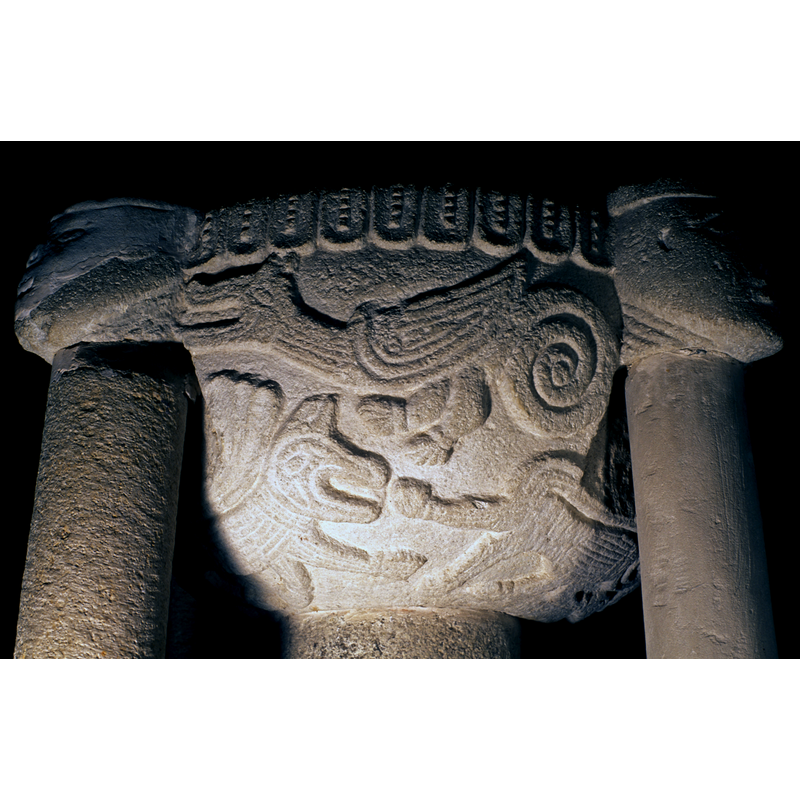
Scene Description: appears to be engaged in a fight with the lion opposite; is it standing on the back of a quadruped?
Copyright Statement: Image copyright © Baptisteria Sacra Index, 2023
Image Source: digital image of a photograph taken 21 July 2000 by BSI
Copyright Instructions: CC-BY-NC-ND-4.0
animal - unidentified
Scene Description: is it a snake? if so, what is it standing on, the back of a quadruped?
Copyright Statement: Image copyright © Baptisteria Sacra Index, 2023
Image Source: digital image of a photograph taken 21 July 2000 by BSI
Copyright Instructions: CC-BY-NC-ND-4.0
animal - mammal - lion - passant
Scene Description: appears to be striking at the animal opposite
Copyright Statement: Image copyright © Baptisteria Sacra Index, 2023
Image Source: digital image of a photograph taken 21 July 2000 by BSI
Copyright Instructions: CC-BY-NC-ND-4.0
animal - fabulous animal or monster - dragon
Scene Description: its tail all curled up
Copyright Statement: Image copyright © Baptisteria Sacra Index, 2023
Image Source: digital image of a photograph taken 21 July 2000 by BSI
Copyright Instructions: CC-BY-NC-ND-4.0
animal - fabulous animal or monster - dragon
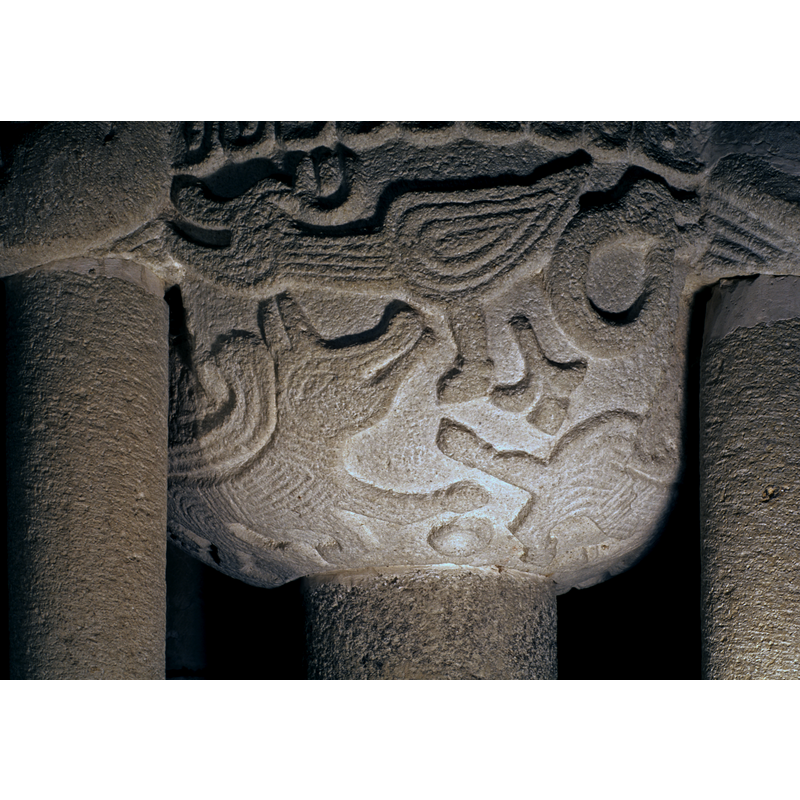
Scene Description: it has an avian body, without the usual tail (unless the curled snake to the right is meant to be the tail of the beast)
Copyright Statement: Image copyright © Baptisteria Sacra Index, 2023
Image Source: digital image of a photograph taken 21 July 2000 by BSI
Copyright Instructions: CC-BY-NC-ND-4.0
animal - mammal - lion - passant
Copyright Statement: Image copyright © Baptisteria Sacra Index, 2023
Image Source: digital image of a photograph taken 21 July 2000 by BSI
Copyright Instructions: CC-BY-NC-ND-4.0
animal - reptile - snake
Scene Description: appears to be biting its tail; it may be that it is meant to be the tail of the dragon
Copyright Statement: Image copyright © Baptisteria Sacra Index, 2023
Image Source: digital image of a photograph taken 21 July 2000 by BSI
Copyright Instructions: CC-BY-NC-ND-4.0
design element - motifs - floral - fleur-de-lis - inverted
Scene Description: towards the centre-right, below the dragon
Copyright Statement: Image copyright © Baptisteria Sacra Index, 2023
Image Source: digital image of a photograph taken 21 July 2000 by BSI
Copyright Instructions: CC-BY-NC-ND-4.0
animal - unidentified
Scene Description: at the bottom right-hand corner; there is another such on another side of the basin
Copyright Statement: Image copyright © Baptisteria Sacra Index, 2023
Image Source: digital image of a photograph taken 21 July 2000 by BSI
Copyright Instructions: CC-BY-NC-ND-4.0
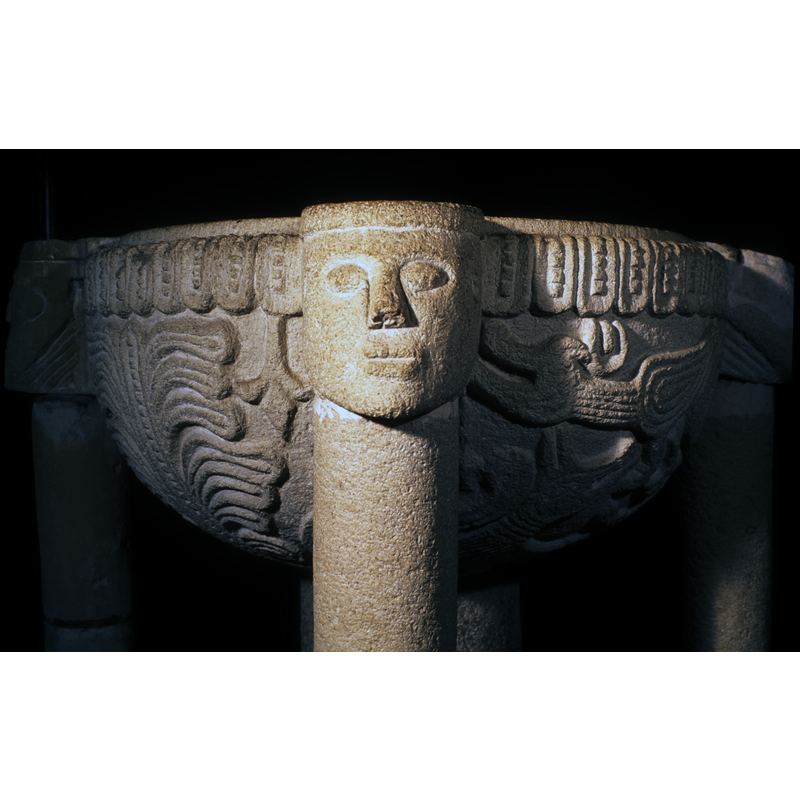
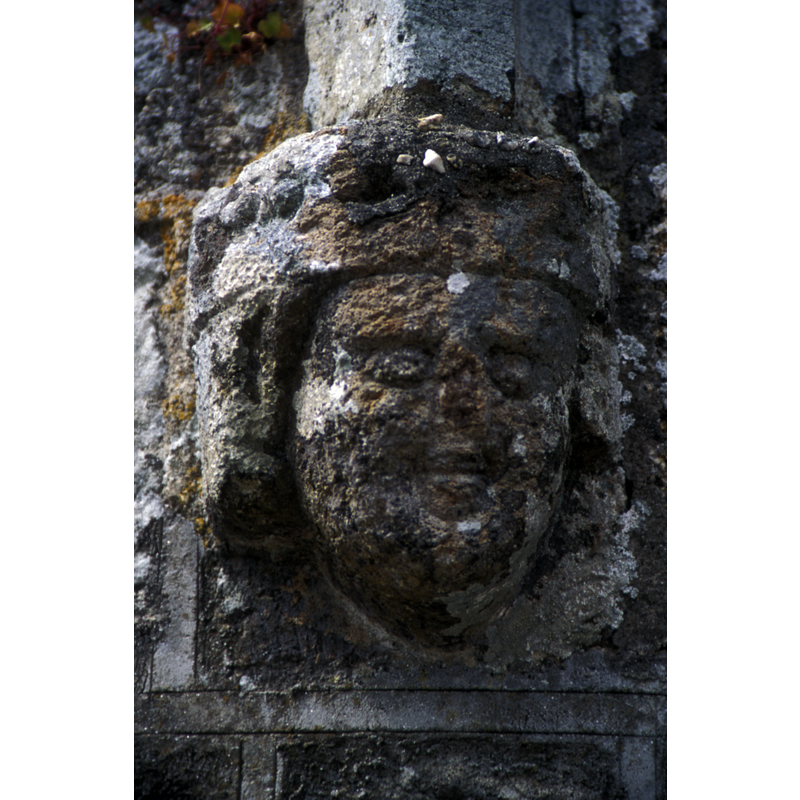
human figure - head - 4
Copyright Statement: Image copyright © Baptisteria Sacra Index, 2023
Image Source: digital image of a photograph taken 21 July 2000 by BSI
Copyright Instructions: CC-BY-NC-ND-4.0
design element - motifs - floral - fleur-de-lis - inverted - 2
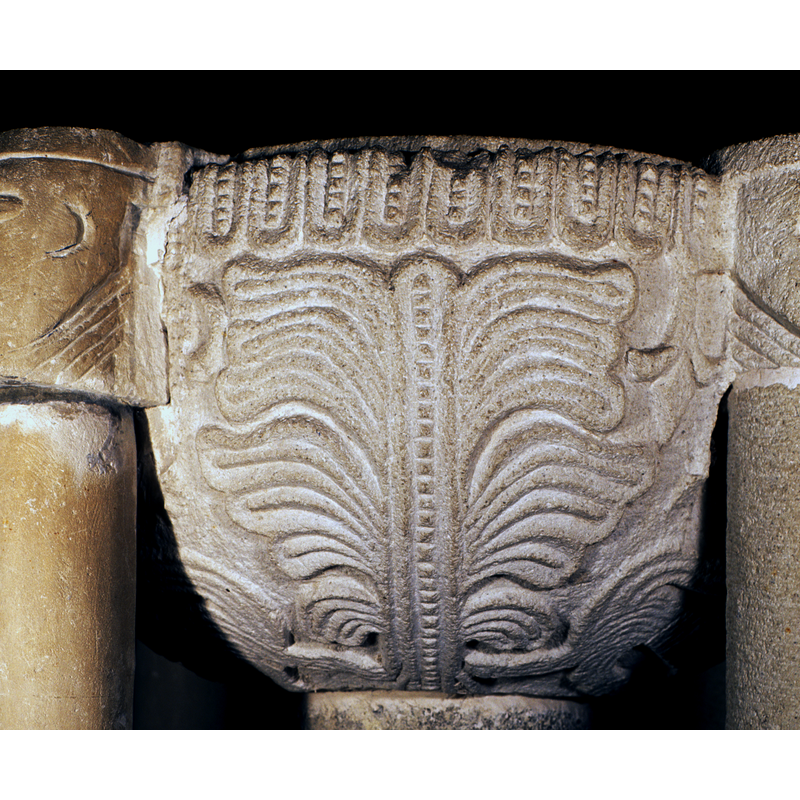
Scene Description: in the top corners, one on each side
Copyright Statement: Image copyright © Baptisteria Sacra Index, 2023
Image Source: digital image of a photograph taken 21 July 2000 by BSI
Copyright Instructions: CC-BY-NC-ND-4.0
symbol - tree - Tree of life - beaded tape
Scene Description: the central stem is made of beaded tape
Copyright Statement: Image copyright © Baptisteria Sacra Index, 2023
Image Source: digital image of a photograph taken 21 July 2000 by BSI
Copyright Instructions: CC-BY-NC-ND-4.0
design element - patterns - scalloped - beaded-tape
Scene Description: a band of, all around below the rim, interrupted by the four protruding heads
Copyright Statement: Image copyright © Baptisteria Sacra Index, 2023
Image Source: digital image of a photograph taken 21 July 2000 by BSI
Copyright Instructions: CC-BY-NC-ND-4.0
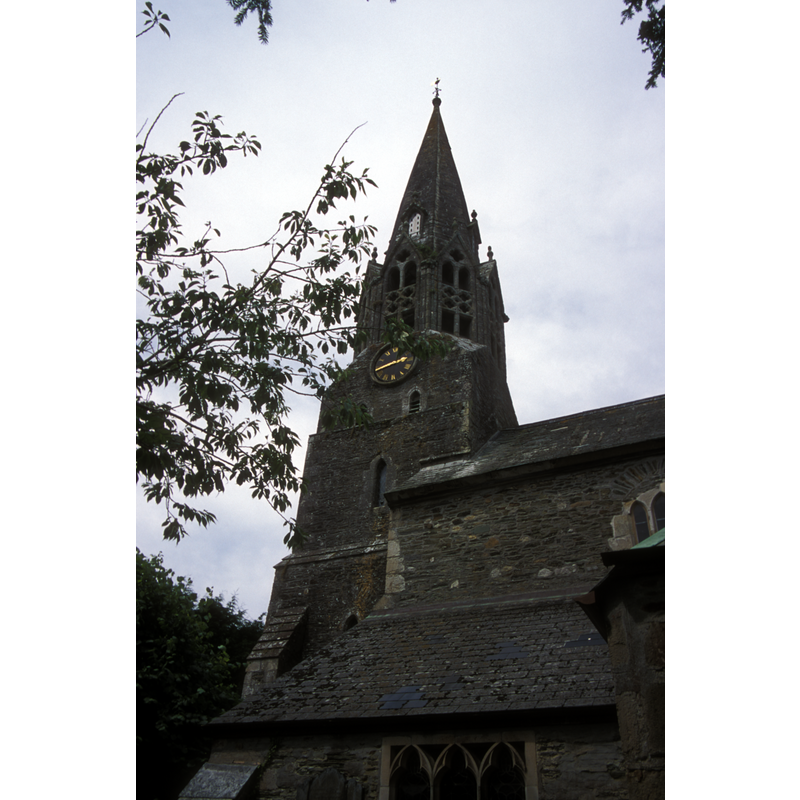
view of church exterior - tower - clock tower
Copyright Statement: Image copyright © Baptisteria Sacra Index, 2023
Image Source: digital image of a photograph taken 21 July 2000 by BSI
Copyright Instructions: CC-BY-NC-ND-4.0
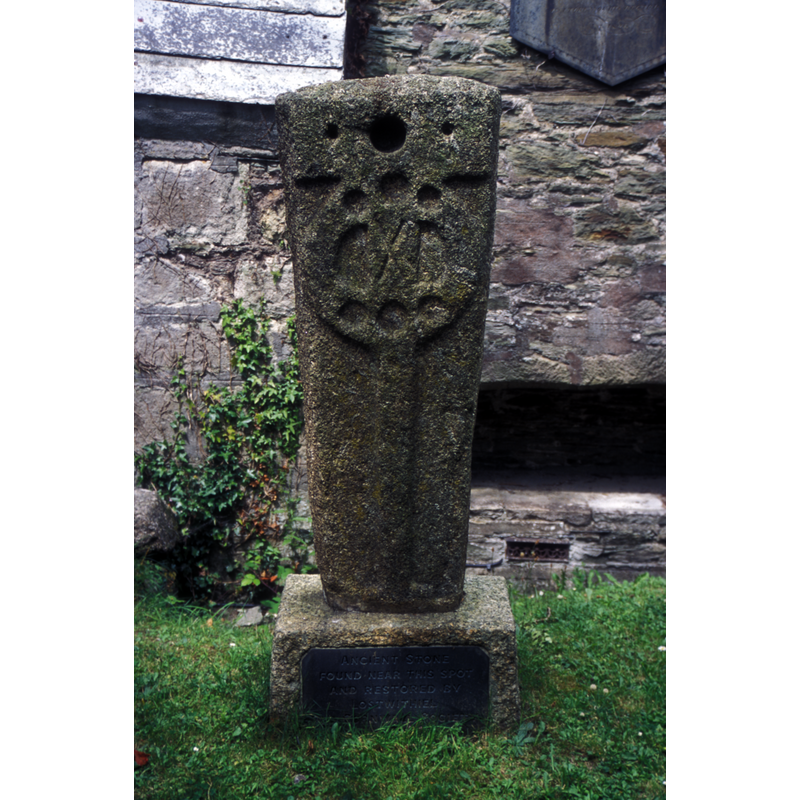
view of church exterior - churchyard, cemetery - tombstone
Copyright Statement: Image copyright © Baptisteria Sacra Index, 2023
Image Source: digital image of a photograph taken 21 July 2000 by BSI
Copyright Instructions: CC-BY-NC-ND-4.0
view of church exterior - detail
Copyright Statement: Image copyright © Baptisteria Sacra Index, 2023
Image Source: digital image of a photograph taken 21 July 2000 by BSI
Copyright Instructions: CC-BY-NC-ND-4.0
view of church exterior - west tower
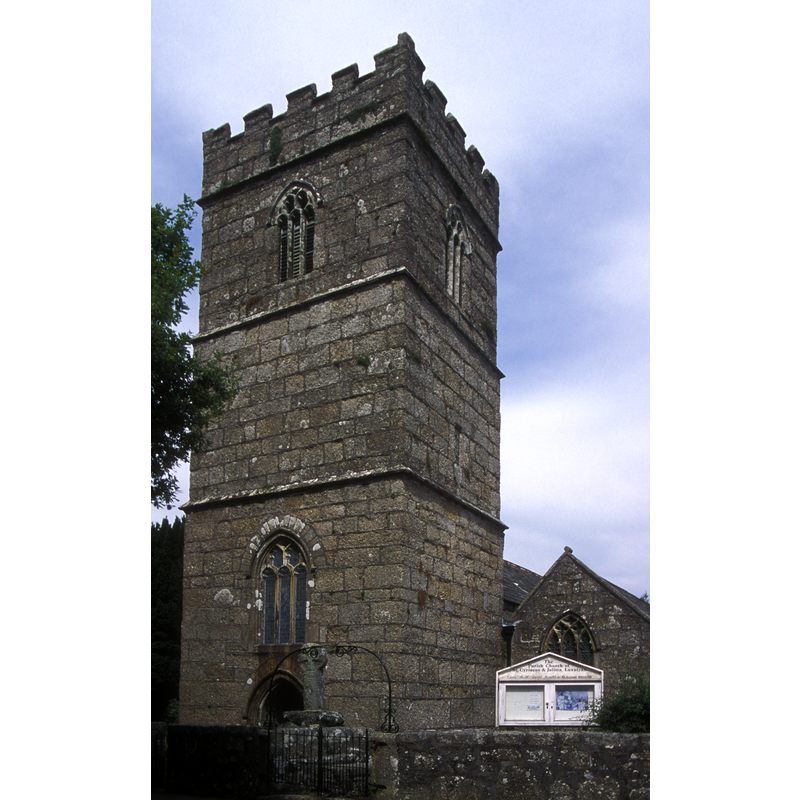
Copyright Statement: Image copyright © Baptisteria Sacra Index, 2023
Image Source: digital image of a photograph taken 21 July 2000 by BSI
Copyright Instructions: CC-BY-NC-ND-4.0
view of church exterior - gate
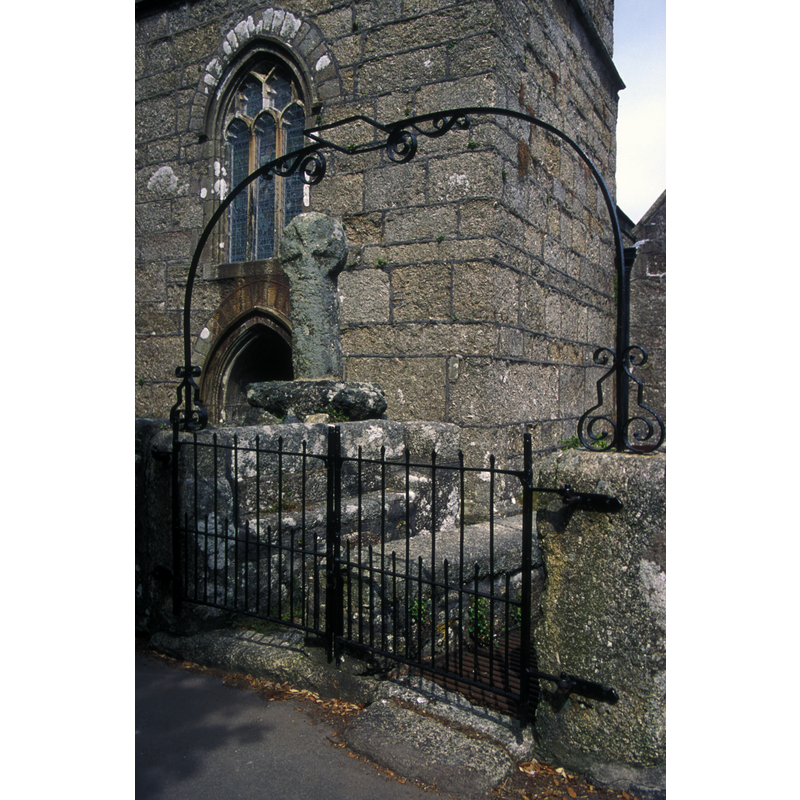
Scene Description: the southwest corner of the tower in the background
Copyright Statement: Image copyright © Baptisteria Sacra Index, 2023
Image Source: digital image of a photograph taken 21 July 2000 by BSI
Copyright Instructions: CC-BY-NC-ND-4.0
view of church exterior - tombstone
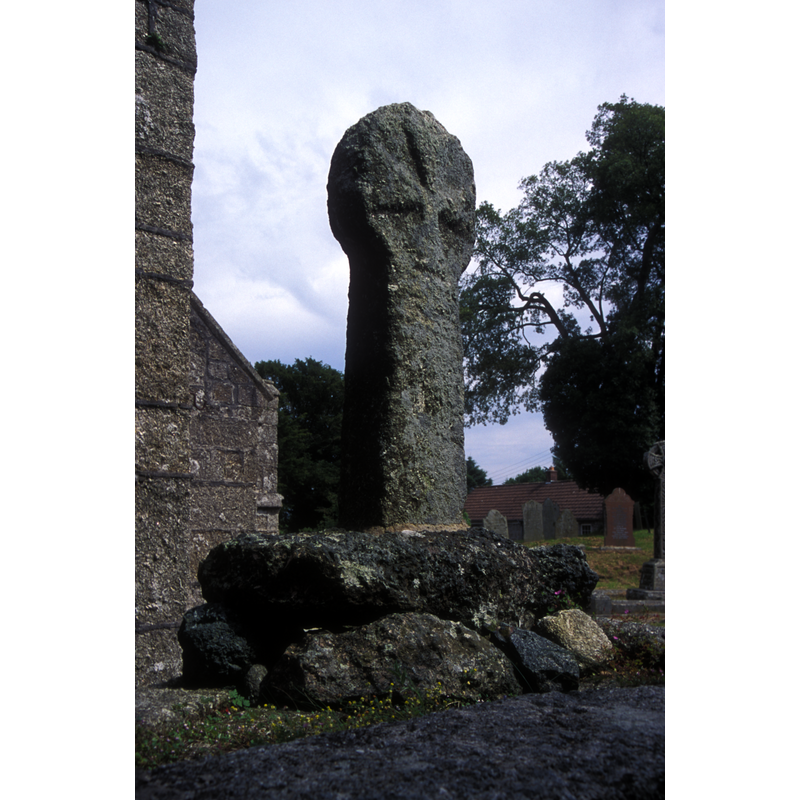
Copyright Statement: Image copyright © Baptisteria Sacra Index, 2023
Image Source: digital image of a photograph taken 21 July 2000 by BSI
Copyright Instructions: CC-BY-NC-ND-4.0
view of church exterior - gate
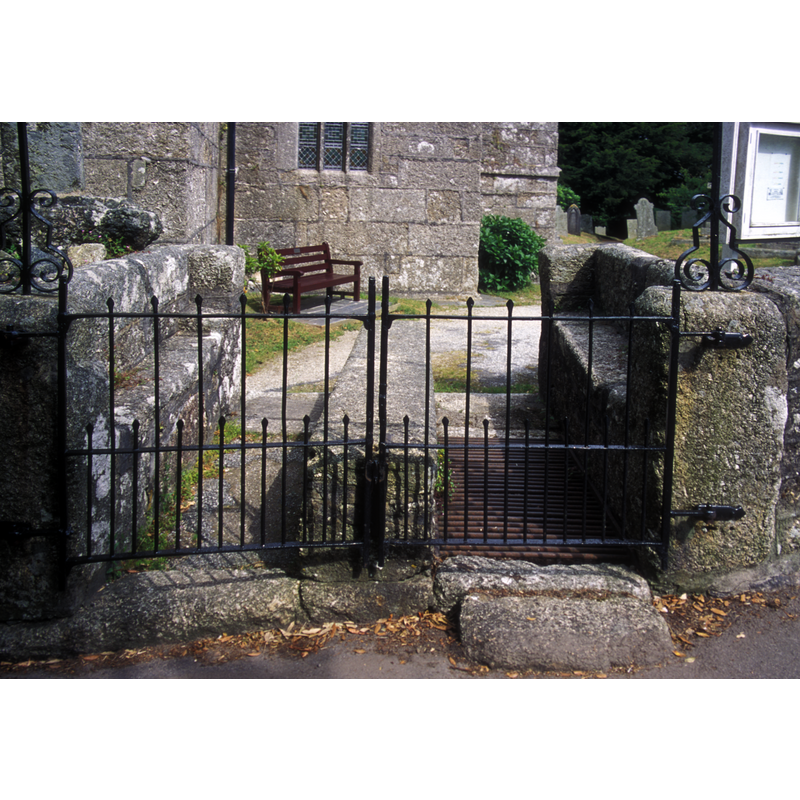
Copyright Statement: Image copyright © Baptisteria Sacra Index, 2023
Image Source: digital image of a photograph taken 21 July 2000 by BSI
Copyright Instructions: CC-BY-NC-ND-4.0
INFORMATION
Font ID: 01459LUX
Object Type: Baptismal Font1
Date Visited: 2000-07-21
Font Century and Period/Style: 12th - 13th century, Late Norman / Transitional?
Workshop/Group/Artisan: Cornish font
Cognate Fonts: Bodmin, St. Austell, St. Columb-Minor, Crantock, Cuby, St. Dennis, St. Gorran, Newlyn, Roche, Southill, Tintagell, Veryan and St. Wen
Church / Chapel Name: Parish Church of St. Cyriacus and St. Julitta [aka St Ciricius & St Julitta]
Font Location in Church: Inside the church, at the W end [its original location; it was for years elsewhere in the church]
Church Patron Saint(s): St. Cyricus [aka Cyriacus, Quiriac, Quiricus, Cyr] & St. Julitta [NB: may have been dedicated originally to St Sulien, aka Sulian]
Church Notes: A holy well (St. Cyr) exists in this town
Church Address: Luxulyan, Cornwall, PL30 5EA, UK -- Tel.: +44 1726 817665
Site Location: Cornwall, South West, England, United Kingdom
Directions to Site: Luxulyan is about 10 kms S of Bodmin, about the same distance E of Roche
Ecclesiastic Region: Diocese of Truro
Historical Region: Hundred of Powder
Additional Comments: locally pronounced 'Luksillyan'
Font Notes:
Click to view
No entry for Luxulyan found in the Domesday Survey. The Lysons (1806-1833) note here one of a group of Cornish fonts that includes Bodmin, “St. Austell, St. Columb-Minor, Crantock, Cuby, St. Dennis, St. Gorran, Luxulion, Newlyn, Roche, Southill, Tintagell, Veryan, and St. Wen”. Noted in 'On the ancient stone fonts of Cornwall' (1851): "The bowl which is round, very large and massive, is supported by a circular shaft; there are heads at the corners resting on plain shafts without base mouldings. The bowl is ornamented with dragons rudely but spiritedly cut, lions, and other curious animals: the whole, as at South Hill and Kea, stands upon a solid base of granite". Listed in Cox & Harvey (1907) as a baptismal font ornamented with dragons or salamanders. Bond (1908) lists this font as having salamanders depicted on it [although, as with most of these reports in Bond, they are probably simply dragons]. Cox (1912) notes a font of Pentewan stone in this church, one of a group "of characteristically Cornish design [...] Norm[an] font is good example of square type, with angle shafts terminating in heads, like those of Bodmin and St. Austell." Tyrrell-Green (1928) lists it as a font of the Bodmin group. Noted in Pevsner (1970) as "almost identical with St. Austell." On-site notes: Cornish-type font with a hemispheric basin with a central support and suspended from four corner shafts topped with heads. The sides of the basin are ornamented with 1)Tree of life; 2)lion and serpent; 3)lion and serpent; 4)2 lions with serpent. The carving is much less representational than the one on the Bodmin font. At least two of the heads which top the corner shafts are not original. The central column of the base has a large base of two volumes, rounded upper and square lower.
COORDINATES
UTM: 30U 376186 5583393
Latitude & Longitude (Decimal): 50.389536, -4.741797
Latitude & Longitude (DMS): 50° 23′ 22.33″ N, 4° 44′ 30.47″ W
MEDIUM AND MEASUREMENTS
Material: stone, limestone / Pentewan stone
Font Shape: hemispheric, mounted
Basin Interior Shape: round
Basin Exterior Shape: round
Drainage System: centre hole in basin
Rim Thickness: 9 - 17 cm
Diameter (inside rim): 53 cm
Diameter (includes rim): 72 cm
Basin Depth: 23 cm
Basin Total Height: 36 cm
Height of Base: 45 cm
Height of Central Column: 25 cm
Height of Side Columns: 65 cm
Font Height (less Plinth): 81 cm
Font Height (with Plinth): 120 cm
Square Base Dimensions: 44 x 44 cm
Notes on Measurements: BSI on-site
REFERENCES
- "On the ancient stone fonts of Cornwall: a communication", 83 (April 1851) / New Series no. 47, Ecclesiologist, 1851, pp. 96-102; p. 98
- Bond, Francis, Fonts and Font Covers, London: Waterstone, 1985 c1908, p. 255
- Clarke, Kate M., "The baptismal fonts of Devon -- Part VI", 51, Report and Transactions of the Devonshire Association for the Advancement of Science, Literature and Art, 1919, pp. 211-221; p. 213 fn1
- Cox, John Charles, Cornwall, London: George Allen & Company, 1912, p. 13, 17, 164-165
- Cox, John Charles, English Church Furniture, New York: E.P. Dutton & Co., 1907, p. 189
- Lysons, Daniel, Magna Britannia, being a concise topographical account of the several counties of Great Britain, London: Printed for T. Cadell and W. Davies, 1806-1822, vol. III: p. ccxxiii
- Pevsner, Nikolaus, Cornwall, Harmondsworth: Penguin Books, 1970, p. 109
- Tisdall, M. W., God's beasts: identify and understand animals in church carvings, England: Charlesfort Press, 1998?, ill. 411, p. 206
- Tyrrell-Green, E., Baptismal Fonts Classified and Illustrated, London: Society for Promoting Christian Knowledge: The Macmillan Co., 1928, p. 127