Marks Tey / Mark's Tey
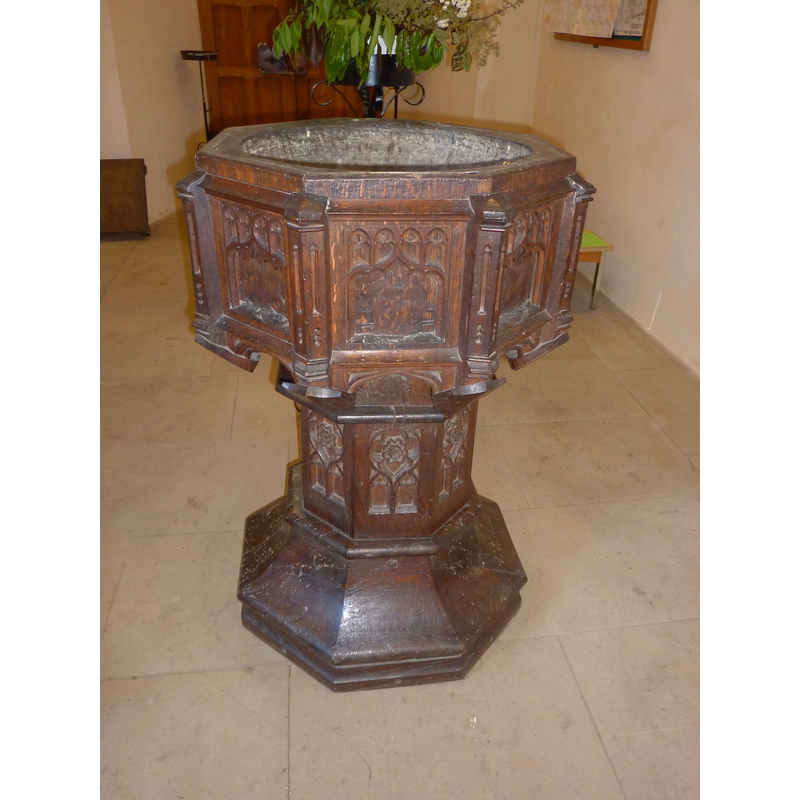
Image copyright © Janice Tostevin, 2010
Standing permission
Results: 13 records
B01: design element - patterns - tracery
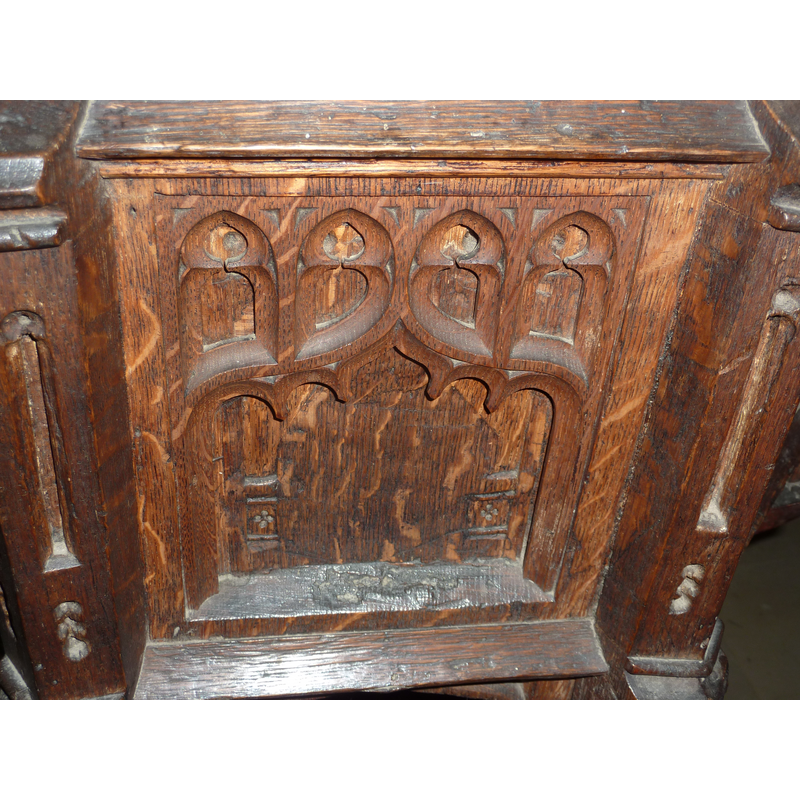
Copyright Statement: Image copyright © Janice Tostevin, 2010
Image Source: digital photograph taken 23 July 2010 by Janice Tostevin for BSI
Copyright Instructions: Standing permission
B02: design element - architectural - buttress - 8
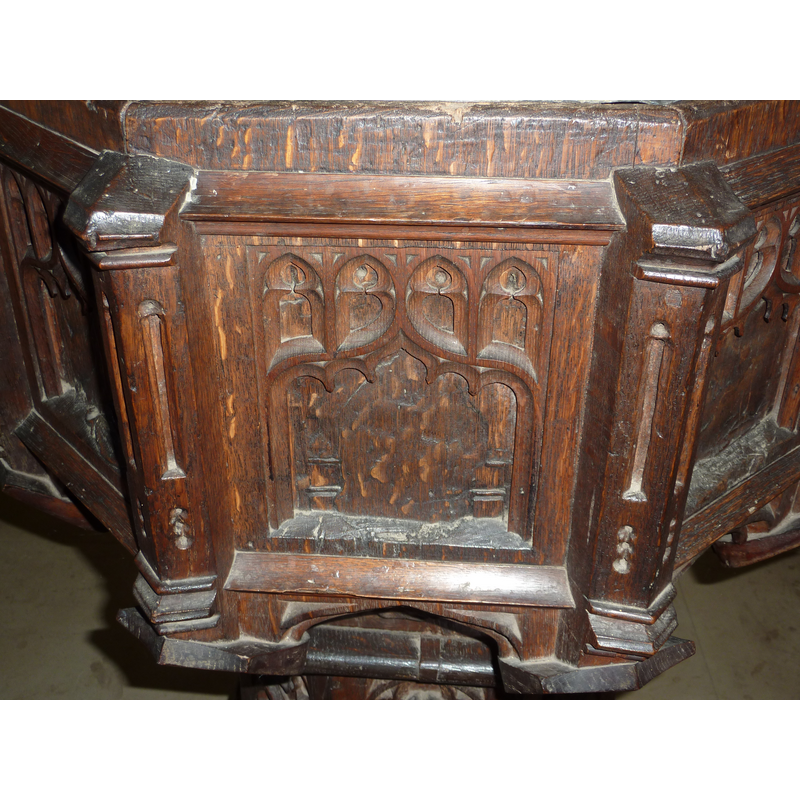
Copyright Statement: Image copyright © Janice Tostevin, 2010
Image Source: digital photograph taken 23 July 2010 by Janice Tostevin for BSI
Copyright Instructions: Standing permission
B03: Apostle or saint - unidenitfied - 4?
![the (seated?) figures were there originally but are now missing [cf. Font notes]](/static-50478a99ec6f36a15d6234548c59f63da52304e5/compressed/1101103018_compressed.png)
Scene Description: the (seated?) figures were there originally but are now missing [cf. Font notes]
Copyright Statement: Image copyright © Janice Tostevin, 2010
Image Source: digital photograph taken 23 July 2010 by Janice Tostevin for BSI
Copyright Instructions: Standing permission
B04: Apostle or saint - Evangelists - symbol - 4?
Scene Description: now missing [cf. Font notes]
Copyright Statement: Image copyright © Janice Tostevin, 2010
Image Source: digital photograph taken 23 July 2010 by Janice Tostevin for BSI
Copyright Instructions: Standing permission
BU01: design element - motifs - floral - rosette - 8?
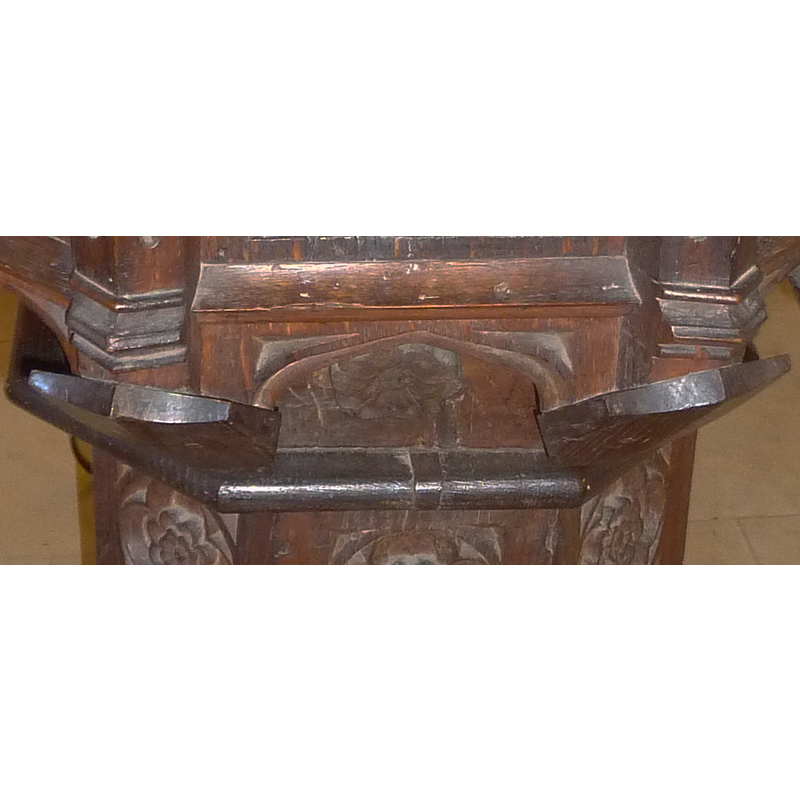
Copyright Statement: Image copyright © Janice Tostevin, 2010
Image Source: detail of a digital photograph taken 23 July 2010 by Janice Tostevin for BSI
Copyright Instructions: Standing permission
BU02: symbol - shield - blank - 8
Scene Description: one at the bottom of each of the buttresses of the basin side; diagonally set
Copyright Statement: Image copyright © Janice Tostevin, 2010
Image Source: detail of a digital photograph taken 23 July 2010 by Janice Tostevin for BSI
Copyright Instructions: Standing permission
LB01: design element - motifs - moulding
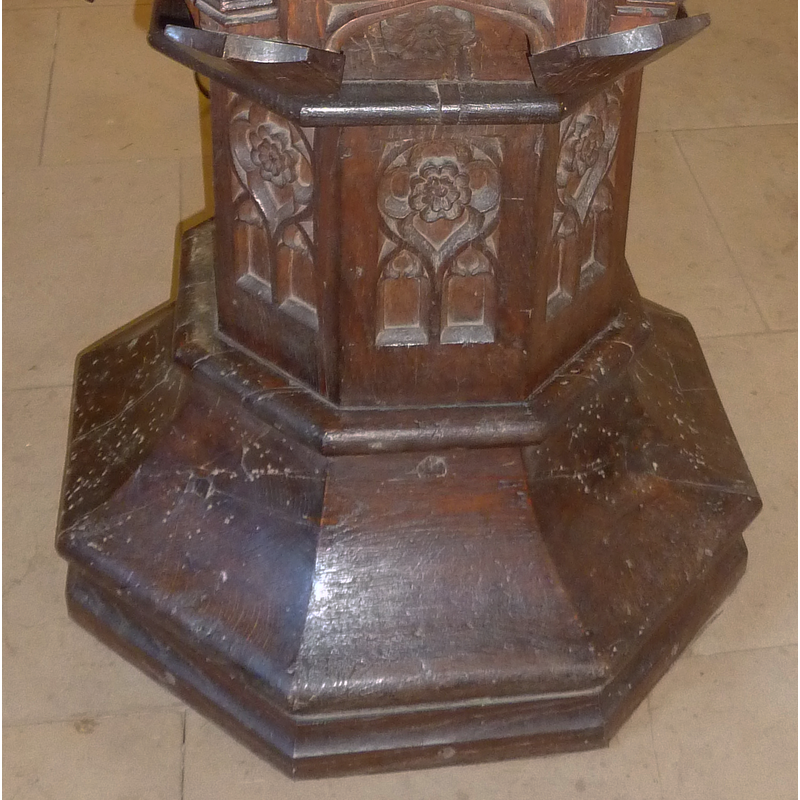
Copyright Statement: Image copyright © Janice Tostevin, 2010
Image Source: detail of a digital photograph taken 23 July 2010 by Janice Tostevin for BSI
Copyright Instructions: Standing permission
UB01: design element - motifs - floral - rose - in a quatrefoil - 8
Scene Description: on each panel of the stem of the base, each with a double arch and a motif in the spandrel
Copyright Statement: Image copyright © Janice Tostevin, 2010
Image Source: detail of a digital photograph taken 23 July 2010 by Janice Tostevin for BSI
Copyright Instructions: Standing permission
UB02: design element - patterns - tracery
Copyright Statement: Image copyright © Janice Tostevin, 2010
Image Source: detail of a digital photograph taken 23 July 2010 by Janice Tostevin for BSI
Copyright Instructions: Standing permission
view of font
Copyright Statement: Image copyright © Janice Tostevin, 2010
Image Source: digital photograph taken 23 July 2010 by Janice Tostevin for BSI
Copyright Instructions: Standing permission
view of font and cover
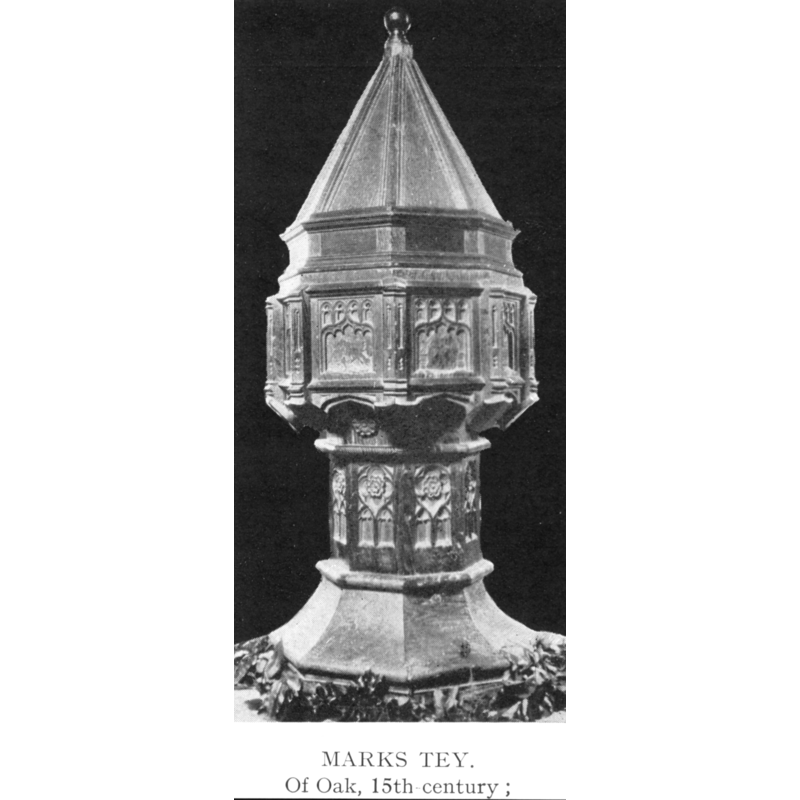
Copyright Statement: Image copyright © H.M.S.O., 1923
Image Source: B&W photograph in the Royal Commission on Historical Monuments (Essex, 1916-1923)
Copyright Instructions: PD
view of font and cover in context
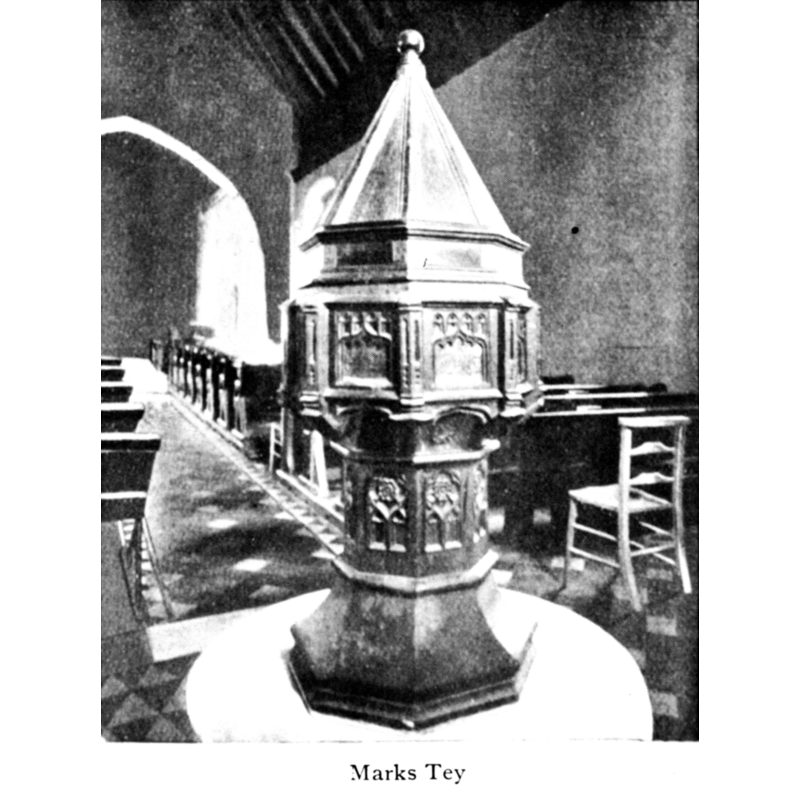
Copyright Statement: Image copyright © [in the public domain]
Image Source: digital image of an illustration in Bond (1908)
Copyright Instructions: PD
view of font and cover
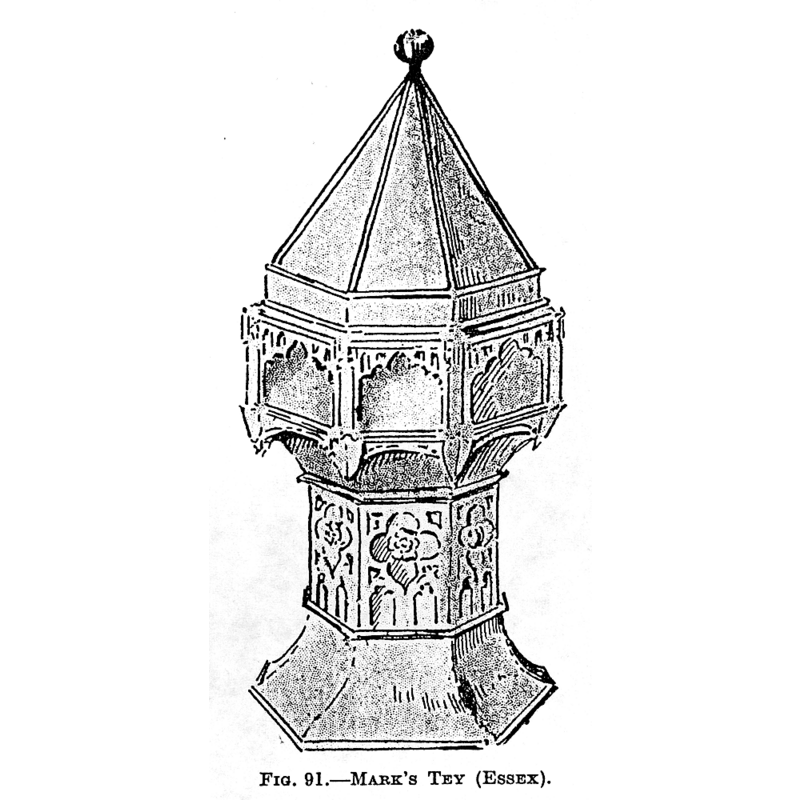
Copyright Statement: Image copyright © [in the public domain]
Image Source: Tyrrell-Green (1928)
Copyright Instructions: PD
INFORMATION
Font ID: 01131MAR
Object Type: Baptismal Font1
Font Date: ca. 1500?
Font Century and Period/Style: 15th - 16th century, Perpendicular
Workshop/Group/Artisan: heraldic font / wooden font
Church / Chapel Name: Parish Church of St. Andrew
Font Location in Church: Inside the church, in the nave, centre aisle, W end
Church Patron Saint(s): St. Andrew
Church Address: Church Ln, Marks Tey, Colchester CO6 1LW, United Kingdom -- Tel.: +44 1206 210247
Site Location: Essex, East, England, United Kingdom
Directions to Site: Marks Tey lies about 4-5 miles S-W of Colchester at the junction of the A12 (Colchester to Chelmsford) with the A120 to Braintree.
Font Notes:
Click to view
Illustrated in a 1849 print by HWK, at the SEAX-Essex Archives Online (ref. I/Mb 348/1/1). The Church Builder (issue no. 47 January 1873: 21) notes: "At Mark's Tey, Essex, is a font carved out of a solid block of wood, with pinnacles at the angles, and canopied sides with traces of subjects carved in relief on the panels; it is lined with lead." The Antiquary (issue of Nov. 1882: 218) reports a visit by the Essex Archaeological Society to Marks Tey, where they note "an ancient wooden font". William Morris (1883) writes:”In the church is an early 15th century oak-panelled font of fine character, partly mutilated in old times, but now constantly ill-used by being pierced afresh with nails each time the neglect of the church is thought to be covered by the usual almost childish festival decorations.” [source: Annual Report of The SPAB – VI (1883) by William Morris http://www.marxists.org/archive/morris/works/1883/spab9.htm]. Listed in Cox & Harvey (1907). Described and illustrated in Bond (1908) as a "fine oak font, c.1500" and its "Jacobean cover"; the illustration in Bond shows a fairly typical example of an octagonal font with features of the Perpendicular style, without visible figures, although the blind arches on the sides of the basin may have been meant to be painted or otherwise filled in. It has a cover of about the same period. Noted with an illustration in the Royal Commission on Historical Monuments (Essex, 1916-1923): "Font [...] of oak, octagonal bowl, panelled sides divided by buttresses, each panel formerly enclosing a carved figure --probably a seated figure-- on a throne and an evangelistic symbol alternately, but now mostly cut away, modern traceried heads to panels; moulded underside of bowl carved with roses, panelled and traceried stem with carved roses and moulded base, 15th-century. Cover of octagonal pyramid form with moulded fillets, early 17th-century." Described and illustrated in Tyrrell-Green (1928) as "a handsome octagonal font, which in its plan and in the details of its ornament resembles the typical stone font of the fifteenth century." Noted in Pevsner (1976) and in Bettley & Pevsner (2007): "Font. C15, octagonal. The remarkable thing is that it is of oak. Stem with tracery panels with roses in the centres, bowl with tracery panels formerly with seated figures." [NB: the RCHM (ibid.) notes a holy-water stoup of uncertain date in the south porch -- not indexed here]
Credit and Acknowledgements: We are grateful to Janice Tostevin for her photographs of this font
COORDINATES
UTM: 31U 346888 5750114
Latitude & Longitude (Decimal): 51.88075, 0.77546
Latitude & Longitude (DMS): 51° 52′ 50.7″ N, 0° 46′ 31.66″ E
MEDIUM AND MEASUREMENTS
Material: wood, oak
Font Shape: octagonal, mounted
Basin Interior Shape: round
Basin Exterior Shape: octagonal
Drainage Notes: lead-lined
LID INFORMATION
Date: Jacobean / 17th century?
Material: wood
Apparatus: no
Notes: Pyramidal octagonal font cover with a ball finial [cf. FontNotes]
REFERENCES
- Bettley, James, Essex, New Haven and London: Yale University Press, 2007, p. 593
- Bond, Francis, Fonts and Font Covers, London: Waterstone, 1985 c1908, p. 76, 289 and ill. on p. 78
- Cox, John Charles, English Church Furniture, New York: E.P. Dutton & Co., 1907, p. 161
- Great Britain. Royal Commission on Historical Monuments, An Inventory of the historical monuments in Essex, London: H.M. Stationary Office, 1916-1923, vol. 3: xxxii, 179-180 and pl. opp. p. xxxiv
- Morris, William, "[untitled]", VI (1883), Annual Report of the SPAB, 1883
- Pevsner, Nikolaus, Essex, Harmondsworth: Penguin, 1976, p. 297
- Tyrrell-Green, E., Baptismal Fonts Classified and Illustrated, London: Society for Promoting Christian Knowledge: The Macmillan Co., 1928, p. 140 and fig. 91