Wroxeter / Rochecestre / Uriconium / Viroconium
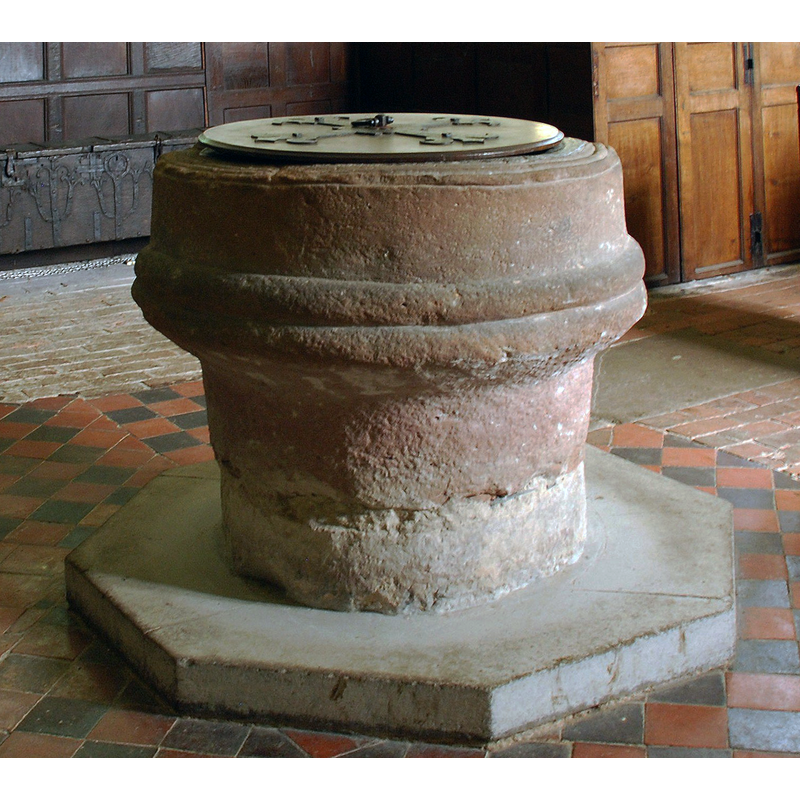
Image copyright © Timothy Marlow, 2015
Image and permission received (letter of 26 October 2013)
Results: 11 records
view of font
Copyright Statement: Image copyright © Timothy Marlow, 2015
Image Source: edited detail of a digital photograph taken 12 May 2012 by Timothy Marlow
Copyright Instructions: Image and permission received (letter of 26 October 2013)
view of font and cover
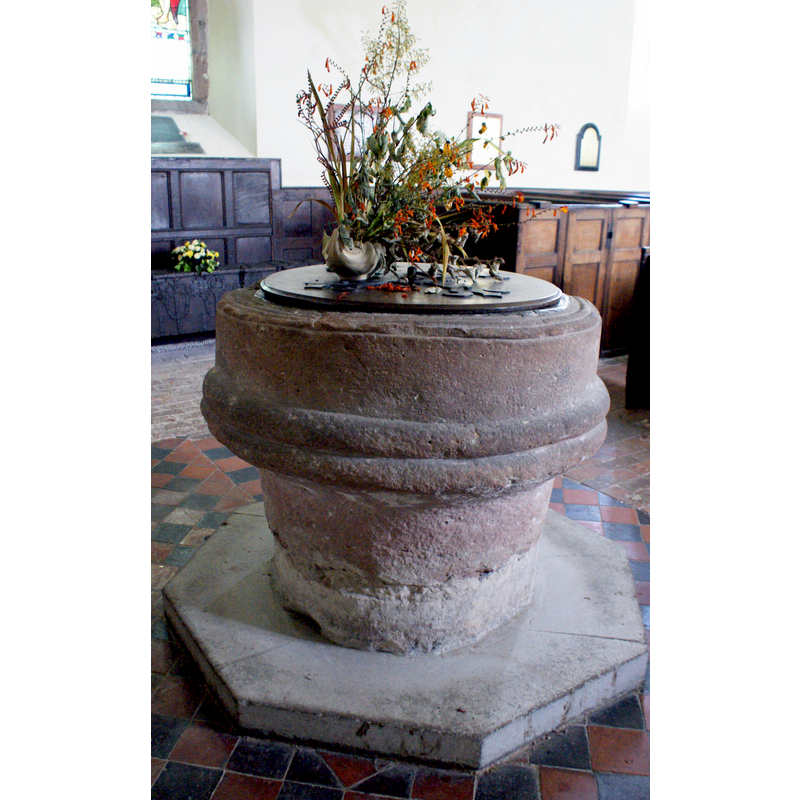
Copyright Statement: Image copyright © Chelmsfordblue Nick, 2009
Image Source: digital photograph taken 11 September 2009 by Chelmsfordblue Nick [www.flickr.com/photos/29356515@N00/3922485365/] [accessed 8 February 2013]
Copyright Instructions: CC-BY-SA-3.0
view of font
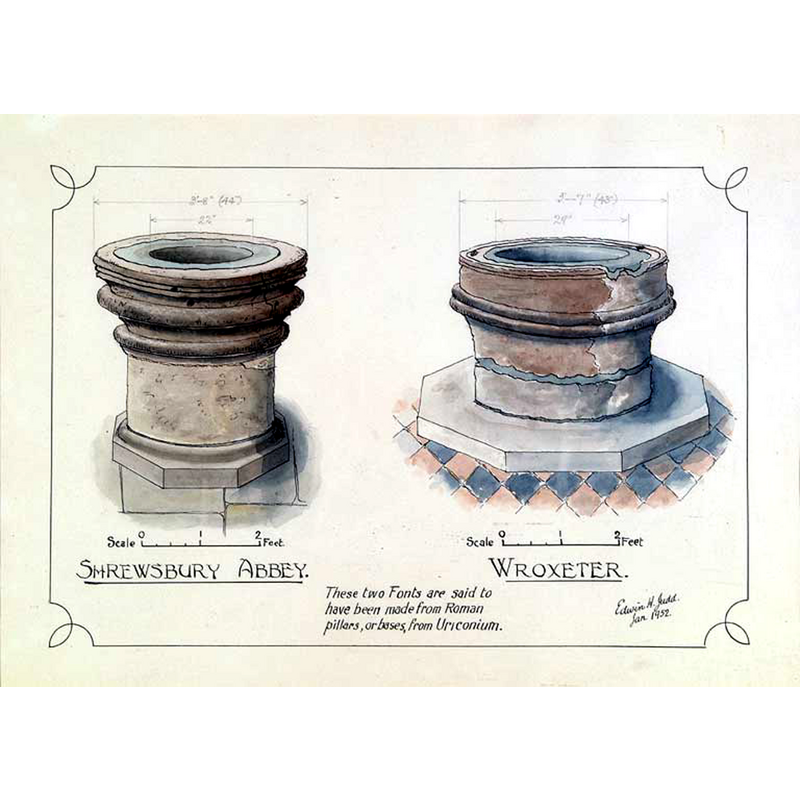
Copyright Statement: Image copyright © Shrewsbury Museums Service, 2006
Image Source: digital image of a watercolour by Edwin H. Judd dated Jan. 1952, in www.darwincountry.org]
Copyright Instructions: No known copyright restriction – Fair Dealing
view of font
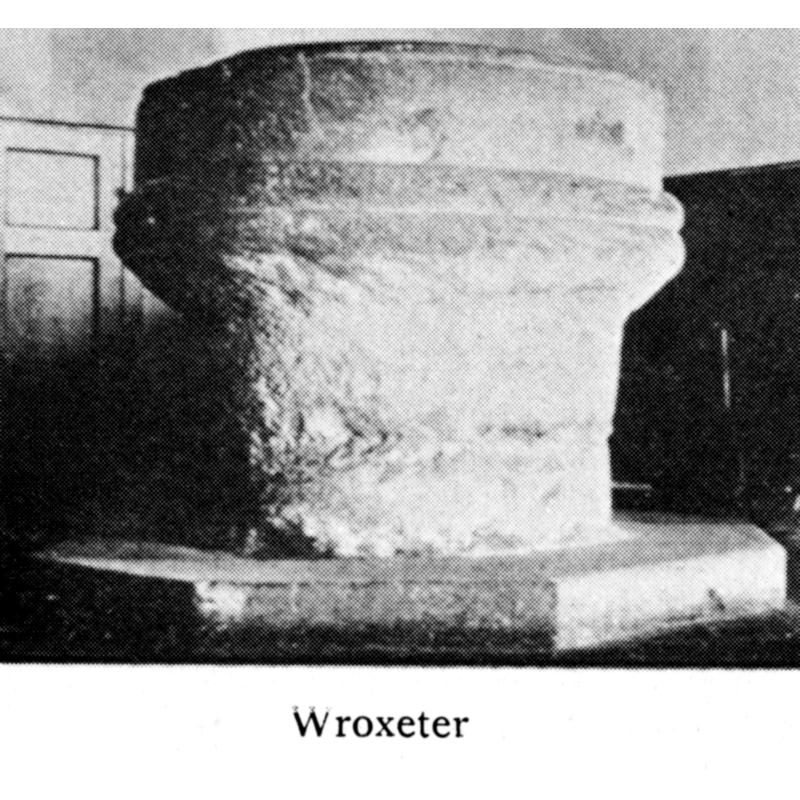
Copyright Statement: Image copyright © [in the public domain]
Image Source: Bond (1908)
Copyright Instructions: PD
view of font
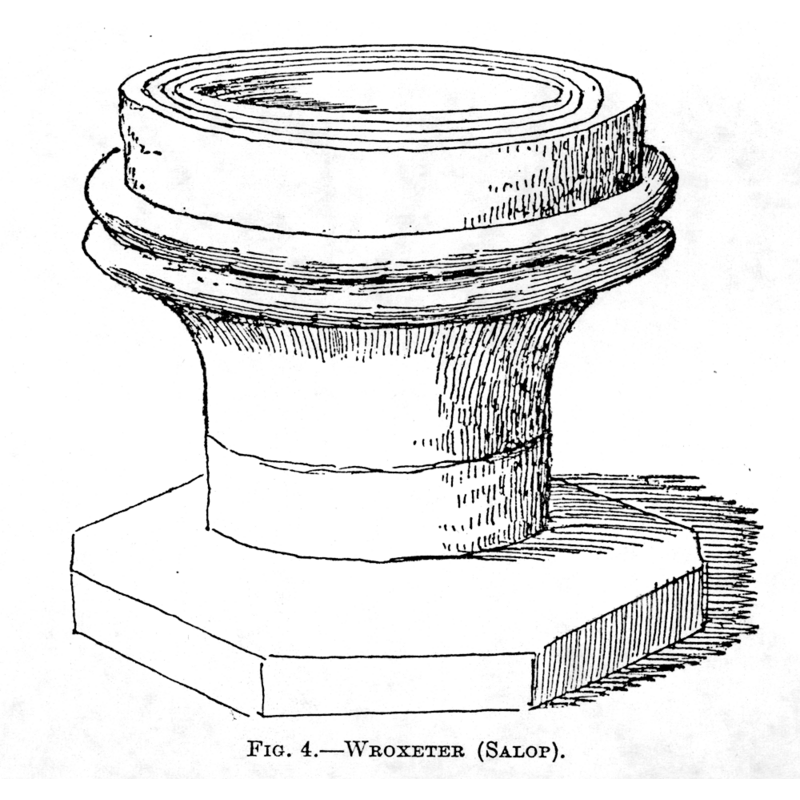
Copyright Statement: Image copyright © [in the public domain]
Image Source: Tyrrell-Green (1928: fig. 4)
Copyright Instructions: PD
design element - motifs - roll moulding - 2 - parallel
Copyright Statement: Image copyright © Timothy Marlow, 2015
Image Source: edited detail of a digital photograph taken 12 May 2012 by Timothy Marlow
Copyright Instructions: Image and permission received (letter of 26 October 2013)
design element - motifs - moulding
Copyright Statement: Image copyright © Timothy Marlow, 2015
Image Source: edited detail of a digital photograph taken 12 May 2012 by Timothy Marlow
Copyright Instructions: Image and permission received (letter of 26 October 2013)
view of basin
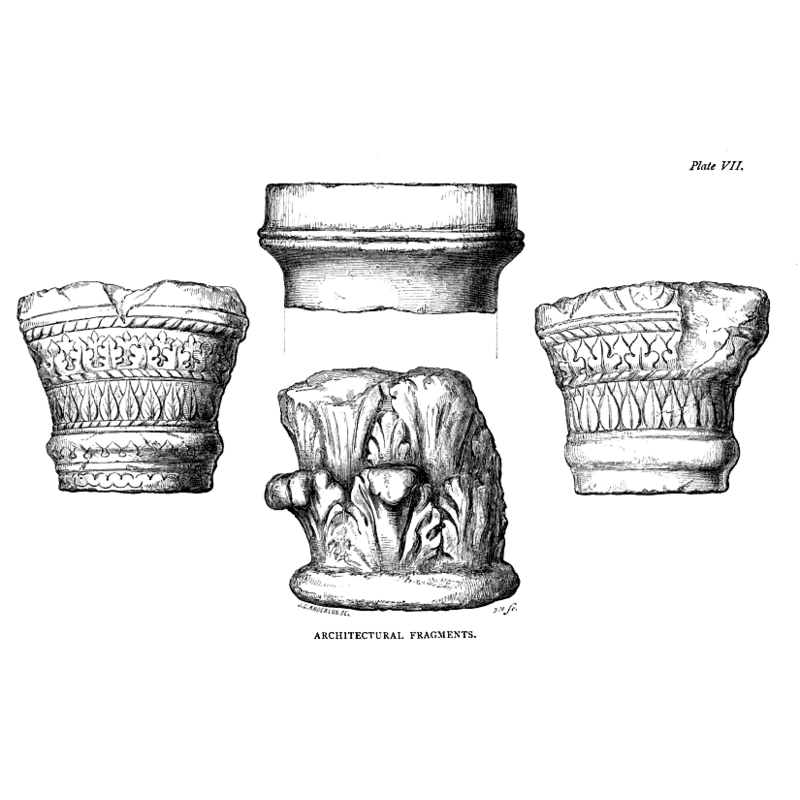
Copyright Statement: Image copyright © [in the public domain]
Image Source: woodcut of a drawing by J.C. Anderson, in Anderson (1867)
Copyright Instructions: PD
view of church exterior - south view
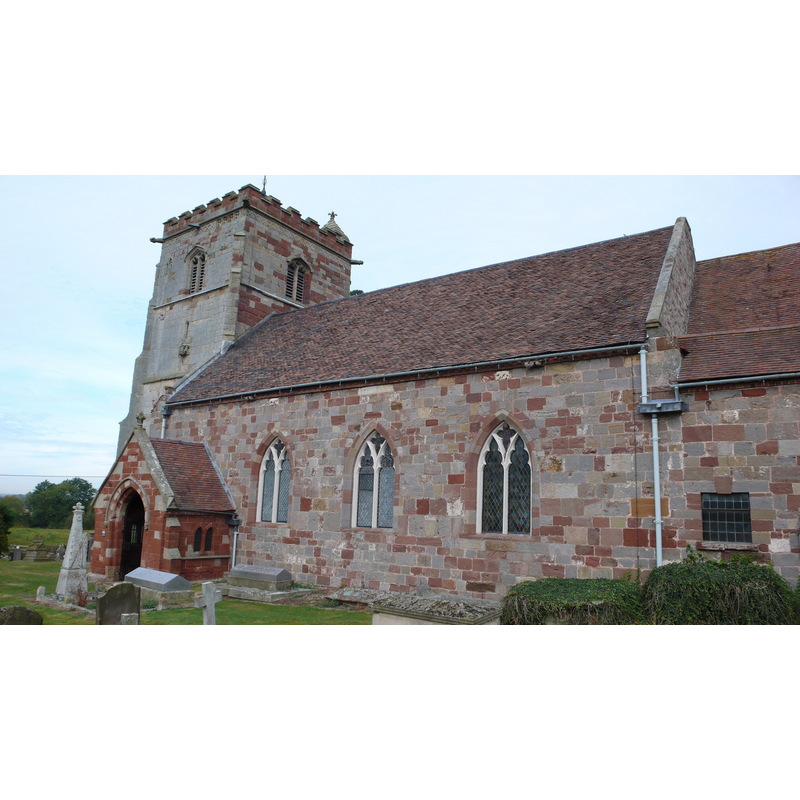
Copyright Statement: Image copyright © Peter Comeau, 2009]
Image Source: digital photograph taken 5 October 2009 by Peter Comeau [www.geograph.org.uk/photo/1754377] [accessed 8 February 2013]
Copyright Instructions: CC-BY-SA-3.0
view of font and cover in context
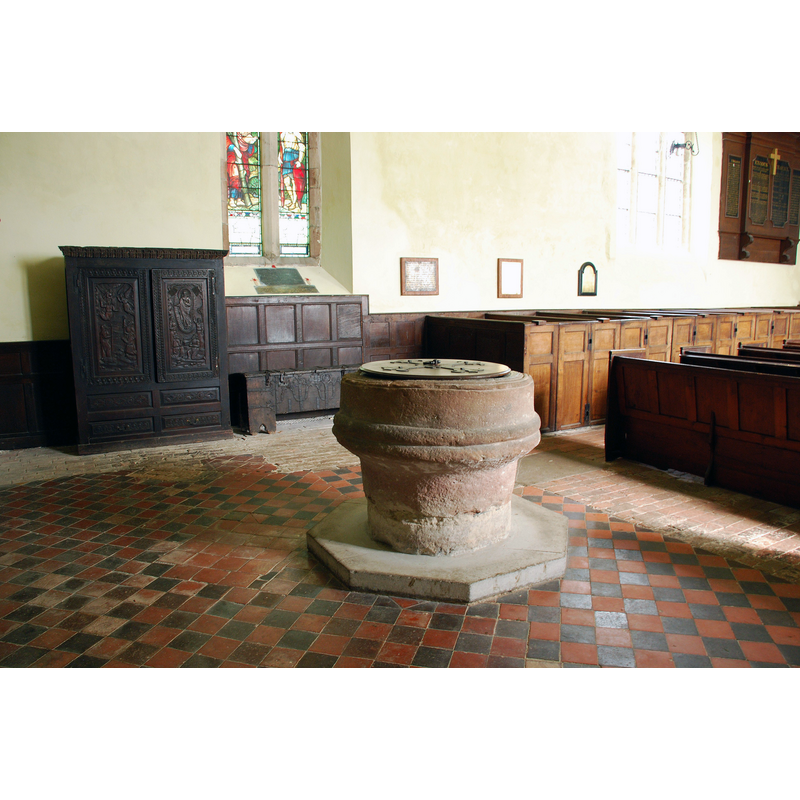
Copyright Statement: Image copyright © Timothy Marlow, 2015
Image Source: digital photograph taken 12 May 2012 by Timothy Marlow
Copyright Instructions: Image and permission received (letter of 26 October 2013)
view of church interior - nave - looking east
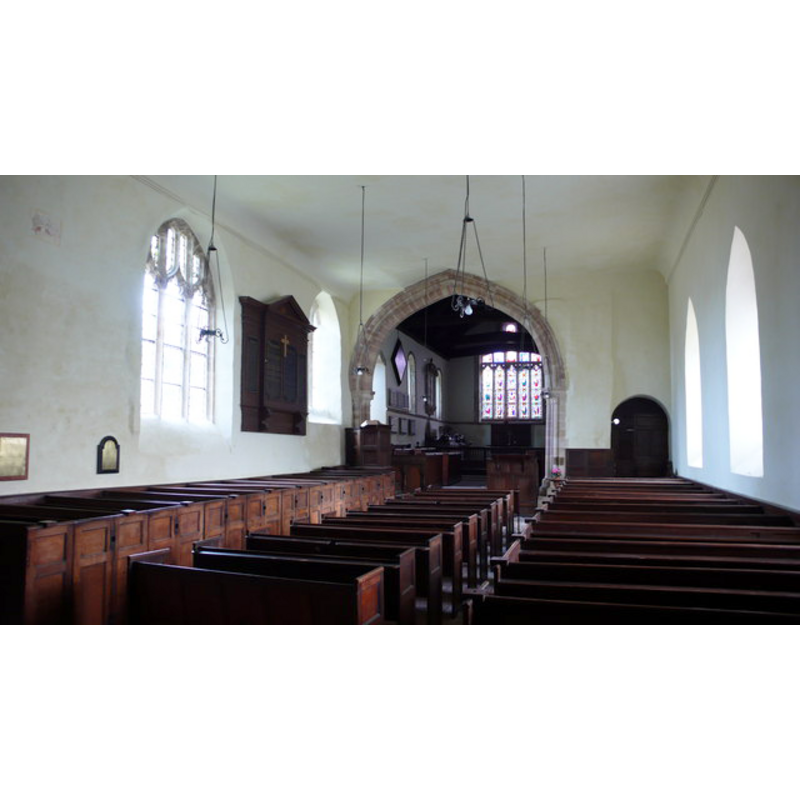
Copyright Statement: Image copyright © Peter Comeau, 2009]
Image Source: digital photograph taken 5 October 2009 by Peter Comeau [www.geograph.org.uk/photo/1754391] [accessed 8 February 2013]
Copyright Instructions: CC-BY-SA-3.0
INFORMATION
Font ID: 01088WRO
Object Type: Other
Object Details: base, Roman
Font Century and Period/Style: 11th - 12th century [altered Anglo-Roman base/capital], Norman[altered]
Cognate Fonts: The basin may be considered somewhat similar to the shape of the one at Hexham -- another such Anglo-Roman (?) re-cut in Norman times at Shrewsbury No. 2
Church / Chapel Name: Parish Church of St. Andrew [originally from Uriconium basilica?]
Font Location in Church: Inside the church, by the entrance
Church Patron Saint(s): St. Andrew
Church Notes: church now redundant and in the care of the Churches Conservation Trust
Church Address: Wroxeter, Shropshire SY5 6PL
Site Location: Shropshire, West Midlands, England, United Kingdom
Directions to Site: Located on the B4380, 10 km EES of Shrewsbury
Ecclesiastic Region: Diocese of Salisbury
Historical Region: Hundred of Wrockwardine [in Domesday] -- Hundred of South Bradford -- Salop
Additional Comments: recycled font: said to be a Roman base from a nearby Roman basilica, hollowed out and re-used as font -- (disappeared font? was there another font in the pre-Conquest collegiate church here?)
Font Notes:
Click to view
There is an entry for Wroxeter [variant spelling] in the Domesday survey [http://domesdaymap.co.uk/place/SJ5608/wroxeter/] [accessed 28 February 2015], and it mentions four priests and a church in it [cf. infra]. Anderson (1864) notes that the church at 'Rochecestre' with four priests is mentioned in Domesday Book, originally a Saxon collegiate foundation. Illustrated with a woodcut from a drawing by J.C. Anderson in Anderson (1867) The Gentleman's Magazine (issue of July-Dec, 1860) reports on a paper delived by the Rev. H.M. Scarth to a gathering ot the British Archaeological Society, in which he stated: "this font consists of a portion of an ancient Roman column, adapted to its present purpose by being hollowed out, and must have existed previous to the Saxon occupation." Romilly Allen (1888) mentions Wroxeter's as one of several "fonts made out of Roman columns". Described in Cox & Harvey (1907) as the drum of a Roman column re-cycled as a baptismal font. Described and illustrated in Bond (1908) as a baptismal font weighing about two tons and looking "like a Roman base turned upside down; the rough beadings of the rim may have been worked in Anglo-Saxon days. [...] It is said to have been taken from the neighbouring basilica of Uriconium, burnt by the West Saxons c. 596". Described and illustrated in Tyrrell-Green (1928) as one of several fonts [Hexham, Kenchester and Over Denton are others] made by re-using Roman dressed stones. It is raised now on an octagonal plinth. Listed in Stocker (1997) as "Wroxteter" with reference to Bond [cf. supra] as having a base/capital of Anglo-Roman origin. Image source: Church fonts from Shrewsbury Abbey and Wroxeter. Ink and watercolour. 1952. Artist: Edwin H. Judd. Shrewsbury Museums Service. (SHYMS: FA/1994/09). Image sy1057. © Shrewsbury Museums Service. Noted in Newman & Pevsner (2006).
Credit and Acknowledgements: We are grateful to Timothy Marlow for his photographs of this font
COORDINATES
UTM: 30U 523857 5835631
Latitude & Longitude (Decimal): 52.6701, -2.6472
Latitude & Longitude (DMS): 52° 40′ 12.36″ N, 2° 38′ 49.92″ W
MEDIUM AND MEASUREMENTS
Material: stone, type unknown
Number of Pieces: one
Font Shape: cylindrical, mounted
Basin Interior Shape: round
Basin Exterior Shape: round
Rim Thickness: 20 cm [calculated]
Diameter (inside rim): 72.5 cm**
Diameter (includes rim): 112.5 cm* / 112.5 cm**
Notes on Measurements: * in ft/in in Bond (1908: 99) / ** Judd's watercolour of 1952 [cf. Images area]
LID INFORMATION
Date: 19th century?
Material: wood, oak?
Apparatus: no
Notes: flat and round, with metal decoration and ring handle
REFERENCES
- Allen, J. Romilly, "On the Antiquity of Fonts in Great Britain", XLIV, Journal of the British Archaeological Association, 1888, pp. 164-173; p. 172
- Anderson, John Corbet, Shropshire, its early history and antiquities, comprising […], London: Willis and Sotheran, 1864, p. 138
- Anderson, John Corbet, The Roman city of Uriconium at Wroxeter, Salop, London: J. Russell Smith, 1867, p. 48 and pl. VII
- Betjeman, John, An American's Guide to English Parish Churches (including the Isle of Man), New York: McDowell, Obolensky, 1958, p. 321
- Bond, Francis, Fonts and Font Covers, London: Waterstone, 1985 c1908, p. 94, 99 and ill. on p. 98
- Cox, John Charles J., English Church Fittings Furniture and Accessories, London: B.T. Batsford, 1922, p. 87
- Cox, John Charles, English Church Furniture, New York: E.P. Dutton & Co., 1907, p. 167
- Newman, John, Shropshire, New Haven: Yale University Press, 2006, p. 718
- Stocker, D.A., "Fons et origo: The Symbolic Death and Resurrection of English Font Stones", I (1997b), Church Archaeology, 1997, pp. 17-25; p. 25
- Tyrrell-Green, E., Baptismal Fonts Classified and Illustrated, London: Society for Promoting Christian Knowledge: The Macmillan Co., 1928, p. 21 and fig. 4