Oxford No. 1 / Oxeneford
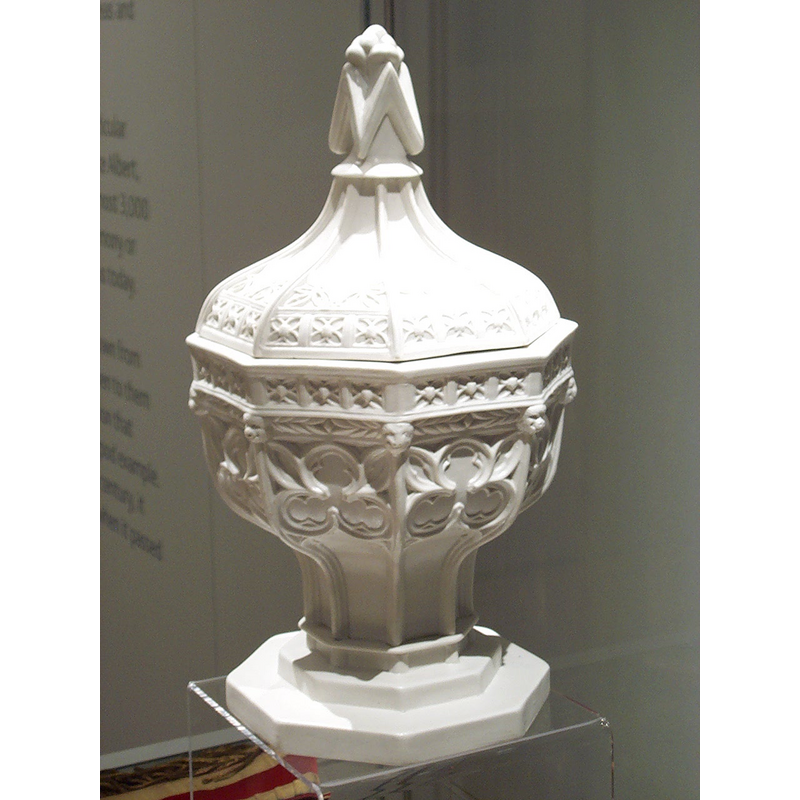
Image copyright © [in the public domain]
PD
Results: 12 records
B01: design element - patterns - tracery
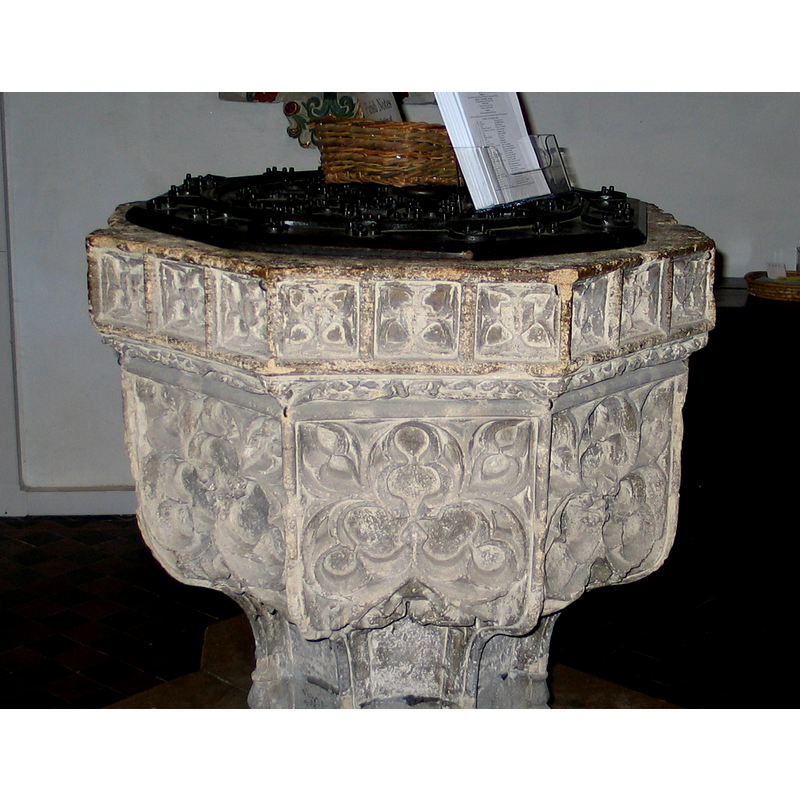
Scene Description: deep-relief, forming clover-leaf shapes on each basin side
Copyright Statement: Image copyright © Baptisteria Sacra Index, 2023
Image Source: BSI - Photographed November 6, 2006
Copyright Instructions: CC-BY-NC-ND-4.0
BBU01: symbol - shield - in a quatrefoil - 24
Scene Description: three per side of the octagonal upper basin side
Copyright Statement: Image copyright © Baptisteria Sacra Index, 2023
Image Source: BSI - Photographed November 6, 2006
Copyright Instructions: CC-BY-NC-ND-4.0
LB01: design element - architectural - buttress - 8
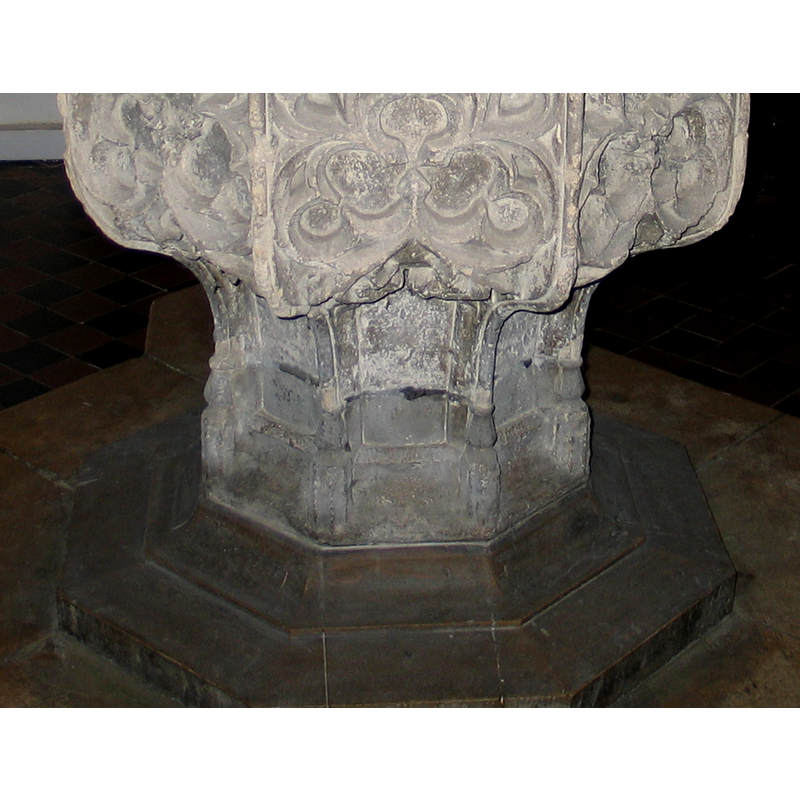
Scene Description: forming panels on the sides of the stem
Copyright Statement: Image copyright © Baptisteria Sacra Index, 2023
Image Source: BSI - Photographed November 6, 2006
Copyright Instructions: CC-BY-NC-ND-4.0
view of font and cover
Scene Description: the miniature replica of the font and cover [cf. FontNotes]
Copyright Statement: Image copyright © [in the public domain]
Image Source: digital photograph taken 1 April 2009 by Simon Speed [http://commons.wikimedia.org/wiki/File:FontStMaryMagOxford.JPG] [accessed 13 November 2011]
Copyright Instructions: PD
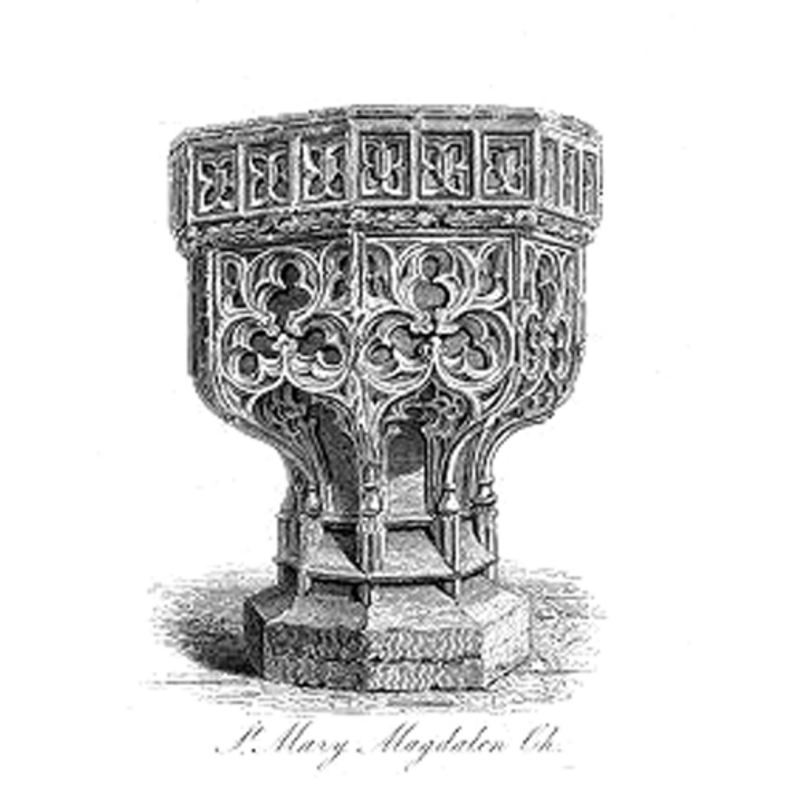
view of font
Copyright Statement: Image copyright © antiqueprints.com, 2008
Image Source: detail of "Fonts &c. in Oxford" drawn by F.Mackenzie, engraved by J.Skelton and published by Skelton in 1821 [http://www.antiqueprints.com/proddetail.php?prod=d6332] [accessed 28 November 2008]
Copyright Instructions: Reproduced here under conditions in http://www.antiqueprints.com/image-use.html [accessed 28 November 2008]
view of font and cover
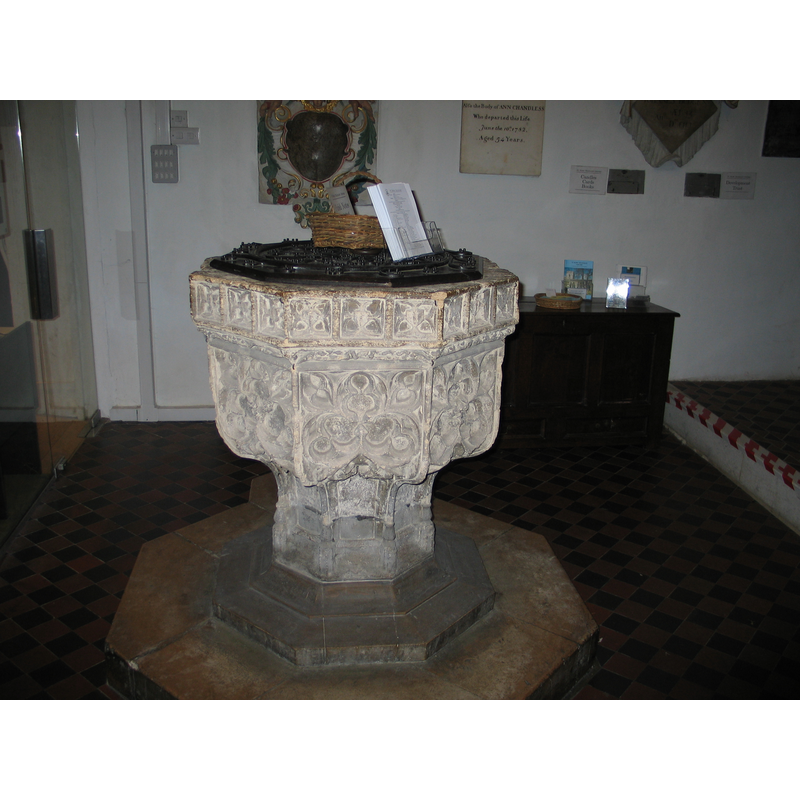
Copyright Statement: Image copyright © Baptisteria Sacra Index, 2023
Image Source: BSI - Photographed November 6, 2006
Copyright Instructions: CC-BY-NC-ND-4.0
view of font and cover
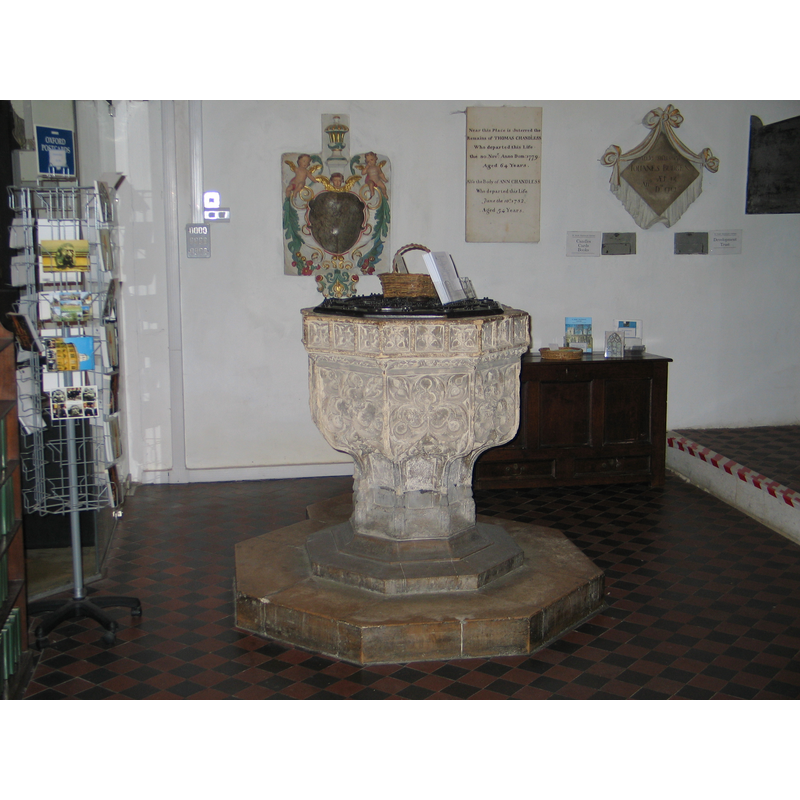
Copyright Statement: Image copyright © Baptisteria Sacra Index, 2023
Image Source: BSI - Photographed November 6, 2006
Copyright Instructions: CC-BY-NC-ND-4.0
view of font and cover
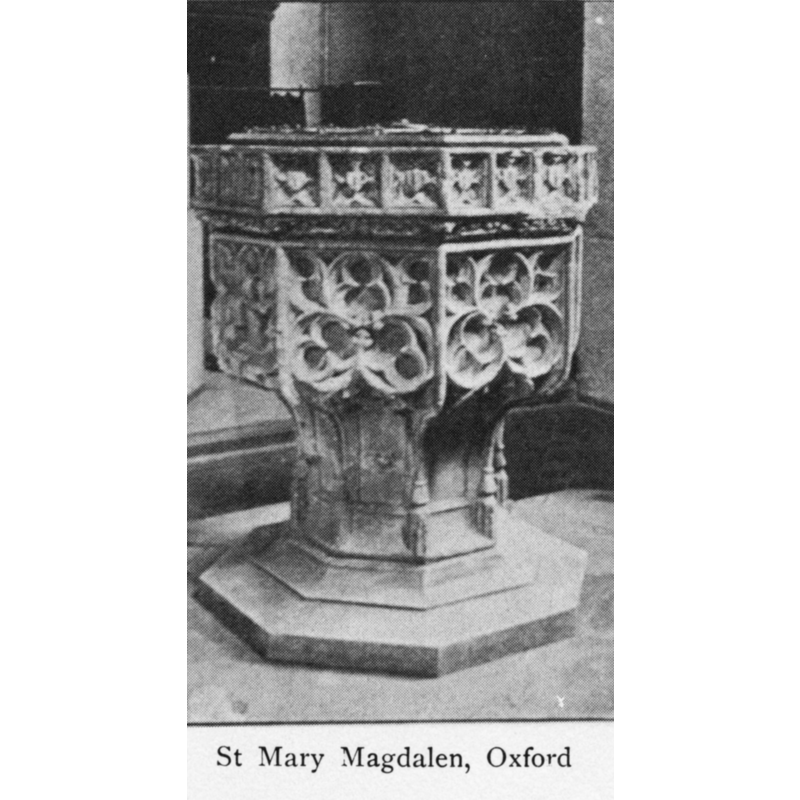
Copyright Statement: Image copyright © [in the public domain]
Image Source: B&W photograph in Bond (1908)
Copyright Instructions: PD
view of font
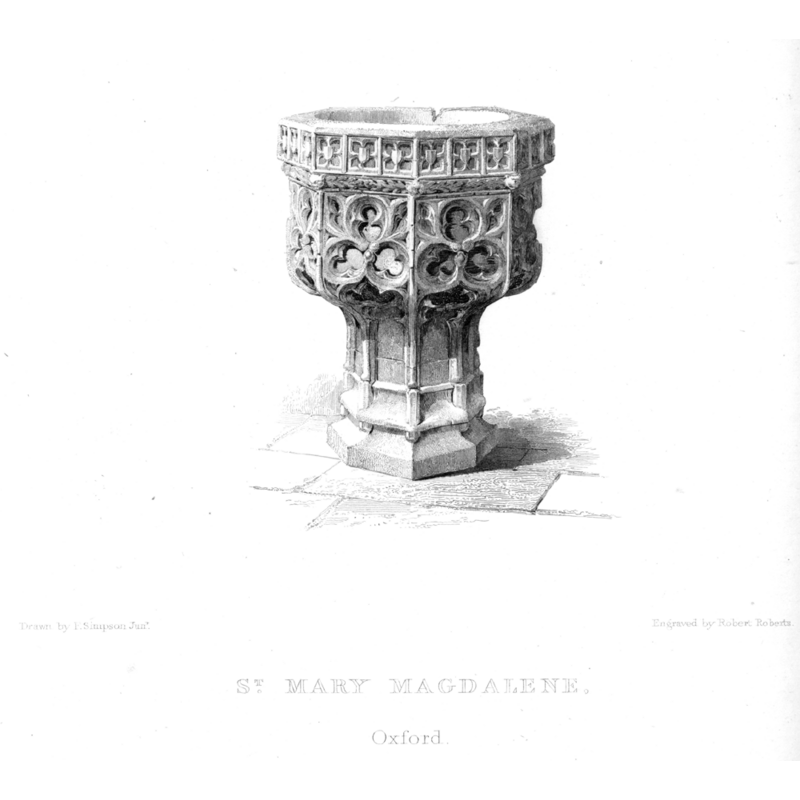
Copyright Statement: Image copyright © [in the public domain]
Image Source: engraving in Simpson (1828: 51)
Copyright Instructions: PD
view of church exterior - south portal - detail
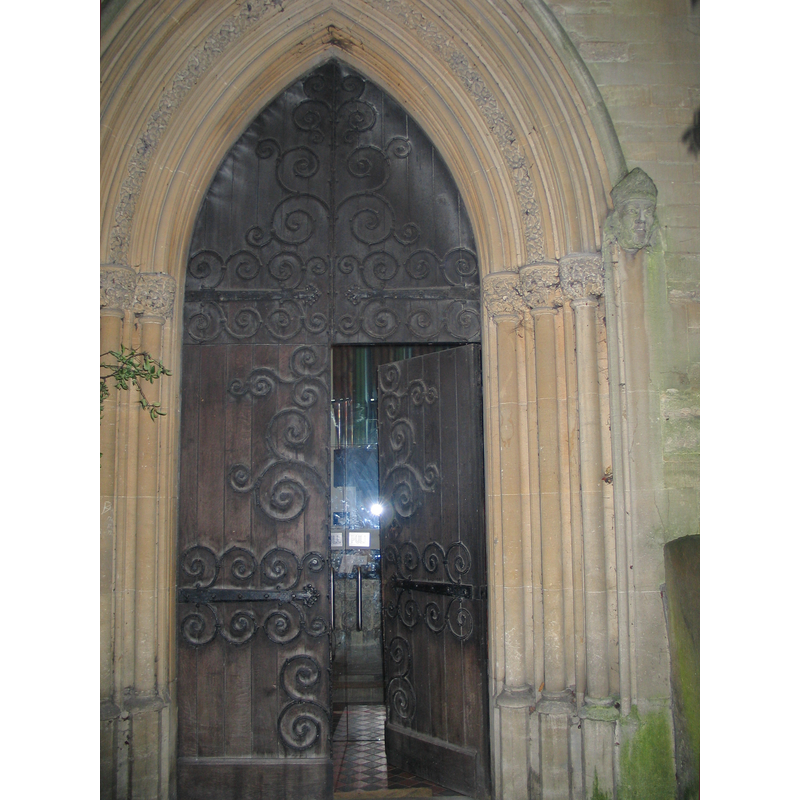
Copyright Statement: Image copyright © Baptisteria Sacra Index, 2023
Image Source: BSI - Photographed November 6, 2006
Copyright Instructions: CC-BY-NC-ND-4.0
view of church exterior - south portal
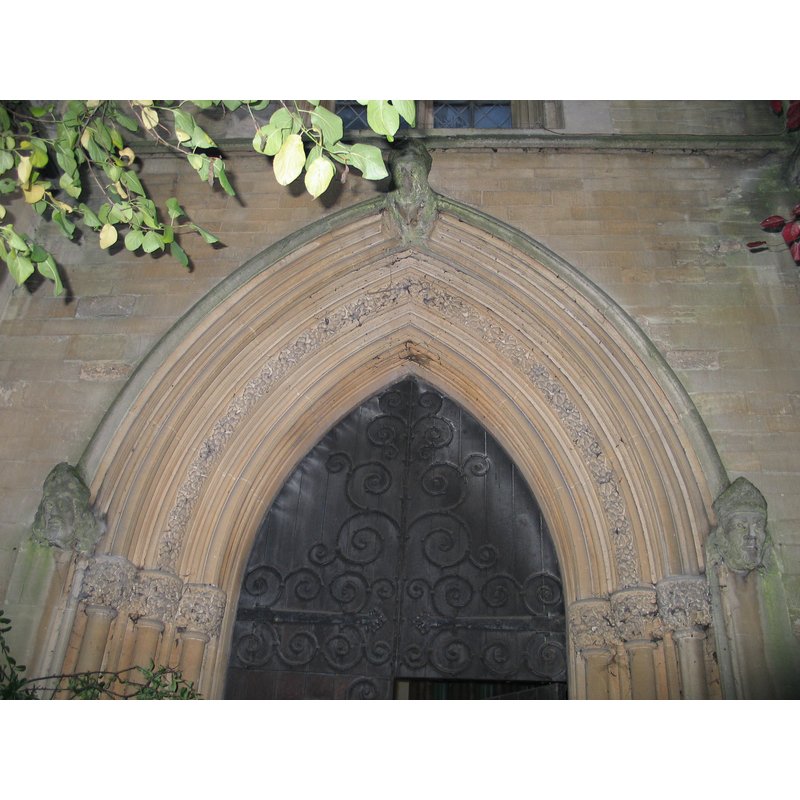
Copyright Statement: Image copyright © Baptisteria Sacra Index, 2023
Image Source: BSI - Photographed November 6, 2006
Copyright Instructions: CC-BY-NC-ND-4.0
view of font and cover in context
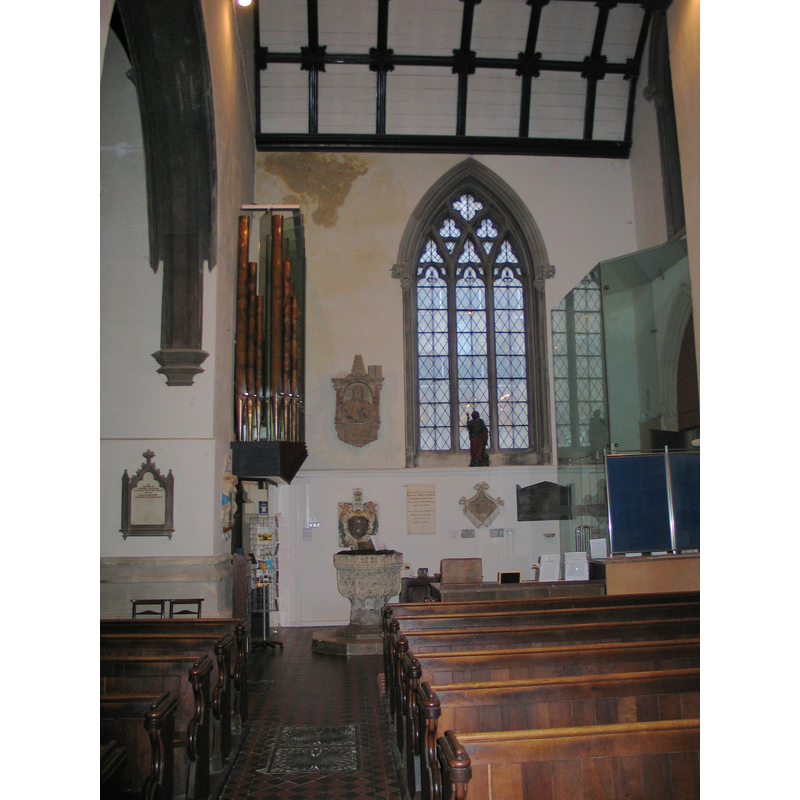
Copyright Statement: Image copyright © Baptisteria Sacra Index, 2023
Image Source: BSI - Photographed November 6, 2006
Copyright Instructions: CC-BY-NC-ND-4.0
INFORMATION
Font ID: 01080OXF
Object Type: Baptismal Font1
Date Visited: 2006-11-06
Font Date: ca. 1337?
Font Century and Period/Style: 14th century, Decorated
Workshop/Group/Artisan: heraldic font
Cognate Fonts: there is a Victorian close copy of this font at Chipping Camden, Gloucs.
Church / Chapel Name: Church of St. Mary Magdalene
Font Location in Church: Inside the church, in the W end of the nave [Simpson reported it ca. 1828 "under the westernmost arch of the south side"]
Church Patron Saint(s): St. Mary Magdalene
Church Address: Magdalen Street East, Oxford OX1 2LR
Site Location: Oxfordshire, South East, England, United Kingdom
Directions to Site: On Magdalen St., in the centre of town
Ecclesiastic Region: Diocese of Oxford
Historical Region: Hundred of headington
Additional Comments: disappeared font? (the one from the 11thC(?) church here)
Font Notes:
Click to view
There are thirteen entries for Oxford [variant spelling] in the Domesday survey [http://opendomesday.org/place/SP5106/oxford/] [accessed 10 November 2016]; two of them mentions a church in each. Illustrated in Skelton (1821). Described and illustrated in Neale (1825): "The stone font in this church […] is veriy rich in its ornaments, and is probably of the date of Edward III.'s time […] It rises from a comparatively small base, and expands in eight divisions, highly enriched with very bold tracery, deeply cut, forming a pointed arch, and a large trefoil, above which is a fillet sculptured with foliage; and on every one of the eight sides of the uppermost division of the font, are three quatrefoils, each containing a plain shield. The top is formed of wood, and is removable at pleasure, by means of a small crane." Simpson (1828) writes: "Edward the Third, in the eleventh year of his reign, A.D. 1337, renewed the south aisle of this church, which still remains. The Font is nearly of the same date. The shafts below the bases to the torus moulding at each angle are fluted, which is not usual in work so early. The execution is very good and the tracery cut very deep, which, united to the beauty of the design, renders the whole very handsome." Poole (1842) notes that this font is "an example of the decorated style", and is mentioned in "the memorials of Oxford" and in "the glossary of Architecture". The Ecclesiastical and Architectural Topography of England: Oxfordshire (1850) notes: "a small church much of which is in the D[ecorated] style [...] its font is a fine one." Described and illustrated in Bond (1908): octagonal mounted font; the upper basin side has three niches per side deply carved with a single tiny shield in each; the eight sides of the basin have deep-relief tracery forming clover-leaf shapes. The stem of the base is octagonal and the lower base and plinth are the same shape. Noted in Long (1923) as belonging to the Decorated [or 'Second Pointed'] period. The Victoria County History (Oxford, 1979) notes: "The church was confirmed to St. George's in the Castle c. 1127, having probably been acquired by Robert d'Oilly at the Conquest and given to St. George's at its foundation in 1074. [...] The early-12th-century church consisted of a nave and chancel, the Norman arch of which survived until 1841 [...] The octagonal font dates from the late 14th century." Noted in Verey & Brooks (1999-2002): "Fonts. One of 1839, a close copy of the late C14 font in St Mary Magdalen, Oxford.-- Half of another, fixed to the E[ast] wall of the S[outh] aisle, has E[arly] E[nglish] decoration probably worked on a Norman bowl." On-site notes: the font is in a fairly good state of repair, raised on a two-step octagonal plinth; the font cover is octagonal and flat, with heavy metal decorations and ring handle. There is a miniature reproduction of the font and cover in this church "made by Minton or Wedgwood around 1840, inscribed St. Mary Mag. Oxford. It is from the collection of the Cecil Higgins Gallery and is on display at the Bedford Gallery, Bedford, Bedfordshire." [source:http://en.wikipedia.org/wiki/File:FontStMaryMagOxford.JPG] [accessed 13 November 2011]
Credit and Acknowledgements: We are grateful to Steve Bartrick Antique Prints & Maps [www.antiqueprints.com] for their image of the church portal
COORDINATES
UTM: 30U 620133 5735207
Latitude & Longitude (Decimal): 51.754857, -1.259512
Latitude & Longitude (DMS): 51° 45′ 17.48″ N, 1° 15′ 34.24″ W
MEDIUM AND MEASUREMENTS
Material: stone, type unknown
Font Shape: octagonal, mounted
Basin Interior Shape: round
Basin Exterior Shape: octagonal
Drainage System: centre hole in basin
Rim Thickness: 10 cm [calculated]
Diameter (inside rim): 68 cm
Diameter (includes rim): 88 cm
Basin Depth: 32.5 cm
Font Height (less Plinth): 110 cm
Notes on Measurements: Simpson (1828: 51)
LID INFORMATION
Material: wood, oak
Apparatus: no
Notes: [cf. FontNotes]
REFERENCES
- The Victoria History of the Counties of England: A History of the County of Oxford, London: VCH, [1990-1996?], Oxford, vol. 4: 369-412 [www.british-history.ac.uk/report.asp?compid=22821] [accessed 26 June 2007]
- Bond, Francis, Fonts and Font Covers, London: Waterstone, 1985 c1908, p. 231 and ill. on p. 236
- Cox, John Charles J., English Church Fittings Furniture and Accessories, London: B.T. Batsford, 1922, p. 19
- Long, E.T., "Dorset church fonts", 44, Proceedings of the Dorset Natural History and Antiquarian Field Club, 1923, pp. 62-76; p. 70
- Moule, Thomas, The English counties delineated; or, A topographical description of England [...], London: George Virtue, 1837 [vol. 2], vol. 2: 85
- Neale, John Preston, Views of the most interesting collegiate and parochial churches in Great Briatin; including screens, fonts, monuments, &c. […] with historical and architectural descriptions [vol. II], London: Longman, Hurst, Rees, Orme, Brown and Green, and Sherwood, Jones, and Co., 1825, vol. 2 [unpaged]
- Parker, John Henry, The Ecclesiastical and architectural topography of England: Oxfordshire, Oxford, London: Published under the sanction of the Central Commitee of the Archaeological Institute of Great Britain and Ireland [by] John Henry Parker, 1850, [unpaged -- entry 240]
- Poole, George Ayliffe, The Appropriate Character of Church Architecture, Leeds; London: T.W. Green; Rivington, Burns, and Houlston and Stoneman, 1842, p. 72
- Simpson, Francis, A series of ancient baptismal fonts: chronologically arranged, drwan by F. Simpson, Jun., engraved by R. Roberts, London: Septimus Prowett, 1828, p. 51