Wychling / Wichling
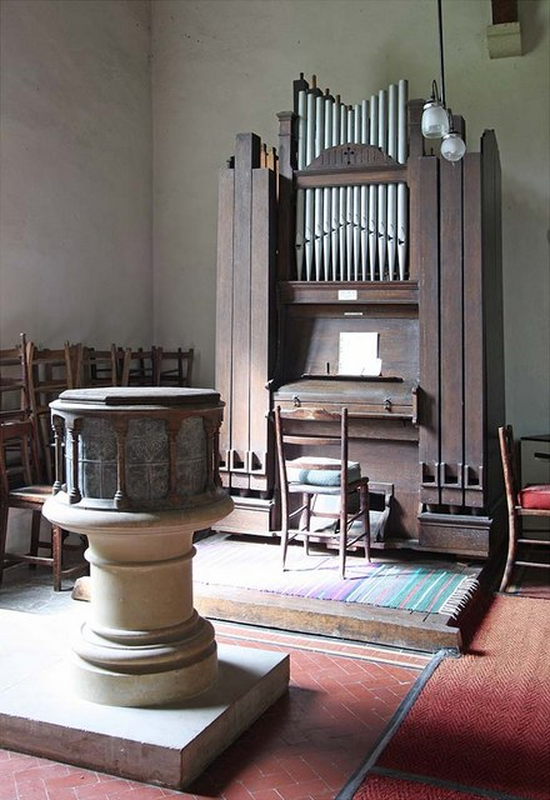
Image copyright © John Salmon, 2009
CC-BY-SA-2.0
Results: 10 records
view of font and cover in context
Scene Description: "St Margaret, Wychling, Kent - Font & organ"
Copyright Statement: Image copyright © John Salmon, 2009
Image Source: digital photograph 20 May 2009 by John Salmon
Copyright Instructions: CC-BY-SA-2.0
view of church exterior - southeast view
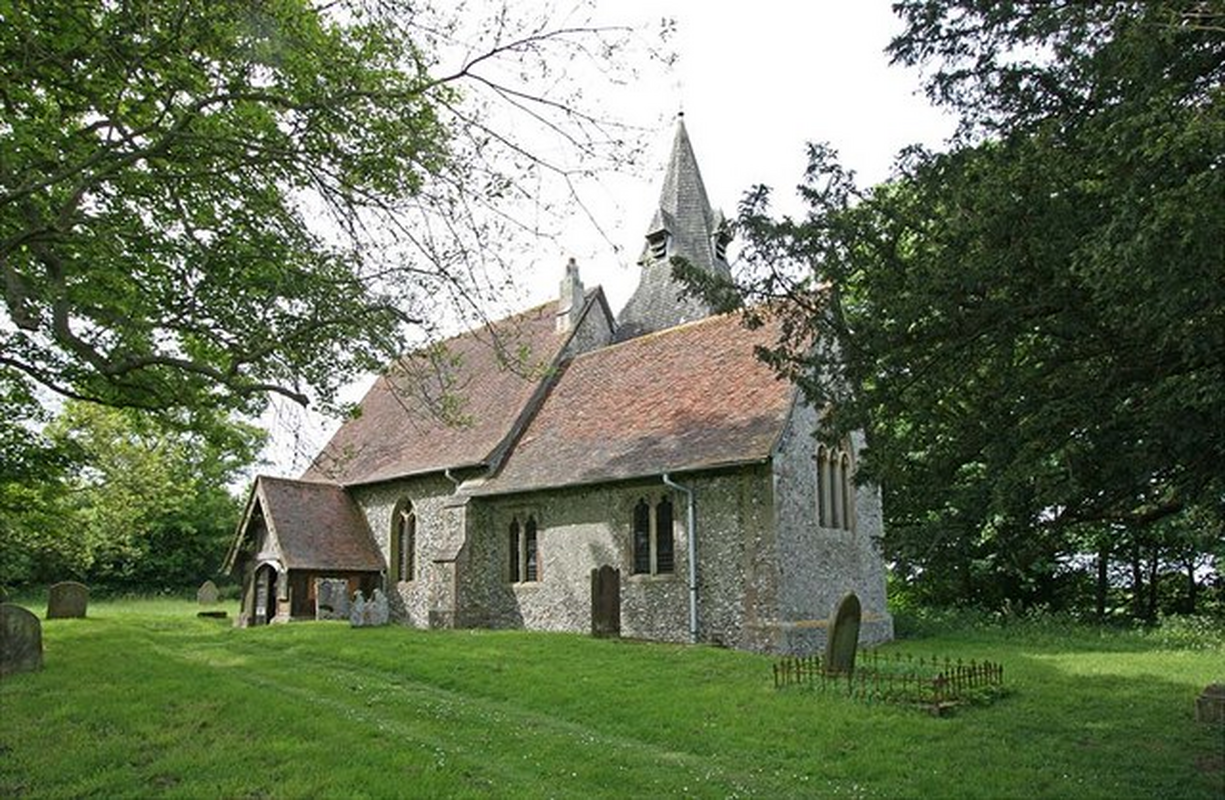
Scene Description: "St Margaret, Wychling, Kent"
Copyright Statement: Image copyright © John Salmon, 2009
Image Source: digital photograph 20 May 2009 by John Salmon
Copyright Instructions: CC-BY-SA-2.0
view of plinth
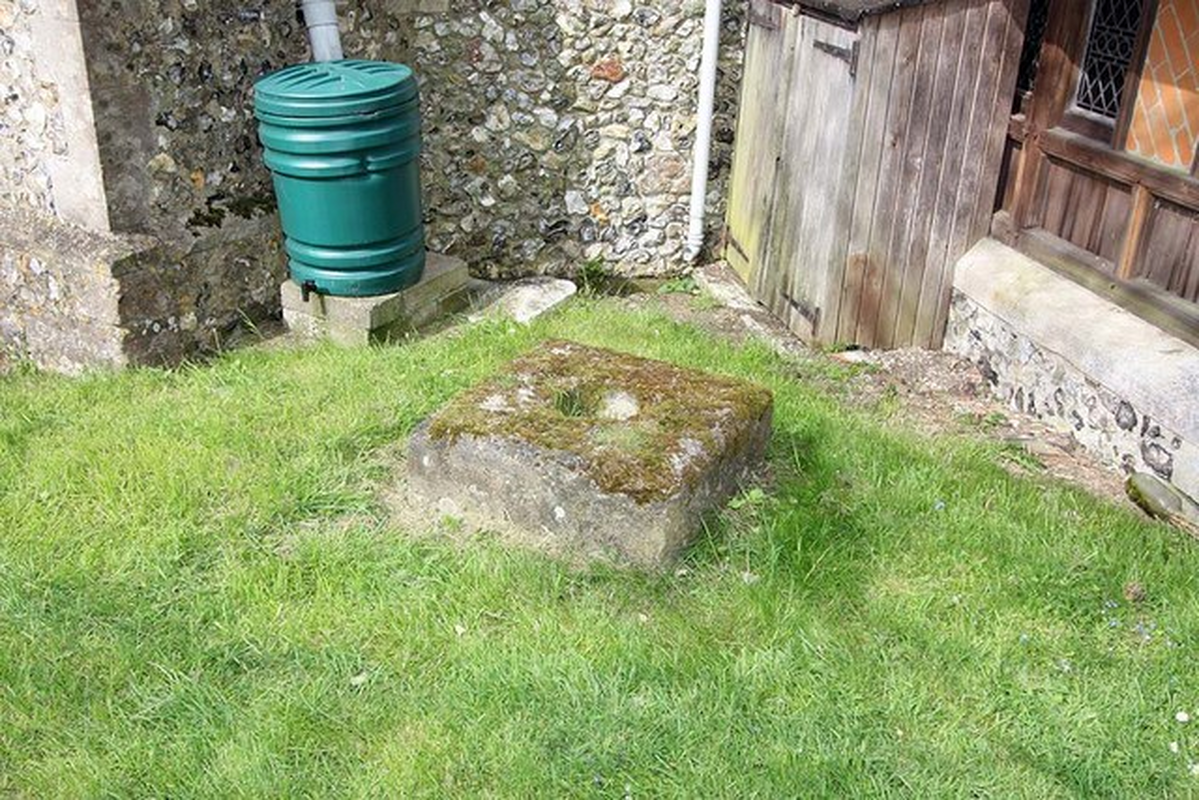
Scene Description: "St Margaret, Wychling, Kent - Base of redundant font"
Copyright Statement: Image copyright © John Salmon, 2009
Image Source: digital photograph 20 May 2009 by John Salmon
Copyright Instructions: CC-BY-SA-2.0
view of font

Copyright Statement: Image copyright © Paula Jardine-Rose, 2019
Image Source: digital image in Paula Jardine-Rose https://www.kentarchaeology.org.uk/journal/140/lead-font-church-st-margaret-wychling
Copyright Instructions: PERMISSION NOT AVAILABLE – IMAGE NOT FOR PUBLIC USE
view of font
Copyright Statement: Image copyright © Paula Jardine-Rose, 2019
Image Source: digital image in Paula Jardine-Rose https://www.kentarchaeology.org.uk/journal/140/lead-font-church-st-margaret-wychling
Copyright Instructions: PERMISSION NOT AVAILABLE – IMAGE NOT FOR PUBLIC USE
view of basin - interior
Copyright Statement: Image copyright © Paula Jardine-Rose, 2019
Image Source: digital image in Paula Jardine-Rose https://www.kentarchaeology.org.uk/journal/140/lead-font-church-st-margaret-wychling
Copyright Instructions: PERMISSION NOT AVAILABLE – IMAGE NOT FOR PUBLIC USE
view of basin - detail
Copyright Statement: Image copyright © Paula Jardine-Rose, 2019
Image Source: digital image in Paula Jardine-Rose https://www.kentarchaeology.org.uk/journal/140/lead-font-church-st-margaret-wychling
Copyright Instructions: PERMISSION NOT AVAILABLE – IMAGE NOT FOR PUBLIC USE
view of basin - detail
Copyright Statement: Image copyright © Paula Jardine-Rose, 2019
Image Source: digital image in Paula Jardine-Rose https://www.kentarchaeology.org.uk/journal/140/lead-font-church-st-margaret-wychling
Copyright Instructions: PERMISSION NOT AVAILABLE – IMAGE NOT FOR PUBLIC USE
view of basin - detail
Copyright Statement: Image copyright © Paula Jardine-Rose, 2019
Image Source: digital image in Paula Jardine-Rose https://www.kentarchaeology.org.uk/journal/140/lead-font-church-st-margaret-wychling
Copyright Instructions: PERMISSION NOT AVAILABLE – IMAGE NOT FOR PUBLIC USE
design element - motifs - scroll work
Scene Description: around the basin sides
Copyright Statement: Image copyright © Paula Jardine-Rose, 2019
Image Source: digital image in Paula Jardine-Rose https://www.kentarchaeology.org.uk/journal/140/lead-font-church-st-margaret-wychling
Copyright Instructions: PERMISSION NOT AVAILABLE – IMAGE NOT FOR PUBLIC USE
INFORMATION
Font ID: 01076WYC
Object Type: Baptismal Font1
Font Century and Period/Style: 8th - 12th century, Medieval
Workshop/Group/Artisan: lead font
Cognate Fonts: [cf. FontNotes]
Church / Chapel Name: Parish Church of St. Margaret
Font Location in Church: Inside the church
Church Patron Saint(s): St. Margaret of Antioch [aka Margaret the Virgin, Marina]
Church Address: Faversham Road, Wychling, Kent, ME9 0DJ, United Kingdom
Site Location: Kent, South East, England, United Kingdom
Directions to Site: Located halfway between the M2 and the M20, 16-18 km E of Maidstone
Ecclesiastic Region: Diocese of Canterbury
Additional Comments: re-purposed font / recycled font: Fryer, Wall, etc., inform that a font bowl of lead was dug up at Wychling, Kent [cf. FontNotes]
Font Notes:
Click to view
Noted in Fryer (1900) as a lead basin "which was dug up a few years ago from out of a mass of brickwork", dating from the end of the Early English or the beginning of the Decorated period, the ornamentation of which "consists of a geometrical pattern [...] which is repeated ten times." In Livett (1905), after Fryer, as one of three Kentish lead fonts [the others at Brookland and Eythorne]. Described in Cox & Harvey (1907) as a "leaden bowl of 13th-cent. date. Listed in Bond (1908) simply as a lead font with decoration other than figures or arcading. Wall (1912) writes: "a few years since a font bowl of lead was dug up at Wychling, Kent. At intervals around its circumference are most chaste and delicate scrolls flowing from an upright stem. It is now encased in a frame of wood to support the fragile metal, but so well arranged that no feature of the original work is lost to view." Listed in Tyrrell-Green (1928) without description or date. Newman (1976) suggests a dating towards the end of the 12th century: "The decoration consists of a ten times repeated clump of wraith-like leaveson a stem. The unfeeling modern wooden framework ought to be removed."
A communcation to BSI from Pol Herman (e-mail of 8 February 2026) includes an article from Paula Jardine-Rose entirled THE LEAD FONT AT THE CHURCH OF ST MARGARET, WYCHLING, in Archaeologia Cantiana , Volume 140. Maidstone: Kent Archaeological Society [https://www.kentarchaeology.org.uk/journal/140/lead-font-church-st-margaret-wychling] [accessed 8 February 2026]: "This report on the Wychling lead font includes new research and analytical tests carried out on the vessel, concluding that the vessel is likely to have been built using a Roman lead decorative panel, possibly from a sarcophagus. It explains that the vessel was constructed during the early Saxon period using known Saxon lead working methods and that the XRF evidence supports the deposition of bone material within the vessel, suggesting that its original function was related to a funerary process [...] To conclude, it is important that we do not just view the Wychling Font as an historic object alone, however magnificent an example it is. The context of the vessel is uniquely linked to the site as a whole and as such remains sacred. For over a hundred years it has been the Baptismal Font of our church and as such continues to be a treasured item in the life of all who have been baptised in it and in the life of the church community itself. As in all research, it is likely that more will be discovered about these lead vessels in the future but for the present this statement from an authority underlines the place currently held by the Wychling font [fn24] "The Wychling font ... leaves no room for doubt that it is one of the Anglo-Saxon bucket-like tanks found on various archaeological sites in eastern England ... the Wychling font is primus inter pares: the fact that it is complete, undamaged and so magnificently decorated puts it firmly at the head of the league." [fn24: By Warwick Rodwell, consultant archaeologist for Westminster Abbey.]
A communcation to BSI from Pol Herman (e-mail of 8 February 2026) includes an article from Paula Jardine-Rose entirled THE LEAD FONT AT THE CHURCH OF ST MARGARET, WYCHLING, in Archaeologia Cantiana , Volume 140. Maidstone: Kent Archaeological Society [https://www.kentarchaeology.org.uk/journal/140/lead-font-church-st-margaret-wychling] [accessed 8 February 2026]: "This report on the Wychling lead font includes new research and analytical tests carried out on the vessel, concluding that the vessel is likely to have been built using a Roman lead decorative panel, possibly from a sarcophagus. It explains that the vessel was constructed during the early Saxon period using known Saxon lead working methods and that the XRF evidence supports the deposition of bone material within the vessel, suggesting that its original function was related to a funerary process [...] To conclude, it is important that we do not just view the Wychling Font as an historic object alone, however magnificent an example it is. The context of the vessel is uniquely linked to the site as a whole and as such remains sacred. For over a hundred years it has been the Baptismal Font of our church and as such continues to be a treasured item in the life of all who have been baptised in it and in the life of the church community itself. As in all research, it is likely that more will be discovered about these lead vessels in the future but for the present this statement from an authority underlines the place currently held by the Wychling font [fn24] "The Wychling font ... leaves no room for doubt that it is one of the Anglo-Saxon bucket-like tanks found on various archaeological sites in eastern England ... the Wychling font is primus inter pares: the fact that it is complete, undamaged and so magnificently decorated puts it firmly at the head of the league." [fn24: By Warwick Rodwell, consultant archaeologist for Westminster Abbey.]
COORDINATES
UTM: 31U 342665 5682158
Latitude & Longitude (Decimal): 51.26902, 0.7446
Latitude & Longitude (DMS): 51° 16′ 8.47″ N, 0° 44′ 40.56″ E
MEDIUM AND MEASUREMENTS
Material: metal, lead
Number of Pieces: one [modern stone base]
Font Shape: cylindrical, mounted
Basin Interior Shape: round
Basin Exterior Shape: round
Diameter (includes rim): 50 cm*
Basin Total Height: 28.75 cm*
Notes on Measurements: * [Fryer (1900) -- NB: the height of the basin is given in Fryer as "11 1/2 inches in depth"]
REFERENCES
- Bond, Francis, Fonts and Font Covers, London: Waterstone, 1985 c1908, p. 87
- Cox, John Charles J., English Church Fittings Furniture and Accessories, London: B.T. Batsford, 1922, pl. 9, p.10
- Cox, John Charles, English Church Furniture, New York: E.P. Dutton & Co., 1907, p. 164
- Fryer, Alfred C., "Leaden Fonts", LVII, Archaeological Journal, 1900, pp. 40ff; p. 40ff
- Newman, John, North East and East Kent, Harmondsworth: Penguin Books, 1976, p. 47, 491
- Newman, John, West Kent and the Weald, Harmondsworth: Penguin Books, 1980, p. 47
- Tyrrell-Green, E., Baptismal Fonts Classified and Illustrated, London: Society for Promoting Christian Knowledge: The Macmillan Co., 1928, p. 144
- Wall, James Charles, Porches and Fonts, London: W. Gardner, Danton & Co., 1912, p. 280