Harpole / Horpol
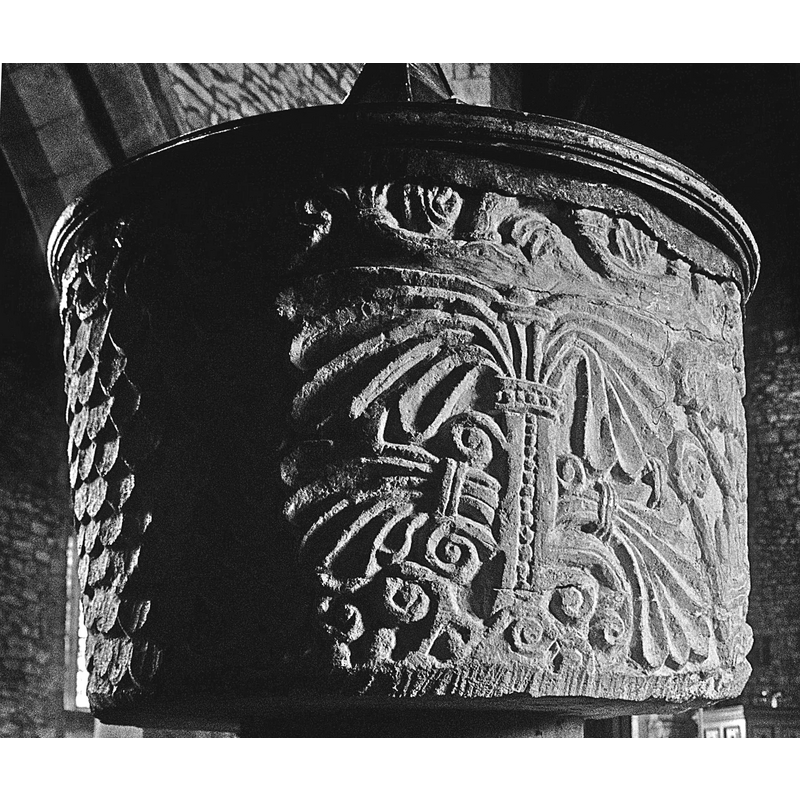
Image copyright © Timothy Marlow, 2014
Image and permission received from the author (letter of 26 October 2013)
Results: 17 records
B01: symbol - tree - Tree of life
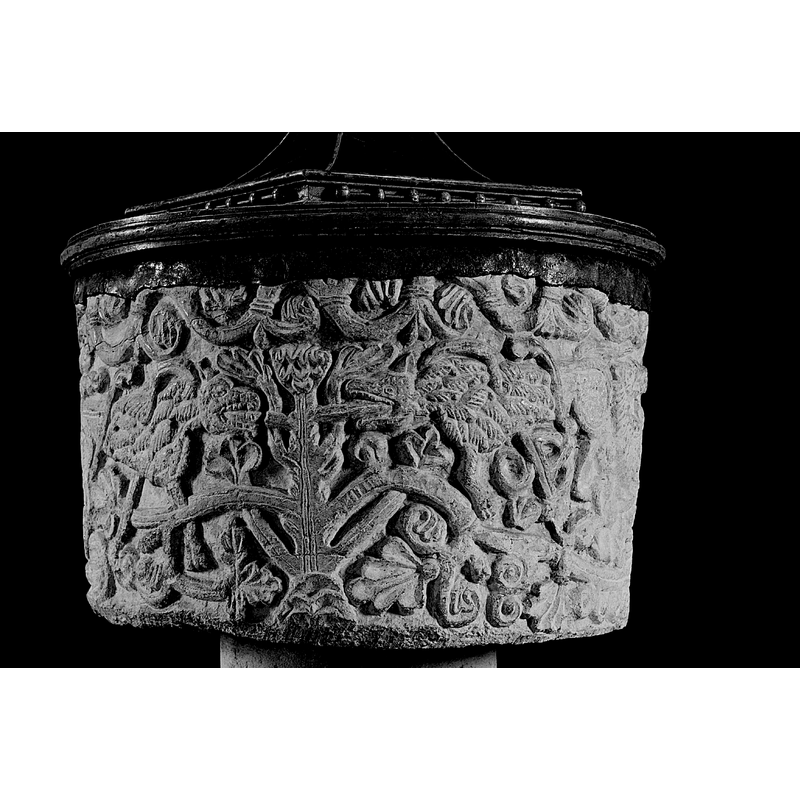
Scene Description: east side of the basin
Copyright Statement: Image copyright © Timothy Marlow, 2014
Image Source: detail of a photograph [edited] taken 7 April 1982 by Timothy Marlow
Copyright Instructions: Image and permission received from the author (letter of 26 October 2013)
B02: animal - mammal - lion - facing lions - gardant - eating from a tree - 2
Scene Description: East side of the basin: one on each side of the Tree of life [cf. FontNotes]
Copyright Statement: Image copyright © Timothy Marlow, 2014
Image Source: detail of a photograph [edited] taken 7 April 1982 by Timothy Marlow
Copyright Instructions: Image and permission received from the author (letter of 26 October 2013)
B04: design element - patterns - scalloped
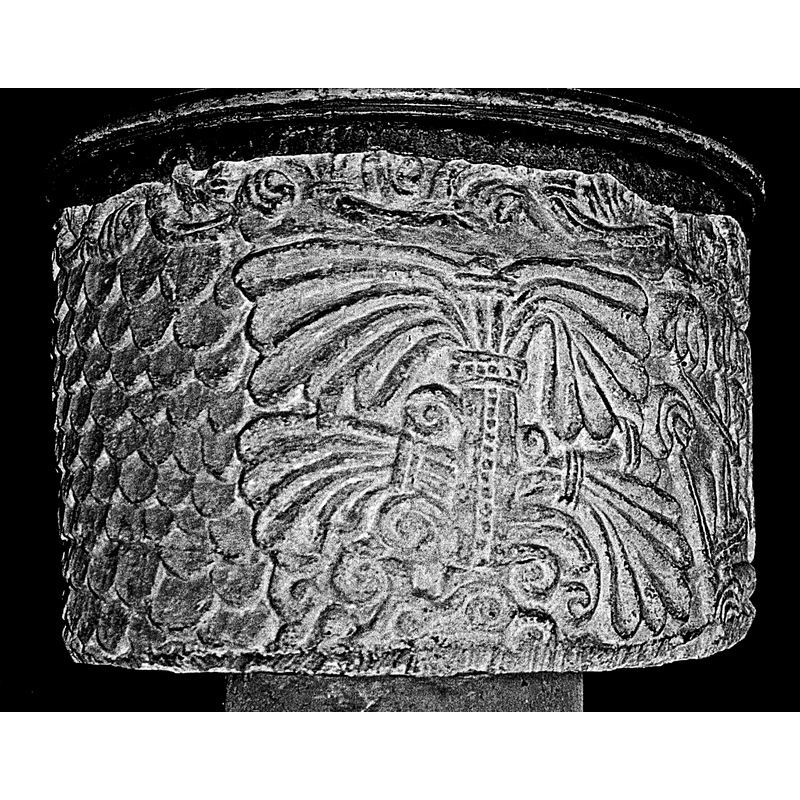
Scene Description: Southwest side of the basin
Copyright Statement: Image copyright © Timothy Marlow, 2014
Image Source: detail of a photograph [edited] taken 7 April 1982 by Timothy Marlow
Copyright Instructions: Image and permission received from the author (letter of 26 October 2013)
B05: design element - motifs - plant
Scene Description: Southwest side of the basin -- a large one, almost like a tree, on the opposite side of Tree of Life
Copyright Statement: Image copyright © Timothy Marlow, 2014
Image Source: detail of a photograph [edited] taken 7 April 1982 by Timothy Marlow
Copyright Instructions: Image and permission received from the author (letter of 26 October 2013)
view of basin - southwest side
Copyright Statement: Image copyright © Timothy Marlow, 2014
Image Source: detail of a photograph [edited] taken 7 April 1982 by Timothy Marlow
Copyright Instructions: Image and permission received from the author (letter of 26 October 2013)
view of basin - south side
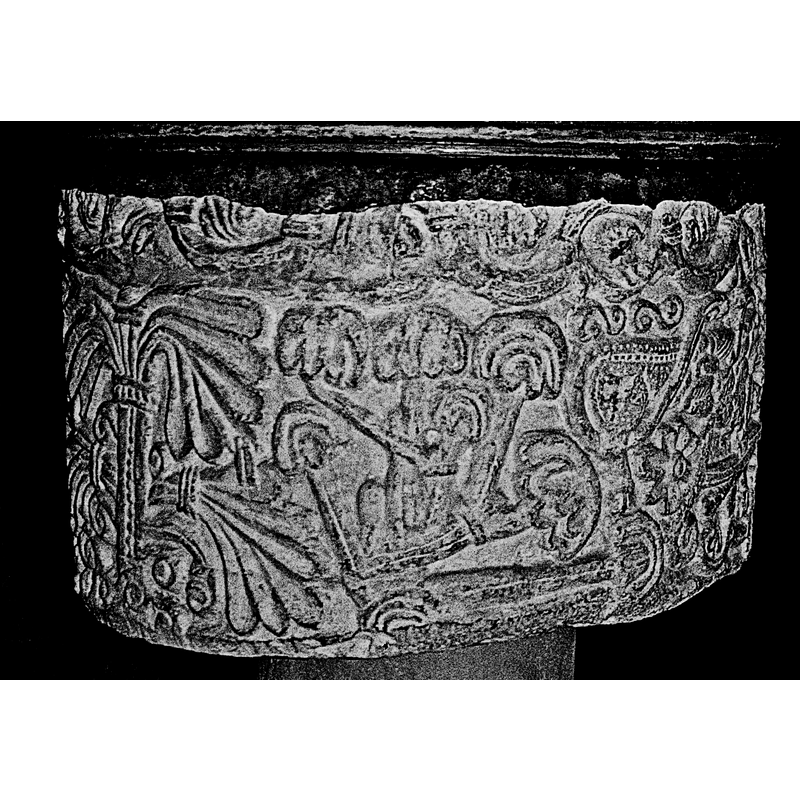
Copyright Statement: Image copyright © Timothy Marlow, 2014
Image Source: detail of a photograph [edited] taken 7 April 1982 by Timothy Marlow
Copyright Instructions: Image and permission received from the author (letter of 26 October 2013)
view of basin - northeast side
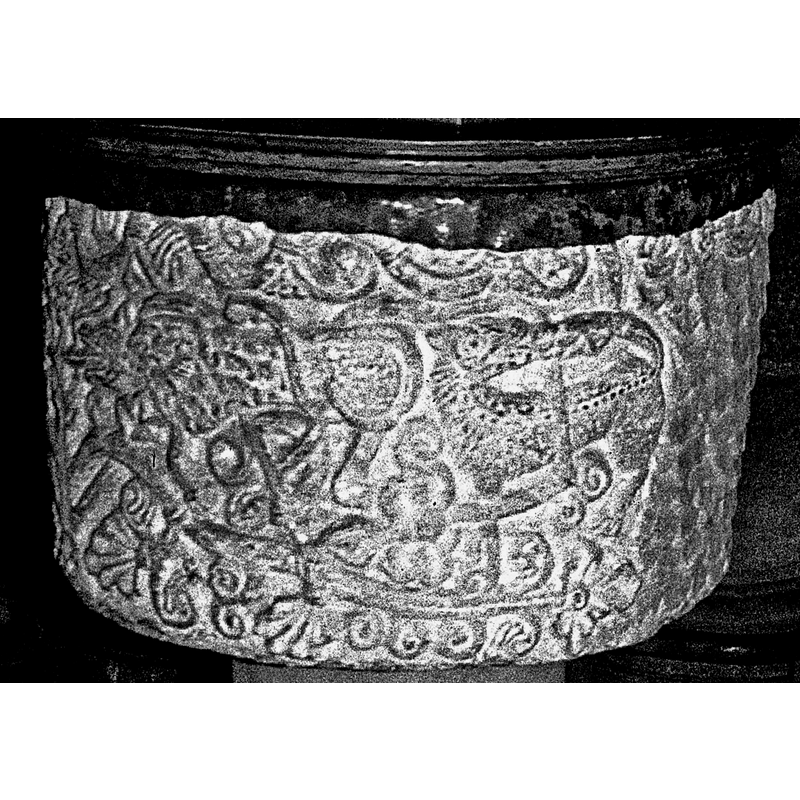
Copyright Statement: Image copyright © Timothy Marlow, 2014
Image Source: detail of a photograph [edited] taken 7 April 1982 by Timothy Marlow
Copyright Instructions: Image and permission received from the author (letter of 26 October 2013)
view of basin - northeast side
Copyright Statement: Image copyright © Timothy Marlow, 2014
Image Source: detail of a photograph [edited] taken 7 April 1982 by Timothy Marlow
Copyright Instructions: Image and permission received from the author (letter of 26 October 2013)
view of basin - east side
Copyright Statement: Image copyright © Timothy Marlow, 2014
Image Source: detail of a photograph [edited] taken 7 April 1982 by Timothy Marlow
Copyright Instructions: Image and permission received from the author (letter of 26 October 2013)
design element - patterns - scrollwork
Scene Description: east side of the basin
Copyright Statement: Image copyright © Timothy Marlow, 2014
Image Source: detail of a photograph [edited] taken 7 April 1982 by Timothy Marlow
Copyright Instructions: Image and permission received from the author (letter of 26 October 2013)
view of basin - southeast side
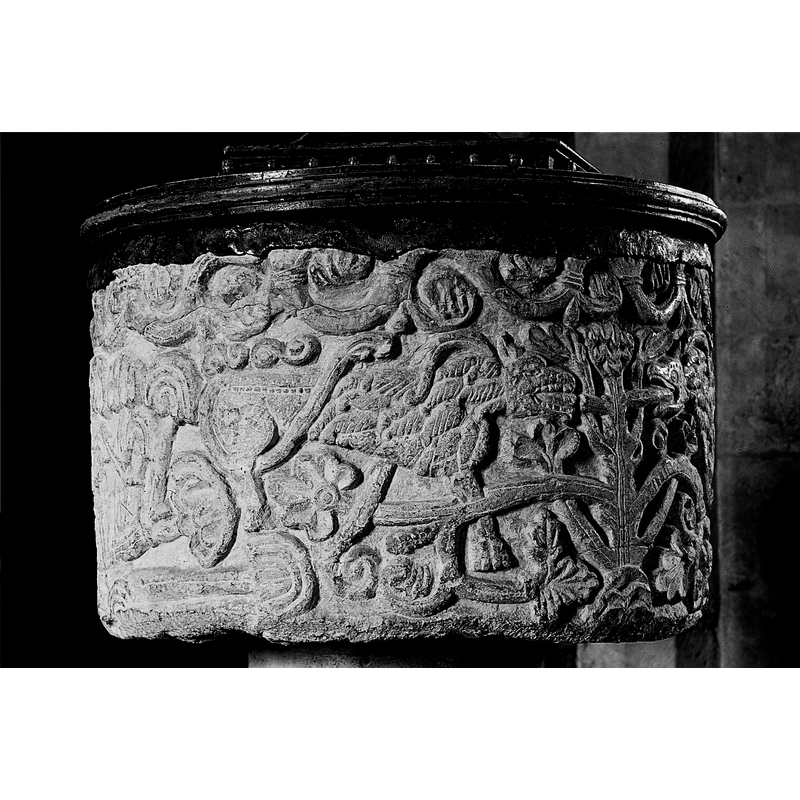
Copyright Statement: Image copyright © Timothy Marlow, 2014
Image Source: detail of a photograph [edited] taken 7 April 1982 by Timothy Marlow
Copyright Instructions: Image and permission received from the author (letter of 26 October 2013)
view of church exterior - south view
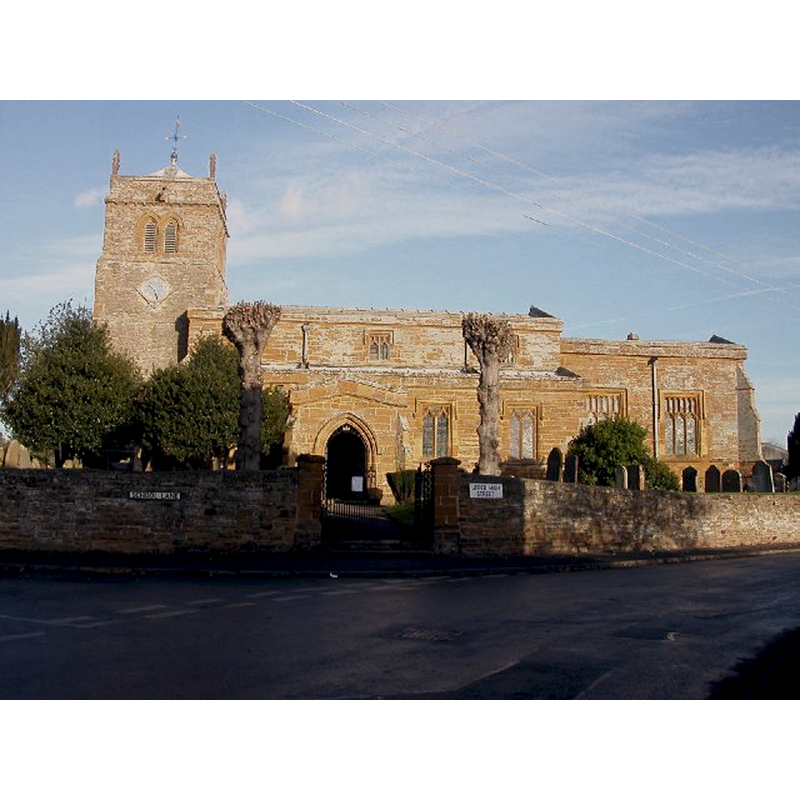
Copyright Statement: Image copyright © Ian Rob, 2005
Image Source: digital photograph taken 16 December 2005 by Ian Rob [www.geograph.org.uk/photo/91828] [accessed 9 November 2014]
Copyright Instructions: CC-BY-SA-2.0
view of font and cover in context - northeast side
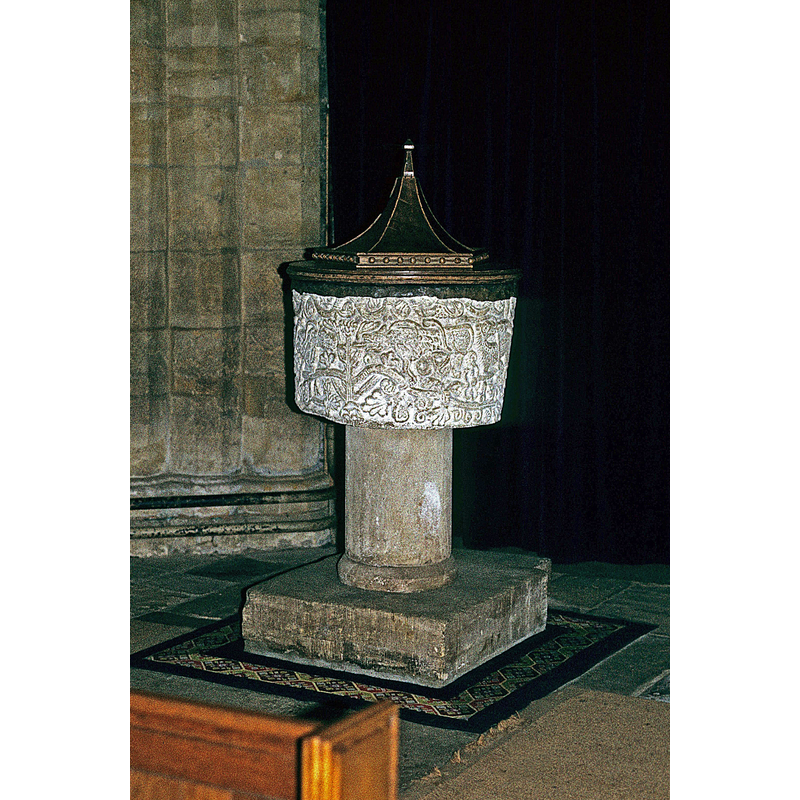
Copyright Statement: Image copyright © Timothy Marlow, 2014
Image Source: photograph taken 7 April 1982 by Timothy Marlow
Copyright Instructions: Image and permission received from the author (letter of 26 October 2013)
view of font and cover in context - southeast side
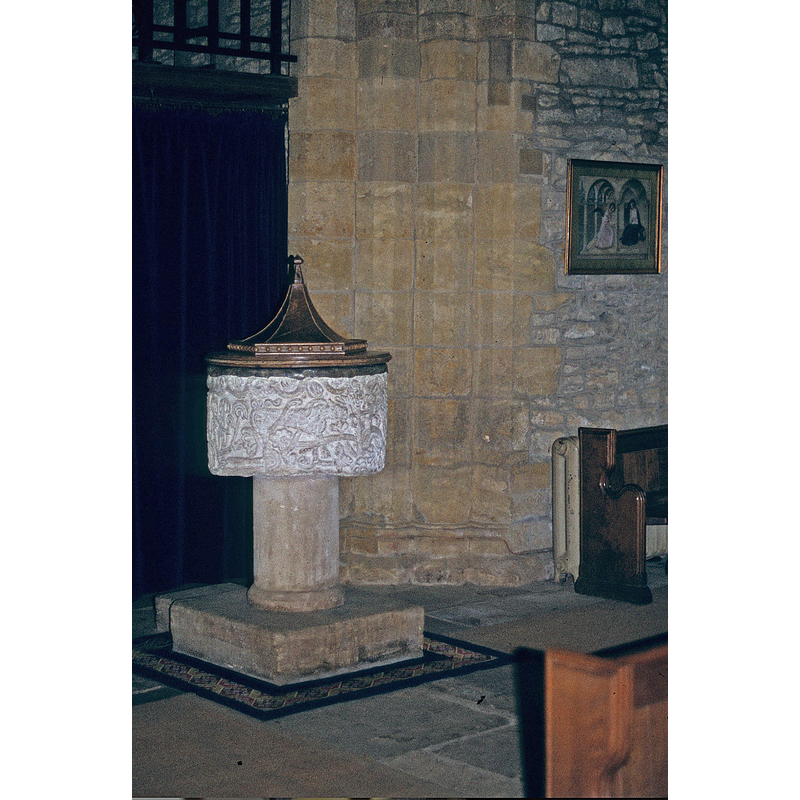
Copyright Statement: Image copyright © Timothy Marlow, 2014
Image Source: photograph taken 7 April 1982 by Timothy Marlow
Copyright Instructions: Image and permission received from the author (letter of 26 October 2013)
view of font cover
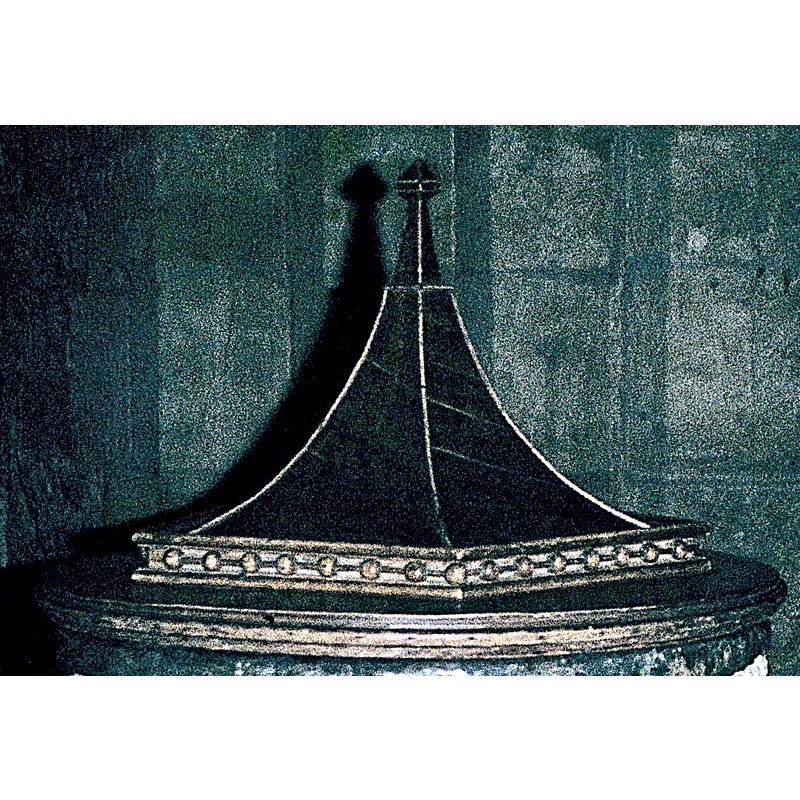
Copyright Statement: Image copyright © Timothy Marlow, 2014
Image Source: photograph taken 7 April 1982 by Timothy Marlow
Copyright Instructions: Image and permission received from the author (letter of 26 October 2013)
view of iconographic program
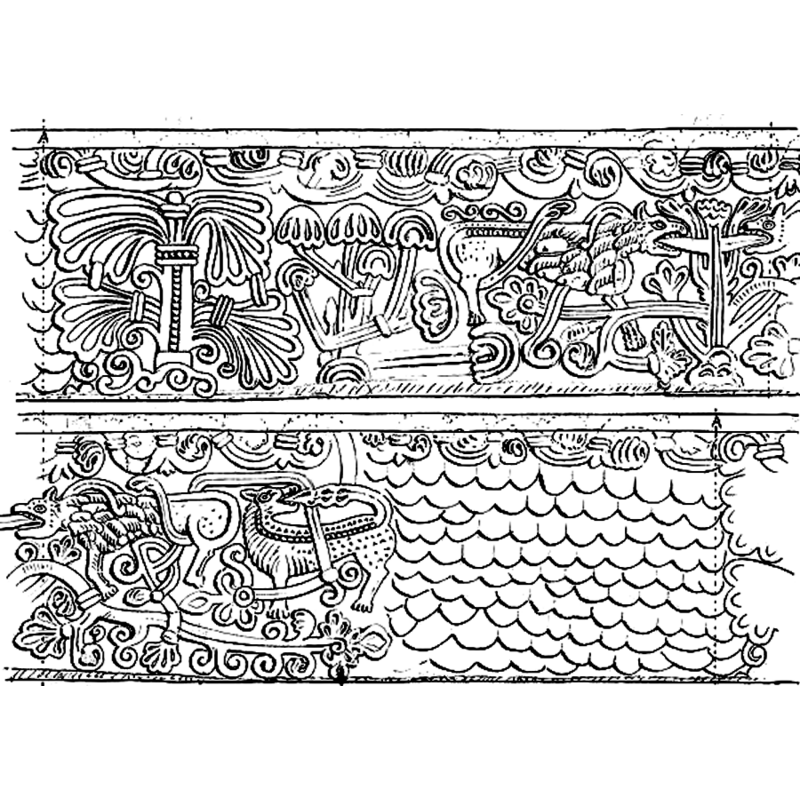
Copyright Statement: Image copyright © Northamptonshire Libraries and Information Service, 2008
Image Source: drawing by Henry E.L. Dryden, in [www.vads.ahds.ac.uk/large.php?pic=DR_25_136_002&cmd=advsearch&page=14&mode=boolean&words=henry&field=all&oper=or&idSearch=boolean&HDC=1&vadscoll=The+Sir+Henry+Dryden+Collection] [accessed 18 March 2008]
Copyright Instructions: No known copyright restriction – Fair Dealing
view of basin - west side

Copyright Statement: Image copyright © The Corpus of Romanesque Sculpture in Britain and Ireland, 2014
Image Source: photograph in the CRSBI (2014) [www.crsbi.ac.uk/site/889/] [accessed 9 November 2014]
Copyright Instructions: PERMISSION NOT AVAILABLE -- IMAGE NOT FOR PUBLIC USE
INFORMATION
Font ID: 00296HAR
Object Type: Baptismal Font1
Font Date: ca. 1140-1150?
Font Century and Period/Style: 12th century (mid?), Late Norman
Workshop/Group/Artisan: Workshop from St Peter's, Northampton
Cognate Fonts: The ornamentation style akin to that on the fonts at Bridekirk (Cumbria) and Haddenham (Bucks.) Also the fonts at Mears Ashby, Green's Norton and some Welsh ones, for instance [cf. FontNotes]
Church / Chapel Name: Parish Church of All Saints
Font Location in Church: Inside the church, just inside the entrance
Church Patron Saint(s): All Saints
Church Address: School Lane (at High St.), Harpole, Northamptonshire, NN7 4DJ, United Kingdom -- Tel.: +44 1604 831621
Site Location: Northamptonshire, East Midlands, England, United Kingdom
Directions to Site: Located off (N) the A4500, 6 km WSW of Northampton
Ecclesiastic Region: Diocese of Peterborough
Historical Region: Hundred of Nobottle [in Domesday]
Font Notes:
Click to view
There is an entry for this Harpole [variant spelling] in the Domesday survey [http://domesdaymap.co.uk/place/SP6960/harpole/] [accessed 9 November 2014]; it reports a priest in it but does not mention a church, though there probably was one here. Parker (1849) writes: "The font and shaft are cylindrical, the former richly covered with Norman sculpture." Listed in Cox & Harvey (1907) as a Norman font. Described and illustrated in Bond (1908): Norman cylindrical mounted font with lead-lined basin. Like the fonts at Bridekirk and Haddenham, its ornamentation consists of intricate scrollwork and a tree in the centre with a fierce beast (salamander? Dragon?) on either side, around the basin sides; scallop motif on the back [NB: the animals are actually lions, depicted in the traditional manner, with the tail around and over the back]. Mee (1945) writes: "Coming in by the Norman doorway, the eye is drawn at once to the chief treasure of the church, a marvellously carved 12th century font. A complicated series of designs represents the tree of life, and two dragons whose bodies trail away in long coils are devouring branches. There are other grotesque symbols, such as the beast biting its own tail, and the whole is filled in with fish-scale design. We can only guess at the conception the sculptor strove to express in this most unusual work, but the boldness of the design stands out as clearly today as when it left its maker's hands. The remarkable mass of carving covers only one side of the bowl, the other being a mass of overlapping leaves, or fish-scale" [NB: at first sight the animals appear to be dragons, but on closer inspection one can discern the hind legs and the tail over the back characteristic of the Norman lion -- the heads, however, are not leonine, except for the highlighted manes]. In Zarnecki (1953). Maguire (1970) suggests that this font, like the one at nearby Mears Ashby, could be attributed to the workshop responsible for the decoration of the west portal at Northampton St Peter's. In Pevsner & Cherry (1973): "Norman, circular, very closely entwined leaf trails and dragons; a remarkable tangle." Described and illustrated in the CRSBI (2014): "the font and the south nave doorway outer capitals are both products of the lively workshop from St Peter's, Northampton, active in the 1140s and '50s. Other fonts by these sculptors are found in the county at Green's Norton, Paulerspury, Dodford, Tiffield and Weedon Lois, and nearby at Maids' Moreton (Bucks)." Thurlby (2006) notes that the appearance of the imbrication motif on fonts "speaks clearly of the iconographic connection between death and resurrection and their simulation in Baptism"
Credit and Acknowledgements: We are grateful to Timothy Marlow for his photographs of this font
COORDINATES
UTM: 30U 637175 5789853
Latitude & Longitude (Decimal): 52.241971, -0.990888
Latitude & Longitude (DMS): 52° 14′ 31.1″ N, 0° 59′ 27.2″ W
MEDIUM AND MEASUREMENTS
Material: stone, type unknown
Number of Pieces: two?
Font Shape: cylindrical, mounted
Basin Interior Shape: round
Basin Exterior Shape: round
Drainage Notes: lead lining
Rim Thickness: 9.5 cm [calculated]
Diameter (inside rim): 56 cm*
Diameter (includes rim): 75 cm*
Basin Total Height: 44 - 46 cm*
Height of Central Column: 55 - 57 cm [calculated]
Font Height (less Plinth): 101 cm*
Notes on Measurements: * CRSBI (2014)
LID INFORMATION
Material: wood
Apparatus: no
Notes: round platform base with low pyramid atop; knob fifial; gilded arrises and decorated sides
REFERENCES
- Bond, Francis, Fonts and Font Covers, London: Waterstone, 1985 c1908, p. 155, 181, 185 and ill. on p. 184
- Corpus of Romanesque Sculpture in Britain and Ireland, The Corpus of Romanesque Sculpture in Britain and Ireland, The Corpus of Romanesque Sculpture in Britain and Ireland. URL: http://www.crsbi.ac.uk.
- Cox, John Charles, English Church Furniture, New York: E.P. Dutton & Co., 1907, p. 211
- Kroesen, Justin E.A., The Interior of the medieval village church = Het middeleeuwse Dorpskerkinterieur, Leuven: Uitgeverij Peeters, 2004, p. 328
- Maguire, Henry P., "A twelfth century workshop in Northampton", 9, 1 (1970), Gesta, 1970, pp. 11-25; p. 15
- Mee, Arthur, The King's England: Northamptonshire, country of spires and stately homes, London: Hodder & Stoughton, 1945, [http://northamptoncastle.homeip.net/northampton/books/Arthur%20Mee.htm] [accessed 20 October 2006]
- Parker, John Henry, Architectural notices of the churches of the Archdeaconry of Northampton: Deaneries of Higham Ferrers and Haddon, London; Oxford: John Henry Parker, 1849, p. 277
- Pevsner, Nikolaus, Northamptonshire, Harmondsworth: Penguin Books, 1973, p. 248
- Thurlby, Malcolm, Romanesque architecture and sculpture in Wales, Little Logaston, Woonton, Almeley, Herts.: Logaston Press, 2006, p. 175
- Zarnecki, George, Later English Romanesque sculpture, 1953, p. 19 and fig. 13