Castle Frome / Brismerfrum
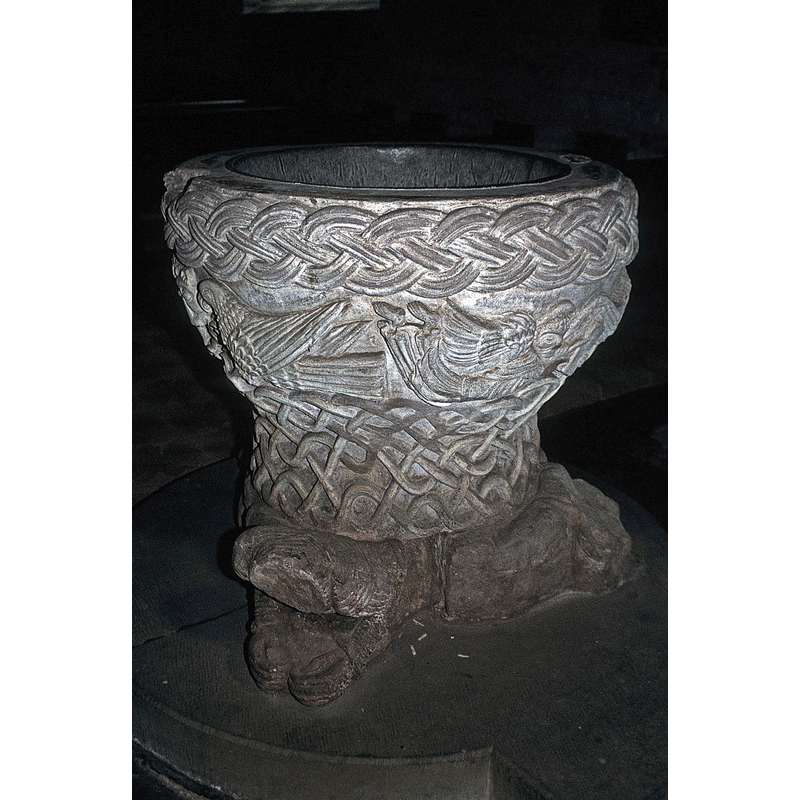
Image copyright © Timothy Marlow, 2014
Image and permission received (letter of 26 October 2013)
Results: 28 records
B01: New Testament - Public life of Christ - baptism of Christ
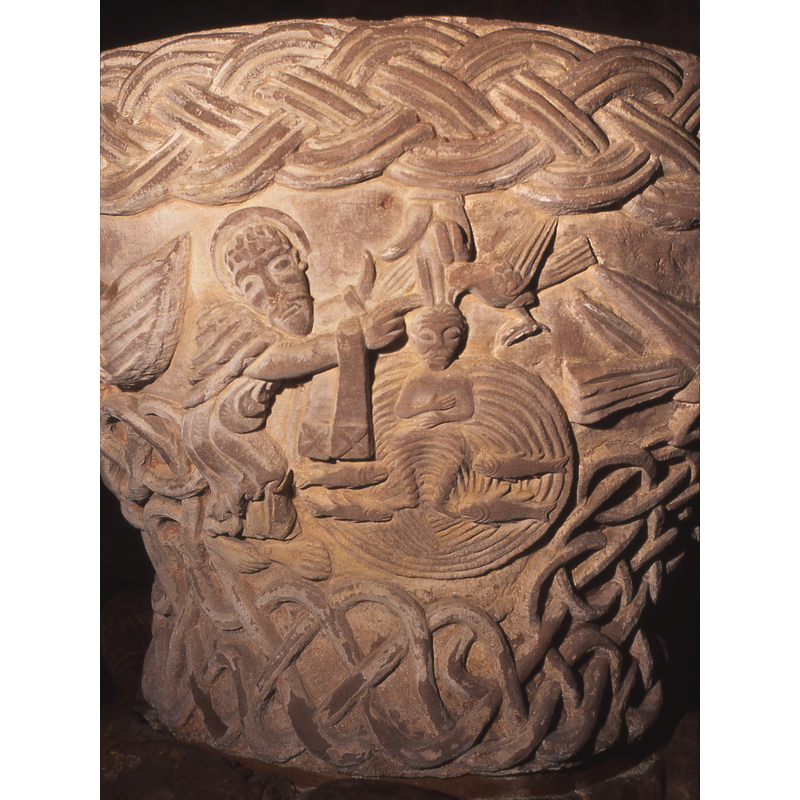
Scene Description: The Manus Dei and the Holy Dove descend on the head of Christ; four fish swim in the Jordan river near Christ's legs; John the Baptist wears a maniple over his right arm
Copyright Statement: Image copyright © Baptisteria Sacra Index, 2023
Image Source: BSI - Photographed July 1998
Copyright Instructions: CC-BY-NC-ND-4.0
B02: animal - bird - dove - facing each other - 2
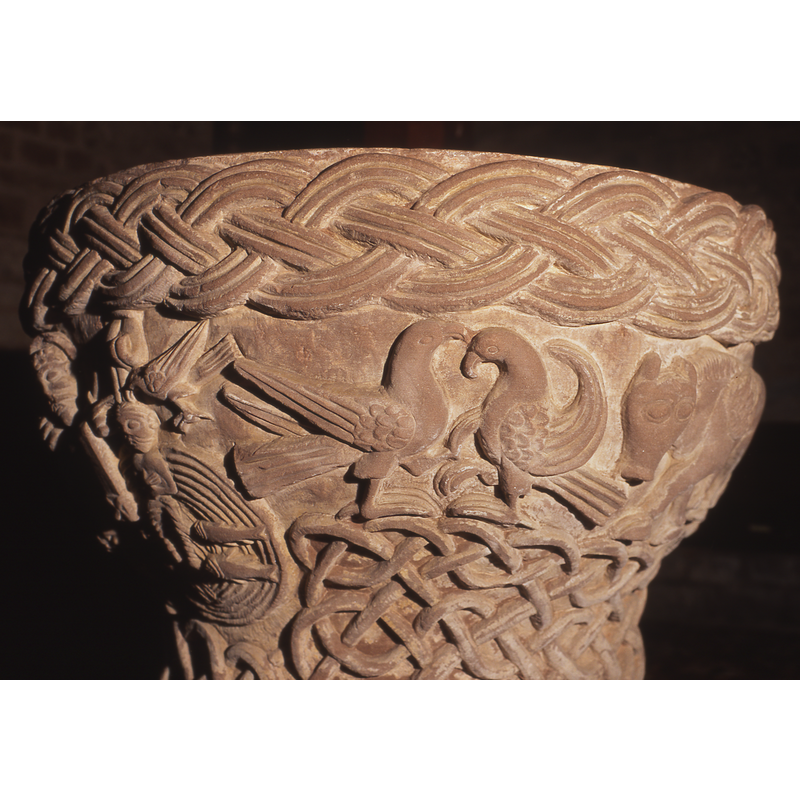
Scene Description: to the right of the Baptism of Christ
Copyright Statement: Image copyright © Baptisteria Sacra Index, 2023
Image Source: BSI - Photographed July 1998
Copyright Instructions: CC-BY-NC-ND-4.0
B03: Apostle or saint - Evangelists - St. Luke - symbol - winged bull
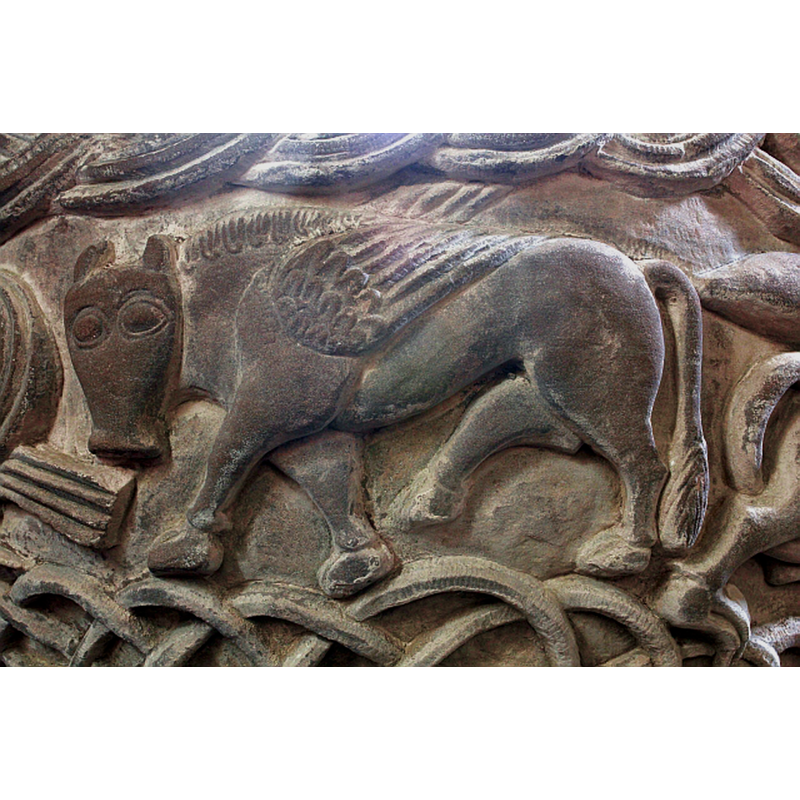
Scene Description: rather equine-looking, unfortunately
Copyright Statement: Image copyright © Bod Embleton, 2012
Image Source: digital photograph taken 14 June 2012 by Bob Embleton [www.geograph.org.uk/photo/2992767] [accessed 25 October 2014]
Copyright Instructions: CC-BY-SA-2.0
B04: Apostle or saint - Evangelists - St. Mark - symbol - winged lion
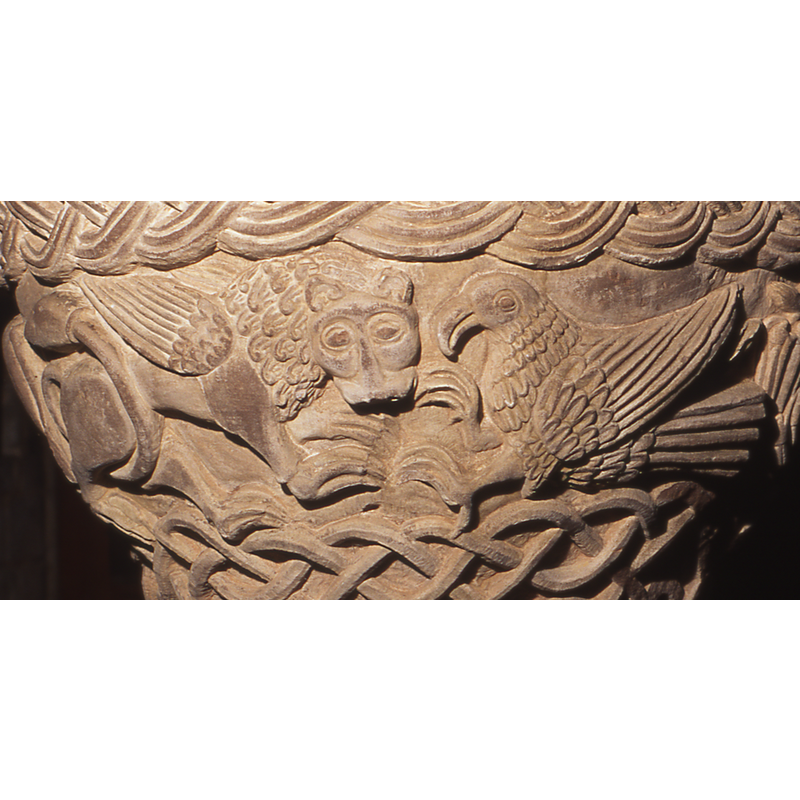
Scene Description: to the right of St. Luke's winged ox, facing right
Copyright Statement: Image copyright © Baptisteria Sacra Index, 2023
Image Source: BSI - Photographed July 1998
Copyright Instructions: CC-BY-NC-ND-4.0
B05: Apostle or saint - Evangelists - St. John - symbol - eagle
Scene Description: to the right of St. Marks winged lion, facing left
Copyright Statement: Image copyright © Baptisteria Sacra Index, 2023
Image Source: BSI - Photographed July 1998
Copyright Instructions: CC-BY-NC-ND-4.0
B06: Apostle or saint - Evangelists - St. Matthew - symbol - angel
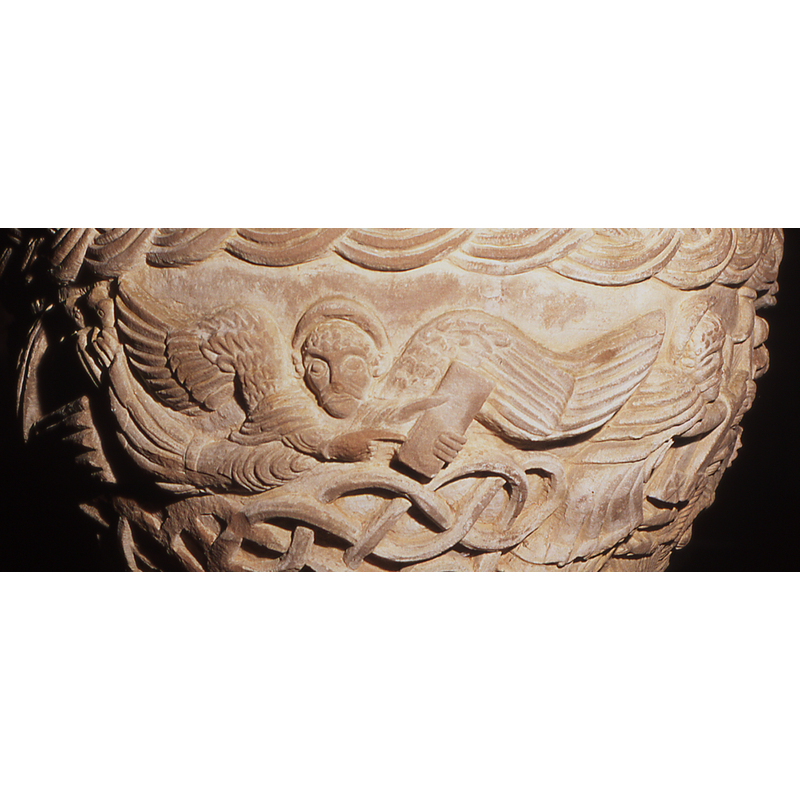
Scene Description: to the right of St. John's eagle, facing right
Copyright Statement: Image copyright © Baptisteria Sacra Index, 2023
Image Source: BSI - Photographed July 1998
Copyright Instructions: CC-BY-NC-ND-4.0
view of font
Scene Description: John's eagle on the left -- Matthew's angel on the right
Copyright Statement: Image copyright © Timothy Marlow, 2014
Image Source: photographed 9 August 1981 by Tim Marlow
Copyright Instructions: Image and permission received (letter of 26 October 2013)
view of font
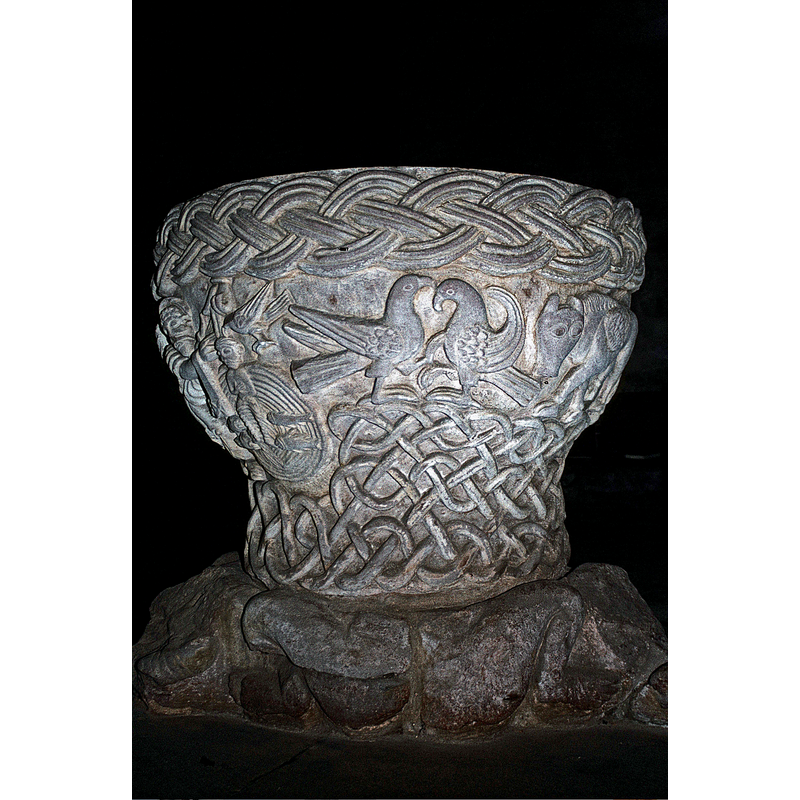
Scene Description: Baptism of Christ -- facing birds -- Luke's ox
Copyright Statement: Image copyright © Timothy Marlow, 2014
Image Source: photographed 9 August 1981 by Tim Marlow
Copyright Instructions: Image and permission received (letter of 26 October 2013)
view of font
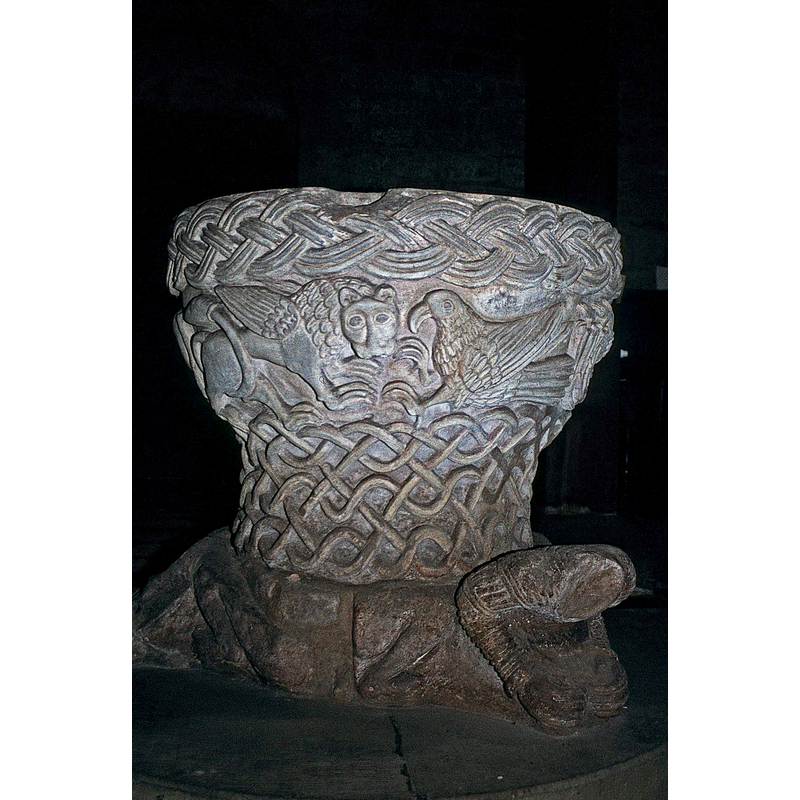
Scene Description: showing Mark's lion on the left; John's eagle on the right
Copyright Statement: Image copyright © Timothy Marlow, 2014
Image Source: photographed 9 August 1981 by Tim Marlow
Copyright Instructions: Image and permission received (letter of 26 October 2013)
view of font
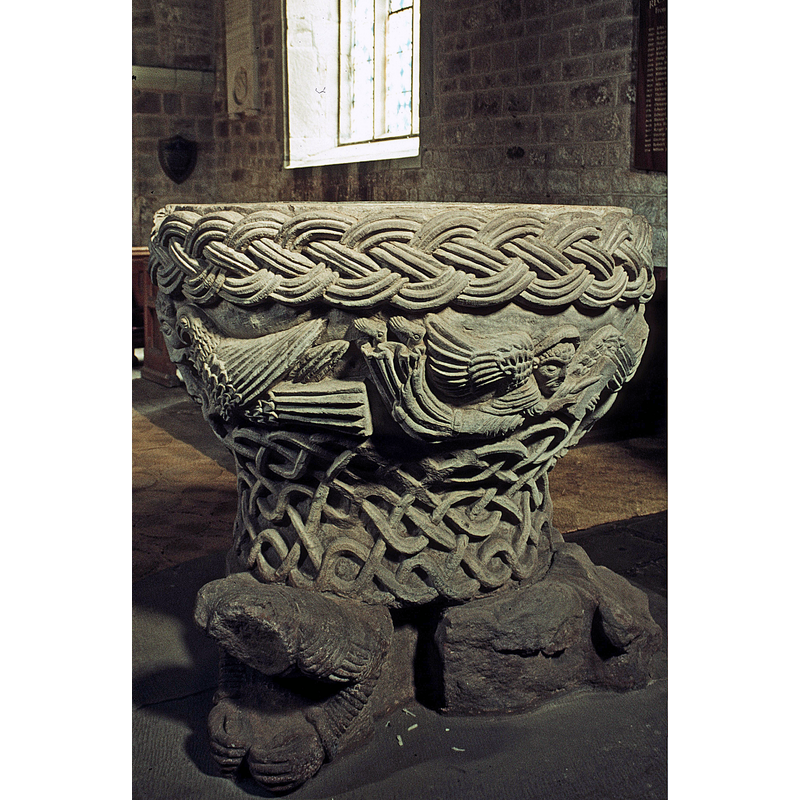
Copyright Statement: Image copyright © Timothy Marlow, 2014
Image Source: photographed 9 August 1981 by Tim Marlow
Copyright Instructions: Image and permission received (letter of 26 October 2013)
view of font in context
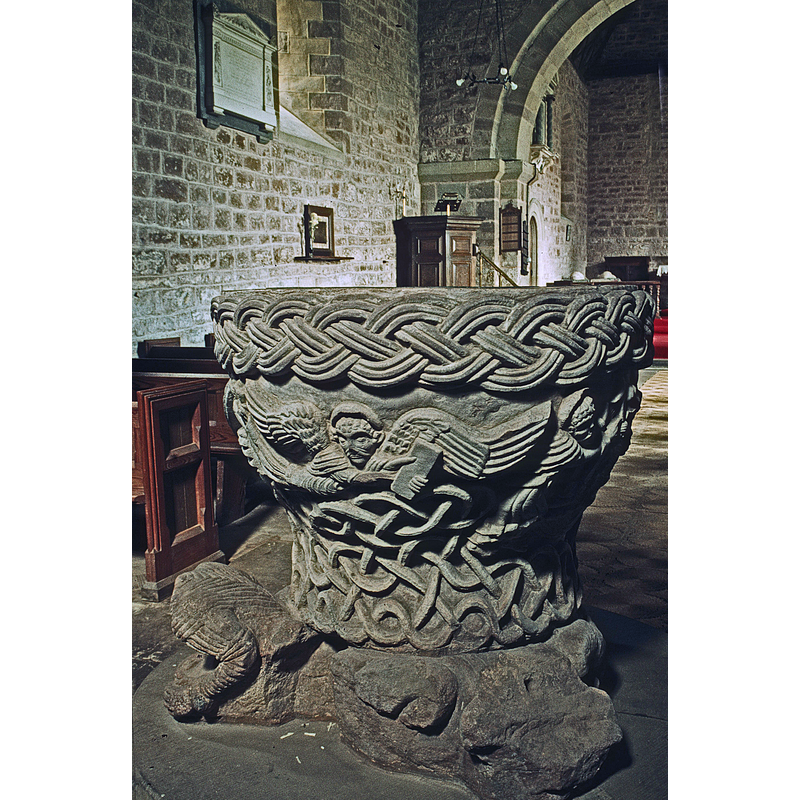
Copyright Statement: Image copyright © Timothy Marlow, 2014
Image Source: photographed 9 August 1981 by Tim Marlow
Copyright Instructions: Image and permission received (letter of 26 October 2013)
view of basin - detail
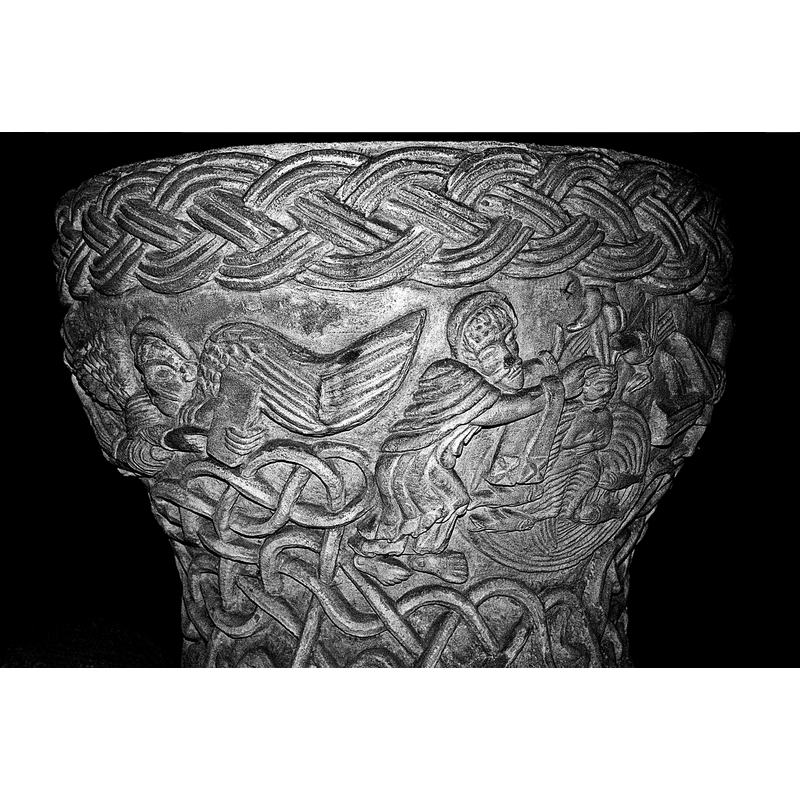
Scene Description: Matthew's angel on the left; Baptism of Christ on the right
Copyright Statement: Image copyright © Timothy Marlow, 2014
Image Source: photographed 9 August 1981 by Tim Marlow
Copyright Instructions: Image and permission received (letter of 26 October 2013)
view of font - detail
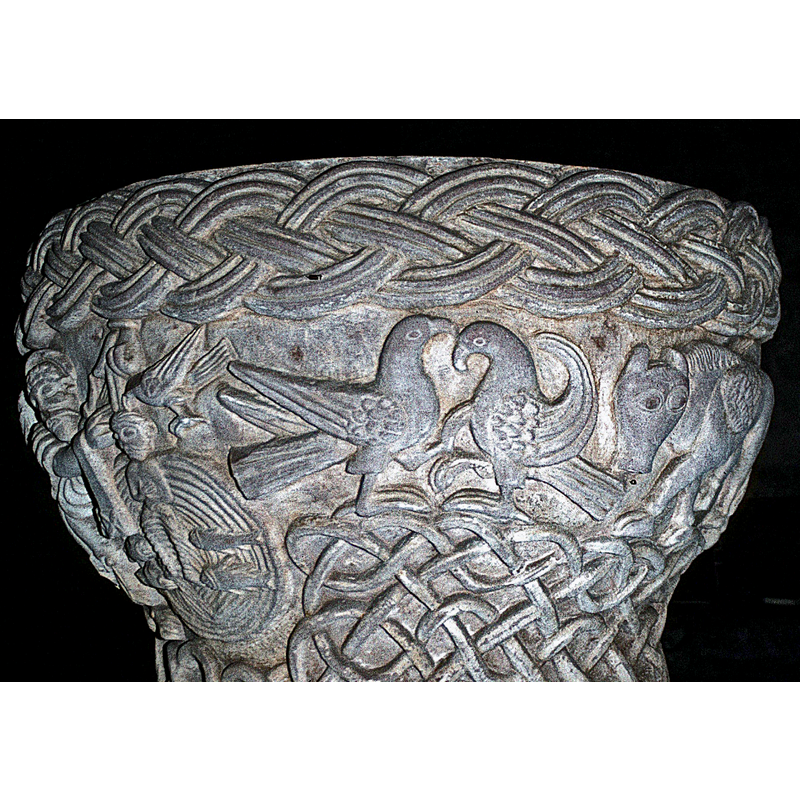
Scene Description: partial view of the Baptism of Christ scene on the left; two facing doves (?) in the centre; St. Luke's winged ox on the left
Copyright Statement: Image copyright © Timothy Marlow, 2014
Image Source: photographed 9 August 1981 by Tim Marlow
Copyright Instructions: Image and permission received (letter of 26 October 2013)
view of basin - detail
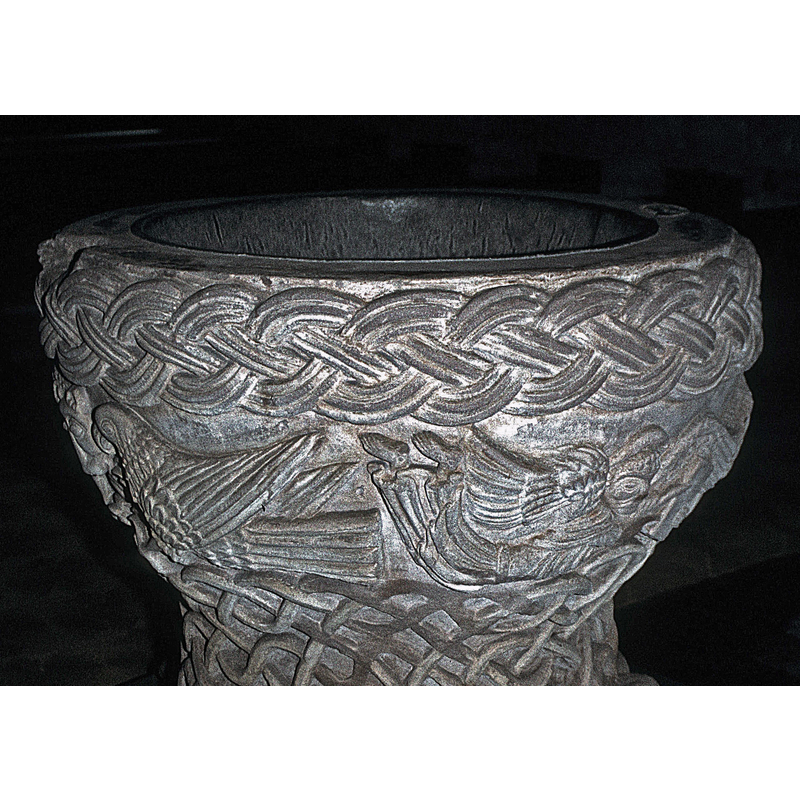
Scene Description: John's eagle on the left; Matthew's angel on the right
Copyright Statement: Image copyright © Timothy Marlow, 2014
Image Source: photographed 9 August 1981 by Tim Marlow
Copyright Instructions: Image and permission received (letter of 26 October 2013)
view of basin - detail
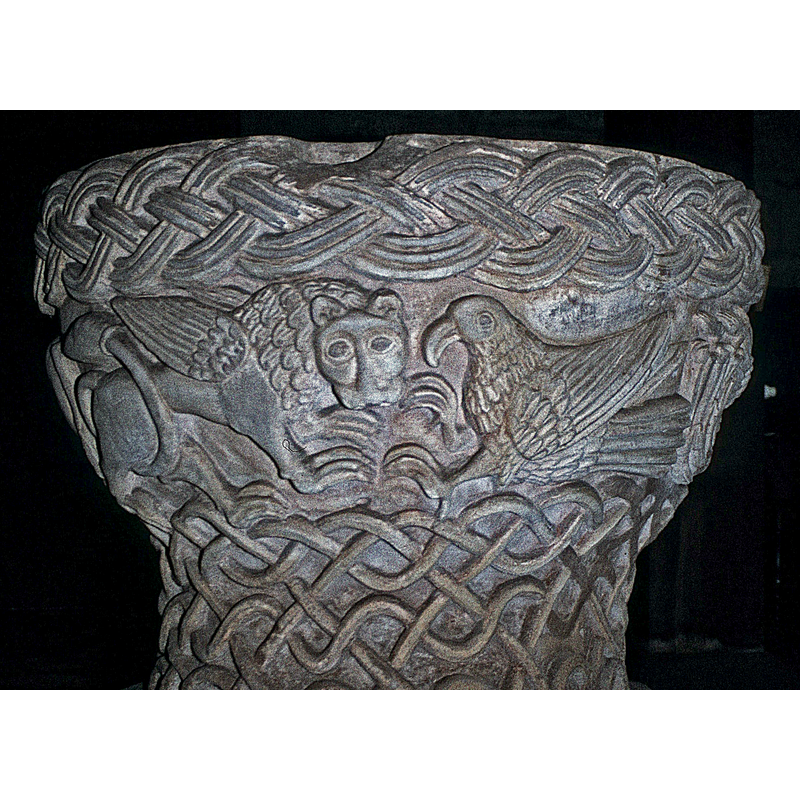
Scene Description: the heads of Mark's lion and John's eagle -- notice the notch on the upper rim
Copyright Statement: Image copyright © Tim Marlow, 2014
Image Source: detail of a photograph taken 9 August 1981 by Tim Marlow
Copyright Instructions: Image and permission received (letter of 26 October 2013)
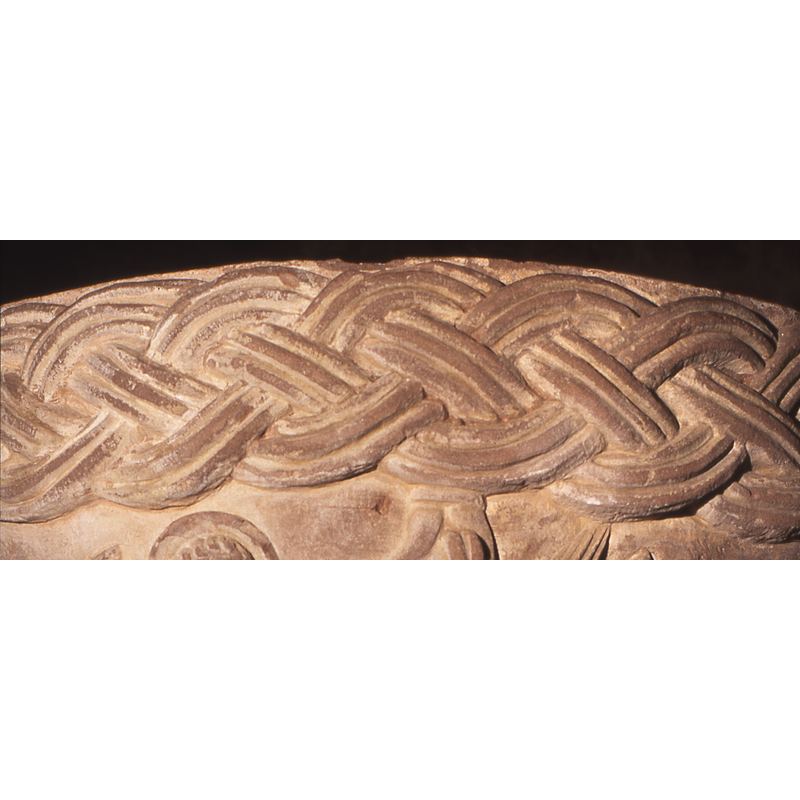
design element - motifs - interlace - 3-strand - braided
Copyright Statement: Image copyright © Baptisteria Sacra Index, 2023
Image Source: BSI - Photographed July 1998
Copyright Instructions: CC-BY-NC-ND-4.0
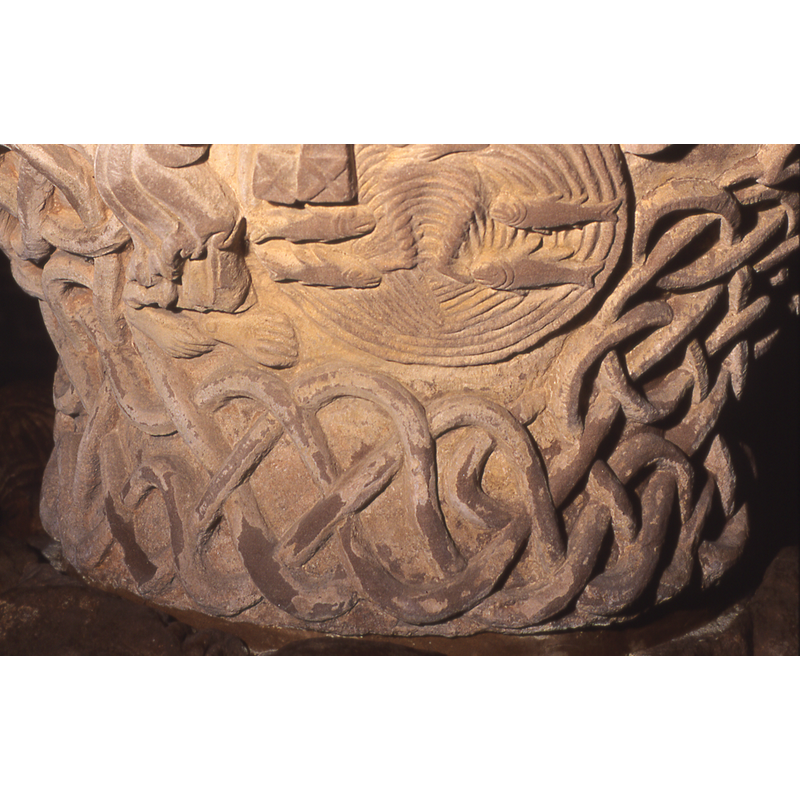
design element - motifs - interlace
Copyright Statement: Image copyright © Baptisteria Sacra Index, 2023
Image Source: BSI - Photographed July 1998
Copyright Instructions: CC-BY-NC-ND-4.0
view of basin
![Photographed during repairs [ca. 2000?]](/static-50478a99ec6f36a15d6234548c59f63da52304e5/compressed/1040903002_compressed.png)
Scene Description: Photographed during repairs [ca. 2000?]
Copyright Statement: Image copyright © Peter Fairweather, 2004
Image Source: Peter Fairweather (Lincoln, England)
Copyright Instructions: Standing permission
view of church exterior - northeast view
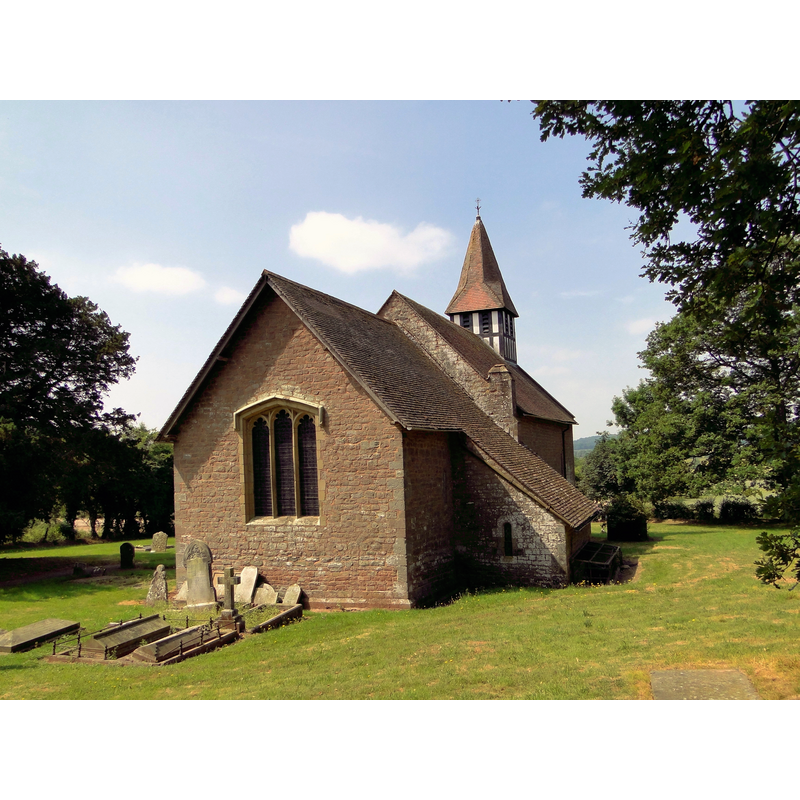
Copyright Statement: Image copyright © Philip Pankhurst, 2013
Image Source: digital photograph taken 16 July 2013 by Philip Pankhurst [www.geograph.org.uk/photo/3561302] [accessed 25 October 2014]
Copyright Instructions: CC-BY-SA-2.0
view of church exterior - south view
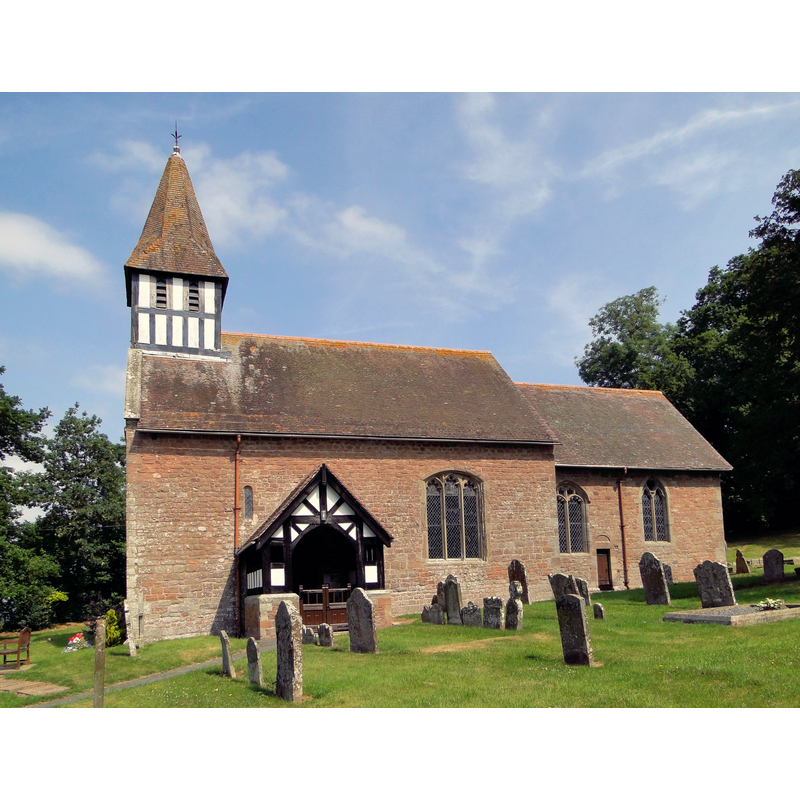
Copyright Statement: Image copyright © Philip Pankhurst, 2013
Image Source: digital photograph taken 16 July 2013 by Philip Pankhurst [www.geograph.org.uk/photo/3561277] [accessed 25 October 2014]
Copyright Instructions: CC-BY-SA-2.0
view of font in context
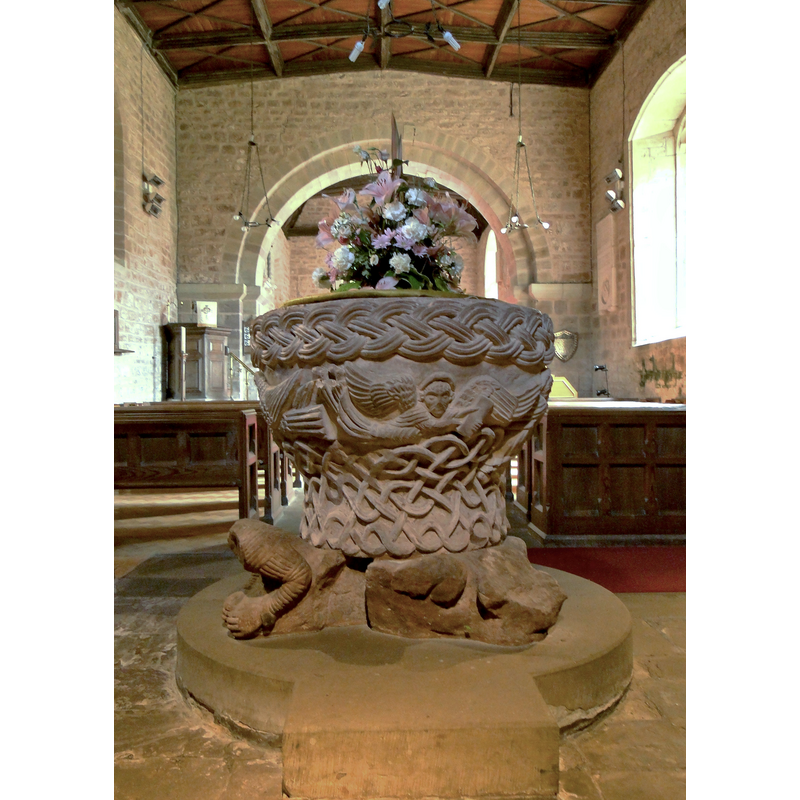
Scene Description: the font seen from the west end of the nave -- source caption: "St Michael, Castle Frome. A small early Norman village church set below the almost invisible remains of an 11th century castle and containing this masterpiece, a late work of the Herefordshire School and possibly the finest example, although the good folk of Eardisley may not concur."
Copyright Statement: Image copyright © Philip Pankhurst, 2013
Image Source: digital photograph taken 16 July 2013 by Philip Pankhurst [www.geograph.org.uk/photo/3561341] [accessed 25 October 2014]
Copyright Instructions: CC-BY-SA-2.0
view of church interior - nave - looking east
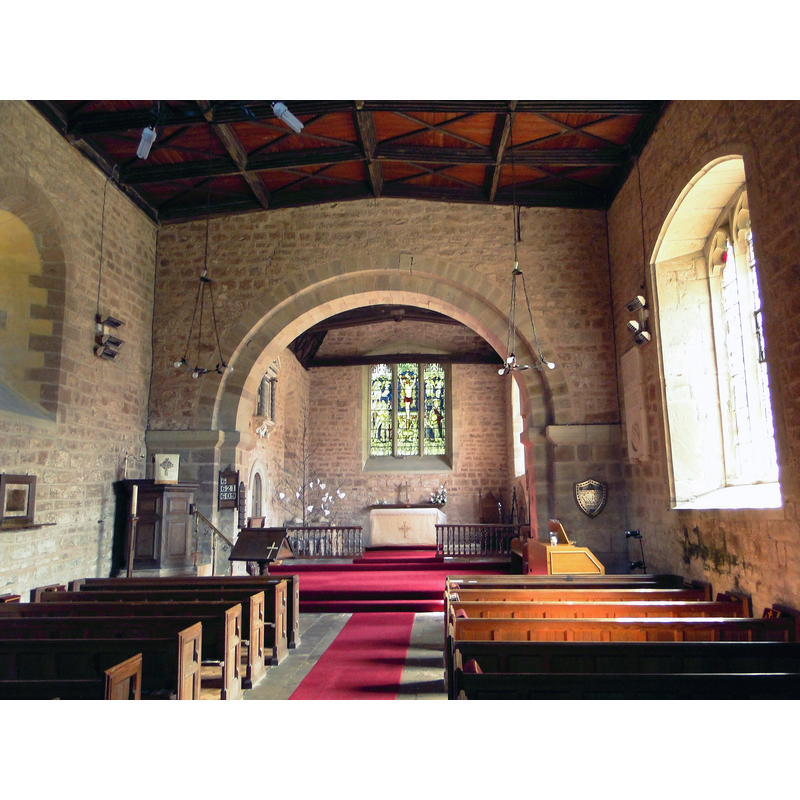
Copyright Statement: Image copyright © Philip Pankhurst, 2013
Image Source: digital photograph taken 16 July 2013 by Philip Pankhurst [www.geograph.org.uk/photo/3561309] [accessed 25 October 2014]
Copyright Instructions: CC-BY-SA-2.0
human figure - grotesque or fantastic - 3
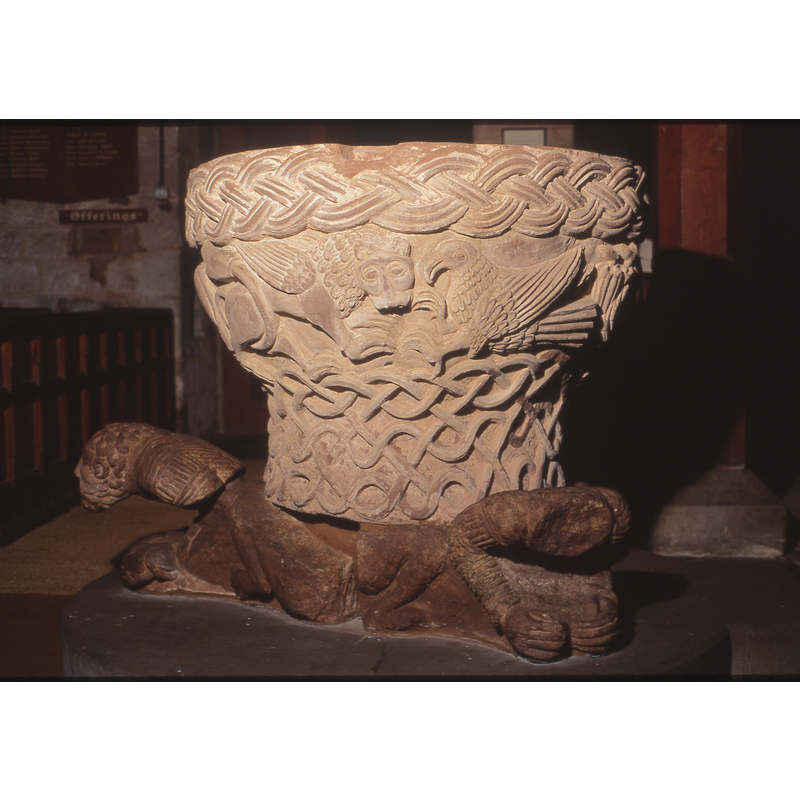
Scene Description: two of them are visible here; are they human? the surviving head appears human, and the torsos of all three are definitely human; the hands appear to be tied
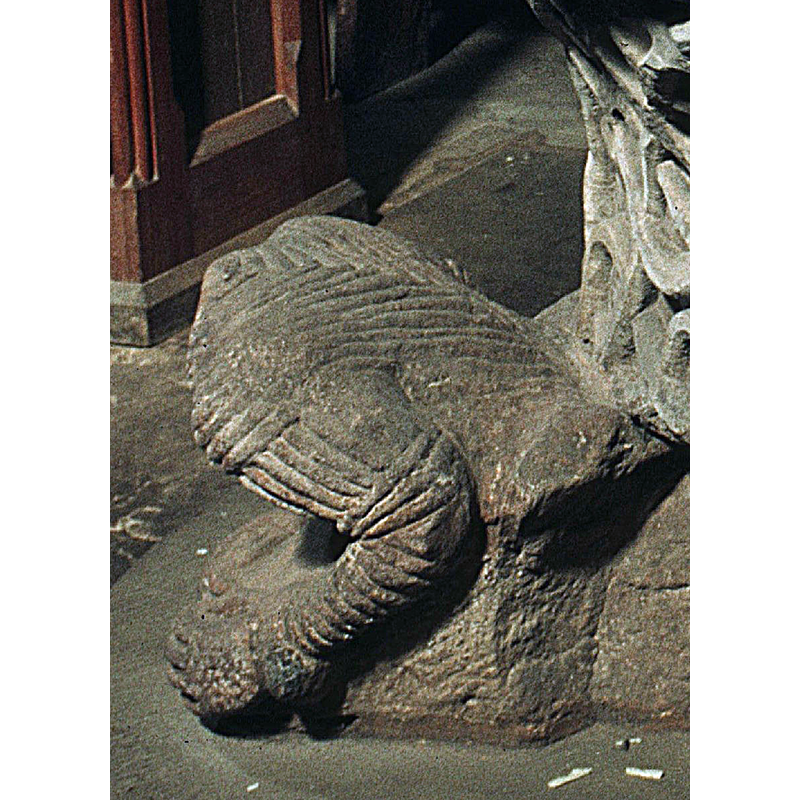
human figure - male - grotesque or fantastic
Copyright Statement: Image copyright © Timothy Marlow, 2014
Image Source: photographed 9 August 1981 by Tim Marlow
Copyright Instructions: Image and permission received (letter of 26 October 2013)
human figure - male - grotesque or fantastic
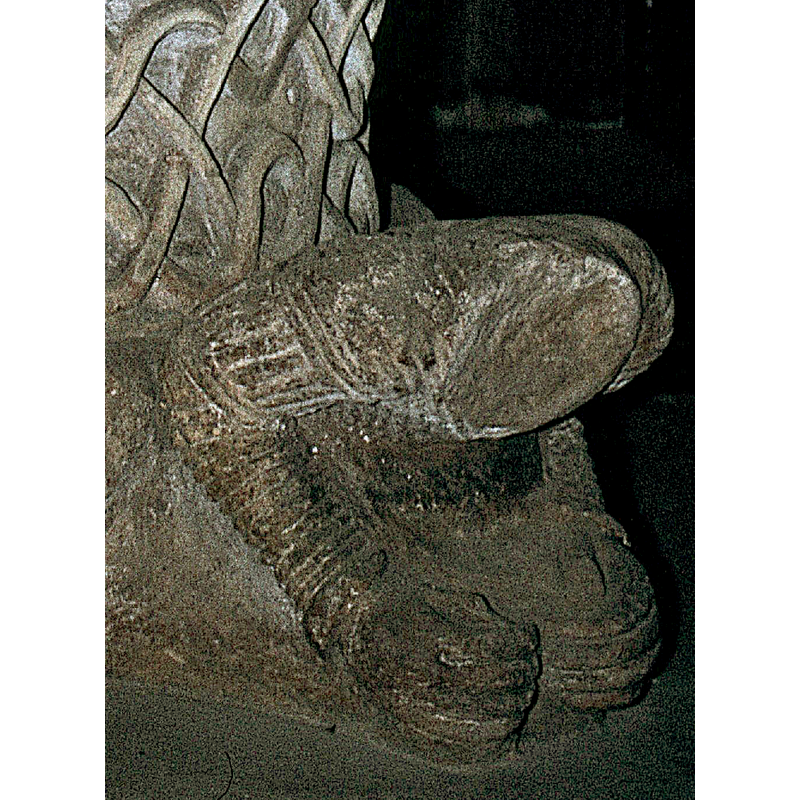
Scene Description: right view of one of the head-less torsos
Copyright Statement: Image copyright © Tim Marlow, 2014
Image Source: photographed 9 August 1981 by Tim Marlow
Copyright Instructions: Image and permission received (letter of 26 October 2013)
human figure - male - grotesque or fantastic - bearded
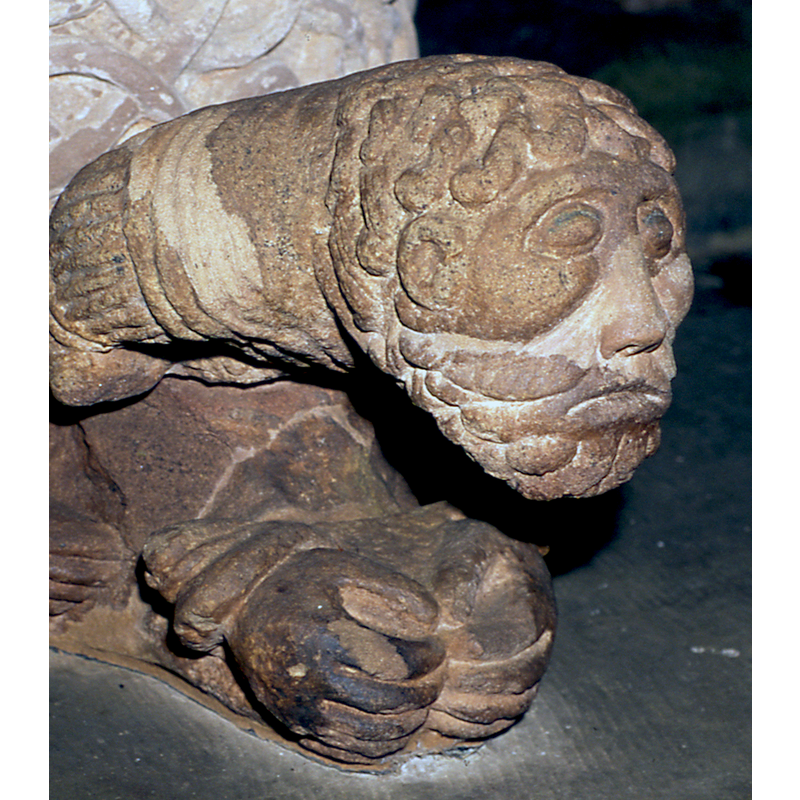
Scene Description: the one surviving head
Copyright Statement: Image copyright © Baptisteria Sacra Index, 2023
Image Source: BSI - Photographed July 1998
Copyright Instructions: CC-BY-NC-ND-4.0
view of base - detail
Scene Description: the head and front limbs of the crouching animal or monster have humanoid features
Copyright Statement: Image copyright © Baptisteria Sacra Index, 2023
Image Source: BSI - Photographed July 1998
Copyright Instructions: CC-BY-NC-ND-4.0
view of base
![Photographed during repairs [ca. 2000?]](/static-50478a99ec6f36a15d6234548c59f63da52304e5/compressed/1040903001_compressed.png)
Scene Description: Photographed during repairs [ca. 2000?]
Copyright Statement: Image copyright © Peter Fairweather, 2004
Image Source: Peter Fairweather (Lincoln, England)
Copyright Instructions: Standing permission
INFORMATION
Font ID: 00103FRO
Object Type: Baptismal Font1
Date Visited: 1998-07-19
Font Date: ca. 1140-1170 (?) / ca. 1150 (?)
Font Century and Period/Style: 12th century (mid?), Norman
Workshop/Group/Artisan: Herefordshire school
Cognate Fonts: Chaddesley Corbett, Eardisley, Elmley, Stafford. The fonts at Holdgate, Eardisley, Castle Frome and Chaddesley Corbett are related in style
Church / Chapel Name: Parish Church of St. Michael and All Saints
Font Location in Church: Inside the church, in the W end of the nave
Church Patron Saint(s): St. Michael & All Saints
Church Address: Castle Frome, Herefordshire, HR8 1HQ
Site Location: Herefordshire, West Midlands, England, United Kingdom
Directions to Site: Located about 25 kms ENE of Hereford
Ecclesiastic Region: Diocese of Hereford
Historical Region: Hundred of Radlow
Additional Comments: restored font [cf. FontNotes] -- St. John the Baptist holds a stole [i.e., maniple] over his one arm.
Font Notes:
Click to view
There is an entry for [Castle] Frome [variant spelling] in the Domesday survey [http://domesdaymap.co.uk/place/SO6645/castle-frome/] [accessed 25 October 2014], but it mentions neither cleric nor church in it. Noted in Poole (1842): "The font of Castle Frome [...], was thus, I believe, restored with much labour and patience, by Mr. Lewis, the author of the illustrations of Kilpeck Church." Noted in Batty (1848) as "highly emblemized". Described in Cox & Harvey (1907) as "the most noteworthy font of the county" and dated as early Norman. Described and illustrated in Bond (1908). Described in Tyrrell-Green (1928). Described and illustrated in the inventory of Herefordshire (1931-1934) with date ca. 1150. Listed in Crossley (1941). Stone (1955) dates it to ca. 1140-1150. The detailed and well-illustrated entry in the CRSBI (2014) appears to favour a date ca. 1140, and rejects Pevsner's ca. 1170 as "totally untenable". Jenkins (1999) comments: "These Norman fonts are as far in mood from the Gothic which followed as is an Inca statue from a post-Columbian altar", and summs it up as "the final flourish of such uninhibited primitivism before the arrival of Gothic." On-site notes: a striking example of Norman craftmanship and thematic treatment, the baptismal font at Castle Frome is chalice-shaped but raised on a lower base made of three crouching figures now badly damaged, only one of which has retained its head; curiously the surviving head and the upper bodies of these figures are skilfully carved, but the lower half of their bodies is just roughed out; the figures, not entirely human, appear to have their hands tied. The upper part of the basin sides has a broad band made of a three-strand braid all around; below it, on the curving sides and underbowl area, the following ornamentation: 1)a large flying angel with spread wings holds a book or tablet in its left hand and points to it with his index finger, the symbol of Matthew; to its right, 2)a scene depicting the Baptism of Christ: John the Baptist, haloed and with a maniple adorned with crosses at either end, extends his right hand over to Christ's head [NB: John wears the maniple in the wrong arm: it was traditionaly worn on the left] ; the centre of the baptism scene is Christ, or, more precisely, if one is to look at the artistic rendition of the scene, the circular and fish-rich waters of the Jordan river in which Christ stands; unfortunately the composition leaves the rather scrawny figure, which intends to represent Christ the baptizand, looking like a rabbit (the rays of the halo look like rabbit ears on his head) being held by a large hand (Hand of God above) and being pecked by a passing bird (perhaps not one of the most successful renditions of the Holy Ghost in medieval art); by contrast, the next scene to the right, 3)two birds in fighting, has been rendered with striking effect, as have 4) the winged ox and the lion and the eagle on the other side, which, with the angel mentioned earlier, make up the symbols of the four Evangelists; the rest of the free space in the area below is covered in intricate interlace. The lower base, which appears to be of a different stone and with a somewhat Italianate flavour, consists of three large creatures holding up the font on the lower base; one is beast-like, while the two others are humans, and appear to wear armour on their bodies. The inside well of the basin is lined with lead and has a central drain. The font cover is described in Herefordshire (ibid.): "cover of oak, octagonal with ribs and central post, formerly supported by four brackets. of which three are missing, early 1th-century." [NB: vol. II, p. xx, of this inventory carries a recommendation of the Royal Commission on the Ancient and Historical Monuments and Constructions of England to His Majesty the King of England to "notice [...] the remarkable font and monument" as "especially worthy of preservation"].
Credit and Acknowledgements: We are grateful to Peter Fairweather, of Lincoln, England, for the photographs of the dismantled font.
COORDINATES
UTM: 30U 535146 5773414
Latitude & Longitude (Decimal): 52.11015, -2.486785
Latitude & Longitude (DMS): 52° 6′ 36.54″ N, 2° 29′ 12.43″ W
MEDIUM AND MEASUREMENTS
Material: stone, type unknown
Number of Pieces: two
Font Shape: chalice-shaped
Basin Interior Shape: round
Basin Exterior Shape: round
Drainage System: centre hole in basin & base
Drainage Notes: Lined with lead and has central drain hole.
Rim Thickness: 12-13 cm
Diameter (inside rim): 71 cm
Diameter (includes rim): 97 cm
Basin Depth: 35 cm
Height of Basin Side: 75 cm
Basin Total Height: 75 cm
Height of Base: 23 cm
Font Height (less Plinth): 98 cm
Font Height (with Plinth): 115 cm
Notes on Measurements: BSI on-site
LID INFORMATION
Date: early 17th-century?
Material: wood, oak
Notes: [cf. FontNotes]
REFERENCES
- Anderson, M.D., The Imagery of British churches, London: John Murray, 1955, p. 18, 81, 111 and pl. 4
- Batty, Robert Eaton, Some particulars connected with the history of baptismal fonts: being a paper read at the quarterly general meeting of the Architectural and Archaeological Society for the County of Buckingham, London: F. & J. Rivington, 1848, p. 24
- Bond, Francis, Fonts and Font Covers, London: Waterstone, 1985 c1908, p. 13, 50, 51, 97, 144, 146, 153, 158, 161, 181, 185, 209 and ill. on p. 52
- Clapham, Alfred William, English Romanesque Architecture after the Conquest, Oxford: Clarendon Press, 1934, p. 155
- Corpus of Romanesque Sculpture in Britain and Ireland, The Corpus of Romanesque Sculpture in Britain and Ireland, The Corpus of Romanesque Sculpture in Britain and Ireland. URL: http://www.crsbi.ac.uk.
- Cox, John Charles, English Church Furniture, New York: E.P. Dutton & Co., 1907, p. 201
- Crossley, Frederick Herbert, English Church Craftsmanship: an Introduction to the Work of the Mediaval Period and Some Account of Later Developments, London: B.T. Batsford, 1941, p. 16
- Davies, J.G., The Architectural Setting of Baptism, London: Barrie and Rockliff, 1962, p. ix, 66, 82, 84 and pl. 17
- Great Britain. Royal Commission on Historical Monuments (England), An Inventory of the Historical Monuments in Herefordshire, London: H.M. Stationary Office, 1931-1934, vol. II: xxx, 49 and pl. 51
- Jenkins, Simon, England's Thousand Best Churches, London and New York: Allen Lane, the Penguin Press, 1999 [2000 rev. printing], p. 267
- Poole, George Ayliffe, The Appropriate Character of Church Architecture, Leeds; London: T.W. Green; Rivington, Burns, and Houlston and Stoneman, 1842, p. 63-64, 80
- Stone, Lawrence, Sculpture in Britain: the Middle Ages, Harmondsworth: Penguin Books, 1955, pl. 47B
- Taylor, H.M., Anglo-Saxon Architecture, Cambridge: Cambridge University Press, 1965-1978, vol. III: p. 153
- Tyrrell-Green, E., Baptismal Fonts Classified and Illustrated, London: Society for Promoting Christian Knowledge: The Macmillan Co., 1928, p. 53, 57, 58, 64, 67, 68, 118